
Introduction
Tree branch cutters are essential tools for maintaining healthy, safe, and well-shaped trees. Whether you are managing a home garden or taking care of larger landscape trees, these tools help in removing unwanted, dead, or overgrown branches with ease. Understanding how they work and how to use them correctly is important for effective tree care and maintenance. In this blog post, you will learn everything from the types of tools available to proper techniques and safety practices.

Table of Contents
Types of Tree Branch Cutters Explained
Extendable Tree Trimming Equipment
Extendable tools are designed for reaching higher branches safely. They are widely used in tree trimming safety practices and help in managing tall trees without climbing. These tools support efficient pruning tree branches while maintaining control and stability during cutting operations.
Hand Pruners
Hand pruners are basic tree pruning tools used for cutting small branches and soft stems. They are ideal for precision work in garden maintenance and help in pruning tree branches that are thin and easy to reach. These tools are widely used for improving plant shape and encouraging healthy tree growth through proper pruning techniques.
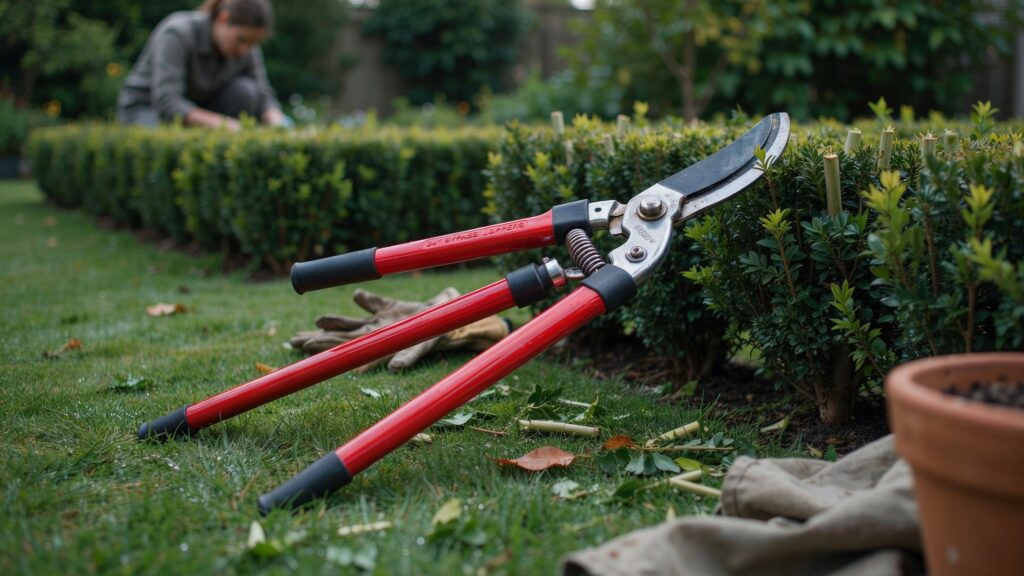
Loppers
Loppers are long-handled branch cutting tools designed for cutting thicker branches that are too large for hand pruners. Their extended handles provide better leverage, making it easier to handle cutting thick branches without applying excessive force. They are commonly used in tree care and maintenance for medium-sized branches.
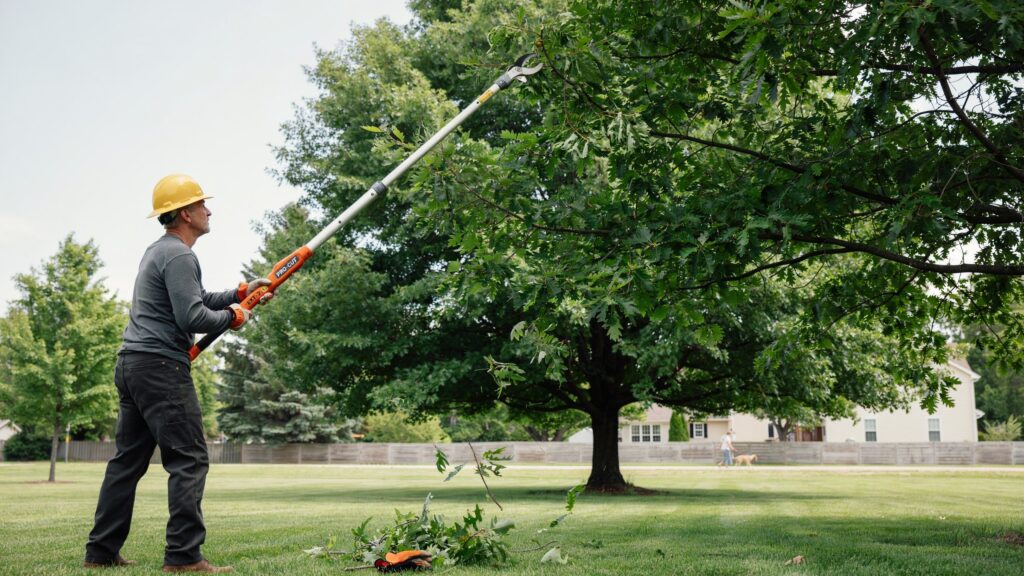
Pole Pruners for Trees
Pole pruners are essential tree trimming equipment used for cutting high branches without climbing a ladder. They are highly useful for improving tree trimming safety, especially when dealing with overgrown trees. These tools allow users to perform pruning tree branches from the ground, reducing risk and improving efficiency.
Pruning Saws
Pruning saws are designed for removing larger branches that cannot be handled by loppers. These tools are important in branch cutting methods where strength and precision are required. They provide clean cuts that support healthy tree growth and help maintain proper tree structure during tree maintenance tasks.
Manual Tree Limb Cutters
Manual tree limb cutters are simple tools used for regular garden maintenance. They are part of essential pruning tools for trees and are suitable for homeowners who need controlled cutting without powered equipment. These tools are effective for maintaining smaller trees and managing light pruning tasks.
Powered Branch Cutting Tools
Powered cutting tools are advanced equipment used for heavy-duty pruning tree branches. They are designed for efficiency in large-scale tree care and maintenance work. These tools reduce manual effort and are often used when dealing with dense or overgrown branches.
Ratchet Pruning Tools
Ratchet pruning tools are specialized branch cutting tools that allow gradual cutting of thicker branches. They are useful for reducing strain on the hands while improving cutting precision. These tools are helpful in maintaining pruning tools performance and ensuring smooth branch removal.
How Tree Branch Cutters Work
Maintenance and Performance Factors
Proper maintenance of pruning tools is important for consistent performance. Regular cleaning and sharpening ensure smooth cutting action, reduce resistance, and support long-term efficiency in tree care and maintenance tasks.
Cutting Mechanism Basics
Branch cutting tools operate using a simple mechanical advantage system that increases force applied to the blade. This allows easier cutting of thick branches with minimal effort. The design is focused on efficient branch cutting methods that support smooth and controlled pruning tree branches.
Blade Action and Design
Most tree pruning tools use sharp steel blades that slide or bypass each other to create a clean cut. This helps prevent damage to tree care and maintenance processes by reducing tearing. Clean cuts are essential for healthy tree growth and proper healing of branches.
Lever and Handle Function
Long handles in branch cutting tools improve leverage, making it easier to handle cutting thick branches. This design reduces strain and increases efficiency during tree maintenance tasks. It also improves control when using pruning tools for trees in different conditions.
Pole Extension Systems
Pole pruner for trees use extendable rods that allow users to reach high branches safely. These systems improve tree trimming safety by eliminating the need for ladders. They are especially useful in pruning tree branches in tall or dense trees.
Ratchet and Step Cutting Technology
Some tools use ratchet systems that cut in stages, allowing gradual pressure buildup. This is helpful for cutting thick branches without excessive force. It improves the efficiency of garden branch cutter tools and reduces hand fatigue during use.
Power-Driven Cutting Systems
Powered tree trimming equipment uses electric or fuel-based motors to drive blades. These systems are designed for fast and efficient cutting thick branches in large-scale tree care and maintenance work. They are widely used for heavy pruning tasks.
Safety and Control Features
Modern branch cutting tools include locking systems and grip-enhanced handles to improve tree trimming safety. These features ensure better control during branch cutting methods and reduce the risk of accidents while pruning.
Choosing the Right Tree Pruning Tools for the Job
- Branch Size Consideration
Selecting the right garden branch cutter depends on the thickness of branches. Small pruning tree branches can be handled with hand pruners, while cutting thick branches requires loppers or saw-based tools for better efficiency. - Tree Height and Accessibility
For tall trees, pole pruner for trees are the most practical option. They help in reaching high branches safely and improve tree trimming safety by reducing the need for climbing. - Type of Tree Maintenance Task
Different tree care and maintenance tasks require different tools. Light shaping needs simple pruning tools for trees, while heavy trimming requires more advanced branch cutting tools for efficiency. - User Strength and Comfort
Comfortable handling is important when working with tree trimming equipment. Lightweight tools with ergonomic handles help reduce fatigue during long pruning tree branches sessions. - Precision Requirements
For accurate branch cutting methods, hand pruners offer better control. They are ideal when maintaining plant shape and encouraging healthy tree growth through careful trimming. - Frequency of Use
For routine tree maintenance, long-lasting and simple tools are ideal, while experts often choose advanced pruning tools for trees that perform reliably under frequent use.. - Safety Conditions
Tree trimming safety should always be considered. Choosing tools with secure grips and controlled cutting systems reduces risk during cutting thick branches or working at height. - Branch Density and Tree Type
Dense trees require stronger branch cutting tools, while lighter ornamental trees can be managed with basic garden branch cutter options for efficient pruning tree brKey Features to Look for in Branch Cutting Tools
Key Features to Look for in Branch Cutting Tools
Safety Features
Safety locks and controlled cutting systems improve tree trimming safety. These features are important when working with powerful or sharp pruning tools for trees.
Blade Quality and Material
High-quality steel blades ensure clean cuts during pruning tree branches. Sharp blades improve efficiency and support healthy tree growth by reducing damage to tree tissues.
Cutting Capacity
The ability to handle cutting thick branches is a key feature. Strong cutting capacity ensures the tool performs well in both light and heavy tree care and maintenance tasks.
Handle Design and Grip
Ergonomic handles improve control and reduce strain during use. Good grip design enhances tree trimming safety and allows better handling of branch cutting tools.
Tool Reach and Extension
Extendable tree trimming equipment is useful for reaching high branches. This feature is essential for pole pruner for trees used in tall tree maintenance.
Durability and Build Strength
Strong construction ensures long-term use in regular tree maintenance tools. Durable materials prevent damage during frequent pruning tree branches tasks.
Cutting Mechanism Type
Different branch cutting methods such as bypass, anvil, or ratchet systems affect performance. Choosing the right mechanism improves efficiency in pruning tools for trees.
Maintenance Requirements
Easy maintenance is important for long-term performance. Tools that are simple to clean and sharpen support consistent results in tree care and maintenance.
Effective Ways to Use Tree Pruning Tools
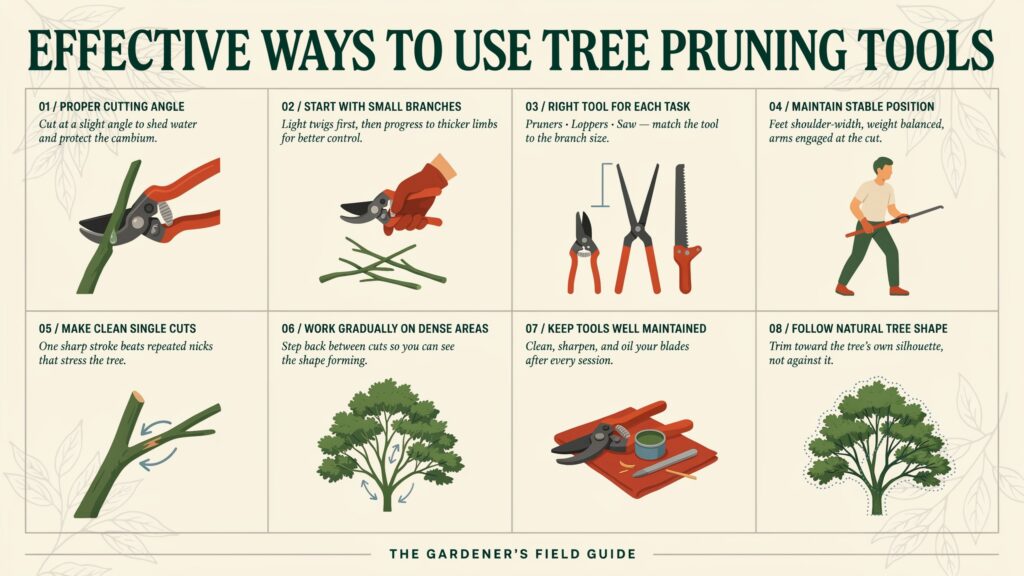
- Proper Cutting Angle
Using correct branch cutting methods is important for clean results. Cutting at a slight angle helps prevent water buildup and supports healthy tree growth during pruning tree branches. - Start with Small Branches
Begin with light pruning tree branches before moving to cutting thick branches. This helps improve control and reduces strain on garden branch cutter tools. - Use the Right Tool for Each Task
Different pruning tools for trees are designed for specific branch sizes. Using the correct tool improves efficiency in tree care and maintenance and prevents damage to branches. - Maintain Stable Position
Keeping a stable stance improves control when using tree trimming equipment. This is important for safe and accurate cutting thick branches. - Make Clean, Single Cuts
Avoid repeated cutting attempts. Clean cuts using sharp branch cutting tools help reduce stress on trees and support proper tree care and maintenance. - Work Gradually on Dense Areas
Dense areas should be pruned step by step. This method ensures better handling of pruning tools for trees and reduces the risk of damaging healthy branches. - Keep Tools Well Maintained
Regular maintenance of garden branch cutter tools ensures smooth performance. Clean and sharp tools improve efficiency in pruning tree branches. - Follow Natural Tree Shape
Respecting the natural structure of trees improves tree maintenance tools effectiveness. Proper shaping encourages balanced and healthy tree growth.
Safety Tips When Cutting Tree Branches
Store Tools Safely After Use
Proper storage of pruning tools for trees prevents accidents and maintains tool condition for future tree maintenance tasks.
Wear Protective Gear
Safety equipment is essential during tree trimming safety practices. Gloves, goggles, and helmets help protect against falling debris and sharp pruning tools for trees.
Check Tool Condition Before Use
Inspecting tree trimming equipment before use ensures safe operation. Damaged blades or loose parts can increase risk during cutting thick branches.
Maintain Safe Distance
Keep a safe distance from others while using branch cutting tools. This reduces the risk of injury during branch cutting methods.
Avoid Overreaching
Using pole pruner for trees helps prevent overreaching. Staying balanced improves control and supports safe pruning tree branches.
Work in Stable Weather Conditions
Avoid tree care and maintenance work during strong winds or rain. Stable conditions improve safety when handling garden branch cutter tools.
Use Proper Ladder Safety
When ladders are needed, ensure proper placement. Stable positioning is important for tree trimming safety while working with tree pruning tools.
Keep Cutting Area Clear
Remove obstacles around the working area. A clear space improves movement and reduces accidents during cutting thick branches.
Maintaining and Sharpening Tree Pruning Tools
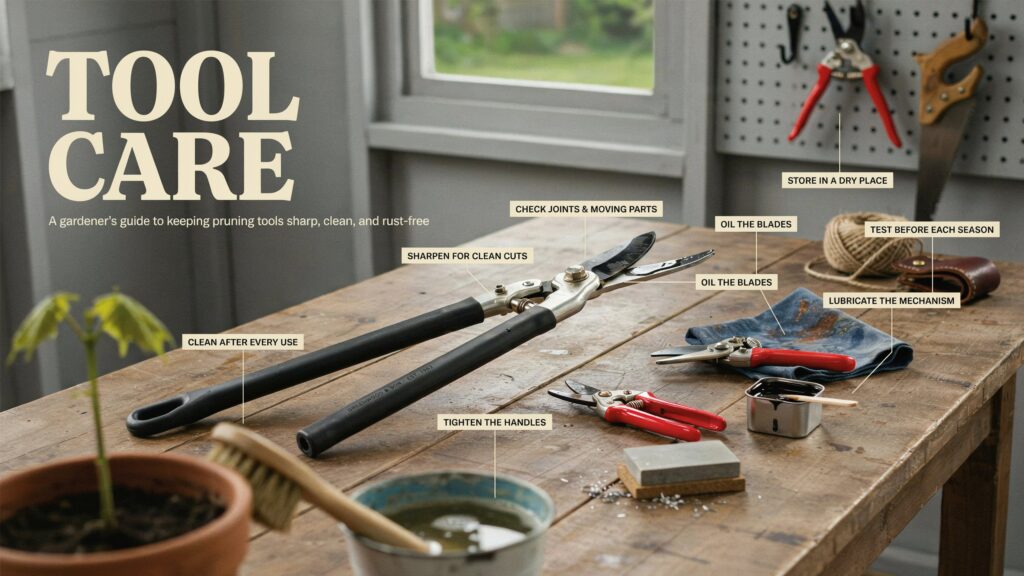
- Regular Cleaning After Use
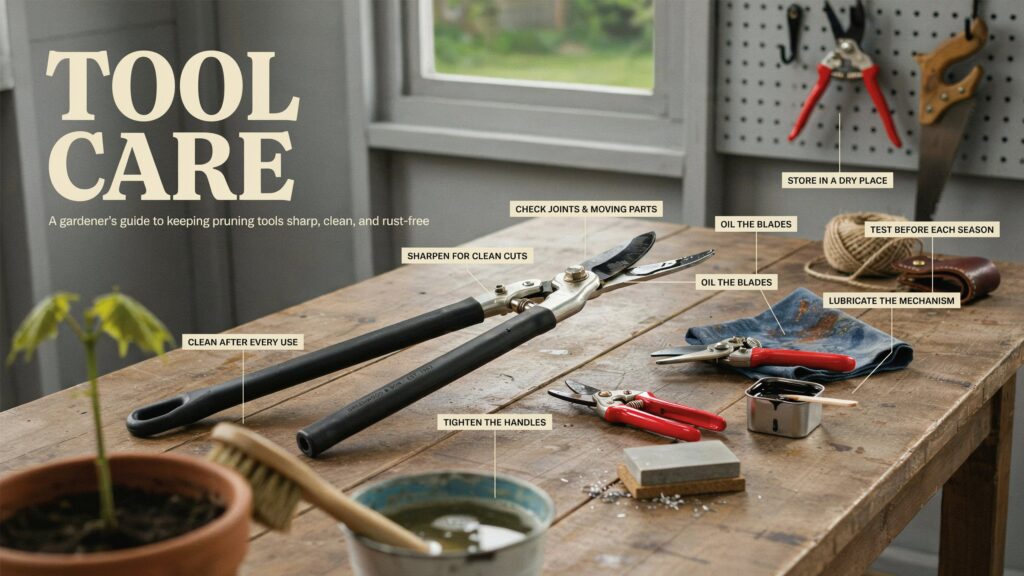
Cleaning tree pruning tools after each use prevents sap and dirt buildup. This helps maintain smooth performance during pruning tree branches and supports long-term tree care and maintenance. - Blade Sharpening for Clean Cuts
Sharp blades are essential for effective branch cutting methods. Regular sharpening ensures clean cuts, reduces effort during cutting thick branches, and supports healthy tree growth. - Rust Prevention Techniques
Applying oil on metal parts helps prevent rust in garden branch cutter tools. This improves durability and keeps tree trimming equipment in good working condition. - Proper Storage Practices
Storing pruning tools for trees in a dry place protects them from moisture damage. Proper storage extends tool life and maintains performance for future tree maintenance tasks. - Checking Moving Parts
Regular inspection of joints and moving parts ensures smooth operation of branch cutting tools. This reduces friction and improves efficiency in tree care and maintenance work. - Handle Maintenance
Keeping handles tight and clean improves safety and control during pruning tree branches. Strong handles reduce risk while using garden branch cutter tools. - Lubrication of Mechanisms
Lubricating cutting joints ensures smoother movement in tree trimming equipment. This helps in cutting thick branches with less effort and better precision. - Periodic Performance Check
Routine checks ensure all pruning tools for trees remain effective. Proper maintenance supports consistent results in tree care and maintenance tasks.
Common Tree Pruning Tasks That Require Branch Cutting Tools
Enhancing Fruit Production
Fruit-bearing trees benefit from proper pruning tree branches techniques. Controlled trimming improves yield and supports better plant development.
Removing Dead Branches
Dead branch removal is essential for tree care and maintenance. Using pruning tree branches tools helps improve tree health and prevents disease spread.
Shaping Tree Structure
Proper shaping improves appearance and supports healthy tree growth. Garden branch cutter tools help maintain natural tree balance through controlled pruning tree branches.
Cutting Thick Branches
Cutting thick branches is a common task in tree maintenance tools usage. Strong branch cutting tools ensure safe and efficient removal of large limbs.
Managing Overgrown Trees
Overgrown trees require regular pruning tools for trees. Controlled cutting improves sunlight exposure and air circulation within the canopy.
Improving Tree Health
Removing weak or damaged branches supports healthy tree growth. Proper branch cutting methods help trees recover and grow stronger.
Clearing Obstructive Branches
Branches blocking pathways or structures are removed using tree trimming equipment. This improves safety and accessibility in outdoor areas.
Seasonal Tree Maintenance
Seasonal pruning is important for long-term tree care and maintenance. It helps prepare trees for growth cycles and changing weather conditions.
Conclusion
Tree branch cutters are important for keeping trees healthy, safe, and well-maintained. From simple hand tools to advanced cutting equipment, each type serves a specific purpose in tree care and maintenance. Using the right tool for the right job not only makes pruning easier but also supports healthy tree growth and prevents damage. By following proper techniques, safety practices, and regular maintenance, you can ensure long-lasting performance of your tools and better results in all your pruning tasks.
Frequently Asked Questions
Q1. What is another name for a tree branch cutter?
A tree branch cutter is commonly called a pruning tool. Depending on the type, it may be known as hand pruners, loppers, pruning saws, or pole pruners used for trimming and removing branches.
Q2. What is the best tool to cut tree branches?
The best tool depends on branch size. Hand pruners work for small branches, loppers for medium branches, and pruning saws or pole pruners are best for thick or high branches.
Q3. What is the 3 cut method for tree branches?
The three-cut technique is a safe pruning method for removing large branches without harming the tree. It involves an undercut, a top cut to remove weight, and a final cut near the branch collar.
Q4. What are the different types of tree branch cuts?
Common types include thinning cuts, heading cuts, reduction cuts, and removal cuts. Each type is used to shape trees, improve growth, and remove unwanted branches.
Q5. What is the easiest way to cut tree branches?
The easiest way is to use the right tool for the branch size and make clean, single cuts at the correct angle. Using sharp tools reduces effort and helps protect tree health.