
Introduction
Choosing the best bypass pruners is essential for maintaining healthy, well-shaped plants in any garden. Clean and precise cuts help plants heal faster, reduce damage, and support strong growth. With many options available, selecting the right pair can feel challenging. This guide simplifies the process by explaining key features, comparing top models, and offering practical tips to help you make an informed decision. Whether you are a beginner or an experienced gardener, this article will help you find the ideal bypass pruners for your gardening needs.

Table of Contents
What Are Bypass Pruners?
Bypass pruners are cutting tools designed to make clean and precise cuts on live plants. They work with two curved blades that pass by each other in a smooth motion, similar to how scissors operate. This design allows the best bypass pruners to trim stems and branches without crushing or damaging the plant tissue. Because of their accuracy, they are widely used for shaping flowers, shrubs, and young branches. Bypass pruners are ideal for gardeners who want to maintain plant health while achieving neat and controlled results. Their simple structure, ease of use, and reliable performance make them an essential tool in everyday garden care.
Benefits of Using the Best Bypass Pruners
Using the best bypass pruners offers several important advantages for gardeners who want clean and healthy plant growth. These tools are designed for precision, allowing you to cut live stems without causing unnecessary damage. Below are the key benefits:
1. Clean and Accurate Cuts
Bypass pruners make smooth cuts because their blades pass closely by each other. This prevents tearing and supports faster healing of the plant.
2. Better Plant Health
Clean cuts reduce stress on the plant, lower the risk of infection, and encourage stronger growth. This is especially important when trimming flowers, shrubs, and young branches.
3. Easy to Use
The best bypass pruners require minimal effort to operate. Their sharp blades and balanced design make them comfortable to use for both small and large pruning tasks.
4. Versatile for Daily Gardening
These pruners work well for shaping plants, removing dead leaves, trimming soft branches, and maintaining garden structure. Their versatility makes them useful for beginners and experienced gardeners alike.
5. Reduced Plant Damage
Because bypass pruners cut cleanly instead of crushing stems, they help preserve the natural form of the plant. This leads to healthier, more attractive growth over time.
Factors to Consider Before Choosing the Best Bypass Pruners
Selecting the best bypass pruners requires careful consideration of several key factors to ensure that you choose a tool that is durable, comfortable, and efficient. Here are the key factors you should review carefully before selecting the right bypass pruners for your needs:
1. Blade Material and Sharpness
The quality of the blades directly affects cutting performance. Look for hardened steel or stainless steel blades, as they stay sharp longer and resist rust. Sharp blades ensure clean cuts and reduce strain on your hands.
2. Cutting Capacity
Different pruners can handle different branch thicknesses. Check the maximum cutting diameter and select a pruner that can easily handle the types of stems you will trim most frequently.
3. Handle Comfort and Ergonomics
Ergonomic handles reduce hand fatigue during extended use. Comfortable grips are especially important if you plan to prune large areas or thick branches regularly.
4. Weight and Balance
Lightweight pruners are easier to maneuver, while well-balanced tools provide better control. Consider both weight and balance to prevent strain and improve cutting accuracy.
5. Safety Lock Mechanism
A secure locking mechanism keeps the blades closed when not in use, protecting both the user and the tool. This feature is essential for safe storage.
6. Durability and Build Quality
High-quality construction ensures long-term performance. Choose pruners made from strong materials with sturdy joints and smooth pivot mechanisms.
7. Rust Resistance
Tools that resist rust maintain their sharpness and require less maintenance over time. Stainless steel or coated blades are ideal for durability.
8. Price and Value
While quality matters most, it is important to consider cost. The best bypass pruners offer a balance between affordability and long-lasting performance.
Top 5 Best Bypass Pruners
Here are five excellent bypass pruning shears that stand out for performance, durability, and value. These are among the top-rated options to consider when looking for the best bypass pruners for gardening.
1. Felco F‑2 Classic Hand Pruner
- Why it’s one of the best: The Felco F‑2 is often regarded as the gold standard for pruning tools. Its hardened steel blades provide extremely clean and precise cuts, which helps in maintaining plant health and promoting fast healing.
- Durability: This model is built for long-term use, and many of its parts (like the blade, spring, and handles) can be replaced, making it a smart investment.
- Cutting capacity: It can handle branches up to about 1 inch in diameter.
- Ergonomics: Lightweight aluminum handles make it comfortable for extended pruning sessions.
2. Fiskars PowerGear2 Bypass Pruner
- Why it’s one of the best: This model features a unique gear mechanism that multiplies leverage. According to tests, it reduces the effort needed to make a cut by up to three times.
- Ease of use: The powerful gearing helps even gardeners with limited hand strength, making it a very practical choice.
- Blade quality: The blades are made of stainless steel and have a low-friction coating that helps prevent sap buildup.
- Budget: Compared to fully professional pruners, this option is more affordable while still very effective.
3. Corona ClassicCUT Forged Bypass Pruner
- Why it’s one of the best: Corona has long produced reliable pruning tools, and their ClassicCUT model is a favorite for combining quality and affordability.
- Blade material: It uses forged carbon-steel blades, which remain sharp under heavy use.
- Cutting capacity: This tool can comfortably cut branches around 1 inch in thickness.
- Comfort: The handles are designed to be ergonomic, and there is a safety lock to keep the blades closed when not in use.
4. Gonicc 8″ Professional Premium Titanium Bypass Pruners
- Why it’s one of the best: These pruners are lighter thanks to the titanium-coated blades, and they provide very sharp, clean cuts.
- Rust resistance: The titanium finish helps resist rust and keeps the blades sharper for longer.
- Value: This is often cited as one of the most budget-friendly high-quality garden pruners.
- Best for: Home gardeners who want a long-lasting, reliable tool without paying top-tier professional prices.
5. ARS HP‑VS8Z Signature Heavy‑Duty Pruner
- Why it’s one of the best: ARS is a Japanese brand known for very sharp, high-precision tools. The HP‑VS8Z model is designed for professional use and heavier garden tasks.
- Cutting strength: These pruners can cut slightly thicker branches, making them useful for more demanding trimming.
- Comfort: It includes a comfortable grip and a well-designed spring mechanism, which helps reduce hand fatigue.
- Durability: Built with high-quality materials, this model is meant to last many seasons with proper care.
Summary
These five pruners are frequently recommended among the best bypass pruners because they offer a strong balance between cutting performance, durability, comfort, and value. Depending on your specific need — whether it is professional gardening, frequent pruning, or occasional home maintenance — one of these tools is likely to serve you well.
6. Detailed Comparison of the Best Bypass Pruners
Below is a side‑by‑side comparison of the top 5 best bypass pruners, based on key features. This will help you decide which one suits your gardening needs.
| Feature | Felco F‑2 | Fiskars PowerGear2 | Corona ClassicCUT | Gonicc Titanium | ARS HP‑VS8Z |
|---|---|---|---|---|---|
| Cutting Performance | Excellent — very clean, precise cuts on soft and semi-hard wood thanks to hardened steel blades. | Very good — gear mechanism provides powerful leverage, making cutting easier for tougher stems. | Good — cuts reliably, though not as force-multiplied; ideal for routine trimming. | Very good — sharp titanium-coated blades maintain edge, useful for many cuts. | Strong — designed for heavier-duty cuts; handles slightly thicker branches. |
| Blade Material & Sharpness | High-quality hardened steel; stays sharp and can be replaced. | Stainless steel low-friction blades; resist sticky sap. | Forged carbon-steel blades — sharp and tough. | Titanium-coated blades — rust-resistant and sharp for longer. | High-carbon steel; precision-ground blades from Japanese manufacturer. |
| Cutting Capacity | Up to ~1 inch (2.5 cm) diameter. | Up to ~1 inch, though easier to cut due to leverage. | Around 1 inch; suitable for most garden tasks. | Slightly less or similar to others, but efficient due to sharpness. | Slightly higher capacity; robust for thicker live stems. |
| Handle Comfort & Ergonomics | Aluminum handles — lightweight, ergonomic, classic feel. | Soft-grip handles plus geared mechanism reduce effort. | Comfortable molded handles; straightforward grip. | Lightweight and balanced; handles feel smooth and easy. | Rubberized handles with good grip; spring mechanism reduces fatigue. |
| Weight & Balance | Very balanced and light, making it easy to hold for long tasks. | Slightly bulkier due to gearing, but still well-balanced. | Medium weight; sturdy but not heavy. | Very light; titanium helps reduce weight without compromising strength. | Well balanced; slightly heavier but built for strength. |
| Safety / Locking Mechanism | Manual locking hook to secure blade. | Safety lock keeps blades closed when not in use. | Simple lock to secure blade. | Locking catch keeps tool closed safely. | Secure lock and strong pivot support safe storage. |
| Durability & Build Quality | Exceptional — many replacement parts available, built to last. | Good — durable with quality mechanism; fewer replaceable parts. | Reliable — forged design resists wear. | Durable — titanium finish protects blade and prolongs life. | Very high — built for professional or heavy use, solid construction. |
| Maintenance (Cleaning / Sharpening) | Easy to sharpen; pivot can be oiled; parts are replaceable. | Requires occasional lubrication; blades are easy to clean. | Simple to clean and sharpen; forged steel takes and holds an edge. | Clean, sharpen, and oil easily; light maintenance effort. | Needs regular sharpening and lubrication; built for long-term use. |
| Rust Resistance | Moderate; steel can tarnish without protection. | Good; low-friction coating helps. | Good; carbon steel resists but needs care. | Excellent; titanium-coated blades provide strong rust resistance. | Good; high-quality steel resists, but requires drying and oil. |
| Value / Price | Higher upfront cost, but very cost-effective over time. | Very good value — leverage helps reduce effort, making it useful for many. | Affordable, especially for gardeners who prune regularly. | Excellent value — premium features at a lower cost than pro-grade tools. | More expensive; justified by durability and professional design. |
| Best Use Case | Ideal for professional gardeners or serious hobbyists who want long-term value. | Great for frequent pruning, especially if hand strength is a concern. |
Summary of Comparison
- Cutting Performance: All five are strong performers, but the Felco F‑2 stands out for precision, while Fiskars PowerGear2 makes cutting easier with less effort.
- Blade Quality: The titanium-coated Gonicc and high-carbon ARS blades excel in longevity, while the Corona ClassicCUT offers traditional forged steel quality.
- Comfort & Use: If you prioritize ease of cutting, Fiskars PowerGear2 is ideal. For a lightweight tool, Gonicc is excellent.
- Durability vs Maintenance: Felco F‑2 offers replaceable parts, and durable construction, making it cost-effective long term. ARS HP‑VS8Z is robust but needs more care.
- Rust Resistance: Gonicc Titanium pruners lead in resisting rust, while others need periodic oiling or maintenance.
- Value: For budget-conscious gardeners, Corona ClassicCUT and Gonicc Titanium offer good performance without compromising much quality. For professionals, Felco F‑2 and ARS HP‑VS8Z provide longevity and precision.
By comparing these key features side by side, you can more confidently choose among the best bypass pruners for your specific gardening needs — whether you prune daily, maintain a small garden, or work on larger landscaping tasks.
How to Use Bypass Pruners Correctly
Using the best bypass pruners correctly ensures clean cuts, reduces plant damage, and prolongs the life of your tool. Proper technique and safety practices are essential for effective gardening.
1. Hold the Pruners Properly
Grip the handles firmly but comfortably, with your thumb and fingers fully supporting the tool. A secure grip helps maintain control and accuracy when cutting branches.
2. Choose the Right Cutting Angle
For healthy plant growth, cut at a slight angle, about 45 degrees. This allows water to drain off the cut surface and prevents disease, promoting faster healing.
3. Cut with the Blade’s Deepest Part
Use the strongest part of the blades near the pivot for cutting. This provides maximum leverage and makes trimming thicker stems easier.
4. Avoid Twisting or Jerking
Bypass pruners are designed for smooth slicing cuts. Twisting or forcing the blades can crush stems, damage plant tissue, and dull the blades.
5. Trim in Small Sections
For thicker branches, make several smaller cuts rather than attempting one large cut. This reduces strain on your hands and ensures a clean result.
6. Keep Hands and Fingers Safe
Always position your hands away from the cutting blades. Make sure the pruners are locked when not in use to avoid accidental injury.
7. Maintain Your Tool After Use
Clean the blades with a cloth to remove sap and dirt. Apply a small amount of oil to the pivot area to keep the blades moving smoothly and prevent rust.
By following these steps, you can maximize the efficiency of the best bypass pruners, ensure cleaner plant cuts, and maintain the pruners in good condition for long-term use.
Maintenance Tips for the Best Bypass Pruners
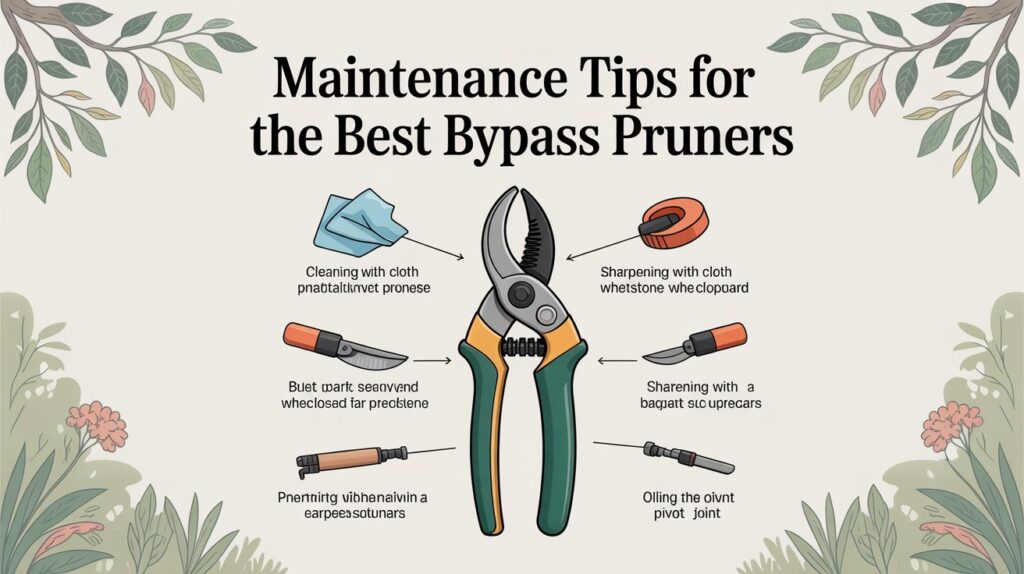
Proper maintenance is essential to keep the best bypass pruners sharp, efficient, and long-lasting. Regular care ensures clean cuts, reduces hand effort, and protects plants from damage or disease. Follow these simple tips to maintain your pruning tools:
1. Clean After Each Use
Wipe the blades with a clean cloth to remove sap, dirt, and plant residue. For sticky sap, use a small amount of mild soap or rubbing alcohol. Clean blades prevent rust and maintain smooth cutting action.
2. Sharpen the Blades Regularly
Dull blades require more force and can crush stems. Use a sharpening stone or file to maintain a sharp edge. Focus on the beveled side of the blade while keeping the original angle intact.
3. Lubricate the Pivot Area
Apply a drop of light oil to the pivot joint to keep the blades moving smoothly. Proper lubrication reduces wear, prevents rust, and ensures that the pruners open and close effortlessly.
4. Check for Loose Screws or Parts
Inspect your pruners periodically for loose screws or misaligned blades. Tighten the pivot screw if necessary and replace worn parts to maintain optimal performance.
5. Protect Against Rust
Keep your pruners in a clean, dry location to prevent moisture from causing rust or damage. You can also wipe the blades with a thin layer of oil before storing them for extended periods.
6. Use Correctly to Minimize Wear
Avoid cutting branches thicker than the pruners’ rated capacity and do not use them on dead or hard wood. Using the tool as intended prolongs its lifespan.
By following these maintenance tips, your best bypass pruners will remain sharp, reliable, and ready for precise, clean cuts every time. Regular care also ensures safer use and extends the tool’s service life.
Common Mistakes to Avoid When Using Bypass Pruners
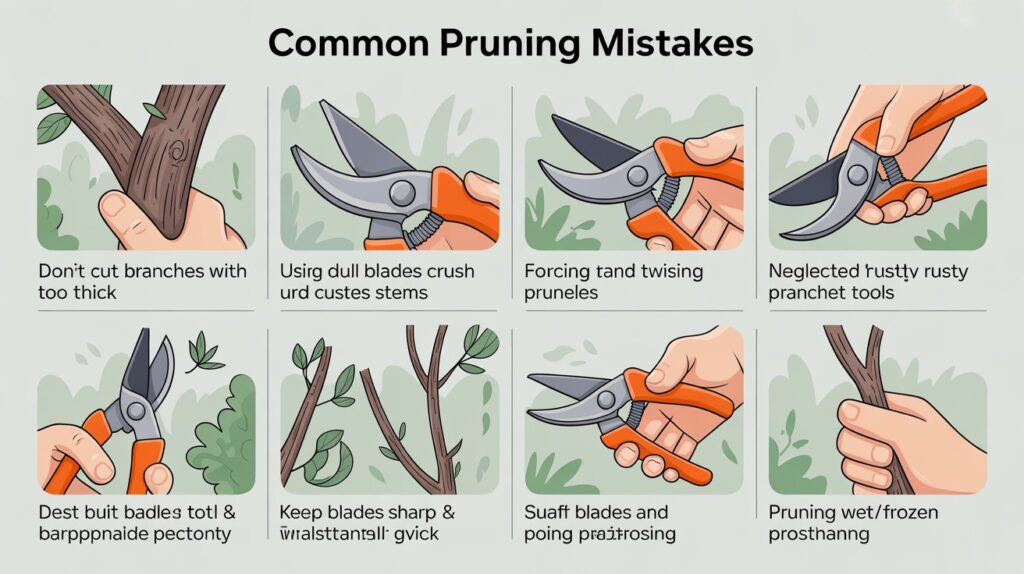
Even the best bypass pruners can become less effective or damage plants if not used properly. Avoiding common mistakes ensures cleaner cuts, longer tool life, and healthier plants. Here are the most frequent errors gardeners should watch for:
1. Cutting Branches That Are Too Thick
Bypass pruners are designed for live stems and small branches. Attempting to cut branches thicker than the pruners’ capacity can damage the blades and result in uneven cuts.
2. Using Dull Blades
Dull blades crush stems instead of slicing cleanly. Always sharpen your pruners regularly to maintain smooth cutting action and protect plant health.
3. Twisting or Forcing the Blades
Forcing or twisting the pruners can bend the blades, misalign the pivot, and crush plant tissue. Use a smooth, slicing motion for the best results.
4. Neglecting Tool Maintenance
Failing to clean, oil, and inspect your pruners can lead to rust, reduced performance, and shorter lifespan. Proper maintenance is essential for the best bypass pruners to function effectively.
5. Ignoring Hand Safety
Placing your hands or fingers too close to the cutting area can cause injury. Always hold the pruners correctly and engage the safety lock when not in use.
6. Pruning in Wet or Frozen Conditions
Using bypass pruners on wet or frozen branches increases the risk of slipping and can damage both the tool and the plant. Wait for dry, safe conditions whenever possible.
By avoiding these mistakes, you ensure that your best bypass pruners provide precise, clean cuts while protecting your plants and yourself. Correct use also extends the life of the tool and maintains its cutting performance.
Conclusion
Selecting the best bypass pruners can make a significant difference in the health and appearance of your plants. With the right tool, you can achieve clean cuts, prevent damage, and support strong plant growth throughout the year. By understanding the key features, comparing top models, and using proper pruning techniques, you can choose a pair that matches your gardening needs and lasts for many seasons. Whether you are a home gardener or a professional, investing in quality bypass pruners ensures efficient, safe, and enjoyable garden maintenance.
Top 5 FAQs About the Best Bypass Pruners
1. How do bypass pruners differ from anvil pruners in the way they cut plant stems?
Bypass pruners have two blades that pass each other like scissors, making clean cuts on live stems. Anvil pruners have a single blade that cuts against a flat surface, which can crush stems. The best bypass pruners are ideal for healthy plants because they minimize damage and promote faster healing.
2. What size branches can the best bypass pruners cut?
Most high-quality bypass pruners can handle branches up to ¾ to 1 inch (2–2.5 cm) in diameter. For thicker or woody branches, consider a professional or heavy-duty model designed for larger cuts.
3. How often should I sharpen my bypass pruners?
Sharpening depends on usage. For regular garden maintenance, sharpening every few months or whenever the blades feel dull is recommended. Regular sharpening keeps the best bypass pruners efficient and prevents crushing stems.
4. Can bypass pruners be used on dead wood?
Bypass pruners are designed primarily for live branches and stems. Cutting hard or dead wood can damage the blades. For dead or thick branches, consider using loppers or saws.
5. How do I maintain the best bypass pruners for long-term use?
Clean blades after each use to remove sap and debris.
Lubricate the pivot joint to ensure smooth operation.
Sharpen blades regularly.
Store pruners in a dry place and engage the safety lock.
Proper maintenance ensures consistent cutting performance and prolongs the life of your best bypass pruners.