
Introduction
Compact table saws are an excellent choice for woodworkers who need accuracy and efficiency without requiring a large workspace. Designed to balance portability, performance, and safety, these saws are ideal for home workshops, garages, and job sites. This guide explains the key features, benefits, and considerations to help you understand whether a compact table saw is the right tool for your woodworking needs.
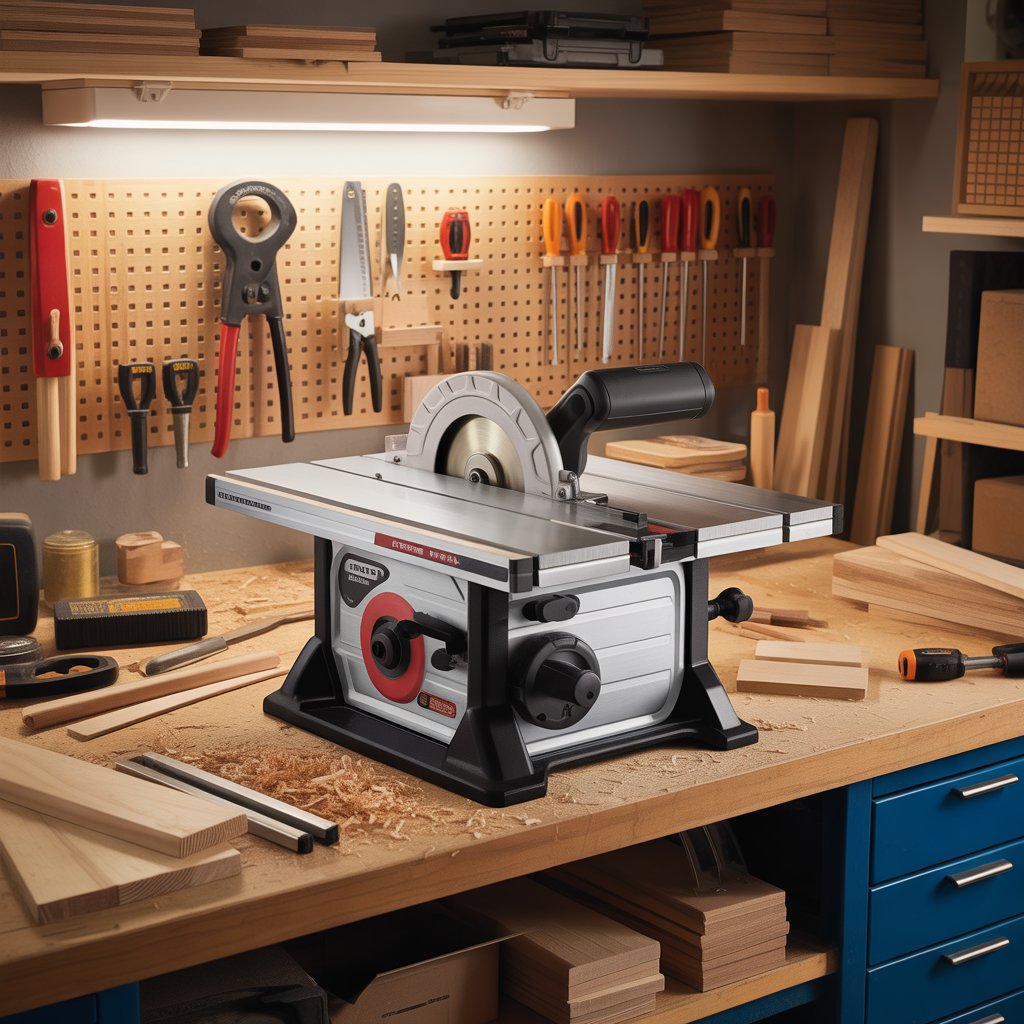
Table of Contents
What Makes a Table Saw “Compact”
A compact table saw is defined by its small footprint, lightweight design, and portability, making it ideal for woodworking in limited spaces. Unlike full-size cabinet saws, these models are often benchtop table saws or portable table saws that can fit on a workbench or a foldable stand. Their reduced size allows for easy storage and quick setup, which is particularly useful for DIY enthusiasts, small workshop owners, and contractors who move between job sites.
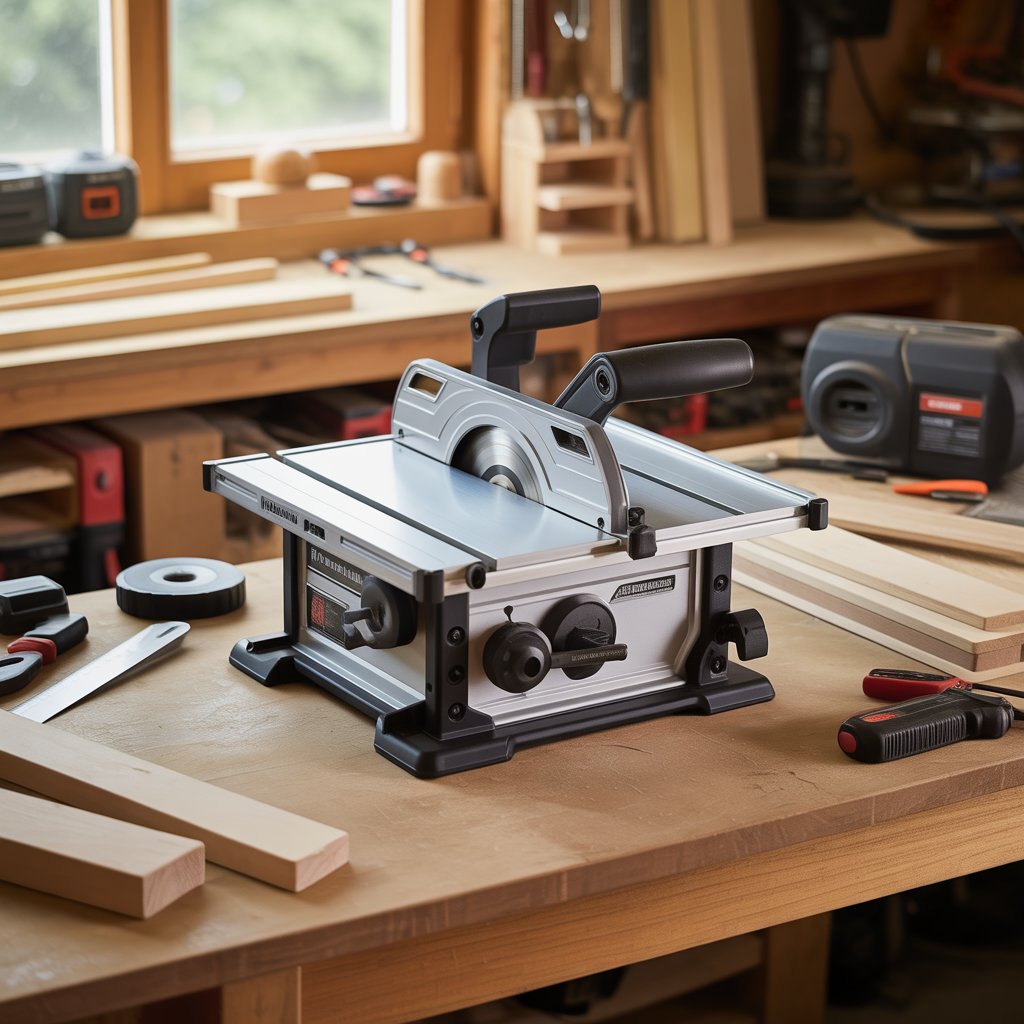
Key features that make a table saw compact include:
- Lightweight Frame: Most compact models are built with materials that keep the saw portable without compromising durability. Users can carry a mini table saw or lightweight table saw comfortably between locations.
- Reduced Table Size: The tabletop is smaller than a standard saw, but still provides enough surface for typical woodworking tasks. This design ensures precision cutting while saving space.
- Integrated Handles or Foldable Stands: Many compact saws include built-in handles or foldable legs for effortless transport and storage. This makes them more convenient than larger, stationary machines.
- Adequate Motor Power: While smaller in size, these saws maintain sufficient motor power to handle common materials, from softwoods to medium hardwoods, supporting tasks such as shelving, trim work, and furniture parts.
- Space-Saving Design: A space-saving table saw is perfect for workshops with limited room. Despite its compact design, it can still accommodate a standard blade diameter and offers a functional rip fence system for accurate cuts.
In summary, a table saw is considered compact not just because of its size, but also due to its combination of portability, storage convenience, and sufficient cutting performance. These features make compact table saws a practical choice for woodworking projects without the bulk of traditional saws.
Key Benefits of Compact Table Saws
Compact table saws offer several practical advantages that make them a popular choice for both beginners and experienced woodworkers. Their design focuses on efficiency, portability, and usability without unnecessary complexity.
Space Efficiency
Their design focuses on minimizing space usage while still supporting efficient woodworking tasks. A small table saw or benchtop table saw fits easily into a garage or DIY home workshop where larger machines would be impractical. This allows users to maintain a functional workspace even in limited areas.
Portability and Convenience
A portable table saw or lightweight table saw can be moved and stored with minimal effort. Many models include built-in handles or foldable stands, making them ideal for jobsite work or shared workspaces. Easy portability also means quicker setup and breakdown.
Reliable Cutting Performance
Despite their compact size, these saws provide solid motor power and dependable cutting capacity for everyday woodworking projects. They handle common tasks such as cutting boards, trim, and panels with consistent results.
Accuracy and Precision
Modern designs prioritize rip fence accuracy and stable tabletops, supporting clean and straight cuts. A well-aligned fence system and proper blade diameter contribute to reliable precision cutting, even on smaller machines.
Safety and Control
Most compact models include essential safety features such as blade guards, riving knives, and anti-kickback mechanisms. These features help reduce risk while maintaining user control during operation.
Cost-Effective Solution
An affordable table saw in a compact format offers excellent value for users who do not need industrial-level equipment. It provides the necessary features for quality work without the high cost or maintenance demands of larger saws.
Overall, these benefits make compact table saws a practical and efficient choice for users seeking performance, accuracy, and convenience in a smaller, more manageable tool.
Motor Power and Cutting Performance
Motor power plays a crucial role in how effectively compact table saws handle different woodworking tasks. Most models are equipped with high-speed motors designed to deliver consistent performance while keeping the overall tool lightweight and portable. This balance allows users to complete common cutting jobs without the bulk of larger machines.
A typical portable table saw uses a direct-drive motor that efficiently transfers power to the blade. This setup provides enough torque for cutting softwoods, plywood, and medium-density hardwoods. For DIY projects and home workshops, this level of motor power is more than sufficient for accurate and smooth cuts.
Cutting performance also depends on the saw’s blade diameter and overall cutting capacity. Many benchtop table saws support standard blade sizes, enabling clean rip cuts, crosscuts, and angled cuts. Combined with a stable tabletop and a reliable fence, users can achieve consistent precision cutting results.
While a small table saw may not be designed for continuous heavy-duty use, it performs exceptionally well for everyday woodworking projects. Tasks such as shelving, trim work, and furniture components can be completed efficiently without sacrificing accuracy or control.
Overall, compact motors paired with well-designed blade systems ensure that these saws provide dependable cutting performance while maintaining portability and ease of use.
Blade Size and Cutting Capacity
Blade size and cutting capacity are key factors that determine how effectively compact table saws handle different woodworking tasks. Most models are designed to support standard blade sizes, typically ranging from 8 to 10 inches. This blade diameter provides enough depth and versatility for common cuts without increasing the overall size of the saw.
A properly matched blade allows a benchtop table saw or portable table saw to perform rip cuts, crosscuts, and bevel cuts with accuracy. The cutting capacity defines how thick or wide a material the saw can handle in a single pass. For most DIY and light professional work, this capacity is more than sufficient for plywood, boards, and trim materials.
Smaller saws maintain efficient performance by balancing blade size with motor power, ensuring smooth operation without overloading the system. This design supports consistent precision cutting, especially when combined with a stable tabletop and an accurate fence system.
Although a small table saw may not handle large sheet goods as easily as a full-size unit, its cutting capacity is ideal for typical woodworking projects. The ability to make clean, controlled cuts while maintaining portability makes these saws a practical choice for limited spaces and mobile work setups.
Overall, the right blade size and cutting capacity ensure reliable performance while preserving the space-saving advantages that compact designs are known for.
Accuracy, Fence System, and Rip Capacity
Accuracy is a critical factor when evaluating compact table saws, as it directly affects the quality of finished work. A stable tabletop combined with precise alignment helps ensure straight, repeatable cuts across different materials. Even in a smaller format, modern designs focus heavily on maintaining cutting accuracy.
The rip fence system plays a major role in achieving consistent results. A well-designed fence locks securely into place and stays parallel to the blade during operation. Many benchtop table saws and portable table saws now feature improved fence mechanisms that reduce movement and vibration, supporting reliable precision cutting.
Rip capacity refers to the maximum width of material that can be cut between the blade and the fence. While a small table saw typically offers less rip capacity than full-size units, it still provides enough range for common woodworking projects such as shelving, panels, and furniture components. This makes these saws practical for most DIY and light professional applications.
Maintaining accuracy also depends on proper setup and calibration. When the fence, blade, and tabletop are correctly aligned, a lightweight table saw can deliver clean, accurate cuts comparable to larger machines for everyday tasks.
Overall, a solid fence system, dependable rip capacity, and consistent accuracy ensure that compact table saws remain efficient tools for users who value precision in limited workspaces.
Safety Features to Look For
Safety is an essential consideration when using compact table saws, especially in small workshops or home environments. Modern designs include multiple safety features that help reduce the risk of injury while maintaining control and cutting accuracy.
A riving knife is one of the most important components. It helps prevent kickback by keeping the material from pinching the blade during cuts. Many portable table saws also include anti-kickback pawls that further enhance stability when cutting wood.
Blade guards are another critical feature. A transparent guard allows users to see the cutting line while keeping hands safely away from the blade. On a benchtop table saw, this added visibility improves both safety and confidence during operation.
Easy-access power switches improve user control. Large, clearly marked switches allow for quick shutdown in case of an emergency. This feature is particularly useful on a lightweight table saw used in busy or shared workspaces.
Additional safety considerations include proper blade alignment, stable tabletops, and reliable fence systems. When these elements work together, they support precision cutting while minimizing the chance of accidents.
Overall, choosing a saw with essential safety features ensures a safer and more controlled woodworking experience, making compact table saws suitable for both beginners and experienced users.
Portability, Size, and Storage
Portability and efficient storage are major reasons why compact table saws are preferred by users with limited space. Their reduced size allows them to fit comfortably in small workshops, garages, or shared work areas without crowding the workspace.
A portable table saw is designed to be lightweight and easy to move. Many models include built-in carrying handles or foldable stands, making transportation between job sites or storage areas simple. This design is especially helpful for contractors and DIY users who need flexibility in their work setup.
Storage convenience is another key advantage. A space-saving table saw can be stored on shelves, under workbenches, or against walls when not in use. Some benchtop table saws feature collapsible components that further reduce their storage footprint.
Despite their smaller size, these saws still provide enough stability for precision cutting. Proper weight distribution and solid base designs help maintain control during operation, even on a lightweight table saw.
Overall, the combination of portability, compact size, and easy storage makes compact table saws a practical solution for woodworking projects in environments where space and mobility matter.
Who Should Use Compact Table Saws
Compact table saws are well suited for users who need reliable cutting performance without the space or budget required for larger machines. Their versatility makes them a practical choice for a wide range of woodworking needs.
DIY enthusiasts and hobbyists benefit greatly from a small table saw or benchtop table saw. These users often work in garages or home workshops where space is limited. A compact design allows them to complete woodworking projects such as shelving, cabinets, and basic furniture with accurate results.
Homeowners who occasionally take on repair or renovation tasks can also benefit from a portable table saw. Its ease of setup, manageable size, and sufficient cutting capacity make it ideal for occasional use without the complexity of professional equipment.
Light-duty professionals and contractors may prefer a jobsite table saw for its portability and convenience. A lightweight table saw with solid motor power allows for efficient trimming, panel cutting, and on-site adjustments while maintaining precision cutting.
These saws are especially useful for users who value mobility, simple storage, and essential safety features. While they may not replace industrial saws for heavy production work, they are highly effective for everyday woodworking tasks in small or mobile work environments.
How to Choose the Best Compact Table Saw
Choosing the right compact table saws depends on understanding your workspace, project needs, and usage frequency. Focusing on a few key features will help you select a model that delivers reliable performance and long-term value.
Start by evaluating motor power and cutting performance. A portable table saw with adequate power ensures smooth cuts through common materials used in woodworking projects. This is especially important if you plan to work with hardwoods or thicker boards.
Next, consider blade diameter and cutting capacity. A properly sized blade allows for clean rip cuts and crosscuts while maintaining consistent precision cutting. For most DIY users, a standard blade size found on a benchtop table saw is more than sufficient.
Accuracy should be a priority. Look for a stable tabletop and a reliable rip fence system that locks firmly into place. Good fence alignment improves straight cuts and reduces material waste, which is essential for quality results.
Safety features are equally important. A quality saw should include a riving knife, blade guard, and anti-kickback mechanisms. These safety features protect users while maintaining control during operation.
Finally, think about portability and storage. A lightweight table saw with a space-saving design is easier to move and store, especially in smaller workshops. Choosing an affordable table saw that balances performance, safety, and convenience ensures you get the best value for your investment.
Conclusion
Compact table saws provide a practical solution for users who want dependable cutting performance in a smaller, more manageable format. Their combination of portability, accuracy, and essential safety features makes them suitable for DIY enthusiasts, homeowners, and light-duty professionals. By considering factors such as motor power, cutting capacity, fence accuracy, and storage needs, users can select a model that fits their workspace and projects effectively. With the right choice, compact table saws can deliver reliable results while maximizing efficiency in limited spaces.
Frequently Ask Questions (FAQs)
Q.1 What is a compact table saw?
A compact table saw is a smaller, portable version of a traditional table saw. It is designed to save space while still providing precise cutting capabilities. Perfect for home workshops, garages, or job sites, compact table saws deliver reliable performance for trimming, crosscutting, and small to medium woodworking projects.
Q.2 What is a mini table saw used for?
A mini table saw is ideal for lightweight and detailed woodworking tasks. It’s commonly used for cutting small boards, molding, trim work, and DIY furniture projects. Its small size makes it perfect for hobbyists and DIY enthusiasts who need precision without a large, permanent machine.
Q.3 What type of cutting is never permitted with a table saw?
Cuts that are unsafe and not recommended include freehand cutting, cutting warped or twisted wood without proper support, and attempting to cut very small pieces that can easily slip. Always use a rip fence, push sticks, and proper guards to maintain safety and avoid accidents.
Q.4 Should I get a circular saw or table saw?
It depends on your needs. A circular saw is portable and versatile for rough cuts and outdoor projects. A table saw, especially a compact or benchtop model, provides precision and stability for repeatable, accurate cuts. If you work on small to medium indoor projects and value accuracy, a compact table saw is usually the better choice.
Q.5 What are the 10 rules of the table saw?
Key table saw safety rules include:
Always wear safety goggles and hearing protection.
Keep hands at a safe distance from the blade.
Use a push stick for small pieces.
Never remove safety guards.
Avoid freehand cutting.
Ensure the blade is sharp and properly aligned.
Keep the work area clean and free of debris.
Never reach over a moving blade.
Disconnect power before changing the blade.
Maintain proper stance and balance while cutting.