
Introduction
Stock guides for a table saw are essential tools for any woodworker seeking precision, safety, and consistent cuts. By keeping material firmly aligned with the fence and applying steady pressure, these guides reduce kickback, improve accuracy, and make your table saw more efficient. In this article, we will explore the types, features, installation tips, and top brands of stock guides, helping you choose the best table saw fence guides and clear-cut stock guides for your woodworking projects.
Table of Contents
What Are Stock Guides for a Table Saw?
Stock guides for a table saw are precision tools designed to hold and direct wood securely while cutting. They use angled rollers or bearings that apply consistent pressure, keeping the material tight against the fence. This ensures smoother, straighter cuts and minimizes the risk of kickback — a major safety concern in woodworking.
How Stock Guides Improve Accuracy and Safety
Unlike basic table saw fence guides, stock guides add downward and lateral pressure, allowing the board to stay firmly aligned with the blade. This combination enhances both precision and safety, making them one of the best table saw accessories for accuracy. By preventing side movement, stock guides help reduce friction, blade drift, and the need for excessive hand pressure.
Why Woodworkers Use Stock Guides for a Table Saw
For many professionals, stock guides for a table saw are essential table saw safety tools. They keep hands farther from the blade and maintain consistent feed pressure. Models such as clear-cut stock guides include one-way bearings that allow the material to move forward smoothly while preventing backward motion, adding another layer of protection
Why You Need Stock Guides for a Table Saw
Using stock guides for a table saw is essential for achieving safe, accurate, and consistent woodworking results. These guides maintain firm control over the workpiece, keeping it pressed tightly against the fence to ensure perfectly straight cuts. They are among the best table saw accessories for accuracy, making them a vital addition for both professionals and serious hobbyists.
Improved Accuracy with Stock Guides for a Table Saw
When compared to standard table saw fence guides, stock guides offer superior alignment and stability. The angled rollers maintain steady contact with the board, reducing vibration and preventing drift during long rip cuts. This consistent pressure enhances precision and allows for cleaner edges on every cut.
Enhanced Safety and Control
Stock guides for a table saw also serve as essential table saw safety tools. They minimize the risk of kickback by preventing the material from lifting or moving away from the fence. Advanced models, such as clear-cut stock guides, feature one-way bearings that let the wood move forward smoothly while blocking reverse motion. This system increases operator safety while improving cutting control.
Types of Stock Guides for a Table Saw
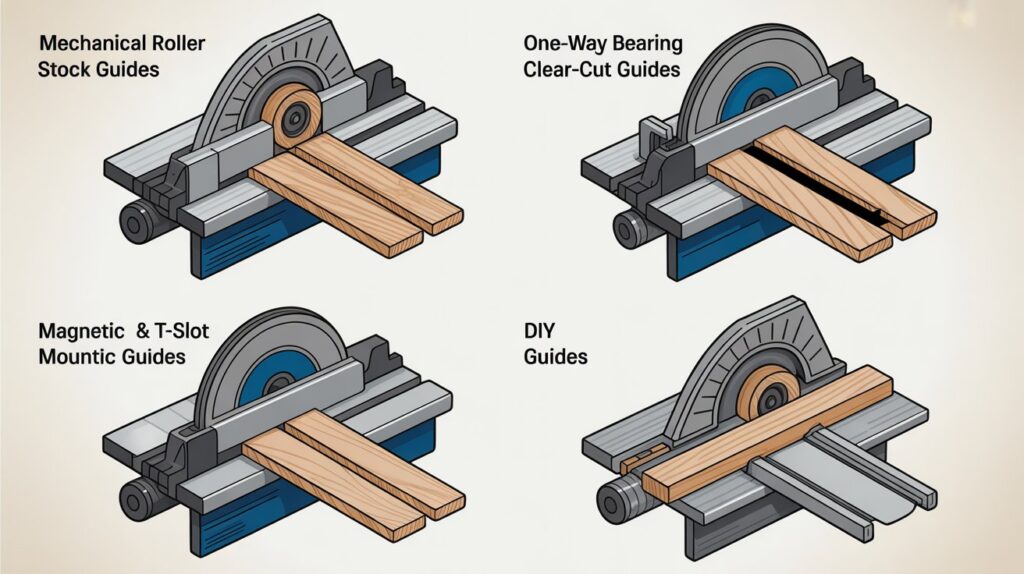
Selecting the right stock guides for a table saw depends on the type of woodworking you perform and the level of precision you require. Each type of guide is designed to enhance accuracy, stability, and safety, making them among the best table saw accessories for accuracy and control.
1. Mechanical Roller Stock Guides
Mechanical roller stock guides are the most common type used on table saw fence guides. They use angled rollers that apply consistent downward and inward pressure, keeping the workpiece tight against the fence. These stock guides for a table saw are durable, reliable, and easy to adjust for different material thicknesses.
2. One-Way Bearing or Clear-Cut Stock Guides
Clear-cut stock guides feature one-way bearings that allow the wood to move smoothly forward but prevent any backward motion. This unique design enhances both safety and precision, classifying them as essential table saw safety tools. They are ideal for long or wide cuts that require steady material feed.
3. Magnetic and T-Slot Mounted Stock Guides
Some stock guides for a table saw attach magnetically or via T-slots on the fence system. These versions are quick to install and remove, making them highly convenient for users who switch between various cutting setups. They provide excellent grip and are compatible with most table saw fence guides.
4. DIY Stock Guides
For woodworkers who prefer customization, DIY stock guides for a table saw can be built using basic rollers, bearings, and brackets. While not as advanced as clear-cut stock guides, they still provide adequate pressure and alignment for smaller projects.
Top Brands and Models to Consider
Choosing high-quality stock guides for a table saw ensures greater precision, smoother operation, and long-term reliability. The following brands are recognized for their exceptional design, safety, and durability, making them some of the best table saw accessories for accuracy available today.
JessEm Clear-Cut Stock Guides
Clear-cut stock guides by JessEm are among the most trusted options in woodworking. They use precision one-way bearings that allow wood to move forward smoothly while preventing backward kick. This system provides stable pressure against table saw fence guides, improving cut consistency and safety. Their solid aluminum construction ensures longevity and resistance to wear.
Toolcool Precision Stock Guides
Toolcool offers durable and affordable stock guides for a table saw suitable for both beginners and professionals. These guides are easy to mount on T-slot fences and provide reliable downward pressure. They are also valued as effective table saw safety tools, minimizing kickback while maintaining consistent board alignment.
Rockler and Bora Stock Guides
Rockler and Bora produce versatile table saw fence guides and stock guide systems known for their accuracy and ease of adjustment. Their designs focus on user comfort, allowing smooth feeding without compromising safety. These models are excellent options for woodworkers seeking balance between performance and affordability.
DIY and Aftermarket Options
For those who prefer customization, many woodworkers create their own stock guides for a table saw using high-quality rollers and brackets. While not as advanced as commercial clear-cut stock guides, well-built DIY versions can still offer dependable accuracy and support during cutting tasks.
Key Features to Compare
When selecting stock guides for a table saw, comparing essential features helps ensure the best performance, safety, and accuracy. The right combination of design and functionality can turn an ordinary saw setup into a professional cutting system. Below are the most important factors to evaluate when choosing among the best table saw accessories for accuracy.
Build Quality and Materials
Durability is vital in stock guides for a table saw. Look for anodized aluminum or steel construction, as these materials resist wear and maintain alignment over time. High-quality rubber or urethane rollers provide firm grip without damaging the work surface, improving contact with table saw fence guides.
Mounting Compatibility
Not all stock guides fit every table saw. Ensure that your guides can be securely mounted on table saw fence guides or T-slot tracks. Adjustable mounting brackets make installation easier, particularly if you plan to learn how to install stock guides on a table saw with different fence types.
Roller Design and Angle
The roller design directly affects how well the material feeds. Angled rollers on clear-cut stock guides apply forward and inward pressure simultaneously, ensuring precise cuts and minimizing blade drift. This feature makes them highly reliable table saw safety tools.
Height and Pressure Adjustment
A good pair of stock guides for a table saw allows you to control roller height and pressure to match material thickness. Proper adjustment reduces drag, improves feeding, and enhances accuracy, especially when working with long boards or sheet goods.
Safety and Stability
Safety is always a priority. Stock guides for a table saw that include anti-kickback features or one-way bearings offer greater control. Combined with solid mounting and durable rollers, these features make them among the safest table saw accessories for accuracy on the market.
How to Install Stock Guides for a Table Saw
Learning how to install stock guides for a table saw is essential for achieving both accuracy and safety during cutting operations. Proper installation ensures that the guides apply the right amount of pressure to the workpiece, keeping it tight against the fence while allowing smooth forward movement.
Step 1: Prepare the Table Saw Fence
Before mounting, clean and inspect the table saw fence guides to remove dust or debris. A clean surface guarantees better attachment and alignment for your stock guides for a table saw. Make sure the fence is locked securely and parallel to the saw blade.
Step 2: Attach the Mounting Brackets
Most stock guides for a table saw come with adjustable brackets or T-slot fittings. Position these brackets along the fence so that the guides will sit above the cutting surface. Tighten them evenly to ensure stability. If using clear-cut stock guides, align their angled rollers toward the fence for proper feed direction.
Step 3: Adjust Height and Angle
Set the roller height to lightly touch the surface of your material. This adjustment provides steady downward pressure without restricting movement. The slight inward angle of stock guides for a table saw pulls the board gently against the fence, improving precision.
Step 4: Test Alignment and Movement
Feed a sample board through to confirm that the rollers move smoothly in one direction. High-quality models, such as clear-cut stock guides, include one-way bearings that allow forward feed while preventing backward motion. This setup enhances control and functions as one of the most reliable table saw safety tools.
Step 5: Secure and Recheck Settings
Once aligned, tighten all bolts and test again using short passes. Make small adjustments if necessary to maintain proper contact between the rollers and the table saw fence guides.
How to Install Stock Guides for a Table Saw
Learning how to install stock guides for a table saw is essential for achieving both accuracy and safety during cutting operations. Proper installation ensures that the guides apply the right amount of pressure to the workpiece, keeping it tight against the fence while allowing smooth forward movement.
Step 1: Prepare the Table Saw Fence
Before mounting, clean and inspect the table saw fence guides to remove dust or debris. A clean surface guarantees better attachment and alignment for your stock guides for a table saw. Make sure the fence is locked securely and parallel to the saw blade.
Step 2: Attach the Mounting Brackets
Most stock guides for a table saw come with adjustable brackets or T-slot fittings. Position these brackets along the fence so that the guides will sit above the cutting surface. Tighten them evenly to ensure stability. If using clear-cut stock guides, align their angled rollers toward the fence for proper feed direction.
Step 3: Adjust Height and Angle
Set the roller height to lightly touch the surface of your material. This adjustment provides steady downward pressure without restricting movement. The slight inward angle of stock guides for a table saw pulls the board gently against the fence, improving precision.
Step 4: Test Alignment and Movement
Feed a sample board through to confirm that the rollers move smoothly in one direction. High-quality models, such as clear-cut stock guides, include one-way bearings that allow forward feed while preventing backward motion. This setup enhances control and functions as one of the most reliable table saw safety tools.
Step 5: Secure and Recheck Settings
Once aligned, tighten all bolts and test again using short passes. Make small adjustments if necessary to maintain proper contact between the rollers and the table saw fence guides.
Tips for Getting the Best Results
To achieve maximum precision and safety when using stock guides for a table saw, correct setup and maintenance are essential. Following these professional tips will ensure smoother cuts, longer tool life, and improved overall performance.
1. Maintain Proper Roller Height and Pressure
Ensure the rollers of your stock guides for a table saw lightly touch the surface of the material. Excessive pressure can slow down feeding, while too little contact reduces stability. This balance helps improve performance alongside table saw fence guides and enhances cutting accuracy.
2. Keep Rollers and Fence Clean
Dust or resin buildup on rollers can reduce grip and cause uneven feeding. Regularly clean the stock guides for a table saw and the table saw fence guides to maintain consistent pressure. Clean surfaces also extend the life of your equipment and help ensure accurate alignment.
3. Use Push Sticks and Safety Tools
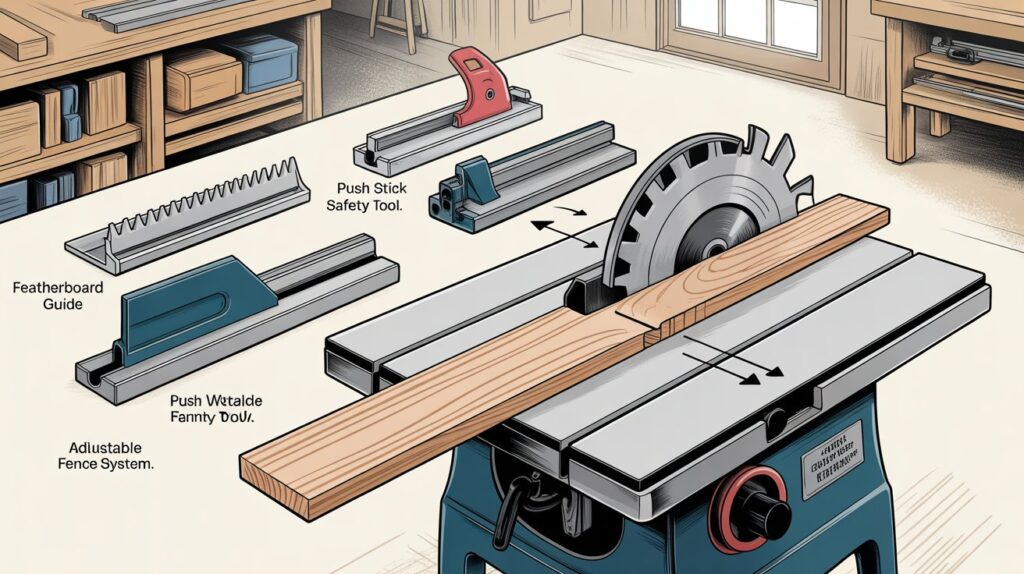
Always pair your guides with reliable table saw safety tools such as push sticks or featherboards. This practice keeps your hands at a safe distance from the blade while maintaining control. Combining these tools with clear-cut stock guides provides a stable, secure cutting environment.
4. Check Alignment Frequently
Even minor shifts can affect precision. Inspect your stock guides for a table saw regularly to confirm they remain parallel to the fence. Proper alignment guarantees smoother feeding and straighter cuts.
5. Adjust for Material Thickness
When cutting materials of varying thickness, adjust both roller height and angle accordingly. This ensures steady contact and consistent downward pressure, which are essential for accurate results with the best table saw accessories for accuracy.
Common Mistakes to Avoid
When using stock guides for a table saw, proper setup and handling are essential for safety and precision. Avoiding the following common errors will help extend the life of your guides and ensure the best performance from your table saw fence guides and related accessories.
1. Incorrect Roller Pressure and Height
One of the most frequent mistakes is setting the rollers too high or applying too much pressure. When stock guides for a table saw are not correctly adjusted, they can cause drag, uneven feeding, or reduced accuracy. The rollers should apply light, consistent pressure to maintain firm contact with the fence and board surface.
2. Misaligned Stock Guides
If the guides are not parallel to the table saw fence guides, the material may drift, leading to inaccurate cuts. Always check alignment before operation. Proper positioning allows clear-cut stock guides and similar models to maintain smooth forward feed and prevent lateral movement.
3. Ignoring Regular Cleaning and Maintenance
Dust buildup affects both the grip and movement of stock guides for a table saw. Clean the rollers, brackets, and the table saw safety tools regularly to avoid friction or slippage. Clean components ensure better precision and longer equipment life.
4. Using Incompatible Mounting Systems
Another mistake is attempting to mount guides on fences that lack proper T-slots or brackets. Before installation, confirm that your stock guides for a table saw are compatible with your setup. Refer to manufacturer instructions for how to install stock guides for a table saw correctly to prevent damage or instability.
5. Overlooking Safety Precautions
Even with high-quality guides, safety should never be ignored. Always use push sticks and other table saw safety tools to keep hands clear of the blade. Stock guides for a table saw are designed to assist, not replace, safe cutting practices.
DIY Option: Make Your Own Stock Guides for a Table Saw
Creating your own stock guides for a table saw is a practical and cost-effective solution for woodworkers who prefer customization. A DIY version allows you to design guides that perfectly fit your table saw fence guides and meet your specific cutting needs.
Materials Required for DIY Stock Guides
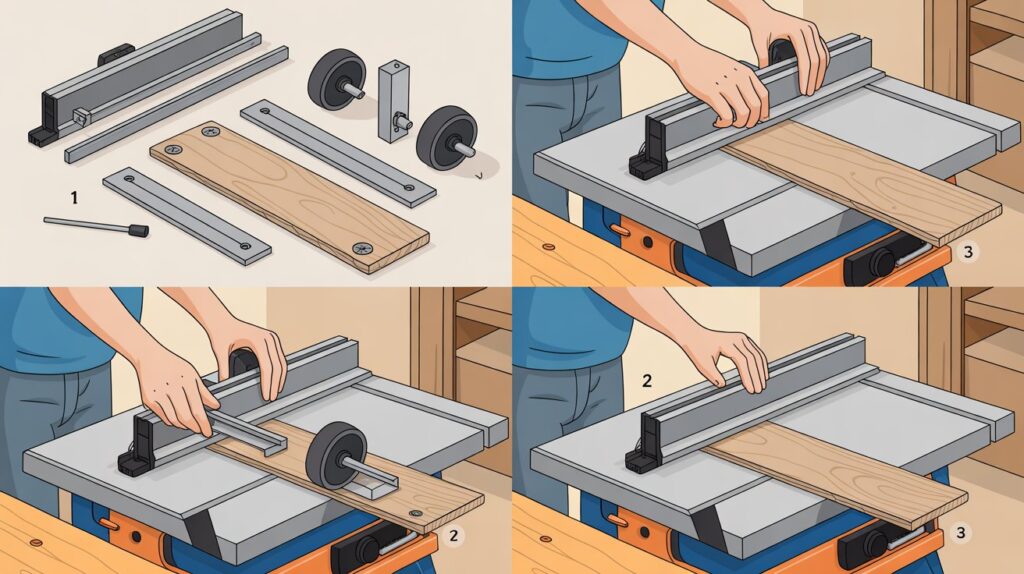
To make stock guides for a table saw, you will need durable components such as rubber rollers, bearings, bolts, and mounting brackets. These materials can be assembled using basic hand tools. Choosing high-quality rollers ensures smooth operation and reliable grip, comparable to professional clear-cut stock guides.
Step-by-Step Construction Process
- Prepare the Mounting Base – Cut an aluminum or hardwood strip that fits securely on your table saw fence guides.
- Attach the Rollers – Mount the rollers at a slight inward angle to keep the workpiece pressed firmly against the fence.
- Install Adjustable Brackets – Use adjustable bolts or slots to modify roller height for different material thicknesses.
- Test Alignment and Pressure – Run a sample board to ensure the DIY stock guides for a table saw apply consistent downward and inward pressure without excess drag.
Benefits of DIY Stock Guides
A homemade system can function as one of the best table saw accessories for accuracy if built properly. It enhances safety, reduces kickback, and increases control during long cuts. Paired with table saw safety tools, a DIY setup provides both protection and precision.
Maintenance and Adjustment Tips
Keep rollers clean and inspect alignment regularly to maintain performance. The same principles used for professional stock guides for a table saw apply to DIY builds: correct height, angle, and smooth feeding ensure consistent accuracy.
Frequently Asked Questions (FAQ)
1. Are Stock Guides for a Table Saw Worth It?
Yes. Stock guides for a table saw significantly improve cutting precision, reduce kickback, and enhance safety. They maintain consistent pressure on the workpiece, ensuring it stays aligned with the table saw fence guides. For anyone seeking the best table saw accessories for accuracy, stock guides are a valuable investment.
2. Can I Use Stock Guides on Any Table Saw?
Most stock guides for a table saw are compatible with standard fences, especially those equipped with T-slots or mounting tracks. However, always check the manufacturer’s specifications before installation. Some fences may require adapters or modifications for secure fitting.
3. How Do I Install Stock Guides on a Table Saw?
To learn how to install stock guides for a table saw, begin by mounting the brackets onto the fence, adjusting roller height, and setting the correct inward angle. Ensure that the rollers apply gentle downward pressure for smooth feeding. Proper alignment guarantees both safety and accuracy.
4. What Is the Difference Between Stock Guides and Featherboards?
While both tools improve control, clear-cut stock guides use bearings or rollers to pull the material toward the fence, offering smoother feeding. Featherboards rely on flexible fingers to hold stock in place. Many woodworkers use both together for maximum safety and precision with their table saw safety tools.
5. How Often Should I Clean or Adjust My Stock Guides?
It is best to clean your stock guides for a table saw after every major cutting session. Remove dust and resin buildup from the rollers and brackets to maintain optimal grip. Check alignment regularly to prevent feed resistance or uneven cuts.
Conclusion
Using stock guides for a table saw is essential for any woodworker who values precision, safety, and efficiency. These guides keep material aligned with the table saw fence guides, reduce the risk of kickback, and improve overall cutting accuracy. Whether you choose professional clear-cut stock guides, other high-quality brands, or even a DIY setup, investing in the right table saw safety tools and best table saw accessories for accuracy will enhance your woodworking projects and ensure safer, cleaner cuts every time.