
Introduction
What are the 50 most common gardening tools? This is an important question for anyone who wants to start or improve their gardening journey. Gardening becomes much easier and more effective when you understand the right tools and how to use them properly.
From digging and planting to watering and cutting, every task in the garden requires specific equipment. Knowing the essential tools helps you work faster, keep your plants healthy, and maintain your garden in a better way.
In this guide, you will learn about the most important gardening tools and their uses in a simple and easy-to-understand way.
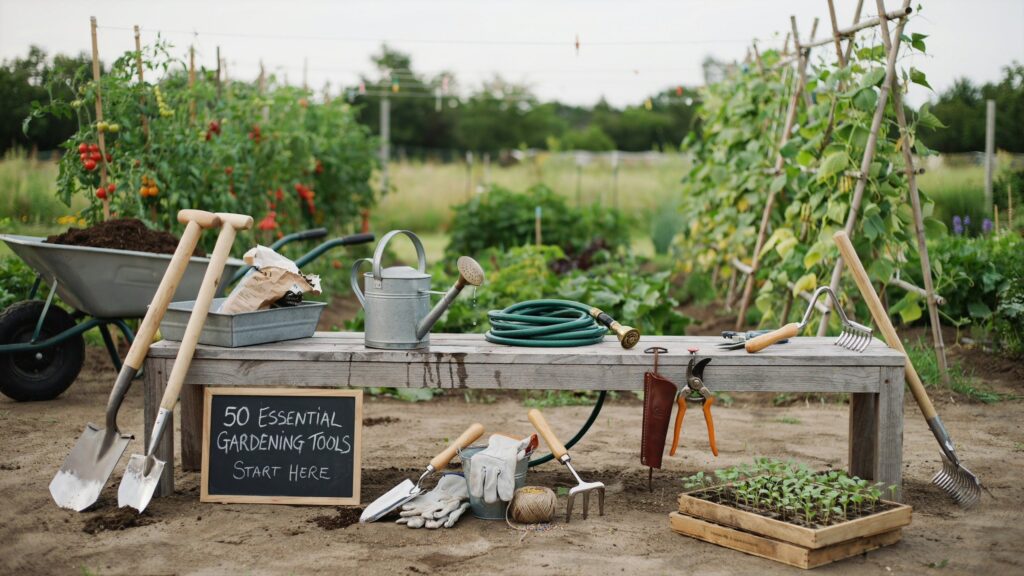
Table of Contents
Understanding the Main 50 Types of Gardening Tools
Below is a clear and simple list of the main tools for gardening, explained one by one for better understanding of their use and importance in everyday gardening.

1. Spade
A strong digging tool used for turning soil and preparing garden beds.
2. Shovel
Used for lifting and moving soil, compost, and sand efficiently.
3. Garden Fork
Helps in loosening compact soil and improving aeration.
4. Hand Trowel
A small tool for planting, digging holes, and transplanting seedlings.
5. Hoe
Used for removing weeds and breaking up soil surface.
6. Rake
Helps collect leaves and level soil for planting.
7. Garden Scissors
A basic example of cutting tools used in the garden for trimming small plants.
8. Pruning Shears
One of the most useful garden tools for cutting branches and shaping plants.
9. Loppers
Long-handled cutting tool for thick branches.
10. Pruning Saw
Used for cutting larger branches that shears cannot handle.
11. Hedge Shears
Ideal for shaping hedges and bushes evenly.
12. Grass Shears
Used for trimming grass edges and corners.
13. Watering Can
A simple tool for controlled watering of plants.
14. Garden Hose
Used for watering large garden areas efficiently.
15. Hose Nozzle
Controls water flow and spray pattern.
16. Sprinkler
Used for automatic and even watering of lawns.
17. Drip Irrigation Kit
A water-saving system for precise watering.
18. Hand Cultivator
Used for loosening soil around plants.
19. Weeder
Helps remove unwanted weeds from soil.
20. Dibber
Used for making holes for seeds and seedlings.
21. Bulb Planter
A tool designed for planting bulbs at correct depth.
22. Garden Knife
A multipurpose tool for cutting and planting tasks.
23. Soil Scoop
Used for transferring soil and compost.
24. Compost Fork
Helps in turning and mixing compost materials.
25. Wheelbarrow
Used for transporting heavy garden materials.
26. Garden Cart
Helps carry tools, soil, and plants easily.
27. Lawn Spreader
Used to distribute seeds, fertilizer, or soil evenly.
28. Compost Spreader
Helps in spreading compost across garden beds.
29. Plant Labels
Used for identifying plants and seeds.
30. Garden Twine
Used for tying plants and supporting growth.
31. Plant Ties
Soft ties used to support stems without damage.
32. Gloves
Protect hands while working in soil and plants.
33. Knee Pads
Provide comfort while working close to the ground.
34. Gardening Fork Hoe
Combines digging and loosening functions.
35. Hand Fork
A small version of a garden fork for precise work.
36. Soil Tester
Used to check soil pH and fertility levels.
37. Moisture Meter
Helps measure soil moisture for better watering.
38. Garden Apron
Used for carrying small tools and protecting clothes.
39. Leaf Blower
Clears leaves and garden waste quickly.
40. Hedge Trimmer
A powered tool for shaping large hedges.
41. Grafting Knife
Used for plant grafting and precise cutting tasks.
42. Pruning Knife
A sharp tool for detailed cutting work in plants.
43. Edging Tool
Used for creating clean lawn borders.
44. Soil Tamper
Helps in compacting soil after planting.
45. Watering Wand
Extends reach for watering hanging or distant plants.
46. Garden Hoe Rake Combo
A multi-use tool for digging and leveling soil.
47. Seed Spreader
Used to distribute seeds evenly in soil.
48. Plant Mister
Used for gentle watering of delicate plants.
49. Hand Weeding Fork
Helps remove deep-rooted weeds easily.
50. Gardening Tool Set
A complete set of essential gardening tools for beginners and professionals, covering planting, cutting, and maintenance needs.
This list represents basic gardening equipment and highlights the most important garden tool names and uses that every gardener should know. Professional gardeners often rely on these tools to maintain efficiency and precision in their work, especially when handling cutting tools used in the garden and other maintenance equipment.
Essential Digging and Soil Preparation Tools
Soil preparation is the foundation of successful gardening. The main tools for gardening in this category help improve soil structure, support healthy plant growth, and make planting easier. Below is a clear list of essential tools used for digging and soil preparation.
1. Spade
A primary digging tool used for turning soil, creating garden beds, and edging. It is one of the most useful garden tools for any gardener.
2. Shovel
Used for lifting, moving, and mixing soil, compost, and sand. It is commonly included in every list of basic gardening equipment.
3. Garden Fork
Helps break compact soil and improve air circulation, making it ideal for soil aeration and preparation.
4. Hand Trowel
A small but important tool used for planting seeds, digging small holes, and transplanting seedlings. It is one of the first gardening tools that new gardeners typically learn to use.
5. Hoe
Used for loosening soil and removing weeds from the surface. It is one of the essential garden cultivation tools for maintaining soil health.
Common Cutting Tools Used in the Garden
Cutting tools are an essential part of main tools for gardening because they help maintain plant health, shape growth, and remove unwanted parts. These tools are widely used in both home gardens and by professionals.
1. Pruning Shears
One of the most useful garden tools for trimming small branches and shaping plants. It is commonly used in everyday garden maintenance.
2. Loppers
Long-handled cutting tools designed for thick branches. They are often used in pruning and trimming tools category.
3. Hedge Shears
Used for shaping hedges and bushes evenly, making them a key part of garden maintenance tools.
4. Pruning Saw
A strong cutting tool used for removing larger branches that cannot be cut with shears.
5. Garden Scissors
Light cutting tool used for trimming flowers, herbs, and soft stems.
6. Grass Shears
Designed for precise trimming of grass edges and lawn borders.
7. Grafting Knife
Used for plant grafting and precise cutting tasks in plant propagation.
8. Pruning Knife
A sharp tool used for detailed cutting and plant care work.
Cutting tools are an important category when understanding what tools do professional gardeners use, as they ensure plant health and proper garden shaping.
Watering and Irrigation Tools Every Gardener Needs
Watering tools are a key part of basic gardening equipment and play an important role in plant growth and survival. These tools help provide controlled and efficient water supply to plants of all types.
1. Watering Can
A simple and widely used tool for small gardens and home plants. It is one of the most useful garden tools for beginners.
2. Garden Hose
A flexible tool used for watering large garden areas quickly and efficiently.
3. Hose Nozzle
Controls water pressure and spray patterns for different watering needs.
4. Sprinkler
Used for automatic and even watering, especially in lawns and larger gardens.
5. Drip Irrigation System
A water-efficient system that delivers water directly to plant roots, commonly used in professional gardening.
6. Watering Wand
An extended tool used for reaching hanging plants and distant garden areas.
7. Plant Mister
Used for gentle watering of delicate plants and indoor gardening.
8. Rain Barrel System
Collects and stores rainwater for sustainable garden watering.
These watering tools are essential for anyone learning about name of garden tools and understanding what tools do professional gardeners use, as they ensure proper hydration and efficient water management in gardens.
Planting and Maintenance Tools
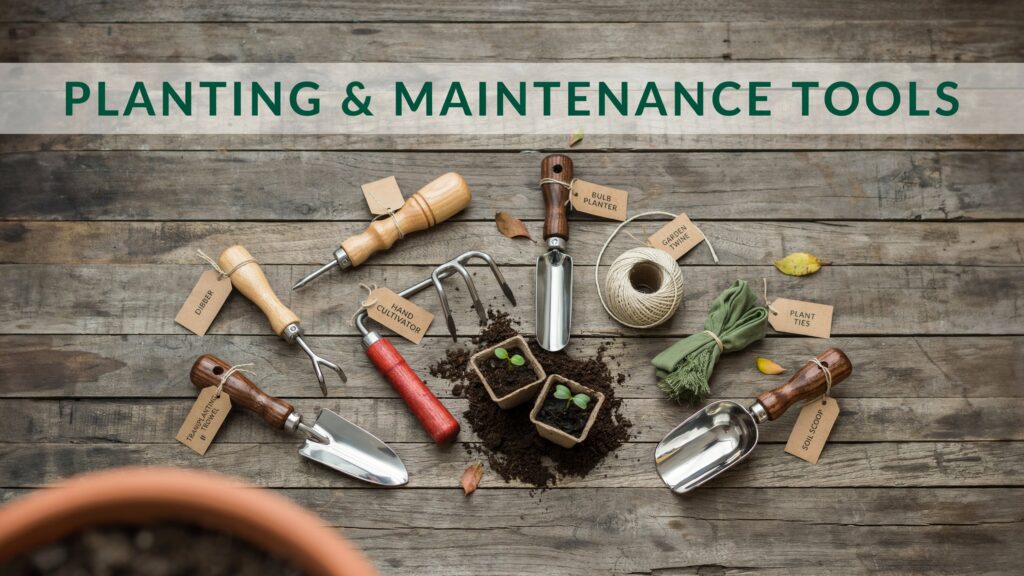
Planting and maintenance tools are important parts of basic gardening equipment because they help in seed planting, plant care, and regular garden upkeep. These tools make gardening easier and more efficient for both beginners and professionals.
1. Dibber
Used for making holes in soil for seeds and seedlings. It is one of the most useful garden tools for planting.
2. Bulb Planter
A specialized tool used for planting bulbs at the correct depth in soil.
3. Hand Weeder
Helps remove unwanted weeds from the root, keeping soil clean and healthy.
4. Hand Cultivator
Used to loosen soil around plants and improve aeration.
5. Garden Twine
A supportive tool used for tying plants and guiding their growth.
6. Plant Ties
Soft materials used to support stems without damaging plants.
7. Transplanting Trowel
Used for moving small plants safely from one place to another.
8. Soil Scoop
Helps in transferring soil, compost, or fertilizers during planting tasks.
These tools are essential for understanding name of garden tools and are commonly used in garden maintenance tools for daily gardening tasks.
Wheelbarrows, Carts, and Heavy-Duty Garden Equipment
Heavy-duty equipment is essential in gardening for transporting soil, plants, and materials. These tools are a key part of main tools for gardening, especially in larger gardens and professional landscaping work.
1. Wheelbarrow
A strong and simple transport tool used for carrying soil, compost, and garden waste. It is one of the most useful garden tools for heavy lifting.
2. Garden Cart
Used for moving tools, plants, and materials easily across the garden.
3. Utility Wagon
A larger transport tool used for carrying heavy loads in bigger gardens or farms.
4. Lawn Spreader
Used for evenly distributing seeds, fertilizer, or soil across large areas.
5. Compost Spreader
Helps in spreading compost evenly to improve soil fertility.
6. Hand Truck
A vertical transport tool used for moving heavy garden supplies.
7. Dump Cart
Used for carrying and unloading large amounts of soil or garden debris.
8. Trailer Cart
A heavy-duty tool attached to tractors or mowers for transporting materials.
These tools are widely used by professionals, helping answer the question what tools do professional gardeners use, especially when handling large-scale gardening tasks and heavy materials efficiently.
How to Choose the Right Gardening Tools for Your Needs
Choosing the right tools is important for efficiency, comfort, and better gardening results. The selection depends on garden size, plant type, and user experience. Below are key factors to consider when selecting most useful garden tools and garden cultivation tools.
1. Identify Your Gardening Needs
Understand whether you need tools for planting, digging, watering, or maintenance. This helps narrow down the main tools for gardening required for your garden.
2. Consider Garden Size
Small gardens need simple hand tools for gardeners, while larger spaces require advanced equipment like carts and spreaders.
3. Choose Quality Over Quantity
High-quality basic gardening equipment lasts longer and performs better than cheap alternatives.
4. Focus on Comfort and Ergonomics
Tools with comfortable grips and lightweight designs reduce fatigue during long gardening sessions.
5. Select Proper Cutting Tools
Good cutting tools used in the garden like pruning shears and loppers ensure healthy plant growth and clean cuts.
6. Check Tool Material
Stainless steel and rust-resistant materials are ideal for durability and long-term use.
7. Match Tools to Experience Level
Beginners should start with simple tools, while professionals may require specialized garden maintenance tools.
8. Consider Storage and Maintenance
Easy-to-clean and store tools improve long-term usability and efficiency.
9. Think About Multi-Purpose Tools
Multi-use tools reduce cost and save space while still covering essential gardening tasks.
10. Learn From Professional Practices
Understanding what tools do professional gardeners use can help you choose better equipment for advanced gardening needs.
Tool Maintenance and Storage Tips
Proper maintenance and storage of gardening tools is essential for keeping them in good condition, improving performance, and extending their lifespan. Well-maintained basic gardening equipment also ensures safer and more efficient gardening work.
1. Clean Tools After Every Use
Always remove soil, sap, and debris from tools after use. Clean tools are part of essential gardening tools care.
2. Dry Tools Properly
Moisture can cause rust, so drying tools is important after washing, especially for cutting tools used in the garden.
3. Sharpen Cutting Tools Regularly
Pruning shears, loppers, and knives should be sharpened to maintain clean and precise cuts. This is important for all pruning and trimming tools.
4. Oil Metal Parts
Applying oil on metal surfaces prevents rust and keeps tools working smoothly.
5. Store Tools in a Dry Place
Keep tools in a shed or storage box to protect them from weather damage and moisture.
6. Hang Tools When Possible
Hanging tools prevents damage and helps organize main tools for gardening efficiently.
7. Inspect Tools Regularly
Check for damage, loose handles, or rust to ensure safety during use.
8. Repair Damaged Tools Quickly
Fix broken handles or blades immediately to avoid further damage and maintain efficiency.
9. Organize Tools by Category
Separate garden maintenance tools, digging tools, and watering tools for easier access.
10. Avoid Leaving Tools Outdoors
Exposure to sun and rain reduces the lifespan of even the most useful garden tools.
11. Follow Manufacturer Guidelines
Each name of garden tools may have specific care instructions that should be followed for best performance.
Proper maintenance ensures that all garden cultivation tools and hand tools for gardeners remain reliable, safe, and long-lasting, supporting efficient gardening work throughout the seasons.
Conclosion
Understanding gardening tools is essential for building a healthy and productive garden. From digging soil to using cutting tools used in the garden, each tool plays an important role in maintaining plant growth and garden structure.
When you know the name of garden tools and their specific uses, it becomes easier to choose the right equipment for each task. Whether you are a beginner or an experienced gardener, having the right tools saves time, improves efficiency, and ensures better results.
By learning about the main tools for gardening and how to maintain them properly, you can create a more organized and successful gardening experience. Good tools combined with proper care will always lead to a healthier and more beautiful garden.
Frequently Asked Questions
Q1. What are the 50 most common gardening tools used by beginners?
Beginners usually use basic gardening equipment such as a spade, shovel, rake, hand trowel, pruning shears, watering can, and garden hose. These tools cover most essential gardening tasks like digging, planting, watering, and simple maintenance.
Q2. Why are cutting tools used in the garden so important?
Cutting tools used in the garden, such as pruning shears, loppers, and hedge trimmers, are important for maintaining plant health. They help remove dead branches, shape plants, and encourage better growth.
Q3. What are the main tools for gardening every gardener should have?
The main tools for gardening include digging tools (spade, fork), cutting tools, watering tools, and planting tools. These are considered essential gardening tools for both small and large gardens.
Q4. What tools do professional gardeners use most often?
Professional gardeners use advanced garden maintenance tools like hedge trimmers, drip irrigation systems, wheelbarrows, soil testers, and high-quality pruning tools to manage gardens efficiently.
Q5. How can I choose the most useful garden tools for my garden?
To choose the most useful garden tools, consider your garden size, plant type, and experience level. Focus on durable basic gardening equipment and tools that match your daily gardening tasks.