
Introduction
Cutting tools in gardening play a vital role in maintaining plant health, shaping landscapes, and ensuring efficient garden care. From simple pruning tasks to heavy branch cutting, these tools help gardeners manage plants with precision and ease. Understanding the right tools and their uses is essential for achieving better growth, cleaner cuts, and a well-maintained garden. This guide will help you explore everything about choosing, using, and maintaining the right cutting tools effectively.
Table of Contents
Understanding the Role of Cutting Tools for Gardening
Enhancing Overall Garden Productivity
Efficient use of gardening cutting tools directly improves plant health, leading to a more productive and visually appealing garden.
Supporting Plant Health Through Pruning Shears
Pruning shears are essential gardening cutting tools used for precise trimming. They help remove dead or diseased branches, allowing healthier growth and reducing the spread of plant infections.
Maintaining Shape with Hedge Shears
Hedge shears are commonly used in gardening cutting tools for shaping shrubs and hedges. They ensure even trimming, improving the visual structure of garden plants.
Managing Thick Branches with Loppers
Loppers are powerful tools in cutting tools for gardening, designed to cut thicker branches that hand pruners cannot handle. They are ideal for maintaining mature trees and woody plants.
Precision Cutting with Garden Scissors
Garden scissors are useful for delicate tasks such as trimming flowers and small plants. They are part of essential gardening cutting tools that ensure clean and controlled cuts.
Tree Maintenance Using Pruning Saws
Pruning saws are used for larger branches and tree maintenance. They help in safe removal of heavy limbs without damaging the plant structure.
Encouraging Healthy Growth Through Plant Maintenance
Proper use of cutting tools for gardening supports healthy plant development by removing weak or overcrowded stems, allowing better air circulation and sunlight exposure.
Reducing Disease Spread with Clean Cuts
Sharp gardening cutting tools create clean cuts that heal faster. This reduces the chances of fungal infections and bacterial spread in plants.
Improving Harvest Efficiency with Harvesting Knives
Harvesting knives are used to collect fruits and vegetables efficiently. They help avoid damage to crops while ensuring smooth harvesting.
Enhancing Lawn Edges with Grass Shears
Grass shears are specialized tools used to maintain clean lawn edges. They provide precision in trimming areas that larger tools cannot reach.
Supporting Landscape Design and Structure
Cutting tools for gardening play an important role in shaping garden layouts, helping maintain symmetry and design balance in landscapes.
Tool Selection Based on Plant Type
Choosing the right gardening cutting tools depends on plant type. Soft stems require scissors, while woody plants need stronger tools like loppers.
Reducing Physical Effort in Gardening Tasks
Well-designed cutting tools for gardening reduce manual effort, making it easier to perform repetitive pruning and trimming tasks.
Improving Airflow in Dense Plants
Using pruning tools helps remove overcrowded branches, improving airflow and reducing pest infestation risks.
Promoting Flowering and Fruit Production
Regular pruning with proper gardening cutting tools encourages better flowering and increases fruit yield in many plant species.
Supporting Seasonal Garden Maintenance
Different cutting tools for gardening are used in different seasons to prepare plants for growth, dormancy, or harvest.
Ensuring Safety During Gardening Work
Using sharp and well-maintained tools reduces accidental slips and improves control during cutting tasks.
Maintaining Garden Cleanliness
Regular trimming with gardening cutting tools keeps the garden clean by removing dry leaves, broken stems, and unwanted growth.
Improving Tool Efficiency Through Proper Usage
Understanding how each tool works ensures better performance and longer tool lifespan in gardening tasks.
Reducing Plant Stress with Proper Techniques
Correct use of cutting tools for gardening minimizes plant stress and promotes faster recovery after pruning.
Types of Cutting Tools in Gardening
Multi-Purpose Garden Cutting Tools
These tools combine different cutting functions, making them versatile for various gardening cutting tools tasks.
Bypass Pruning Shears
Bypass pruning shears are essential gardening cutting tools used for clean cuts on green stems. They work like scissors and are ideal for live plants.
Anvil Pruning Shears
Anvil shears are designed for cutting dry or dead branches. They provide strong pressure for tough stems in gardening cutting tools.
Loppers
Loppers are long-handled tools used for cutting thick branches. They are important cutting tools for gardening when dealing with woody plants.
Hedge Shears
Hedge shears help shape hedges and shrubs evenly. They are widely used in gardening cutting tools for landscape maintenance.
Pruning Saw
A pruning saw is used for cutting large branches that are too thick for loppers. It ensures clean cuts in garden pruning equipment.
Garden Scissors
Garden scissors are small, precise tools used for trimming flowers and herbs. They are part of essential gardening cutting tools.
Grass Shears
Grass shears are used for trimming lawn edges and hard-to-reach areas. They improve lawn appearance in cutting tools for gardening.
Harvesting Knives
Harvesting knives are used to pick fruits and vegetables without damaging plants. They are important plant cutting tools.
Grafting Knife
A grafting knife is used for plant propagation and precise cuts. It supports healthy plant maintenance and growth.
Secateurs
Secateurs are compact pruning tools used for cutting small branches. They are widely used gardening cutting tools.
Pole Pruners
Pole pruners help reach high branches without climbing. They are useful cutting tools for gardening in tall trees.
Grass Edging Shears
These tools are designed for clean lawn borders. They help maintain sharp edges in garden landscapes.
Flower Cutters
Flower cutters are used for harvesting blooms without damaging stems. They support healthy plant care.
Brush Cutters
Brush cutters are powerful tools used for clearing thick weeds and overgrown areas in gardens.
Hedge Trimmers (Manual)
Manual hedge trimmers are used for shaping small hedges with precision. They are traditional gardening cutting tools.
Electric Hedge Trimmers
Electric hedge trimmers provide fast trimming for larger hedges. They increase efficiency in garden maintenance.
Pruning Clippers
Clippers are used for light trimming tasks. They are simple but effective cutting tools for gardening.
Tree Loppers with Ratchet System
These loppers use a mechanical advantage system to cut thicker branches with less effort.
Topiary Shears
Topiary shears are used for decorative shaping of plants. They help create artistic garden designs.
50 Additional Types of Gardening Cutting Tools
Professional Tree Branch Shears
High-strength shears used in advanced tree care operations.
Long Reach Pruning Shears
Used for cutting higher branches without using a ladder, improving safety in garden maintenance.
Mini Pruning Scissors
Small precision tool used for delicate trimming of herbs and indoor plants.
Floral Snips
Designed for cutting flowers cleanly, often used in floral arrangements and plant care.
Deadheading Shears
Used to remove spent blooms to encourage more flowering in ornamental plants.
Handheld Hedge Clippers
Compact version of hedge shears used for small hedge trimming tasks.
Electric Pruners
Battery-powered tools that reduce effort when cutting multiple branches quickly.
Cordless Hedge Trimmers
Portable electric tools used for trimming large hedges efficiently.
Heavy-Duty Branch Cutters
Designed for thick branches in mature trees and shrubs.
Tree Pruning Clippers
Used specifically for controlled pruning of tree branches.
Fruit Picking Scissors
Help harvest fruits without damaging stems or surrounding branches.
Vine Cutters
Used for cutting climbing plants and vines in gardens and greenhouses.
Bonsai Pruning Scissors
Specialized tools for shaping and maintaining bonsai trees.
Root Pruning Shears
Used for trimming plant roots during transplantation.
Weed Cutting Scissors
Designed to remove unwanted weeds from tight spaces.
Garden Utility Knife
Multi-purpose knife used for cutting stems, twine, and small branches.
Pruning Loppers with Telescopic Handle
Extendable loppers for reaching distant branches safely.
Manual Grass Trimmers
Used for precise lawn edging and small grass patches.
Shrub Trimming Shears
Designed for shaping small to medium shrubs evenly.
Orchard Pruning Tools
Heavy-duty tools used in fruit orchards for branch management.
Hedge Sculpting Shears
Used for decorative hedge shaping and artistic garden designs.
Precision Bonsai Knives
Small knives used for detailed bonsai shaping work.
Bypass Loppers
Sharp cutting loppers used for clean cuts on live branches.
Anvil Loppers
Used for cutting dry and hard branches with strong force.
Garden Machete
Used for clearing dense vegetation and thick plant growth.
Pruning Hook Knife
Curved blade tool used for vine cutting and plant shaping.
Branch Pruning Snips
Small snips used for light branch trimming tasks.
Horticultural Scalpels
Very fine cutting tools used in plant propagation and grafting.
Stem Cutting Clippers
Used for propagation and controlled stem cutting.
Garden Secateur Variants
Different types of secateurs designed for various plant sizes.
Professional Landscaping Shears
Heavy-duty shears used in commercial garden maintenance.
Electric Grass Shears
Battery-powered shears used for fast lawn edge trimming.
Hand Pruning Saws (Foldable)
Portable saws used for safe storage and cutting thick branches.
Fixed Blade Pruning Knives
Strong knives used for tough plant cutting tasks.
Garden Edging Knives
Used for defining clean lawn and soil borders.
Multi-Head Pruning Tools
Tools with interchangeable heads for different cutting tasks.
High Reach Pole Clippers
Used for pruning tall trees safely from the ground.
Shrub Maintenance Clippers
Designed for regular trimming of decorative shrubs.
Garden Floral Cutters with Grip Lock
Ensure safe cutting and storage during flower harvesting.
Heavy Blade Hedge Shears
Used for dense and thick hedge cutting tasks.
Hand Pruners: The Most Essential Gardening Cutting Tool
Essential Role in Cutting Tools for Gardening
Hand pruners remain one of the most important cutting tools for gardening due to their versatility, precision, and ease of use.
Bypass Pruning Shears for Clean Cuts
Bypass pruning shears are widely used gardening cutting tools designed for cutting live stems. They work like scissors, making clean cuts that support healthy plant growth.
Anvil Pruners for Dry Branches
Anvil pruners are effective cutting tools for gardening when dealing with dry or dead branches. They apply strong pressure to break tougher plant material.
Secateurs for Everyday Pruning Tasks
Secateurs are compact gardening cutting tools used for small branch trimming. They are essential for routine garden maintenance and plant shaping.
Ergonomic Hand Pruners for Comfort
Ergonomic designs reduce hand strain during long gardening tasks. These tools improve efficiency in regular plant maintenance work.
Ratchet Pruners for Thick Stems
Ratchet pruners use a step-cut mechanism, making it easier to cut thicker stems with less effort in gardening cutting tools.
Spring-Loaded Pruners for Fast Cutting
Spring-loaded designs help open blades automatically after each cut, improving speed and reducing fatigue.
Precision Pruning Shears for Flower Care
These tools are ideal for trimming flowers and delicate plants, ensuring clean cuts without damaging stems.
Heavy-Duty Hand Pruners for Tough Branches
Designed for stronger cutting tasks, these pruners handle thicker branches in shrubs and small trees.
Non-Slip Grip Pruners for Safety
Rubber-coated handles provide better control and reduce slipping during wet or long gardening sessions.
Stainless Steel Blade Pruners for Durability
Stainless steel blades resist rust and maintain sharpness, making them long-lasting gardening cutting tools.
Gardening Cutting Tools for Plant Maintenance
Hand pruners play a key role in general plant maintenance, helping remove unwanted stems and improve plant structure.
Tools for Trimming Plants in Small Spaces
Hand pruners are perfect cutting tools for gardening in tight areas where larger tools cannot be used effectively.
Pruning Shears for Healthy Plant Growth
Regular use of pruning shears encourages better airflow and sunlight exposure, supporting healthier plants.
Lightweight Pruners for Easy Handling
Lightweight designs make it easier to perform repeated trimming tasks without fatigue.
Bypass Secateurs for Live Branches
These tools are specifically designed for green stems, ensuring smooth cuts and reduced plant damage.
Anvil Secateurs for Hard Stems
Used for tougher stems, anvil secateurs provide strong cutting force for dry or woody branches.
Multi-Purpose Garden Scissors
Garden scissors extend functionality beyond pruning, assisting in harvesting and light trimming tasks.
Blade Sharpened Pruners for Clean Cuts
Sharp blades reduce tearing and help plants heal faster after pruning.
Hand Pruners for Seasonal Gardening Work
These tools are essential for seasonal trimming, shaping, and plant preparation.
Specialized Cutting Tools for Gardening Tasks
Precision Landscaping Shears for Professional Work
Landscaping shears are heavy-duty tools used in professional gardening for detailed shaping and maintenance work.
Hedge Shears for Precise Shaping
Hedge shears are essential gardening cutting tools used for shaping hedges and shrubs evenly, improving overall landscape appearance.
Grass Shears for Lawn Edging
Grass shears are designed for trimming lawn edges and tight corners where larger tools cannot reach, improving garden neatness.
Pruning Saw for Thick Branch Removal
A pruning saw is used for cutting large and hard branches that cannot be handled by regular pruning shears.
Garden Scissors for Light Trimming
Garden scissors are useful cutting tools for gardening tasks like trimming flowers, herbs, and small plants with precision.
Harvesting Knives for Crops
Harvesting knives are designed for collecting fruits and vegetables without damaging stems or surrounding plants.
Flower Cutting Scissors for Delicate Plants
These scissors are used for cutting flowers cleanly, making them ideal for floral arrangements and plant care.
Grafting Knives for Plant Propagation
Grafting knives are specialized tools used in plant propagation to make precise cuts for successful grafting.
Pole Pruners for High Branches
Pole pruners help reach tall branches safely without climbing, making them important cutting tools for gardening in trees.
Brush Cutters for Dense Vegetation
Brush cutters are powerful tools used for clearing thick weeds, shrubs, and overgrown areas.
Topiary Shears for Decorative Designs
Topiary shears are used for artistic shaping of plants, helping create decorative garden structures.
Hedge Trimmers for Fast Cutting
Hedge trimmers are efficient gardening cutting tools used for quickly trimming large hedges and shrubs.
Electric Pruning Shears for Efficiency
Electric pruning shears reduce manual effort and are ideal for repetitive cutting tasks in gardens.
Bypass Loppers for Clean Branch Cuts
Bypass loppers are designed for cutting live branches cleanly without damaging plant tissue.
Anvil Loppers for Dry Wood
Anvil loppers are used for cutting dry and hard branches, offering strong cutting force.
Root Pruning Tools for Transplanting
These tools help trim plant roots carefully during transplanting, ensuring better plant survival.
Vine Cutters for Climbing Plants
Vine cutters are designed for controlling and trimming climbing plants and garden vines.
Deadheading Tools for Flower Maintenance
Deadheading tools remove faded flowers to encourage new blooms and healthier growth.
Shrub Clippers for Regular Maintenance
Shrub clippers are used for maintaining shape and density in decorative shrubs.
Multi-Purpose Garden Cutting Tools for Versatility
These tools combine multiple cutting functions, making them useful for various gardening tasks.
How to Choose the Right Cutting Tools in Gardening
Prioritize Safety and Efficiency Together
The best gardening cutting tools combine safety features with efficient cutting performance for better gardening results.
Identify Your Gardening Needs First
Before selecting gardening cutting tools, understand your garden size, plant types, and maintenance requirements. This helps you choose the right tools for trimming plants effectively.
Match Tools with Plant Types
Soft-stem plants require garden scissors or pruning shears, while woody plants need stronger cutting tools for gardening like loppers or pruning saws.
Choose Quality Blade Material
Stainless steel blades are preferred in gardening cutting tools because they stay sharp longer and resist rust, ensuring clean and precise cuts.
Check Ergonomic Handle Design
Comfortable handles reduce hand strain during long gardening sessions and improve control while using garden pruning equipment.
Select Lightweight Tools for Easy Use
Lightweight tools are easier to handle and ideal for regular plant maintenance tasks, especially in small home gardens.
Consider Cutting Capacity of Tools
Each tool has a specific cutting thickness limit. Choose tools that match the branch size to avoid damage and improve efficiency.
Look for Safety Lock Features
Safety locks prevent accidental injuries and make storage safer when handling cutting tools for gardening.
Evaluate Tool Sharpness and Edge Quality
Sharp blades ensure clean cuts, which support healthy plant growth and reduce disease spread in gardening cutting tools.
Choose Tools Based on Garden Size
Large gardens require heavy-duty tools like hedge shears and loppers, while small gardens need simple hand pruners and scissors.
Focus on Maintenance Requirements
Tools that are easy to clean and sharpen last longer and perform better in regular garden maintenance tasks.
Check Durability and Build Quality
Strong materials increase the lifespan of gardening cutting tools, making them reliable for long-term use.
Select Tools for Specific Gardening Tasks
Use specialized cutting tools for gardening such as hedge trimmers for shaping and pruning saws for heavy branches.
Ensure Comfortable Grip for Better Control
Non-slip grips improve handling and safety during wet or long gardening work.
Consider Manual vs Electric Tools
Manual tools offer precision, while electric cutting tools for gardening provide speed and efficiency for larger tasks.
Check Weight Balance of Tools
Well-balanced tools reduce fatigue and allow smoother trimming of plants and shrubs.
Look for Multi-Purpose Tools
Multi-use gardening cutting tools reduce the need for multiple tools and increase convenience.
Assess Blade Sharpness Retention
Tools that maintain sharp edges longer are more efficient for regular trimming and pruning work.
Choose Tools Based on User Experience Level
Beginners should use simple garden scissors, while professionals may prefer advanced pruning equipment.
Compare Tool Brands and Quality Standards
Reliable brands usually offer better performance, safety, and durability in cutting tools for gardening.
Maintenance and Care of Gardening Cutting Tools
Maintain a Regular Care Routine
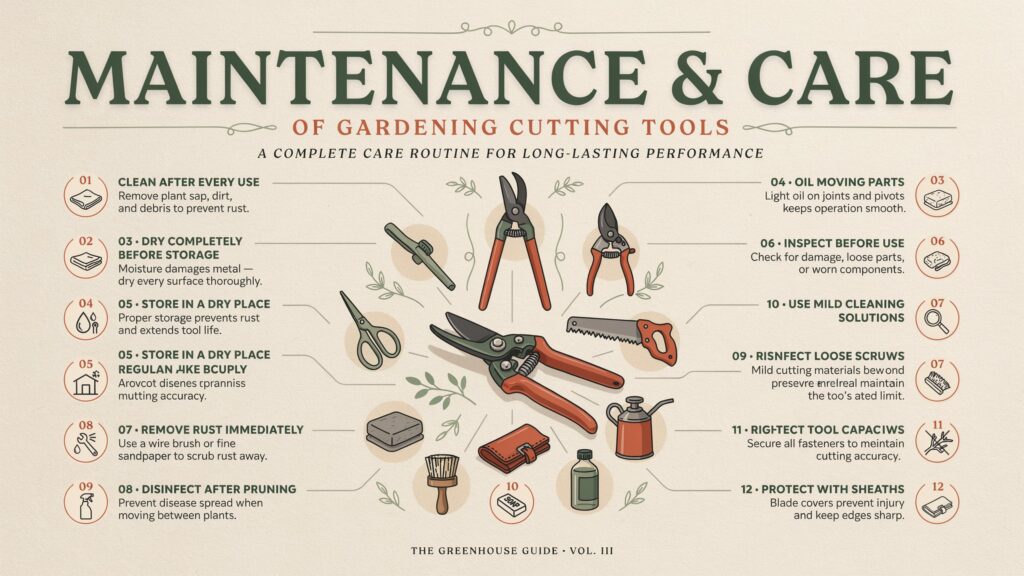
Consistent maintenance ensures all cutting tools for gardening remain effective, safe, and long-lasting.
Clean Tools After Every Use
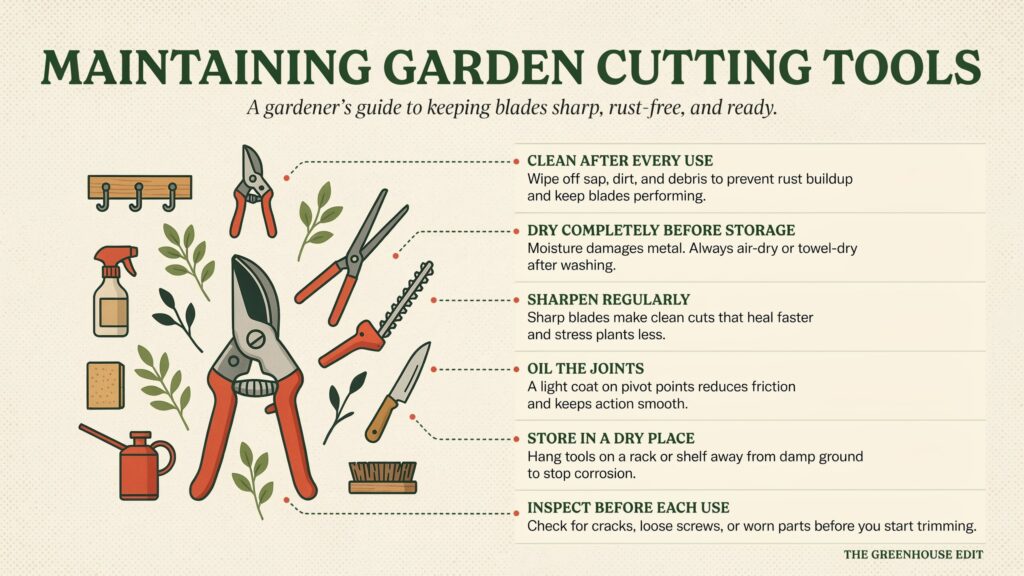
Regular cleaning of gardening cutting tools removes plant sap, dirt, and debris, preventing rust and improving tool performance.
Dry Tools Completely Before Storage
Moisture can damage metal parts, so drying cutting tools for gardening after washing is essential for long-term durability.
Sharpen Blades Regularly
Sharp blades ensure clean cuts in pruning shears and other gardening cutting tools, reducing stress on plants and improving efficiency.
Oil Moving Parts for Smooth Operation
Applying light oil to joints and blades helps reduce friction and keeps garden pruning equipment working smoothly.
Store Tools in a Dry Place
Proper storage prevents rust and corrosion, extending the lifespan of cutting tools for gardening.
Inspect Tools Before Use
Checking for damage or loose parts ensures safety and better performance during trimming plants or branches.
Remove Rust Immediately
Rust should be cleaned using a wire brush or sandpaper to maintain the effectiveness of gardening cutting tools.
Disinfect Blades After Pruning
Disinfecting prevents the spread of plant diseases, especially when using pruning shears on multiple plants.
Tighten Loose Screws and Joints
Loose parts can reduce cutting accuracy, so regular tightening is important for all garden cutting tools.
Use Proper Cleaning Solutions
Mild soap or alcohol-based cleaners help maintain hygiene in cutting tools for gardening without damaging metal surfaces.
Avoid Cutting Hard Materials Beyond Capacity
Using tools beyond their limit can damage blades and reduce efficiency in plant maintenance tasks.
Protect Tools with Covers or Sheaths
Blade covers prevent accidental injury and keep gardening cutting tools sharp during storage.
Keep Handles Clean and Secure
Clean handles improve grip and reduce slipping while using pruning and trimming tools.
Lubricate Rust-Prone Areas Regularly
Lubrication prevents corrosion and ensures smooth movement in garden pruning equipment.
Separate Tools by Usage Type
Keeping tools organized prevents damage and makes it easier to select cutting tools for gardening tasks.
Replace Damaged Blades When Needed
Worn blades reduce cutting efficiency, so replacement ensures better performance and cleaner cuts.
Avoid Leaving Tools Outdoors
Exposure to weather conditions can quickly damage gardening cutting tools and reduce their lifespan.
Check Alignment of Blades
Proper alignment ensures precise cuts and reduces strain on both plants and tools.
Use Tools Only for Intended Purpose
Using tools correctly prevents unnecessary wear and maintains efficiency in trimming plants and shrubs.
Safety Tips When Using Cutting Tools for Gardening
Store Tools in a Dry and Locked Place
Safe storage prevents unauthorized access and keeps cutting tools for gardening secure and long-lasting.
Wear Protective Gloves During Use
Protective gloves reduce the risk of cuts and improve grip while handling gardening cutting tools during trimming tasks.
Use Safety Glasses for Eye Protection
Safety glasses protect your eyes from flying debris when using pruning shears or other garden cutting tools.
Keep Blades Sharp for Safer Cutting
Sharp blades in cutting tools for gardening ensure clean cuts and reduce the chance of slipping or accidents.
Inspect Tools Before Each Use
Checking for cracks, loose parts, or rust ensures safer operation of gardening cutting tools.
Use the Right Tool for Each Task
Selecting proper cutting tools for gardening prevents misuse and reduces the risk of injury or plant damage.
Maintain a Stable Working Position
Always stand on firm ground while using garden pruning equipment to avoid losing balance during cutting tasks.
Keep Hands Away from Blades
Proper handling techniques reduce accidental cuts when using pruning shears and other sharp tools.
Do Not Use Damaged Tools
Broken or worn-out gardening cutting tools should be repaired or replaced immediately to prevent accidents.
Store Tools Safely After Use
Proper storage with blade covers prevents injuries and keeps cutting tools for gardening in safe condition.
Clean Tools After Each Gardening Session
Clean tools reduce buildup that can affect performance and increase safety risks during use.
Avoid Cutting Wet or Slippery Branches
Wet plants can cause slipping of garden cutting tools, increasing the chance of injury.
Use Both Hands for Larger Tools
Loppers and pruning saws require two-hand control for better stability and safer cutting.
Keep Children Away from Tools
Gardening cutting tools should always be kept out of reach of children for safety reasons.
Work in Good Lighting Conditions
Proper lighting improves visibility and reduces mistakes when using plant cutting tools.
Do Not Rush While Cutting Plants
Slow and controlled movements ensure safer handling of trimming tools for gardening.
Secure Loose Clothing and Hair
Loose clothing or hair can get caught in garden pruning equipment, causing accidents.
Follow Proper Cutting Techniques
Using correct angles and pressure improves safety and prevents damage to plants and tools.
Avoid Overreaching While Pruning
Using long-reach tools instead of stretching prevents loss of balance and injury.
Disinfect Tools After Diseased Plants
Cleaning blades reduces contamination risks when using gardening cutting tools across multiple plants.
Common Mistakes Gardeners Make with Cutting Tools
Rushing Through Gardening Tasks
Hurrying increases mistakes and reduces accuracy when using gardening cutting tools for plant care.
Using Dull Blades on Plants
Dull gardening cutting tools tear plant tissue instead of making clean cuts, which slows healing and increases disease risk.
Choosing the Wrong Tool for the Task
Using improper cutting tools for gardening, such as scissors for thick branches, can damage both plants and tools.
Ignoring Regular Maintenance
Failing to clean and oil garden pruning equipment reduces efficiency and shortens tool lifespan.
Overcutting Healthy Branches
Removing too much healthy growth can weaken plants and disrupt natural growth patterns.
Not Disinfecting Tools Between Uses
Skipping disinfection allows the spread of plant diseases through gardening cutting tools.
Applying Excess Force While Cutting
Forcing blades through thick branches can break tools and create unsafe working conditions.
Using Incorrect Cutting Angles
Wrong cutting angles damage plant stems and reduce the effectiveness of plant cutting tools.
Neglecting Safety Gear
Not using gloves or protective gear increases the risk of injury during garden maintenance tasks.
Improper Storage of Tools
Leaving cutting tools for gardening exposed to moisture leads to rust and reduced performance.
Cutting Wet or Slippery Plants
Wet surfaces increase the chance of slipping and inaccurate cuts.
Overlooking Blade Alignment Issues
Misaligned blades reduce cutting precision and can harm plant health.
Using Rusty Tools Without Repair
Rusty gardening cutting tools reduce efficiency and may introduce infections to plants.
Not Checking Tool Condition Before Use
Failing to inspect tools can lead to sudden breakage during trimming plants.
Using Tools Beyond Their Capacity
Each garden cutting tool has a limit; exceeding it causes damage and unsafe use.
Poor Handling of Sharp Tools
Incorrect grip or careless handling increases accident risks during pruning tasks.
Ignoring Seasonal Pruning Needs
Using cutting tools for gardening at the wrong time of year can stress plants and reduce growth.
Not Sharpening Tools Regularly
Unsharpened blades create uneven cuts and make gardening work harder.
Improper Tool Cleaning Methods
Using harsh chemicals or skipping cleaning damages garden pruning equipment over time.
Leaving Tools Outdoors After Use
Exposure to rain and sunlight quickly degrades metal parts of cutting tools.
Conclusion
Cutting tools in gardening are essential for keeping plants healthy, well-shaped, and properly maintained. Each tool serves a specific purpose, from light trimming to heavy branch cutting, making gardening tasks easier and more efficient. By choosing the right tools, maintaining them properly, and using safe techniques, gardeners can significantly improve plant growth and garden appearance. A well-maintained set of cutting tools ensures long-term performance and supports a productive and healthy garden environment.
Top Five Frequently Asked Questions
Q.1 What are cutting tools in gardening used for?
Cutting tools in gardening are used for pruning, trimming, shaping, and maintaining plants. They help improve plant health by removing dead or overgrown branches.
Q.2 Which cutting tools for gardening are best for beginners?
Hand pruners, garden scissors, and small hedge shears are the best cutting tools for gardening beginners because they are easy to use and safe for basic trimming tasks.
Q.3 How often should gardening cutting tools be sharpened?
Gardening cutting tools should be sharpened regularly, especially after heavy use, to ensure clean cuts and prevent damage to plants.
Q.4 What is the most important cutting tool in gardening?
Hand pruners are considered the most important gardening cutting tools because they are versatile and used for most small to medium cutting tasks.
Q.5 How do I maintain cutting tools for gardening properly?
Clean tools after each use, sharpen blades regularly, oil moving parts, and store them in a dry place to extend their lifespan and performance.