
Introduction
In today’s fast-moving industries, tools that improve speed, accuracy, and safety are extremely important. why every worker needs a cutter? is a key question that highlights the value of simple yet powerful cutting tools in everyday professional tasks. From construction sites to warehouses and factories, cutters play a vital role in making work easier, safer, and more efficient across different industries.
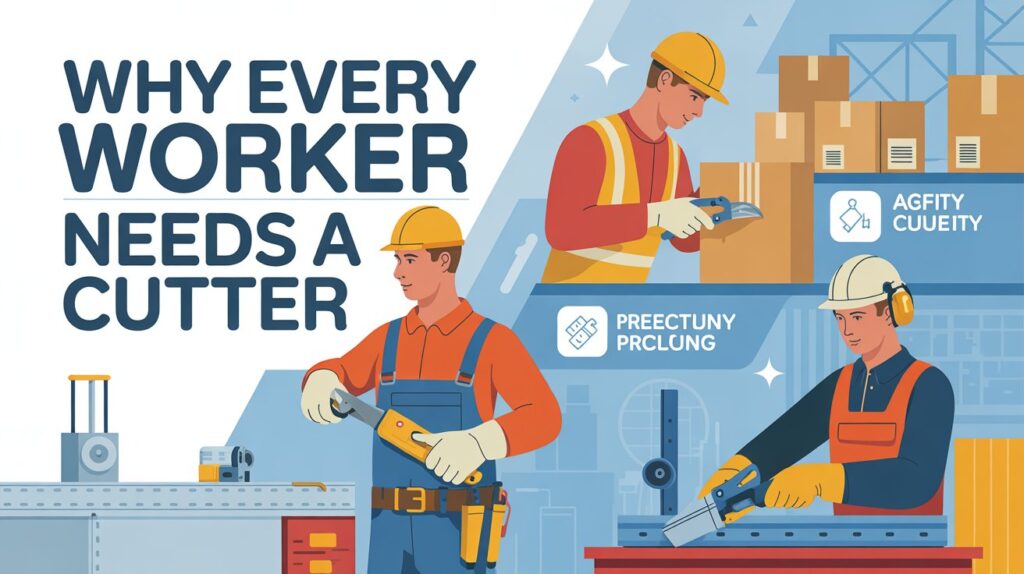
Table of Contents
Why Every Worker Needs a Cutter? and Its Relevance in Modern Workplaces
Conclusion on workplace relevance
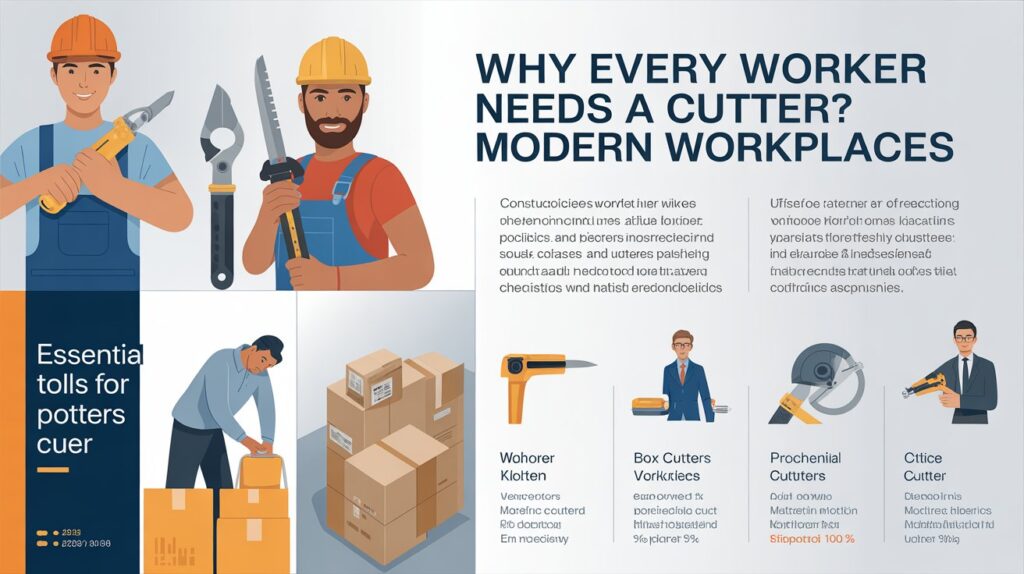
In modern workplaces, cutters are no longer optional tools. They are necessary for efficiency, safety, and performance, making them a key part of everyday professional work.
Introduction to modern workplace needs
In today’s fast-paced industries, efficiency and accuracy are essential. This is where Why Every Worker Needs a Cutter? becomes an important discussion, as cutting tools are widely used across multiple job roles.
Essential tool for daily tasks
A cutter is not just a simple tool; it is one of the most practical utility cutting tools used in offices, warehouses, and construction sites. It helps workers work faster and more effectively.
Improves work efficiency
The presence of cutters in modern workplaces significantly improves workflow. Workers can perform cutting tasks with better speed and accuracy, which supports overall productivity.
Supports multiple industries
From packaging to manufacturing, cutters play a vital role. They are widely used in industrial hand tools categories and are essential in handling different types of materials.
Enhances workplace practicality
Understanding Why Every Worker Needs a Cutter? highlights its importance in reducing manual effort and making routine tasks easier in professional environments.
Widely used across job roles
Whether in construction, logistics, or office environments, cutters are considered essential construction worker tools and warehouse cutting tools that support daily operations.
Understanding importance of cutters in daily life for workers across different industries
Wide Range of Applications Across Industries
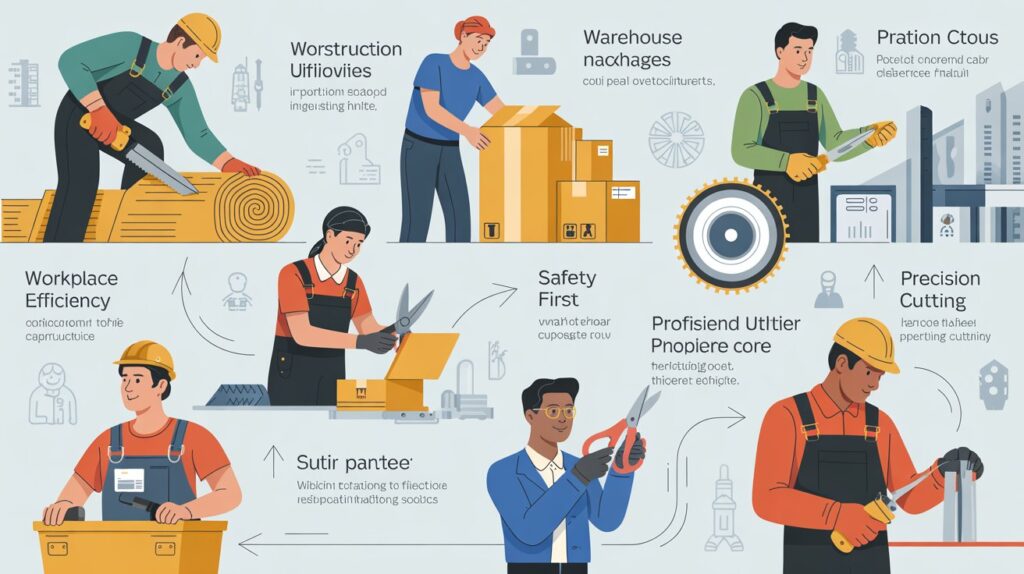
The cutter tool applications extend to offices, workshops, and industrial zones. Their versatility as utility cutting tools makes them a key component in everyday operations across various job roles.
Role in Everyday Work Activities
Cutters are widely used in multiple professions where precision is required. The importance of cutters in daily life becomes clear when workers rely on them for routine cutting, trimming, and shaping tasks across different sectors.
Support in Industrial Operations
In factories and production units, industrial hand tools like cutters are essential for handling materials such as plastic, cardboard, and thin metals. They improve workflow and reduce manual effort in large-scale operations.
Essential in Packaging and Logistics
In distribution centers, warehouse cutting tools are used daily for opening boxes, trimming packaging materials, and managing shipments. These tools are crucial for packaging cutting solutions that ensure smooth logistics operations.
Improving Workplace Efficiency
The benefits of using cutters include faster task completion and improved accuracy. Workers can achieve better material cutting efficiency, which directly increases productivity in both small and large industries.
Importance in Construction and Field Work
In building projects, construction worker tools often include cutters for cutting wires, insulation, and lightweight materials. The role of cutters in construction work is important for maintaining accuracy and safety on site.
Safety and Practical Usage
Modern safety knife applications are designed to reduce workplace injuries while improving control during cutting tasks. These tools are part of essential occupational safety products used in professional environments.
Improving workplace productivity
Cutters contribute significantly to faster task execution, making them important worker productivity tools in both skilled and unskilled labor environments.
Versatility across different tasks
One of the key advantages of utility cutters is their ability to handle multiple materials like plastic, fabric, foam, and packaging sheets with ease.
Support in daily office work
Even in office environments, cutters are used for document trimming, opening parcels, and general tasks, proving their importance of cutting tools in industry and office settings.
Precision in material handling
Workers rely on cutters for accurate cutting, ensuring better material cutting efficiency in production and assembly tasks.
Safety-focused design improvements
Modern tools designed under occupational safety products guidelines help reduce injuries while maintaining high performance during cutting operations.
Use in shipping and delivery sectors
In logistics, warehouse cutting tools are essential for opening packages quickly and safely, improving delivery workflow efficiency.
Importance in repair and maintenance work
Technicians use cutters as part of industrial hand tools for stripping wires, cutting cables, and handling repair tasks efficiently.
Role in construction environments
The role of cutters in construction work is vital for cutting insulation, plastic sheets, and lightweight materials used in building projects.
Support for safety compliance
Many workplaces adopt cutters as part of workplace safety equipment to ensure safe and controlled cutting practices.
Efficiency in packaging industry
Cutters are widely used in packaging cutting solutions, helping workers process large volumes of goods in less time.
Wide industrial demand
Across factories and plants, cutters are among the most used essential cutting tools for workers, supporting daily production tasks.
Contribution to faster workflow
By reducing effort and saving time, cutters strengthen overall operational speed in different industrial setups.
Use in construction material preparation
Before installation, workers use cutters to shape and prepare materials, improving on-site efficiency.
Reliability in repetitive tasks
Cutters are designed for repeated use, making them dependable tools for continuous industrial operations.
Overall industrial importance
Across all sectors, cutters remain a core part of utility cutting tools, supporting productivity, safety, and efficiency in everyday work environments.
Importance in handling raw materials
Cutters help workers efficiently handle raw materials like plastic, foam, and paper, improving material cutting efficiency in production lines.
Essential for fast assembly work
In assembly units, cutters are used for quick adjustments and trimming, making them vital essential cutting tools for workers in manufacturing industries.
Reducing physical effort in tasks
Instead of using heavy machinery, cutters simplify tasks and reduce strain, improving daily workflow in various workplaces.
Support in emergency adjustments
Workers often use cutters for quick fixes and urgent adjustments, showing their importance as flexible industrial hand tools.
Improving accuracy in finishing work
Cutters help in fine detailing and finishing tasks where precision is required, especially in industrial production environments.
Widely used in construction finishing stages
During final construction phases, construction worker tools like cutters help in trimming materials for proper fitting and alignment.
Cost-effective workplace tool
Cutters are affordable yet highly effective tools, making them an essential part of worker productivity tools in every industry.
Overall contribution to industrial efficiency
From small tasks to large-scale operations, cutters improve workflow, safety, and efficiency, reinforcing the importance of cutting tools in industry.
What are cutters? Types and overview of utility cutting tools used in daily work
Conclusion on cutter types
Overall, cutters play a vital role in different sectors, supporting efficiency, precision, and safety in everyday work environments across industries.
Basic definition of cutters
Cutters are simple yet highly effective tools designed for slicing, trimming, and cutting different materials. They are widely used across industries where precision and speed are required in daily operations.
Importance in professional environments
The importance of cutting tools in industry is reflected in how cutters support workers in completing tasks efficiently in manufacturing, construction, and logistics sectors.
Utility cutting tools overview
Modern utility cutting tools are designed for versatility and safety. They are commonly used in offices, warehouses, and workshops for handling paper, plastic, packaging materials, and more.
Fixed blade cutters
These cutters are strong and stable tools often used in heavy-duty work. They are a key part of industrial hand tools used in factories and production units.
Retractable blade cutters
Retractable models are widely used in warehouse cutting tools because they offer safety and control while opening boxes and cutting packaging materials.
Precision safety knives
These tools are designed for accuracy and safety, making them important in safety knife applications where controlled cutting is required in sensitive tasks.
Heavy-duty utility cutters
Built for tough materials, these cutters are essential construction worker tools used in cutting insulation, plastic sheets, and other building materials.
Office and light-duty cutters
Used in administrative environments, these cutters support document handling and packaging tasks, contributing to worker productivity tools in offices.
Rotary cutters
Rotary cutters are commonly used in fabric and craft industries, offering smooth and continuous cutting performance with high precision.
Snap-off blade cutters
These cutters are widely used for their convenience and sharpness adjustment, making them practical utility cutting tools for everyday tasks.
Electric cutters overview
Electric versions are used in industrial environments for high-volume cutting tasks, improving material cutting efficiency in large-scale production.
Multi-purpose cutting tools
Some cutters are designed for multiple functions, supporting various packaging cutting solutions in logistics and distribution centers.
Role in workplace efficiency
Cutters significantly improve workflow speed and accuracy, making them essential worker productivity tools in modern industries.
Safety considerations in cutter usage
Many cutters are designed as part of occupational safety products, ensuring reduced risk of injury while maintaining performance.
Why cutters are important for efficiency, precision, and task completion
Conclusion on performance benefits
Overall, cutters are essential for maintaining efficiency, precision, and successful task completion in almost every professional field.
Improving overall work efficiency
Cutters play a major role in speeding up daily tasks across industries. The benefits of using cutters include faster execution of work with less effort, which directly improves productivity in workplaces.
Ensuring precision in cutting tasks
One of the main reasons for their importance is accuracy. why cutters are important becomes clear when workers need clean, precise cuts in materials like plastic, paper, and packaging sheets.
Supporting task completion in industries
In many sectors, especially manufacturing and logistics, cutters help complete tasks on time. This makes them essential worker productivity tools for smooth workflow management.
Role in industrial operations
Cutters are widely used as industrial hand tools in factories where accuracy and speed are necessary for production processes and assembly work.
Contribution to material handling efficiency
The use of cutters improves material cutting efficiency, reducing waste and ensuring better utilization of raw materials in production environments.
Importance in packaging and logistics
In shipping industries, packaging cutting solutions are essential for opening, trimming, and preparing goods quickly, ensuring timely delivery operations.
Use in construction and field tasks
Cutters are vital construction worker tools used for cutting insulation, wires, and lightweight materials, helping workers complete tasks efficiently on-site.
Safety and controlled operation
Modern tools designed as occupational safety products ensure that cutting tasks are performed safely while maintaining high levels of precision and control.
Essential in warehouse environments
In logistics centers, warehouse cutting tools help workers handle packaging, boxes, and sealing materials, improving workflow speed and accuracy.
Wide application across industries
The cutter tool applications extend across multiple sectors including retail, construction, and manufacturing, making them highly versatile tools.
Importance in daily industrial use
The importance of cutting tools in industry is seen in how they support continuous operations, reduce delays, and maintain production efficiency.
Versatility of utility cutting tools
Modern utility cutting tools are designed for different tasks, allowing workers to handle multiple materials without switching tools frequently.
Improving workplace safety and control
Many cutters are designed with safety features, making them important safety knife applications that reduce the risk of workplace injuries.
Enhancing productivity in repetitive tasks
Cutters allow workers to perform repetitive cutting tasks quickly and consistently, supporting long-term efficiency in industrial environments.
Uses of cutters in different industries such as construction, packaging, manufacturing and other industries
Overall industrial significance
From construction to manufacturing, cutters remain essential tools that support efficiency, precision, and safe operations across multiple sectors.
Construction industry applications
In construction work, cutters are widely used as construction worker tools for cutting insulation materials, plastic sheets, wires, and finishing materials. The role of cutters in construction work is essential for accurate and efficient site operations.
Packaging industry usage
Cutters are widely used in packaging and logistics for opening boxes, cutting wrapping materials, and preparing shipments. These packaging cutting solutions help speed up order processing and delivery.
Manufacturing sector importance
In factories, cutters are key industrial hand tools used for shaping, trimming, and processing raw materials during production lines, ensuring smooth workflow and precision.
Warehouse operations
In storage facilities, warehouse cutting tools are used for opening boxes, cutting tapes, and handling bulk packaging materials safely and efficiently.
Use in retail industry
Retail workers use cutters for unpacking goods, preparing displays, and managing stock, making them essential worker productivity tools in fast-paced environments.
Office environment usage
In offices, cutters are used for paper trimming, opening parcels, and general utility tasks, showing the practical cutter tool applications in administrative work.
Logistics and distribution sector
Cutters support shipping and delivery operations by enabling quick handling of packaging materials, improving workflow efficiency in distribution centers.
Automotive industry use
In automotive workshops, cutters are used for trimming wires, removing insulation, and handling lightweight materials during repairs and assembly.
Electrical work applications
Electricians rely on cutters as part of industrial hand tools for stripping wires and cutting cables safely during installation and maintenance tasks.
Construction finishing work
During finishing stages, cutters help in precise trimming of materials, supporting accurate fitting and alignment in construction projects.
Manufacturing precision tasks
Factories use cutters for detailed work where accuracy is required, improving material cutting efficiency in production processes.
Safety-focused industrial use
Many modern cutters are designed as occupational safety products, ensuring controlled cutting while reducing workplace injuries.
Multi-industry versatility
The utility cutting tools category covers a wide range of industries, making cutters suitable for diverse professional environments.
Improving workflow across sectors
Across all industries, cutters enhance speed and reduce manual effort, supporting better productivity and task management.
Textile industry usage
In textile production, cutters are used for fabric shaping and trimming, making them important industrial hand tools for precise garment manufacturing. Food processing industry
Cutters are used for packaging food items and handling wrapping materials, supporting efficient packaging cutting solutions in food production units. Pharmaceutical industry
In pharmaceutical packaging, cutters help open sealed materials safely, ensuring proper handling as part of occupational safety products. Agriculture industry applications
Farm workers use cutters for cutting ropes, packaging materials, and lightweight agricultural supplies, improving daily field efficiency. Aviation industry usage
In aircraft maintenance, cutters are used for trimming wires and insulation, acting as reliable construction worker tools in technical environments. Marine and shipping industry
On ships and ports, cutters are used for rope cutting, packaging handling, and cargo operations, improving material cutting efficiency in maritime work. E-commerce industry operations
Online businesses rely heavily on cutters for fast order packing and dispatch, making them essential worker productivity tools in fulfillment centers. Printing and publishing industry
Cutters are used for trimming paper, books, and printed materials, supporting precise finishing work in publishing houses. Furniture manufacturing industry
Workers use cutters for cutting foam, fabric, and packaging materials, making them vital industrial hand tools in production units. Electronics industry applications
In electronics assembly, cutters are used for wire trimming and small component handling, ensuring accurate cutter tool applications. Telecommunication industry
Technicians use cutters for cable installation and maintenance, supporting efficient network setup and repairs. Mining industry usage
In mining operations, cutters assist in handling ropes, packaging, and auxiliary materials used in field operations. Defense and military sector
Cutters are part of essential field kits used for cutting straps, packaging, and emergency materials, supporting operational readiness. Construction materials supply industry
Suppliers use cutters for preparing and packaging building materials, ensuring smooth logistics and delivery processes. Event management industry
In event setups, cutters are used for stage preparation, decoration setup, and packaging materials, improving fast execution of tasks. Waste management and recycling industry
Cutters are used for breaking down packaging materials and sorting recyclable items, improving efficiency in waste processing systems.
Hospitality industry usage
In hotels and restaurants, cutters are used for unpacking supplies, preparing packaging materials, and supporting daily operational tasks, improving worker productivity tools in service environments. Education and training sector
Teachers and staff use cutters for craft work, paper trimming, and classroom activities, showing practical cutter tool applications in educational environments.
Sports and fitness industry
Cutters are used for preparing equipment packaging, cutting tapes, and handling sports material setups, supporting fast and efficient operations.
Real estate and property management
Workers use cutters during site visits and maintenance tasks for opening packages and handling light repair work, making them useful industrial hand tools.
Oil and gas industry
In field operations, cutters are used for cutting insulation, packaging, and safety materials, supporting occupational safety products in demanding environments.
Mining support services
Service teams in mining operations use cutters for handling ropes, packaging, and equipment maintenance, improving material cutting efficiency.
Cleaning and sanitation industry
Cleaning staff use cutters for opening supplies and handling waste packaging, improving workflow efficiency in service operations.
Travel and transportation industry
Airports, bus terminals, and transport hubs use cutters for luggage handling, packaging, and maintenance tasks.
Printing and signage industry
Cutters are essential for trimming vinyl, paper, and signage materials, ensuring accurate finishing and clean output.
Handicrafts and DIY industry
Artisans and DIY workers use cutters for shaping materials like paper, foam, and fabric, making them important utility cutting tools for creative work.
Benefits of using cutters for workers in terms of speed, safety, and productivity
Overall impact on job performance
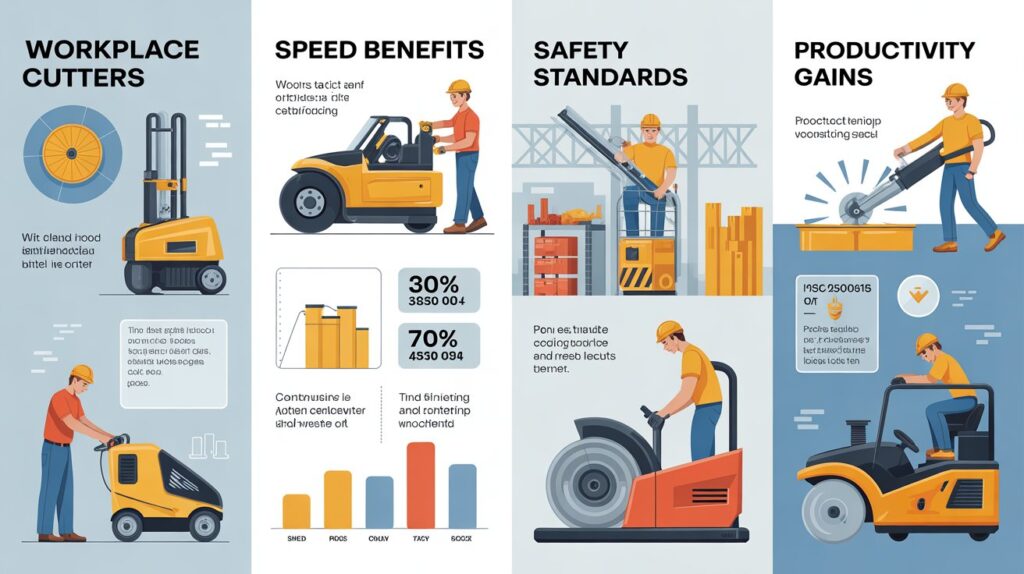
Cutters contribute significantly to workplace performance by combining speed, safety, and productivity into one essential working tool.
Faster task completion in daily work
One of the main benefits of using cutters is improved speed. Workers can complete cutting tasks quickly, which increases overall efficiency in workplaces and supports smooth operations.
Improved workplace safety standards
Modern cutters designed as occupational safety products help reduce accidents. Their controlled design ensures safer handling compared to unsafe manual cutting methods.
Enhanced productivity in industries
Cutters are widely recognized as worker productivity tools because they reduce effort and save time, allowing workers to focus on more important tasks.
Better precision in cutting tasks
The use of cutters ensures accuracy in material handling, improving material cutting efficiency in manufacturing, packaging, and construction work.
Support in industrial operations
In factories and production units, industrial hand tools like cutters help maintain steady workflow and reduce delays in production processes.
Efficiency in packaging and logistics
Cutters play a key role in packaging cutting solutions, allowing workers to quickly open, trim, and prepare goods for shipping and delivery.
Reduced physical effort for workers
By replacing heavy tools or manual tearing, cutters make daily tasks easier and reduce strain on workers in different industries.
Important in construction tasks
In building sites, construction worker tools such as cutters are used for trimming insulation, wires, and lightweight materials safely and efficiently.
Versatility in workplace usage
The cutter tool applications extend across offices, warehouses, and factories, making them useful in almost every working environment.
Time-saving in repetitive tasks
Workers performing repeated cutting tasks benefit from faster execution, which improves productivity and reduces fatigue over long working hours.
Support for safe cutting practices
Many modern cutters are designed for safety knife applications, ensuring controlled use and minimizing workplace injuries.
Improved workflow in warehouses
In storage and distribution centers, warehouse cutting tools help workers handle packaging materials quickly and maintain order efficiency.
Better handling of different materials
The use of utility cutting tools allows workers to cut various materials like plastic, cardboard, foam, and fabric with ease and accuracy.
Increased industrial efficiency
The importance of cutting tools in industry is reflected in faster operations, reduced downtime, and improved production output.
Advantages of utility cutters and their impact on material cutting efficiency
Overall industrial impact
Utility cutters play a key role in improving efficiency, safety, and productivity across multiple sectors, making them indispensable in modern workplaces.
Improved cutting performance in daily tasks
One of the main advantages of utility cutters is their ability to deliver fast and accurate cutting results, improving overall workflow in different industries.
Enhanced material cutting efficiency
The use of utility cutting tools significantly increases material cutting efficiency by reducing wasted effort and ensuring clean and precise cuts in various materials.
Strong support in industrial environments
In factories and production units, industrial hand tools like cutters help workers handle materials smoothly, improving productivity and reducing processing time.
Essential for warehouse operations
In logistics centers, warehouse cutting tools are used for opening boxes, cutting packaging tapes, and managing goods efficiently during storage and dispatch.
Better safety during cutting tasks
Modern cutters are designed as occupational safety products, helping reduce workplace injuries while maintaining high performance in cutting operations.
Wide application across industries
The cutter tool applications extend to construction, retail, packaging, and manufacturing, making them versatile tools for everyday work.
Improved productivity for workers
Cutters act as worker productivity tools by reducing manual effort and enabling faster completion of repetitive cutting tasks.
Support in construction work
In building sites, construction worker tools such as cutters are used for trimming insulation, wires, and lightweight materials with precision.
Efficient packaging operations
Cutters are widely used in packaging cutting solutions, allowing quick handling of cartons, wrapping materials, and shipment preparation.
Reduced material wastage
By providing accurate cuts, utility cutters help minimize material loss, improving cost efficiency in industrial and commercial operations.
Safe handling of different materials
The design of safety knife applications ensures controlled usage when cutting plastic, foam, fabric, and cardboard materials.
Importance in industrial productivity
The importance of cutting tools in industry is seen in how they streamline production processes and improve output quality.
Support for everyday workplace tasks
From offices to warehouses, cutters are part of essential utility cutting tools used in routine tasks that require speed and accuracy.
Reduced physical strain on workers
Cutters reduce the need for heavy tools or manual tearing, making work easier and less physically demanding.
Importance of cutters
Overall workplace significance
Cutters remain a fundamental part of modern work environments, supporting efficiency, safety, and productivity across all industries.
Essential role in daily industrial tasks
Cutters are widely used across industries because they simplify cutting operations and improve workflow. The importance of cutters in daily life is clearly seen in their frequent use in professional environments.
Support for efficient workplace operations
In many sectors, utility cutting tools help workers complete tasks faster and with better accuracy, making them a key part of modern workplace systems.
Improved productivity in industries
Cutters act as worker productivity tools by reducing manual effort and enabling quicker completion of repetitive cutting tasks in different job roles.
Widely used in manufacturing environments
In production units, industrial hand tools like cutters are essential for shaping, trimming, and handling materials during manufacturing processes.
Important in logistics and warehousing
In distribution centers, warehouse cutting tools are used for opening packages, cutting tape, and managing shipments efficiently.
Critical in construction activities
The role of cutters in construction work is important for cutting insulation, wires, and other materials used in building and finishing projects.
Enhancing safety in workplaces
Modern cutters designed as occupational safety products help reduce workplace injuries by providing controlled and safe cutting performance.
Wide range of industrial applications
The cutter tool applications include use in construction, retail, packaging, and maintenance work, making them highly versatile tools.
Better efficiency in material handling
Cutters improve material cutting efficiency by ensuring precise cuts and reducing waste in production and packaging operations.
Support in packaging industry operations
In logistics, packaging cutting solutions help workers handle cartons, wrapping materials, and shipments quickly and effectively.
Flexibility across different job roles
From offices to factories, cutters are used as essential cutting tools for workers in multiple professional environments.
Contribution to industrial growth
The importance of cutting tools in industry is reflected in their ability to improve productivity and maintain smooth operational flow.
Safe and controlled cutting applications
Modern safety knife applications ensure safe handling during cutting tasks, reducing risks in industrial workplaces.
Support for multiple material types
Cutters can handle plastic, cardboard, foam, and fabric, making them versatile utility cutting tools for everyday use.
Conclusion
In conclusion, why every worker needs a cutter? becomes clear when we understand its impact on efficiency, safety, and productivity. Cutters are not just basic tools but essential equipment that supports daily operations in almost every industry. They help workers complete tasks faster, reduce effort, and improve accuracy in cutting different materials. Whether in construction, packaging, manufacturing, or office work, cutters remain a reliable solution for improving workflow and performance in modern workplaces.
Top five FAQS
What are the main uses of cutters in daily work?
Cutters are used for cutting packaging materials, trimming wires, opening boxes, and handling various industrial and office tasks efficiently.
How do cutters improve workplace productivity?
Cutters reduce manual effort and save time, allowing workers to complete repetitive tasks faster, which increases overall productivity.
Are cutters safe to use in industrial environments?
Yes, modern cutters designed as safety tools reduce injury risks and provide controlled cutting, making them safe for workplace use when handled properly.
Which industries use cutters the most?
Cutters are widely used in construction, manufacturing, logistics, warehousing, retail, and packaging industries for daily operational tasks.
Why every worker needs a cutter in modern workplaces?
A cutter is essential because it improves speed, accuracy, and safety in daily tasks across industries like construction, packaging, and manufacturing.