
Introduction
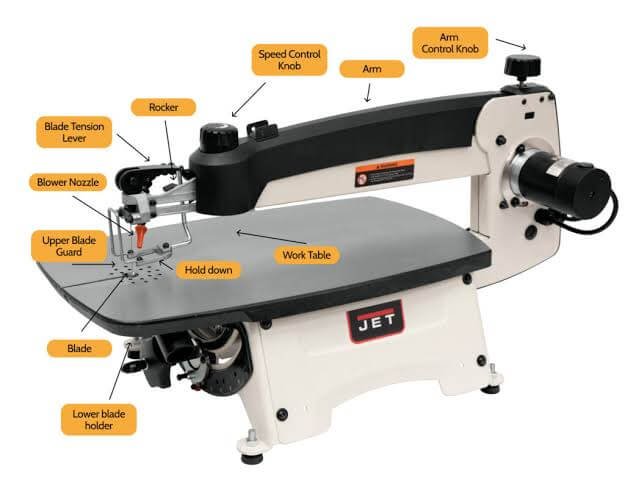
Scroll saw parts play an important role in making accurate cuts, creating detailed patterns, and completing woodworking projects. Each component has a specific function, from holding the blade to powering its movement and supporting the material. Understanding these components helps beginners learn how a scroll saw works, identify common problems, and maintain the machine properly. This guide explains the main components, their functions, useful accessories, basic maintenance, and essential safety tips in simple English.
Table of Contents
What Are Scroll Saw Parts?
A scroll saw is a small electric cutting machine designed for making detailed curves, shapes, and patterns in wood and other suitable materials. Its main scroll saw components work together to provide controlled and accurate cutting.
Each component has a specific function. The blade cuts the material, the motor powers its movement, and the worktable supports the material during cutting. Other features, such as blade clamps, speed control, and the blade tension knob, help users manage the cutting process.
Understanding the functions of scroll saw parts helps beginners use the machine correctly, identify common problems, and perform basic maintenance.
Main Scroll Saw Components and Their Functions

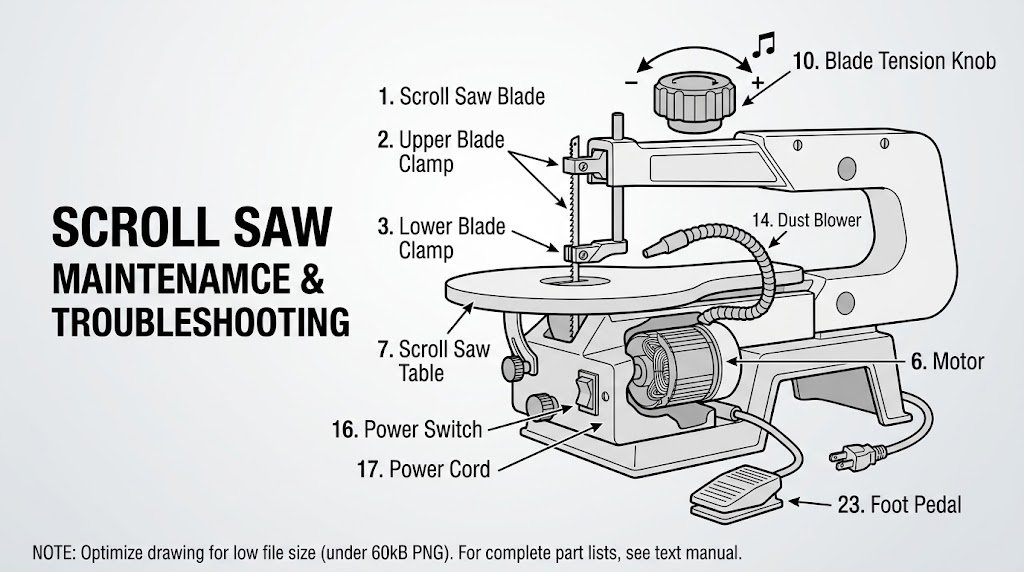
1. Scroll Saw Blade: The blade moves up and down to cut curves, shapes, and detailed patterns in wood. Different blade types suit different materials and cutting tasks.
2. Upper Blade Clamp: Holds the upper end of the blade firmly in place. It helps prevent the blade from slipping during operation.
3. Lower Blade Clamp: Secures the lower end of the blade to the cutting mechanism. Proper installation helps keep the blade stable.
4. Upper Arm: Supports the upper blade assembly and moves during cutting. Its movement helps guide the blade through the material.
5. Lower Arm: Supports the lower blade assembly and helps control blade movement. Its design varies between scroll saw models.
6. Electric Motor: Provides the power needed to operate the cutting mechanism. The motor’s movement drives the blade through the connected components.
7. Scroll Saw Table: Provides a flat surface for supporting wood during cutting. A stable table helps users guide the material accurately.
8. Table Tilt Mechanism: Allows the table to tilt on models designed for angled cutting. It helps users create bevel cuts at suitable angles.
9. Speed Control: Adjusts the blade’s operating speed according to the cutting task. A suitable speed helps improve control and cutting quality.
10. Blade Tension Knob: Adjusts the tightness of the blade. Correct tension helps the blade remain stable and reduces the risk of breakage.
11. Throat Plate: Fits around the blade opening in the table. It supports the workpiece near the blade and may be replaceable.
12. Throat Depth: Measures the distance from the blade to the rear frame. It indicates how far a workpiece can extend into the saw.
13. Hold-Down Foot: Helps keep the workpiece flat against the table. Correct adjustment reduces unwanted lifting during cutting.
14. Dust Blower: Directs air toward the cutting area to remove sawdust. This helps users see the cutting line more clearly.
15. Dust Collection Port: Connects the saw to a compatible dust extraction system. It helps collect sawdust and keep the workspace cleaner.
16. Power Switch: Controls the machine’s electrical operation. Users should switch off the saw before making adjustments.
17. Power Cord: Supplies electricity to the machine from a suitable power source. Check it regularly for damage before use.
18. Frame: Forms the main structure of the machine and supports its moving components. A strong frame helps maintain stability during cutting.
19. Blade Guard: Helps reduce accidental contact with the blade on models equipped with one. Always follow the manufacturer’s safety instructions.
20. Blade Tension Lever: Allows quick blade tension adjustment on compatible models. It can make blade changes easier.
21. Blade Release Knob: Helps loosen the blade-holding mechanism for blade removal. Its design depends on the manufacturer.
22. Variable-Speed Dial: Allows users to select a suitable operating speed. It provides better control for different cutting materials and patterns.
23. Foot Pedal: Controls operation on models designed for foot-pedal use. It allows users to control the machine without using the main switch.
24. Work Light: Illuminates the cutting area to improve visibility. Better lighting helps users follow detailed patterns more easily.
25. Blade Storage Holder: Stores extra blades neatly so they are easy to find when needed. Certain models have a storage compartment built into the machine.
26. Table Lock Knob: Secures an adjustable table at the selected angle. Tightening it helps prevent unwanted table movement.
27. Base: Supports the machine and distributes its weight. A stable base helps reduce unwanted movement during operation.
28. Mounting Holes: Allow the machine to be attached to a workbench. Proper mounting can improve stability and reduce vibration.
29. Linkage Mechanism: Transfers movement from the drive system to the blade arms. This helps produce the repeated blade motion needed for cutting.
30. Bearings: Support moving components and reduce friction. Proper maintenance helps keep the mechanism operating smoothly.
You may also enjoy our guide to Scroll Saw Projects: 30 Creative Ideas for Woodworking for more inspiration and creative woodworking ideas.
Additional Scroll Saw Components and Their Functions
31. Crankshaft: Converts rotary motion into movement for the blade mechanism. It is used in designs that rely on a crank-driven system.
32. Drive Belt: Transfers power between rotating components on belt-driven models. A worn belt may affect machine performance.
33. Motor Pulley: Transfers rotational motion from the motor to the drive system. Its size and design depend on the machine.
34. Drive Pulley: Helps transfer movement through a belt-driven mechanism. It works with the belt and other drive components.
35. Connecting Rod: Transfers motion from the drive mechanism to a moving arm. This helps produce the blade’s cutting movement.
36. Pivot Bearings: Support the pivot points of moving arms. They help the arms move with less friction.
37. Arm Pivot Bolts: Secure the arms at their pivot points. Correctly fitted bolts help maintain proper alignment.
38. Blade Tension Spring: Helps adjust or maintain blade tension on models fitted with a spring mechanism. Its function depends on the saw’s design.
39. Blade Adapter: Connects a compatible blade to the holding system when an adapter is required. Always check blade compatibility before installation.
40. Blade Access Door: Provides access to internal components on compatible models. It can help with inspection and servicing.
41. Table Insert: Fits around the blade opening and supports the material near the cutting area. It can be replaced if damaged.
42. Table Tilt Scale: Shows the table angle on models with an adjustable table. It helps users set the desired cutting angle.
43. Angle Adjustment Lock: Secures an adjustable table or cutting assembly in position. This helps maintain the selected angle during work.
44. Bevel Adjustment Mechanism: Allows users to set an angled cutting position on compatible machines. The adjustment method varies by model.
45. Flexible Dust Hose: Directs airflow or carries sawdust as part of the dust-management system. Its purpose depends on the machine’s design.
46. Dust Collection Adapter: Connects the dust port to a compatible vacuum hose. It helps improve sawdust collection.
47. Speed Control Circuit: Regulates motor speed on electronically controlled models. It helps maintain the selected operating speed.
48. Motor Housing: Covers and protects the motor’s internal components. It also helps keep dust and debris away from sensitive areas.
49. Vibration Dampers: Help reduce vibration when fitted between the machine and its support. They can improve stability during operation.
50. Workpiece Support Extension: Provides extra support for larger materials on models equipped with an extension. It helps users handle suitable workpieces more steadily.
Note: Not every scroll saw includes all these components. Some are specific to certain models or drive systems. Check the manufacturer’s manual before replacing parts or adjusting the machine.
How Do the Components Work Together?
Motor and Blade Movement
The electric motor powers the cutting mechanism, moving the blade up and down to cut wood and other suitable materials.
Blade Tension and Clamps
The blade tension knob and scroll saw blade clamp help hold the blade securely. Correct scroll saw blade tension supports smoother, more accurate cutting.
Table and Workpiece Support
The scroll saw table supports the material while the user guides it through the blade. The hold-down foot helps keep the workpiece stable during cutting.
Speed Control and Cutting Accuracy
Scroll saw speed control allows users to adjust blade speed according to the material and task. Choosing a suitable speed helps improve control and reduce blade damage.
Dust Management and Safety
The scroll saw dust blower clears sawdust from the cutting line, helping users see their work more clearly. Proper scroll saw maintenance and safe operating practices also support reliable performance.
Scroll Saw Accessories and Replacement Components
The right scroll saw accessories help users maintain their machines and complete cutting tasks more easily. Common accessories include replacement blades, blade clamps, table inserts, and dust collection attachments.
- Replacement Blades: Different scroll saw blade types suit various materials, thicknesses, and cutting patterns. Choose a compatible blade for your project.
- Blade Clamps and Holders: These components secure the blade during operation. Replace worn or damaged clamps to maintain a reliable grip.
- Table Inserts: A suitable scroll saw table insert supports the material around the blade opening and can be replaced when damaged.
- Dust Collection Attachments: A compatible dust hose or adapter helps connect the machine to a suitable extraction system.
- Replacement Belts and Bearings: Some models use these components to transfer motion and support moving parts. Replace them when worn, following the manufacturer’s guidance.
Before purchasing scroll saw replacement parts, check your machine’s model number, component dimensions, and manufacturer’s recommendations. Using compatible parts helps maintain proper operation and supports safe, accurate cutting.
Basic Maintenance and Troubleshooting
Clean the Machine Regularly
Remove sawdust from the table, frame, and moving areas after use. Good scroll saw maintenance helps keep the machine clean and working properly.
Check the Blade
Check the blade for blunt edges, cracks, or signs of wear. Install a new blade when necessary to achieve smooth and accurate cuts.
Adjust Blade Tension
Incorrect scroll saw blade tension can cause loose cutting, blade wandering, or breakage. Follow the manufacturer’s instructions to set the tension correctly.
Inspect Blade Clamps
Check the scroll saw blade clamp for wear or looseness. Secure the blade correctly before starting the machine.
Check the Table
Keep the scroll saw table clean and free from obstructions. Ensure it is secure before cutting.
Reduce Excessive Vibration
Check that the machine is mounted securely. Loose mounting hardware can increase vibration.
Solve Blade Breakage
A blade may break because of excessive tension, incorrect installation, or forcing the material. Guide the workpiece gently.
Improve Rough Cuts
Use a suitable blade and speed for the material. Avoid pushing the workpiece too quickly through the blade.
Check Dust Management
Keep the scroll saw dust blower clear so sawdust does not block your view of the cutting line.
Follow Safety Procedures
Switch off and unplug the machine before cleaning, replacing blades, or inspecting components. Consult the user manual if a problem continues.
Safety Tips When Using a Scroll Saw
Wear Safety Glasses
Always wear safety glasses to protect your eyes from flying wood chips and dust.
Secure the Workpiece
Use the hold-down foot correctly to help keep the material flat and stable while cutting.
Check the Blade
Before starting, examine the blade and its clamp for damage or looseness. Ensure the blade is fitted correctly and firmly held in place.
Keep Hands Away from the Blade
Guide the material carefully, keeping your fingers away from the moving blade. Never rush a cut.
Switch Off Before Adjustments
Turn off and unplug the machine before changing blades, adjusting tension, or performing scroll saw maintenance. Follow the manufacturer’s safety instructions.
Conclusion
Understanding the main components of a scroll saw helps users operate the machine correctly, make cleaner cuts, and identify worn or damaged components. Regular cleaning, proper blade tension, suitable accessories, and safe working habits can improve performance and extend the machine’s service life. Always check the manufacturer’s manual before adjusting or replacing components, because designs vary between models. Learning how each component works makes woodworking easier, safer, and more efficient.
Frequently Asked Questions
Q1. What are the main scroll saw components?
The main components include the blade, motor, table, blade clamps, arms, speed control, and tension knob. Each component helps the machine cut materials accurately.
Q2. What does a scroll saw blade do?
A scroll saw blade moves up and down to cut detailed curves, shapes, and patterns in wood and other suitable materials.
Q3. How often should a scroll saw be maintained?
Clean the machine after use and inspect the blade, clamps, and moving parts regularly. Follow the manufacturer’s maintenance schedule.
Q4. Why does a scroll saw blade keep breaking?
Blade breakage can result from excessive tension, incorrect installation, a worn blade, or forcing the material during cutting.
Q5. Can scroll saw components be replaced?
Yes. Many components, including blades, clamps, and table inserts, can be replaced. Always check your machine’s model and manufacturer’s recommendations before buying replacement parts.