

Introduction
A Frame Saw is a traditional woodworking hand tool used to cut wood into different sizes and shapes. It has a blade held under tension by a supporting frame, which helps provide control during cutting. Woodworkers use this tool for cutting timber, preparing boards, and handling various carpentry tasks. Understanding its parts, types, working method, and maintenance can help beginners choose and use the right tool safely. This guide explains the essential information in simple English.
Table of Contents
What Is a Frame Saw?
A frame saw is a manual wood cutting tool designed with a thin blade held tightly inside a supporting frame. It is commonly used in traditional woodworking and carpentry to cut timber into different sizes and shapes.
The wooden saw frame keeps the blade under tension, helping it remain straight during cutting. Unlike a standard manual saw, this design uses a frame and tensioning mechanism to support the blade. It can be useful for precision wood cutting, preparing boards, and cutting thick pieces of wood.
A traditional frame saw usually has two side arms connected by a crossbar, with a blade fitted between them. Some designs include a cord or twisting mechanism to adjust blade tension. The tool is useful for woodworkers who prefer hand tools and want better control over their cutting work.
The exact design and purpose vary depending on the type of saw and the job being performed.
What Is a Frame Saw Used For?
A frame saw is a traditional woodworking hand tool used to cut wood into different sizes and shapes. It consists of a blade held within a supporting frame, which keeps the blade under tension and helps maintain control during cutting. Depending on its design, blade type, and size, this tool can be used for cutting timber, preparing lumber, resawing thick boards, and completing various carpentry tasks.
Unlike many ordinary hand saws, a frame-style design supports the blade at both ends. This structure helps keep the blade straight when the correct tension is applied. Woodworkers use different models for different jobs, from general timber preparation to more demanding resawing work.
1. Cutting Wooden Boards and Timber
One common use is cutting wooden boards and timber into the required lengths. Woodworkers can mark a cutting line on the surface and guide the blade along it using controlled back-and-forth strokes.
This is useful when preparing wood for shelves, furniture frames, wooden boxes, and other carpentry projects. The quality of the cut depends on the blade’s teeth, the type of wood, and the user’s technique.
2. Resawing Thick Boards Into Thinner Pieces
A large resawing design is made for cutting thick wood lengthwise to produce thinner boards. This process is called resawing and is useful when preparing lumber for furniture making, cabinet panels, and decorative woodworking.
For example, a woodworker may divide a thick board into two thinner pieces for a project. A suitable blade, a stable workpiece, and proper cutting technique are important for achieving a consistent result. Resawing by hand requires physical effort and may take longer than using a powered bandsaw.
3. Preparing Wood for Furniture Making
Furniture makers need wooden pieces of different sizes and thicknesses. A suitable frame-style hand saw can help prepare timber before the wood is shaped, joined, or sanded.
It can help shape and prepare wooden pieces for tables, chairs, cupboards, and similar projects. It is especially suitable for woodworkers who prefer using manual tools in their workshops.
4. Making Straight Cuts
With the correct blade tension and a steady cutting motion, this tool can help produce straight cuts. Woodworkers usually mark the desired line before cutting and keep the blade aligned with that mark.
Straight cuts are important when preparing boards for joints, frames, and other parts that need to fit together. However, the tool does not guarantee perfect accuracy on its own. Careful marking, secure clamping, and good technique are also necessary.
5. Supporting Traditional Woodworking
Traditional woodworking often relies on hand tools to shape and prepare wood. Frame-style saws remain useful for woodworkers who prefer manual methods and want greater control over the cutting process.
Using a hand-operated tool also helps develop practical skills, including controlling blade movement, following marked lines, and understanding how different woods respond to cutting.
6. Cutting Different Types of Wood
Depending on the blade and design, a frame saw can be used on various types of timber, including pine, oak, beech, and other woodworking woods. Softer woods are generally easier to cut by hand, while dense hardwoods may require more effort and an appropriate blade.
The blade’s tooth size and spacing affect how it performs. Coarser teeth are generally useful for faster material removal, while finer teeth may provide a smoother cut in suitable applications.
7. Producing Wood for Small Projects
Some frame-style saws are suitable for preparing material for smaller woodworking projects. These may include wooden frames, boxes, craft items, and simple household objects.
The exact applications depend on the size of the saw and its blade. A large resawing model is not necessarily suitable for detailed work, so selecting the correct design is important.
8. Reducing Dependence on Powered Tools
Because a manual frame-style saw operates without electricity, it can be useful in workshops where powered equipment is unavailable or unsuitable for a particular task.
It can also complement powered machinery by allowing woodworkers to perform selected cuts manually. However, cutting large amounts of timber by hand may require significantly more time and effort.
Safety Tips When Using a Frame Saw
Before cutting, inspect the blade and frame for damage. Secure the wood firmly with suitable clamps, check that the blade is properly tensioned, and use smooth, controlled strokes. Wear suitable eye protection and keep your hands away from the blade’s path.
In summary, a frame saw is mainly used for cutting timber, preparing wooden boards, resawing thick lumber, and supporting traditional carpentry. Choosing the right design and blade for the task helps improve cutting control, efficiency, and safety.
For more insights: read our article, Why Every Worker Needs a Cutter: Importance, Uses, and Benefits Explained, to learn about its practical uses and key benefits.
Main Parts of a Saw Frame
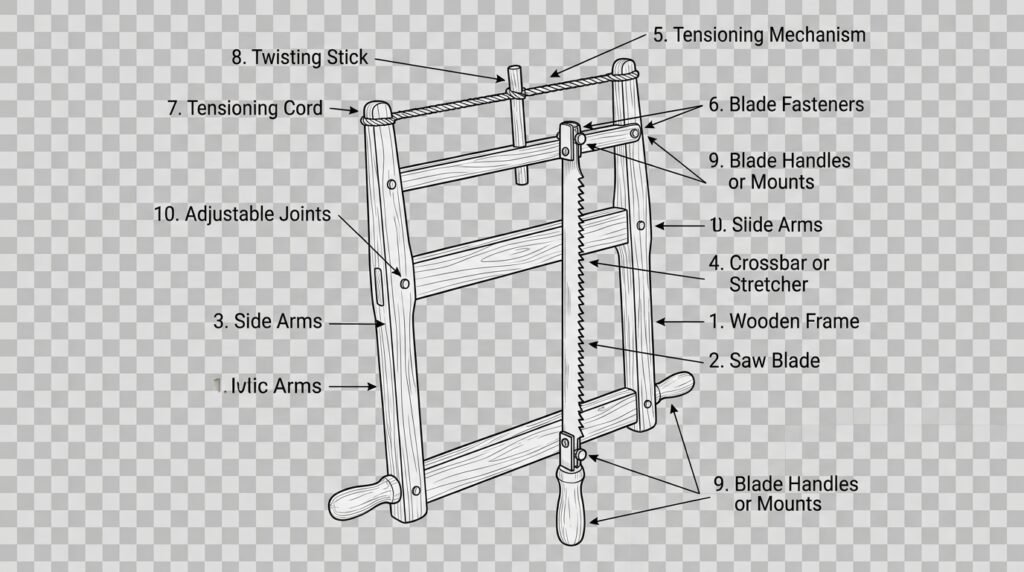
A saw frame has several important parts that work together to provide stable and controlled wood cutting. Understanding these components helps beginners learn how the tool works.
1. Wooden Frame: The main structure holds the blade in position. A strong wooden saw frame helps support the blade during cutting.
2. Saw Blade: The blade has sharp teeth that cut through wood. Choosing the correct frame saw blade depends on the wood thickness and the type of cut required.
3. Side Arms: These arms connect the ends of the frame and help maintain its shape during use.
4. Crossbar or Stretcher: This part connects the side arms and keeps the frame stable.
5. Tensioning Mechanism: A cord, stick, or other adjustment system applies tension to the blade. Proper tension helps support precision wood cutting and reduces unwanted blade movement.
6. Blade Fasteners: These hold the blade securely at both ends and help prevent it from slipping during use.
7. Tensioning Cord: In some traditional designs, a strong cord helps tighten the blade and maintain proper tension.
8. Twisting Stick: This small piece of wood twists the cord to increase blade tension when needed.
9. Blade Handles or Mounts: These connect the blade to the frame and help keep it aligned during cutting.
10. Adjustable Joints: Some designs include adjustable connections that allow users to change blade tension or replace worn components more easily.
Each part has a specific purpose. Keeping the components in good condition helps improve cutting control, tool life, and woodworking safety. Regularly checking these parts helps maintain a stable frame saw tool and supports safer, more accurate woodworking.
Why a Frame Saw Is Important in Woodworking
A frame saw is a useful hand tool for cutting and preparing wood. Knowing how this tool works helps beginners and experienced carpenters select the most suitable equipment for each woodworking job.
| Feature | Detailed Explanation | Why It Is Important |
|---|---|---|
| Wood Cutting | Used to cut wooden boards, timber, and other pieces of wood into suitable sizes. | Helps prepare materials for woodworking and carpentry projects. |
| Cutting Accuracy | A properly tensioned blade can help maintain a controlled cutting path. | Supports cleaner cuts and reduces unwanted deviations when used correctly. |
| Resawing Wood | Larger models can cut thick boards lengthwise to produce thinner pieces. | Helps prepare wood for furniture, panels, and other projects. |
| Manual Operation | Works through hand movement without electricity or a motor. | Useful in workshops without power and for woodworkers who prefer hand tools. |
| Blade Tension | The frame holds the blade under tension to help keep it straight during cutting. | Correct blade tension makes cutting easier to control and helps keep the blade aligned with the cutting line. |
| Different Applications | Blade sizes and tooth patterns can be selected for different cutting tasks. | Allows woodworkers to match the tool to the material and type of cut. |
| Skill Development | Using this tool teaches users how to control cutting direction, pressure, and movement. | Builds useful traditional woodworking skills. |
| Material Efficiency | Resawing can produce thinner boards from suitable thick pieces of timber. | May help reduce material waste when the cuts are planned carefully. |
| Maintenance | The blade, frame, fasteners, and tensioning system need regular inspection. | Helps maintain performance and reduces the risk of tool failure. |
| Professional Woodworking | Suitable designs can support furniture making, carpentry, and traditional woodworking tasks. | Gives professionals another option when a manual cutting method is appropriate. |
Summary
A frame saw is important because it supports manual wood cutting, controlled resawing, and traditional woodworking techniques. Its effectiveness depends on the frame design, blade selection, wood type, and user’s skill. Choosing the right tool and maintaining it properly can improve cutting results and workplace safety.
How Does a Frame Saw Work?
A frame saw tool works by moving a tensioned blade back and forth through wood. The frame supports the blade and helps keep it straight during cutting.
First, secure the wood on a stable workbench. Check that the frame saw blade is sharp and properly tightened. Grip the tool securely and move the blade carefully along the line drawn on the wood.
Use smooth, controlled strokes without applying too much force. The blade teeth remove small pieces of wood as the blade moves. Proper blade tension helps reduce unwanted movement and improves cutting control.
Different wood cutting tools are designed for different jobs. A suitable blade can help with straight wood cuts, timber preparation, or resawing thick boards into thinner pieces. The results depend on the blade type, wood condition, and the user’s technique.
Always keep your hands away from the cutting path and make sure the wood cannot move during the process. Regular blade checks and correct tension help support safe, accurate woodworking.
Types of Frame Saws
Different types of frame saws are designed for specific woodworking tasks. Choosing the right design depends on the wood thickness, cutting style, and level of detail required.
1. Traditional Frame Saw: This hand tool has a wooden frame and a tensioned blade. It is commonly used for general woodworking and traditional carpentry.
2. Resaw Frame Saw: A larger design used for resawing thick boards into thinner pieces. It is useful for preparing lumber for furniture and other woodworking projects.
3. Bow-Style Saw: This design has a curved or bow-shaped frame that holds the blade under tension. It is often used for cutting wood in outdoor work and general carpentry.
4. Fine-Cutting Frame Saw: This type uses a finer blade for more controlled cuts and detailed woodworking tasks. Blade choice affects the smoothness of the finished edge.
5. Turning Frame Saw: Some narrow-bladed frame designs allow curved or shaped cuts, depending on their construction and blade flexibility.
Before choosing a frame saw tool, consider the blade size, tooth spacing, frame design, and intended use. Selecting suitable wood cutting tools helps improve control and makes woodworking tasks easier.
Advantages and Disadvantages
A frame saw tool can be useful for traditional woodworking, but its performance depends on the blade, design, and user’s skill. Understanding its benefits and limitations helps you decide when to use it.
Advantages
- Good cutting control: A tensioned blade supports controlled cutting when the tool is used correctly.
- Suitable for thick wood: A large resawing design can help split thick boards into thinner pieces.
- No electricity required: This manual tool works without a motor or power supply.
- Replaceable blades: Many designs allow worn or damaged blades to be replaced.
- Useful for traditional woodworking: It supports various carpentry tasks and hand-tool projects.
Disadvantages
- Requires physical effort: Cutting thick timber by hand can take time and energy.
- Needs practice: Beginners may need time to learn proper blade tension and cutting techniques.
- Regular maintenance: The blade and frame need inspection and care.
- Limited speed: It may be slower than a powered saw when processing large amounts of wood.
- Blade selection matters: The wrong blade can make cutting difficult and produce poor results.
Overall, this tool is a practical option for woodworkers who value manual control. For frequent, high-volume cutting, a powered saw may be more suitable.
How to Use and Maintain the Tool Safely
Using a frame saw tool correctly helps improve cutting accuracy and reduce the risk of injury. Follow these simple steps for safe woodworking.
How to Use It Safely
- Check the blade: Inspect the frame saw blade for damage, rust, or loose fasteners before starting.
- Keep the wood steady: Use a clamp to hold the wood firmly in place before you begin cutting.
- Check blade tension: Make sure the blade is properly tightened according to the tool’s design.
- Use controlled strokes: Follow the marked cutting line and avoid forcing the blade through the wood.
- Protect yourself: Wear safety glasses and keep your fingers away from the blade’s path.
How to Maintain the Tool
- Clean after use: Remove sawdust and dirt from the blade and frame.
- Check for damage: Replace a cracked frame or damaged blade before using the tool again.
- Prevent rust: Dry the blade after cleaning and apply a suitable protective coating when needed.
- Store safely: Keep the tool in a dry place, away from moisture and children.
- Inspect regularly: Check the blade fasteners and tensioning mechanism to ensure they work correctly.
Proper care helps extend tool life and supports safer, more reliable woodworking. Always follow the manufacturer’s instructions for adjustments and maintenance.
Conclusion
A Frame Saw is a useful hand tool for traditional woodworking, timber preparation, and different cutting tasks. Understanding its parts, blade types, advantages, and limitations helps you choose the right design for your needs. Proper blade tension, safe cutting techniques, and regular maintenance can improve its performance and service life. Whether you are a beginner or an experienced woodworker, selecting the right tool for each job helps you work more safely and achieve better results.
Frequently Asked Questions
Q1. What is a frame saw used for?
A frame saw is used for cutting timber, preparing wooden boards, and performing various woodworking and carpentry tasks.
Q2. What are the main parts of a frame saw?
The main parts include the frame, saw blade, side arms, crossbar, blade fasteners, and tensioning mechanism.
Q3. How does a frame saw work?
It works by moving a tensioned blade back and forth through wood to create a cut.
Q4. What are the advantages of using a frame saw?
It offers manual cutting control, requires no electricity, and can help cut thick wood when fitted with a suitable blade.
Q5. How do you maintain a frame saw?
Clean the blade after use, check for damage, prevent rust, inspect the tensioning system, and store the tool in a dry place.