

Introduction
Frame saw types vary in design, blade size, and purpose. These traditional cutting tools help woodworkers cut timber, shape wooden pieces, and create different designs. Understanding their features and uses can help you choose the right saw for your woodworking projects.
Table of Contents
What Is a Frame Saw?
A frame saw is a woodworking hand tool used to cut wood into different shapes and sizes. It has a strong frame that holds a thin, tensioned blade in place. This design helps users make accurate cuts with better control.
The main parts include the saw frame structure, tensioned saw blade, handles, and a blade tension mechanism. Some models are designed for straight cuts, while others are suitable for curved cutting and detailed woodworking projects.
This traditional tool is useful for carpenters, woodworkers, and people who enjoy making wooden items. Choosing the right blade and maintaining proper tension can improve cutting performance and safety.
20 Common Types of Frame Saws
Traditional Frame Saw
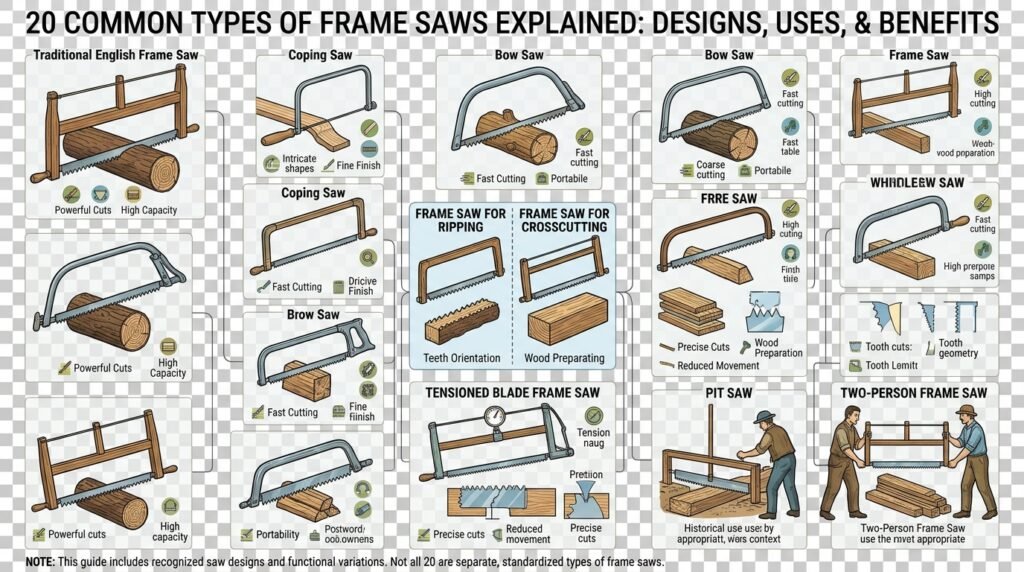
A traditional frame saw has a wooden frame and a tensioned blade. It is used for cutting timber into different sizes. Woodworkers use it for preparing wood for furniture and other projects. Its design helps keep the blade stable during cutting.
Bow Saw
A bow saw has a narrow blade fitted inside a curved metal frame. It is commonly used for cutting branches, logs, and firewood. Its replaceable blade makes maintenance easier. It is useful for gardening and outdoor cutting tasks.
Turning Saw
A turning saw features a slim blade that helps cut curved lines in wood. It allows woodworkers to shape decorative patterns and rounded edges with greater control. This hand tool is useful for detailed cuts and creative woodworking tasks.
Coping Saw
A coping saw features a thin blade held in a U-shaped frame. It is useful for cutting curves and intricate shapes in wood. The blade can usually be replaced when worn. It is often used for trim work and small woodworking tasks.
Large Frame Saw
A large frame saw features a wide frame and an extended blade for handling bigger pieces of wood. It is commonly used to cut thick timber into manageable sections. Its performance depends on the blade design and overall structure, making it better suited to heavy cutting jobs than fine, decorative work.
Small Frame Saw
A small frame saw is compact and easy to handle. It is useful for cutting smaller wooden pieces. Its size allows better control in tight spaces. Woodworkers may use it for craft projects and light cutting tasks.
Frame Saw for Ripping
A ripping frame saw is one of the frame saw types designed to cut timber along the direction of the wood grain. Its specially shaped teeth remove wood as the blade moves through the material. This saw can split thick boards into thinner pieces, while the final cut quality depends on the blade design and cutting method.
Frame Saw for Crosscutting
A crosscut frame saw is used to cut wood perpendicular to its grain. Its teeth are shaped to slice through wood fibers efficiently. This tool is helpful for shortening boards and preparing timber for building projects. Selecting the right blade teeth can produce cleaner, more effective cuts.
Tensioned Blade Frame Saw
A tensioned blade frame saw holds its blade firmly using a tensioning system. Proper tension helps reduce unwanted blade movement. This can support straighter and more controlled cuts. Users should check blade tension before starting work.
Modern Frame Saw
A modern frame saw may feature a metal frame and adjustable blade tension. Some models allow quick blade replacement. These features can make the tool easier to maintain. Its best use depends on the blade design and overall construction.
Two-Person Frame Saw
A two-person frame saw is designed to be operated by two people. It has a long blade suitable for cutting large timber. Each person controls one end during the sawing process. This traditional tool was used in sawmills and timber preparation.
Pit Saw
A pit saw is a large manual saw traditionally used to turn logs into boards. One worker stands above the log while another works below it. The two users move the blade back and forth together. It played an important role in historical timber production.
Veneer Saw
A veneer saw is associated with cutting thin layers of wood. It is useful when preparing material for decorative surfaces and furniture. The blade must suit the thin material being cut. Not every veneer saw uses a frame design.
Bow-Frame Pruning Saw
A bow-frame pruning saw has a narrow blade held within a bow-shaped frame. It is designed for cutting tree branches and removing unwanted growth. Its open frame provides space around the blade. It is frequently used to care for gardens and keep outdoor spaces tidy.
Adjustable Frame Saw
An adjustable frame saw allows the user to change blade tension. This helps keep the blade stable during cutting. Some designs also allow blade replacement. Regular checks help maintain cutting accuracy and safe operation.
Wooden Frame Saw
A wooden frame saw uses a wooden structure to support a narrow blade. Traditional versions may include cords or a mechanism for tightening the blade. It can be used for different timber-cutting tasks. The quality of the frame affects stability and durability.
Metal Frame Saw
A metal frame saw uses a metal structure to hold the blade. Metal construction can provide strength and resist wear. Depending on the design, the blade may be replaceable or adjustable. It is useful when a sturdy frame is needed for regular cutting.
Portable Frame Saw
A portable frame saw is designed to be carried between work locations. Some models can be assembled or packed down for transport. It may be useful for outdoor woodworking and timber preparation. Users should ensure all parts are secure before cutting.
Fine-Tooth Frame Saw
A fine-tooth frame saw uses closely spaced teeth for controlled cutting. It may be suitable for thinner wood and tasks requiring a smoother finish. The results depend on the blade and wood type. Fine teeth generally cut more slowly than coarse teeth.
Coarse-Tooth Frame Saw
A coarse-tooth frame saw has larger teeth with wider spaces between them. This design allows wood shavings and chips to clear away quickly during cutting. It is useful for rough cutting and removing material efficiently. The final surface may need additional smoothing.
Note: These examples include recognized saw designs as well as variations based on size, frame material, blade type, and purpose. Not all 20 are separate, standardized types of frame saws.
Uses of Frame Saws in Woodworking
Cutting Wood into Different Sizes
Frame saws help woodworkers cut timber into smaller, manageable pieces. They are useful for preparing wood for furniture, shelves, and other woodworking projects.
Making Straight Cuts
A suitable frame saw blade can make straight cuts along or across the wood grain. These cuts help prepare boards for construction and furniture making.
Cutting Curved Shapes
Some designs, such as a turning saw, are made for cutting curves. They help create rounded edges, decorative shapes, and detailed wooden designs.
Resizing Thick Timber
Larger saws can help divide thick timber into smaller sections. Traditional wood cutting tools, including large frame saws, have been used to prepare logs and boards.
Creating Furniture Parts
Woodworkers use hand saws to prepare pieces for chairs, tables, cabinets, and other furniture. Accurate cutting helps different parts fit together properly.
Making Decorative Designs
A fine-toothed blade helps create precise shapes in wood. It is ideal for making crafts, decorative ornaments, and detailed woodworking designs.
Trimming Wooden Pieces
Frame saws can trim excess material and cut wooden pieces to the required dimensions. Choose a suitable saw based on the wood’s thickness and the type of cut needed.
Preparing Wood for Joinery
Woodworkers need accurately sized pieces when making joints. A suitable hand saw can help prepare wood edges before assembling furniture or other structures.
Cutting Branches and Small Logs
A bow saw is useful for cutting branches and small logs. Although commonly used for outdoor tasks, it can help prepare wood for certain woodworking activities.
Supporting Traditional Woodworking
Traditional frame saws have been used in workshops and sawmills to process timber manually. They remain useful examples of how simple tools can cut wood without powered machinery.
How to Choose the Right Frame Saw
Consider Your Cutting Needs
First, decide what you want to cut. A wood cutting saw for straight cuts may differ from one designed for curved shapes or detailed woodworking projects.
Check the Blade Type
Select a frame saw blade that matches your cutting needs. Coarse-toothed blades remove wood quickly for rough cuts, while fine-toothed blades offer greater control and a smoother finish on suitable materials.
Choose the Right Size
A large frame saw may be suitable for bigger timber, while a small frame saw is easier to handle for smaller pieces. Select a size that matches your project and workspace.
Examine the Frame Material
A wooden frame saw offers a traditional design, while a metal frame saw can provide a sturdy structure. Check that the frame is strong and has no damaged parts.
Check Blade Tension
A tensioned saw blade should remain secure during use. Look for a reliable blade tension mechanism and follow the manufacturer’s instructions to adjust it correctly.
Consider Comfort and Control
Choose a saw with comfortable handles and a frame you can control easily. Good grip and balance help you guide the blade more accurately.
Inspect Safety and Maintenance
Check the blade for damage and ensure all parts are secure before cutting. Clean the saw after use and replace worn blades when necessary.
Match the Saw to Your Experience
Beginners should choose a saw that is easy to control and suitable for their intended work. Practising on scrap wood can help improve cutting skills before starting a detailed project.
Frame Saw Safety Tips
Wear Safety Equipment
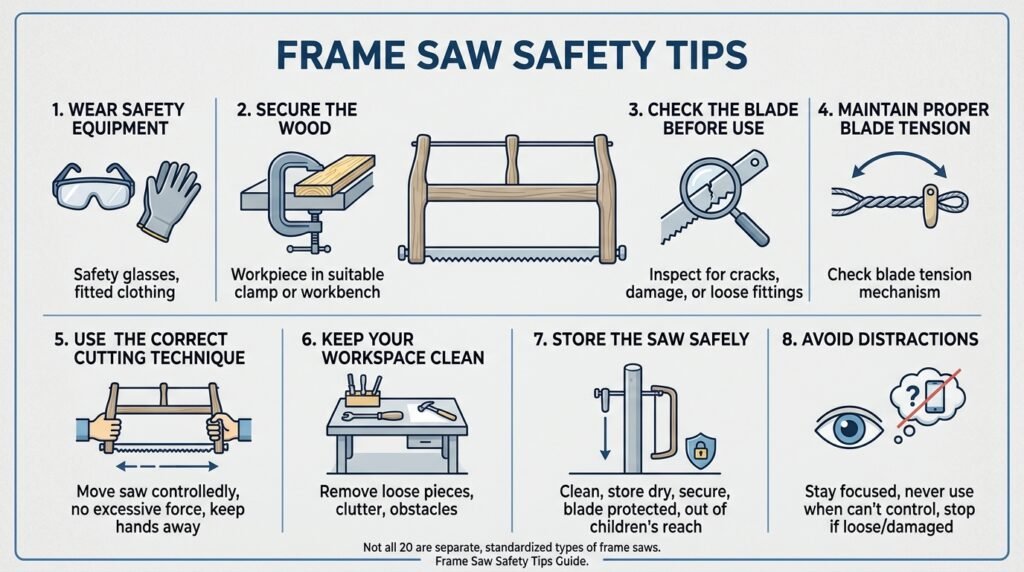
Wear safety glasses to shield your eyes from flying wood particles and dust. Use appropriate protective gear and wear fitted clothing to prevent fabric from getting caught in the saw.
Secure the Wood
Hold the workpiece firmly with a suitable clamp or workbench. Securing the wood helps prevent slipping and improves control during wood cutting.
Check the Blade Before Use
Inspect the frame saw blade for cracks, damage, or loose fittings. Replace damaged blades before starting work to reduce the risk of accidents.
Maintain Proper Blade Tension
Check the blade tension mechanism and ensure the blade is secure according to the manufacturer’s instructions. Correct tension helps the saw cut more steadily.
Use the Correct Cutting Technique
Move the saw in a controlled manner without applying excessive force. Let the woodworking hand tool do the cutting, and keep your hands away from the blade’s path.
Keep Your Workspace Clean
Remove loose wood pieces, clutter, and other obstacles from your work area. A clean, well-lit workspace helps you maintain balance and focus.
Store the Saw Safely
After use, clean the saw and store it in a dry, secure place. Keep the blade protected and out of children’s reach to prevent accidental injuries.
Avoid Distractions
Stay focused while cutting wood. Never use a saw when you cannot maintain proper control, and stop immediately if the blade becomes loose or damaged.
Avoid Common Mistakes When Using a Frame Saw
Using the Wrong Blade
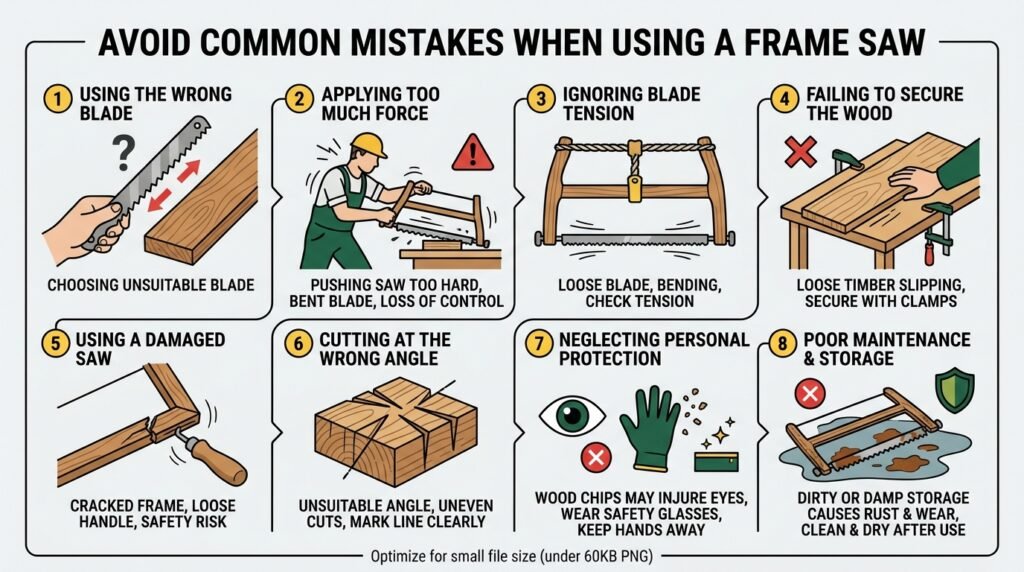
Choosing an unsuitable frame saw blade can make cutting difficult and reduce accuracy. Select the blade according to the wood type and the cut you need.
Applying Too Much Force
Pushing the saw too hard can reduce control and damage the blade. Use steady movements and let the teeth cut through the wood naturally.
Ignoring Blade Tension
A loose tensioned saw blade may bend or move during cutting. Check the blade tension mechanism before starting and follow the manufacturer’s instructions.
Failing to Secure the Wood
Loose timber can slip while you are cutting. Secure the workpiece with suitable clamps to improve stability and control.
Using a Damaged Saw
A cracked frame, loose handle, or worn blade can create safety risks. Inspect your woodworking hand tools before each use and replace damaged parts.
Cutting at the Wrong Angle
Holding the saw at an unsuitable angle can produce uneven cuts. Mark your cutting line clearly and guide the blade carefully along it.
Neglecting Personal Protection
Wood chips may injure your eyes during wood cutting. Wear safety glasses, keep your hands away from the blade, and maintain a clean workspace.
Poor Maintenance and Storage
Leaving the saw dirty or storing it in a damp place can cause wear and rust. Clean and dry the tool after use, then store it safely.
Conclusion
Understanding frame saw types makes it easier to choose the right tool for your woodworking tasks. Each design serves a specific purpose, from cutting straight lines to shaping curves. Before buying a saw, consider its blade, frame size, and intended use. Always follow safety guidelines to achieve accurate cuts and better woodworking results.
Frequently Asked Questions About Frame Saws
Q1. What is a frame saw used for?
A frame saw is a hand tool used in woodworking to cut timber, shape wood, and prepare boards for furniture making and other projects.
Q2. What are the common types of frame saws?
Common designs include traditional frame saws, bow saws, turning saws, and coping saws. Each serves different cutting needs.
Q3. What is the difference between a frame saw and a bow saw?
A frame saw generally has a blade stretched tightly within a supporting frame. A bow saw is a particular type with a curved frame, commonly used to cut tree branches and logs.
Q4. How do I choose the right frame saw?
Choose a saw based on the wood thickness, the type of cut, blade teeth, frame size, and your project’s requirements.
Q5. How can I use a frame saw safely?
Clamp the wood firmly, check the blade for damage, put on safety glasses, keep your fingers away from the blade, and cut with smooth, controlled movements.