
Introduction
How to trim overgrown rose bushes is an important skill for maintaining healthy plants, improving airflow, and encouraging better flowering. When rose bushes become too large, their branches may overlap, dead stems can accumulate, and sunlight may not reach the inner growth. Proper pruning helps restore their shape without removing too much healthy growth. This guide explains the right pruning time, suitable tools, cutting techniques, and aftercare to help manage overgrown roses safely, especially during summer.

Table of Contents
When Is the Best Time to Prune Overgrown Rose Bushes in Summer?
Summer pruning is best done when the weather is mild rather than during extreme heat. For most established roses, a light trim after the first flush of flowers helps remove faded blooms and encourages another flowering cycle. In hot regions, early morning is a better time because plants are less stressed than during the afternoon sun.
Prune After the First Flowering Period
Many repeat-flowering roses produce their first major display in late spring or early summer. Once most flowers have faded, remove the spent flower clusters and any weak or damaged growth. This helps the plant direct energy towards healthy shoots instead of developing unnecessary seed heads.
Choose a Mild, Dry Day
Avoid heavy pruning during heatwaves, drought, or periods of intense sunlight. Cutting healthy branches during stressful weather can make recovery harder. Wait until the plant has received enough water and temperatures become more suitable. Prune when the foliage is dry to make handling easier and reduce the spread of some fungal diseases.
Consider the Type of Rose
Different roses need different summer pruning schedules. Repeat-flowering hybrid teas and floribundas can benefit from light trimming after flowering. Once-blooming climbing roses should generally be pruned after their flowering season, while rambling roses often need their main pruning after flowering.
For pruning overgrown rose bushes, avoid removing large amounts of healthy growth in summer. Focus on dead rose canes, faded flowers, and damaged rose stems. Save major renovation pruning for the appropriate dormant or late-winter period, depending on the rose variety and local climate.
How to Identify Dead, Damaged, and Unhealthy Rose Canes
Before pruning an overgrown rose bush, examine its branches carefully to decide which growth needs removal. Not every brown or leafless cane is dead, and cutting healthy branches unnecessarily can reduce flowering. Check the colour, firmness, and condition of each stem before making a cut.
Check the Stem Colour and Scratch Test
Healthy rose canes usually have green tissue beneath their outer bark, while dead stems are often brown, grey, and dry. If you are unsure whether a branch is alive, gently scratch a small area of the outer surface with your fingernail or a clean knife. Green or moist tissue underneath indicates living growth. Brown, dry tissue usually indicates dead wood. Repeat the check slightly lower on the cane if necessary to locate healthy tissue.
Look for Signs of Disease and Physical Damage
Inspect the branches for blackened patches, unusual swelling, cracks, and soft or decaying areas. Diseased canes may show dark lesions or discoloured sections that spread along the stem. Remove clearly infected growth by cutting back to healthy tissue with clean, sharp garden pruning shears. Disinfect the blades between cuts on suspected diseased branches to reduce the risk of spreading infection.
Recognise Weak and Unproductive Growth
Thin, poorly developed stems often produce fewer flowers and may struggle to support new growth. Also look for branches that rub against each other, grow towards the centre, or have broken tips. These can restrict airflow and create crowded areas where moisture remains.
Remove dead rose canes, prune damaged rose stems, and clear weak or crossing branches where necessary. When checking healthy rose canes, look for firm stems without visible damage. Preserving strong branches helps maintain the bush’s structure and supports better flowering.
Important: Do not judge a cane by its colour alone. Some healthy older rose stems naturally develop brown or woody bark. Use the scratch test and check the firmness of the tissue before removing a branch.
Preparing Rose Bushes and Tools Before Pruning
Proper preparation makes pruning safer and helps prevent unnecessary damage to rose plants. Before cutting any branches, inspect the bush, clear the surrounding area, and check that your equipment is clean and sharp. This is particularly important when dealing with large bushes that have dense growth and hidden thorny branches.
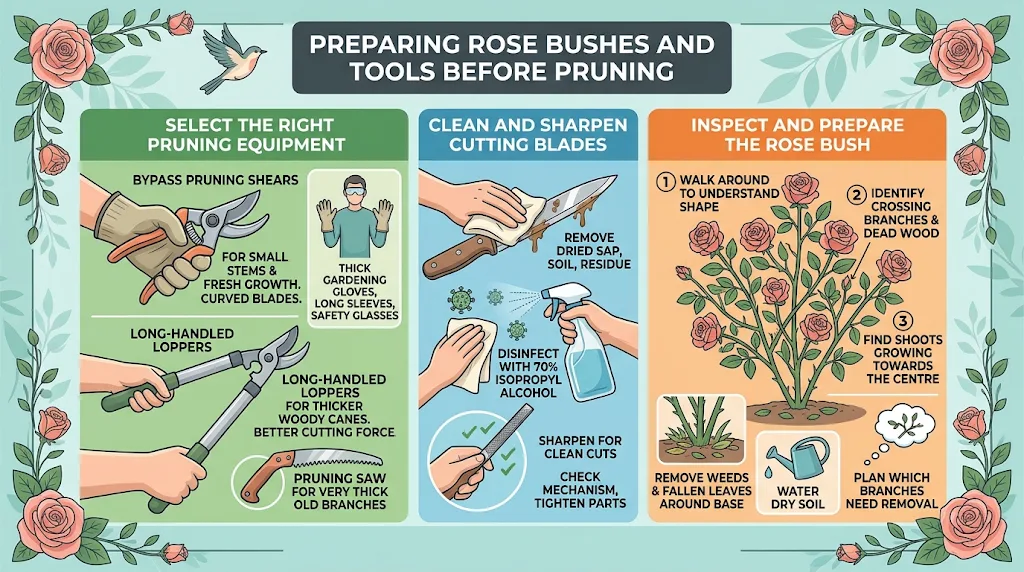
Select the Right Pruning Equipment
Use sharp bypass garden pruning shears for small stems and fresh growth. Their curved blades make clean cuts without crushing soft plant tissue. For thicker, woody canes, use long-handled loppers that provide better cutting force. A pruning saw may be needed for old branches that are too thick for ordinary shears.
Wear thick gardening gloves, long sleeves, and safety glasses to protect your hands, arms, and eyes from thorns and loose branches.
Clean and Sharpen the Cutting Blades
Dirty or blunt blades can crush stems and leave uneven wounds. Remove dried sap, soil, and plant residue with a suitable brush or cloth. Disinfect the cutting blades with 70% isopropyl alcohol, following safe handling instructions, especially when moving between diseased plants. Allow the blades to dry before use.
Check that the cutting mechanism works smoothly and tighten any loose parts. Sharp equipment makes it easier to remove dead rose canes without damaging nearby healthy growth.
Inspect and Prepare the Rose Bush
Walk around the entire plant to understand its shape and identify crowded sections. Look for crossing branches, damaged stems, dead wood, and shoots growing towards the centre. Remove weeds and fallen leaves around the base so you can see the lower branches clearly.
If the soil is very dry, water the rose bush before pruning and allow it to recover from water stress. Avoid heavy watering that leaves the ground waterlogged.
Finally, plan which branches need removal before making the first cut. This prevents excessive trimming and helps preserve the plant’s natural structure.
How to Trim Overgrown Rose Bushes Without Damaging Healthy Growth
Trimming a large rose bush requires careful cutting rather than removing branches randomly. The main goal is to reduce excessive growth while preserving strong canes that support new leaves and flowers. Start by removing clearly unwanted branches, then gradually improve the plant’s shape. This approach helps maintain its natural structure and reduces unnecessary stress.
Remove Dead and Damaged Branches First
Begin with completely dead, broken, and diseased canes. Follow each damaged stem downwards until you reach firm, healthy tissue. Make the cut slightly above a healthy section or back to the point where the cane joins another branch. Remove severely diseased canes at their base when necessary.
Use clean, sharp garden pruning shears for smaller stems and loppers for thicker branches. Do not leave long dead stubs because they can become entry points for decay.
Make Cuts Above Outward-Facing Buds
When shortening a healthy cane, locate a strong bud facing away from the centre of the plant. Make a clean cut approximately 5–6 mm above it, sloping slightly away from the bud. This encourages new growth to develop outward rather than into the crowded centre.
Avoid cutting too close to the bud, as this can damage it. Leaving a long stub is also undesirable because the remaining section may die back.
Reduce Excessive Growth Gradually
Remove weak, thin, and inward-growing stems that make the bush overcrowded. Keep strong, well-spaced canes that provide a balanced structure. For an extremely large plant, avoid removing a large amount of healthy growth during hot summer weather.
A useful approach to pruning overgrown rose bushes is to work around the plant in sections. Step back occasionally to check its shape from different angles. This helps prevent one side from becoming shorter or thinner than the other.
Preserve Healthy Flowering Canes
Not every long branch needs cutting. Some healthy canes carry flower-producing shoots, so shortening them unnecessarily can reduce the next display. Focus on removing unwanted growth while maintaining enough strong branches for future flowering.
After each cut, check that the remaining stems have enough space for airflow and sunlight. Proper rose pruning techniques help maintain a manageable shape without sacrificing healthy growth.
Removing Crossing, Crowded, and Weak Rose Branches
Overgrown rose bushes often develop branches that overlap, rub against each other, or grow towards the centre of the plant. This crowded growth can reduce airflow, block sunlight, and create wounds where stems repeatedly rub together. Removing selected branches helps open the plant’s structure while preserving strong, healthy canes.
Identify Branches That Rub Against Each Other
Look for two stems touching or crossing at the same point. Wind can cause these branches to rub repeatedly, damaging their outer bark and exposing the inner tissue. Choose the weaker, damaged, or poorly positioned branch for removal. Keep the stronger stem if it is growing in a useful direction.
Use sharp garden pruning shears to make a clean cut without crushing the remaining branch. For thicker stems, use suitable loppers.
Clear Crowded Growth From the Centre
Examine the middle of the bush for shoots growing inward or tightly packed branches competing for space. Remove selected inward-growing stems, especially those blocking the centre or preventing sunlight from reaching healthy growth.
This helps improve air circulation and allows leaves to dry more quickly after rain or watering. Better airflow can reduce conditions that favour fungal diseases, although it does not prevent every plant disease.
Remove Weak and Thin Stems
Thin, damaged, or poorly developed shoots may contribute little to the overall structure. Look for stems that are much thinner than nearby healthy canes, have limited growth, or produce very weak shoots. Remove those that are unlikely to develop into strong branches.
When pruning overgrown rose bushes, avoid removing every small stem. Some young shoots are healthy replacement growth and should be preserved. Check their colour, firmness, and direction before cutting.
Maintain Enough Space Between Branches
After removing unwanted growth, look at the entire bush from different sides. Strong branches should have enough room to grow without constantly rubbing against neighbouring stems. Avoid creating large empty gaps or removing too many healthy canes at once.
Proper rose bush maintenance involves selective pruning rather than excessive cutting. A balanced arrangement of strong branches helps the plant maintain its shape and supports healthy flowering.
How Much of an Overgrown Rose Bush Should You Cut Back?
The amount of growth to remove depends on the rose variety, its condition, and the season. An overgrown bush may have long branches, crowded stems, and dead wood, but cutting everything back to the same height is not a suitable approach. The aim is to improve its shape while keeping enough healthy foliage and strong canes to support continued growth.
Follow the One-Third Pruning Rule Carefully
For routine summer maintenance, removing around one-third of the unwanted growth is a useful conservative guideline for many established repeat-flowering roses. However, it is not a fixed rule for every variety or situation. During hot weather, avoid heavy cutting and remove only dead, damaged, and overcrowded branches.
If the bush needs major renovation, divide the work into stages rather than removing too much healthy growth in one session.
Consider the Age and Condition of the Rose
Young rose bushes need enough healthy stems and leaves to establish their root systems. Avoid aggressive trimming because excessive removal can slow their development.
Established bushes can usually tolerate more selective pruning. Older plants with thick woody canes may need gradual renovation, especially if the centre has become crowded. Remove dead wood first and preserve strong, productive branches.
Adjust the Amount According to Rose Variety
Different varieties have different growth habits:
- Hybrid tea roses: Remove weak and damaged stems while maintaining strong, well-spaced canes.
- Floribunda roses: Thin crowded growth and remove faded flower clusters to encourage repeat flowering.
- Climbing roses: Preserve their main framework and shorten selected side shoots when appropriate.
- Shrub roses: Remove unwanted growth gradually while maintaining their natural shape.
Recognise When You Have Pruned Enough
Stop when the bush has a balanced shape, fewer crossing branches, and enough healthy foliage to support growth. Avoid stripping the plant of most of its leaves during summer because leaves produce energy through photosynthesis.
When cutting back overgrown roses, remember that the goal is not to make the bush as small as possible. Careful rose pruning techniques should improve airflow, remove unhealthy growth, and preserve the branches needed for future flowering.
Pruning Different Rose Varieties During Summer
Not all roses respond to summer pruning in the same way. Some varieties produce flowers repeatedly throughout the growing season, while others bloom mainly once a year. Their growth habits also differ, so the pruning method should match the type of rose rather than applying the same cutting technique to every bush.
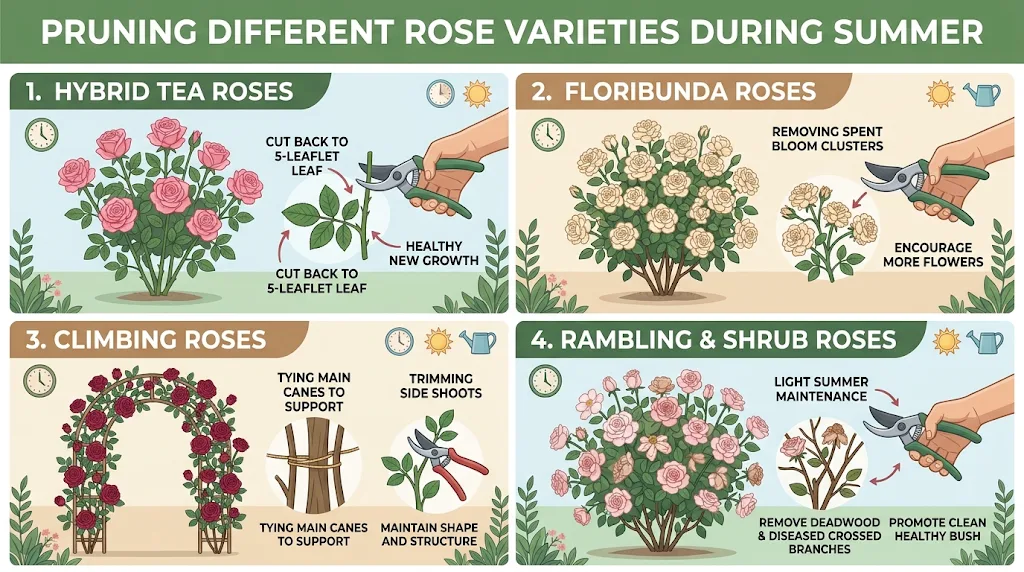
Hybrid Tea Roses
Hybrid tea roses produce large flowers on long, upright stems. During summer, remove faded flowers by cutting the flowering stem back to a strong, healthy leaf with five leaflets, where suitable. Remove dead, damaged, and weak canes when necessary. Avoid cutting back too much healthy growth during hot weather because the plant needs its leaves to produce energy.
Floribunda Roses
Floribunda roses produce clusters of flowers rather than individual blooms. Once most flowers in a cluster have faded, remove the spent cluster to encourage another flowering cycle. Cut above a healthy outward-facing leaf or suitable bud. Also remove crossing branches and weak shoots that make the centre overcrowded.
Climbing Roses
Climbing roses need their main framework preserved because their long canes support future flowering growth. During summer, remove faded flowers and damaged side shoots where appropriate. Tie long, flexible canes to their support instead of cutting them unnecessarily. Some climbing varieties flower on older wood, so excessive pruning can remove next season’s flower-producing stems.
Rambling and Shrub Roses
Many rambling roses flower once during the season. Their main pruning is generally carried out after flowering, not during active summer growth. Shrub roses usually need light maintenance, such as removing dead wood and shortening unwanted branches to maintain their natural shape.
Match the Pruning Method to the Flowering Habit
Before pruning overgrown rose bushes, identify whether the plant flowers once or repeatedly. Check its variety if possible, because removing healthy older canes at the wrong time may reduce future blooms. Good rose pruning techniques focus on removing unnecessary growth while preserving productive stems.
For summer maintenance, use clean garden pruning shears and avoid severe cutting during extreme heat. This helps protect healthy growth while keeping the plant manageable.
Common Mistakes to Avoid When Cutting Back Overgrown Roses
Pruning an overgrown rose bush requires attention because incorrect cutting can damage healthy stems and reduce flowering. Avoiding a few common mistakes helps maintain the plant’s structure and supports better recovery.
Removing Too Many Healthy Branches
Cutting away too much growth at once can reduce the leaves needed for photosynthesis. During summer, avoid severe pruning, particularly when temperatures are high. Remove dead, diseased, and crowded stems first, then assess whether additional trimming is necessary.
Making Cuts in the Wrong Position
Cutting too close to a bud can damage it, while leaving a long stub may cause the remaining stem to die back. Make clean cuts approximately 5–6 mm above a healthy, outward-facing bud.
Using Dirty or Blunt Tools
Blunt blades can crush stems instead of cutting them cleanly. Dirty equipment may also transfer disease between plants. Clean and disinfect garden pruning shears regularly, especially after removing infected branches.
Ignoring the Rose Variety
Different roses produce flowers on different types of growth. Excessive summer pruning of climbing or once-flowering roses may remove stems needed for future blooms. Identify the variety before removing major branches.
How to Care for Rose Bushes After Heavy Pruning
After removing unwanted growth, give the plant suitable care so it can recover without additional stress. Pay attention to soil moisture, sunlight, and signs of damage.
Water According to Soil Conditions
Water deeply around the root zone when the upper soil begins to dry. Avoid frequent shallow watering because it may not reach deeper roots. Do not allow water to collect around the base, as waterlogged soil can damage roots.
Apply a Suitable Layer of Mulch
Spread approximately 5–7 cm of organic mulch, such as composted bark, around the plant. Keep the mulch several centimetres away from the main stems to prevent excessive moisture around the crown.
Monitor New Leaves and Stems
Check the bush regularly for wilting, unusual leaf discolouration, or damaged shoots. Remove any newly discovered diseased growth using clean equipment. Avoid unnecessary cutting while the plant is recovering.
How to Encourage Healthy New Growth After Pruning
Healthy new growth depends on suitable growing conditions rather than cutting alone. Once the plant begins producing fresh shoots, provide consistent care without forcing rapid growth.
Maintain Adequate Sunlight
Most roses grow best with around six hours of direct sunlight daily. Avoid placing newly exposed stems under sudden intense heat if the plant was previously growing in partial shade.
Provide Balanced Nutrition
If the rose is actively growing and the soil needs nutrients, use a suitable rose fertiliser according to its label. Avoid applying excessive nitrogen because it can encourage soft leafy growth instead of balanced flowering.
Remove Unwanted New Shoots
Watch for weak, inward-growing, or damaged shoots as they develop. Preserve strong outward-facing growth and remove unwanted shoots selectively.
Maintain Consistent Soil Moisture
Check the soil regularly, particularly during hot summer weather. Deep watering when needed helps support developing roots and new stems. Proper rose bush maintenance encourages stronger growth and helps the plant establish a balanced shape.
Conclusion
Trimming an overgrown rose bush requires patience and careful attention to its growth pattern. Removing dead, damaged, weak, and crossing branches helps improve airflow and maintain a balanced shape. Choose the pruning method according to the rose variety and avoid heavy cutting during extreme summer heat. With clean tools, suitable watering, and proper aftercare, pruning overgrown rose bushes can support healthy new growth and future flowering.
Top 5 Five FAQs
Q1. When is the best time to trim overgrown rose bushes?
Late winter or early spring is suitable for major pruning of many repeat-flowering roses. Light summer trimming can remove faded flowers and damaged growth.
Q2. How much should you cut back an overgrown rose bush?
For routine summer maintenance, remove unwanted growth gradually. Avoid cutting more than one-third of healthy growth at once unless the variety and pruning season allow it.
Q3. Can you prune overgrown rose bushes in summer?
Yes. You can remove dead, damaged, and crossing branches during summer. Avoid severe pruning during extreme heat.
Q4. Should dead branches be removed from rose bushes?
Yes. Remove completely dead, broken, and diseased branches to improve plant health and reduce potential sources of infection.
Q5. How do you encourage new growth after pruning roses?
Provide adequate sunlight, water when the soil begins to dry, apply suitable fertiliser when needed, and maintain a layer of organic mulch around the plant.