
Introduction
How to cut dead rose stems is an important gardening skill that helps keep rose bushes healthy, tidy, and free from damaged growth. Dead, broken, or diseased branches can affect the plant’s appearance and create conditions that encourage fungal problems. However, removing the wrong stems can damage healthy growth and reduce future flowering. Understanding the correct pruning time, identifying dead canes, and using suitable tools helps gardeners remove unwanted branches safely. This guide explains practical pruning methods, common mistakes, and aftercare to help maintain healthy rose plants.

Table of Contents
How to Cut Dead Rose Stems Safely and Correctly
Removing dead stems is an important part of rose plant maintenance. Dead or damaged branches can make a rose bush look untidy and may provide places where fungal diseases develop. Proper pruning helps maintain the plant’s shape and allows healthy stems to receive better access to sunlight and air.
Before cutting, check whether a stem is completely dead. Some rose branches may look dry on the outside but still contain living tissue underneath the bark. Cutting healthy wood unnecessarily can reduce flowering growth.
Check Which Rose Stems Need Cutting
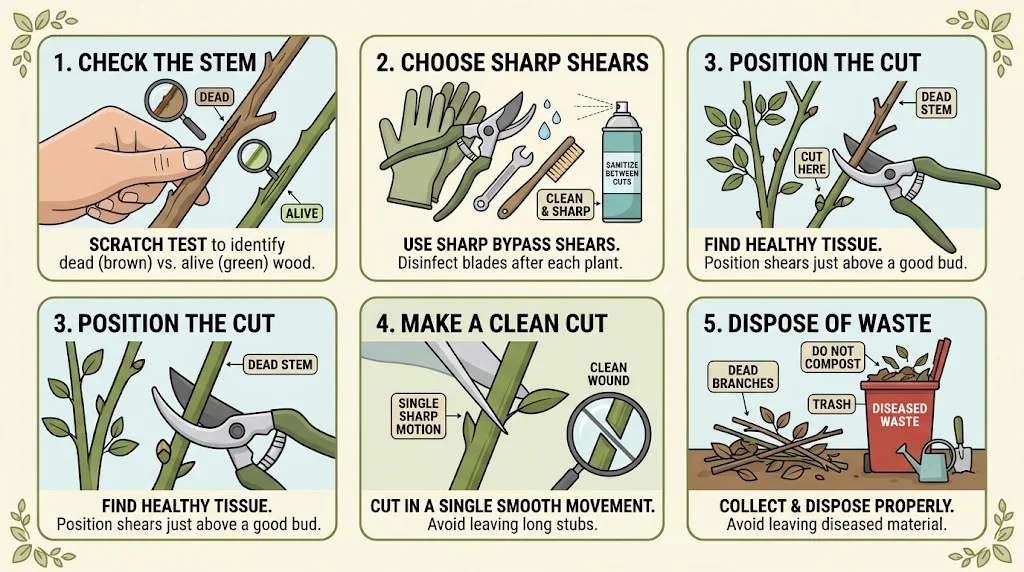
Start by examining the entire rose bush, including its inner branches. Look for stems that are completely dry, brittle, dark, or shriveled. A simple scratch test can help you identify them.
Gently scratch a small area of the stem with your fingernail or a clean knife.
- Brown or black tissue: Usually indicates dead or damaged wood.
- Green tissue: Indicates that the stem is still alive.
- Dry, brittle branches: Often need removal if they have no living growth.
This method helps with identifying dead rose stems without removing healthy branches by mistake. Also, check for unusual spots, soft areas, or signs of disease.
Use Clean and Sharp Pruning Shears
Choose sharp bypass pruning shears for removing smaller rose stems. They make cleaner cuts than blunt tools, which can crush plant tissue and create rough wounds.
Before pruning, clean the blades to remove dirt and plant residue. If you suspect disease, disinfect the blades between cuts using an appropriate disinfectant according to its instructions. This helps prevent spreading infection between branches.
Make Clean Cuts Without Damaging Healthy Growth
Hold the dead stem firmly and cut it back until you reach healthy tissue. If the entire branch is dead, remove it near its point of origin without cutting into the main crown or damaging nearby healthy canes.
For partially damaged stems, continue cutting downward until the inside of the stem shows healthy green or pale tissue.
These proper pruning cuts help avoid unnecessary damage. When cutting back damaged rose canes, avoid leaving long, dead stubs because they can become entry points for decay.
Dispose of Dead and Diseased Stems Properly
Collect removed branches and fallen leaves from around the plant. Do not leave diseased material under the rose bush. Dispose of infected stems in household waste rather than composting them unless your local composting system safely handles diseased plant material.
Regular inspection and careful pruning support healthy rose growth and make future maintenance easier.
Best Time to Remove Dead Stems from Rose Bushes
Choosing the right time to remove dead rose stems helps prevent unnecessary damage and keeps the plant in good condition. Unlike heavy pruning, removing completely dead or broken branches can usually be done whenever they are noticed. However, weather conditions, flowering habits, and the condition of the rose bush should guide your approach.
Remove Dead Stems as Soon as You Notice Them
Completely dead, broken, or diseased stems should not be left on the plant for long periods. They can collect moisture, develop decay, and create conditions that encourage fungal problems. Inspect your rose bush regularly, especially after strong winds, heavy rain, or extreme heat.
For removing dead wood from rose plants, choose a dry day when possible. Dry conditions allow you to examine the branches more easily and reduce the chance of spreading some fungal diseases through wet plant material.
Choose the Right Season for Rose Pruning
The best season for major pruning depends on the rose variety and your local climate.
- Spring: Remove winter-damaged branches and dead canes when new growth begins. Avoid cutting healthy shoots unnecessarily.
- Summer: Remove dead flowers, damaged stems, and diseased branches as needed. Light pruning can also improve airflow through crowded growth.
- Autumn: Remove broken or diseased material, but avoid heavy pruning that may encourage tender new growth before cold weather.
- Winter: In mild climates, dead stems can be removed when necessary. In colder regions, wait until severe frost has passed before carrying out major pruning.
Consider Summer Heat Before Cutting
Summer pruning requires extra care, particularly during hot and dry weather. Although dead stems can be removed when necessary, avoid working during the hottest part of the day. Early morning is generally more comfortable for gardening.
For rose plant maintenance, check soil moisture before and after pruning. Water the plant when the soil is dry, but avoid keeping the roots constantly wet. Do not remove large amounts of healthy foliage during extreme heat because leaves help protect the plant from sun exposure.
Adjust Pruning Time According to Rose Varieties
Different roses have different flowering habits, so the timing of routine pruning matters.
- Hybrid tea roses: Remove dead and damaged canes whenever necessary. Carry out major shaping according to the local growing season.
- Floribunda roses: Remove dead stems promptly and lightly maintain crowded growth.
- Climbing roses: Remove dead canes while protecting healthy framework branches. Some varieties flower on older wood, so avoid unnecessary cutting.
- Old garden roses: Check their flowering habits before removing healthy branches, as some bloom on previous year’s growth.
Understanding these differences helps you decide when to prune dead rose stems without accidentally removing branches that are important for future flowering.
Avoid Pruning During Unfavourable Conditions
Avoid unnecessary pruning during severe frost, extreme heat, or prolonged wet weather. Wet conditions can make disease management more difficult, while excessive heat can increase stress on already weak plants.
If a branch is infected or badly broken, remove it promptly using clean tools rather than waiting for the ideal season. This balances timely plant care with protection of healthy growth.
How to Identify Dead, Damaged, and Diseased Rose Canes
Before removing any rose stem, it is important to determine whether it is actually dead, physically damaged, or affected by disease. These conditions may look similar, but they require slightly different care. Removing healthy branches by mistake can reduce flowering and slow the development of the rose bush.
Signs of Completely Dead Rose Canes
Dead canes usually lose their natural green colour and become dry and brittle. Their outer surface may turn brown, grey, or black. They may also have shriveled bark and no visible buds or new shoots.
To confirm, gently scratch a small section of the outer bark with a clean fingernail.
- Green or pale green tissue underneath indicates living wood.
- Brown and dry tissue usually indicates dead wood.
- A brittle stem that breaks easily is often completely dead.
This simple check helps with identifying dead rose stems before making a pruning decision.
How to Recognize Damaged Rose Stems
Damaged canes are not always completely dead. Some may still have healthy tissue but show signs of physical injury.
Look for these common problems:
- Cracked stems: Splits in the bark caused by strong winds or physical pressure.
- Broken branches: Stems that are bent sharply or hanging loosely.
- Blackened tips: Dark, dry sections near the ends of branches.
- Frost damage: Discoloured or shriveled growth following cold weather.
When cutting back damaged rose canes, check how far the injury extends. Remove only the damaged section if the lower part remains healthy.
Signs of Diseased Rose Canes
Diseased stems may develop unusual discolouration, sunken patches, or dark lesions. Some fungal diseases cause reddish, purple, brown, or black areas on the bark. These marks may gradually spread along the branch.
Watch for:
- Black or dark brown lesions on stems.
- Soft or rotting sections of wood.
- Cracked bark around discoloured areas.
- Unusual swelling or dying tissue near branch joints.
Not every dark mark indicates disease, so examine the surrounding tissue and overall plant condition before deciding what to remove.
Check the Difference Before Pruning
| Stem condition | Common signs | Action |
|---|---|---|
| Dead | Dry, brittle, brown inside | Remove dead wood |
| Damaged | Cracked, bent, or broken | Cut below the injury |
| Diseased | Spreading lesions or rotting tissue | Remove affected sections |
| Healthy | Firm stem with green tissue | Keep it |
Why Correct Identification Matters
Accurate identification prevents unnecessary cutting and protects healthy branches. It also makes rose pruning techniques more effective and supports better rose plant maintenance.
If disease is suspected, disinfect pruning tools between cuts and dispose of infected material appropriately. Avoid putting potentially infected branches into ordinary garden compost.
Tools Needed for Pruning Dead Rose Stems
Using suitable gardening tools makes rose pruning easier, safer, and more accurate. The right equipment helps remove dead branches without crushing healthy tissue or damaging nearby shoots. Before starting, prepare your tools according to the thickness and condition of the stems.
Bypass Pruning Shears for Small Stems
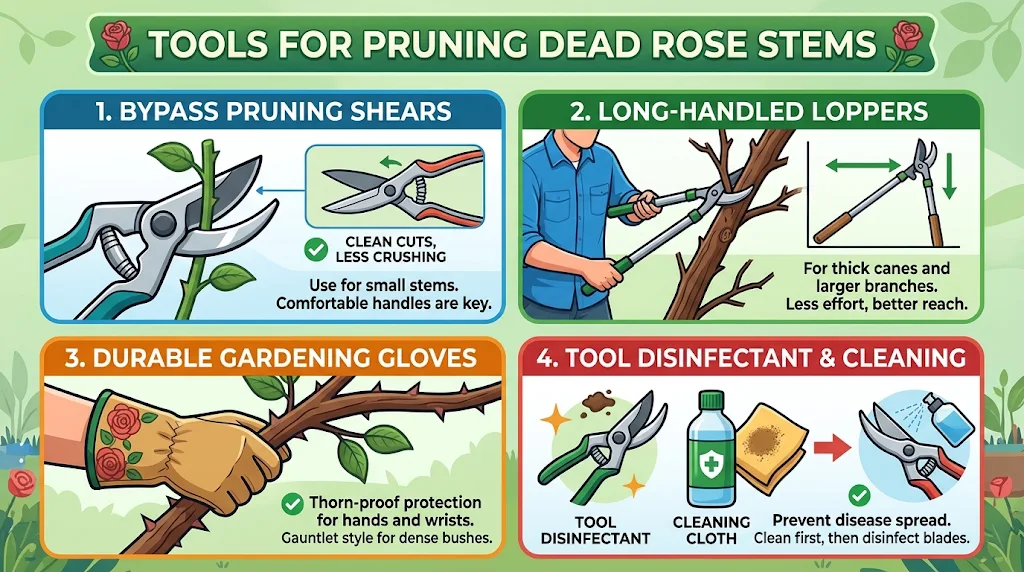
Bypass pruning shears are useful for cutting small and medium-sized rose stems. Their two curved blades pass each other like scissors, producing a cleaner cut than anvil-style shears.
Choose a sharp pair with comfortable handles. Blunt blades can crush stems instead of cutting them properly.
Loppers for Thick Rose Canes
Thick, woody branches may be too difficult to cut with ordinary hand shears. Long-handled loppers provide extra leverage and help remove larger dead canes with less effort.
Use them only when necessary, and avoid cutting healthy main branches unnecessarily.
Protective Gardening Gloves
Rose stems often contain sharp thorns that can scratch or puncture skin. Wear durable gardening gloves that cover your hands and wrists. Long-cuff gloves offer additional protection when working inside dense rose bushes.
Disinfectant for Cleaning Pruning Tools
Cleaning tools is important, particularly when dealing with diseased branches. Remove dirt and plant residue first, then disinfect the blades using a suitable product according to its instructions. This reduces the risk of transferring plant pathogens between cuts.
Additional Equipment for Safe Pruning
Keep these useful items nearby:
- Safety glasses: Protect your eyes from thorny branches.
- Small hand saw: Helps remove thick, woody canes that loppers cannot cut easily.
- Cleaning cloth: Removes moisture and plant residue from blades.
- Garden waste bag: Collects removed branches and diseased material.
Check Your Tools Before Starting
Inspect the blades for rust, looseness, or damage. Make sure handles are secure and cutting edges are sharp. Proper equipment supports rose pruning techniques, helps make proper pruning cuts, and improves overall rose plant maintenance.
For better results, use a tool that matches the thickness of each branch rather than forcing small shears through thick wood.
Step-by-Step Techniques for Cutting Dead Rose Stems
Removing dead branches requires more than simply cutting them off. The position of the cut, condition of the stem, and type of pruning tool all affect how safely the work can be done. A careful approach helps protect healthy canes and prevents unnecessary damage to the rose bush.
Step 1: Examine the Entire Rose Bush
Start by looking at the plant from different sides. Identify completely dry branches, broken canes, and sections showing signs of disease. Check the lower parts of the bush because dead growth can sometimes remain hidden behind healthy leaves.
Use the scratch test to confirm whether a stem is alive. Green tissue underneath the bark usually indicates living wood, while dry brown tissue suggests that the section may be dead.
Step 2: Prepare and Clean Your Pruning Tools
Select sharp bypass pruning shears for smaller branches. Use loppers or a pruning saw for thicker woody canes.
Before cutting, remove dirt and plant residue from the blades. Disinfect them with a suitable product, especially when working with diseased stems. Wear protective gloves to avoid injuries from rose thorns.
Step 3: Remove Completely Dead Stems
Hold the dead branch carefully and follow it down toward its base. Make a clean cut close to the point where it joins the healthy main cane or crown.
Avoid cutting into the crown or damaging nearby living branches. If the stem is thick, use suitable loppers or a pruning saw instead of forcing hand shears through it.
Step 4: Trim Partially Damaged Branches
Some canes have dead tips but remain healthy near their base. In this situation, remove only the damaged portion.
Continue checking the inside of the stem until you reach firm, healthy tissue. This process supports cutting back damaged rose canes without removing useful growth.
Step 5: Remove Diseased Growth Carefully
If you notice spreading dark lesions, rotting tissue, or other signs of infection, remove the affected sections. Disinfect the cutting blades between cuts to reduce the risk of spreading disease.
Collect infected branches separately and dispose of them according to local garden-waste guidance.
Step 6: Inspect the Plant After Cutting
Once pruning is complete, examine the bush again. Check for remaining dead stubs, damaged branches, and accidental injuries to healthy canes.
Remove loose plant debris from around the base. These rose pruning techniques help maintain airflow and support healthy development.
Important Cutting Tips
- Avoid tearing or twisting branches while removing them.
- Do not remove healthy green canes unnecessarily.
- Keep cutting tools sharp to produce clean wounds.
- Avoid heavy pruning during extreme summer heat.
- Clean and disinfect tools when disease is suspected.
Following these steps makes pruning dead rose stems more controlled and helps maintain the structure of the plant.
Where to Make the Correct Pruning Cut on a Rose Stem
The position of a pruning cut can affect how a rose plant responds after removing damaged or unwanted growth. Cutting too far from the healthy section may leave a dead stub, while cutting too close can damage the remaining cane. Understanding where to make each cut helps protect living tissue and maintain the natural shape of the bush.
Cut Back to Healthy Green Tissue
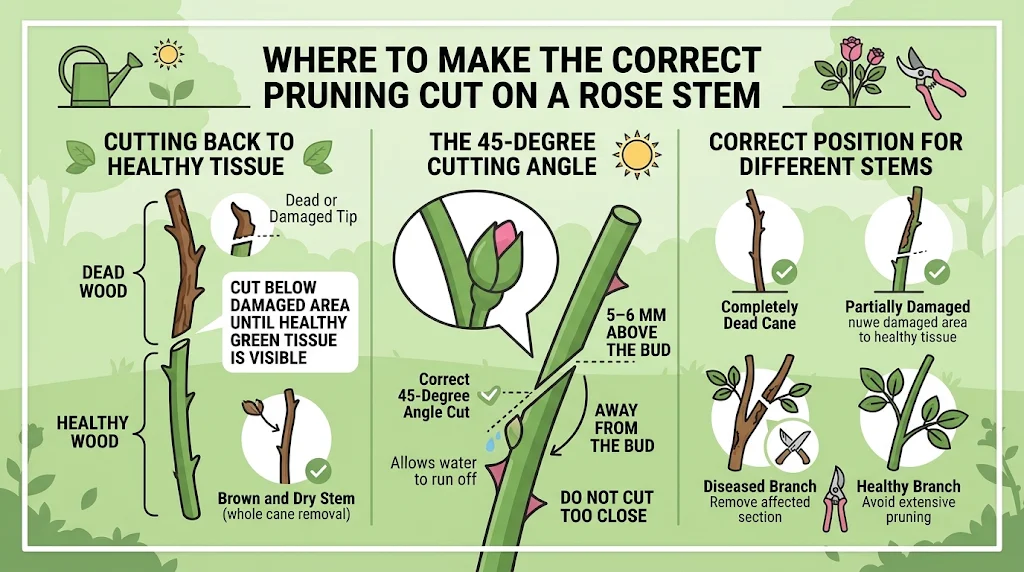
When a rose stem has a dead or damaged tip, follow it downward until you find firm, healthy wood. Make the cut just above the point where the inside of the stem shows healthy tissue.
If the stem remains brown and dry throughout its length, remove it near its base without injuring the crown or neighbouring canes. This approach helps with removing dead wood from rose plants while preserving healthy growth.
Understand the 45-Degree Cutting Angle
For cuts made above a healthy bud, a slight angle of approximately 45 degrees is commonly recommended.
- Position the cut about 5–6 mm above the bud.
- Keep the highest point of the cut just above the bud.
- Angle the cut away from the bud.
- Avoid cutting too close, as this can damage it.
This technique helps water run away from the bud rather than collecting directly above it.
Choose the Correct Position for Different Stems
The cutting position depends on the condition and location of the branch.
Completely dead canes: Remove them near their point of origin. Avoid leaving long dead sections or cutting into the crown.
Partially damaged canes: Cut below the damaged area until healthy tissue is visible.
Diseased branches: Remove the affected section and disinfect the blades between cuts.
Healthy branches: Avoid removing them simply to make the bush look smaller. Major shaping should follow the requirements of the rose variety.
Avoid These Common Cutting Errors
Incorrect cuts can create unnecessary problems during pruning. Watch out for these mistakes:
- Leaving long dead stubs above healthy tissue.
- Cutting directly through a healthy bud.
- Making cuts too close to the remaining cane.
- Tearing bark with blunt pruning shears.
- Cutting into the main crown while removing old branches.
Following proper pruning cuts and using sharp tools helps reduce physical damage. These careful rose pruning techniques also make regular rose plant maintenance easier and more effective.
Removing Dead Stems from Different Rose Varieties
Not all roses grow in the same way. Some produce flowers on new growth, while others bloom mainly on older branches. This difference matters when removing dead stems because cutting the wrong healthy cane can reduce future flowering. Before pruning, identify your rose variety and understand its growth habit.
Hybrid Tea Roses
Hybrid tea roses usually have upright growth and produce large flowers on individual stems. Inspect the bush for dry, blackened, or broken canes. Remove completely dead branches near their base and trim partially damaged stems back to healthy tissue.
When removing dead stems from rose bushes, avoid cutting healthy flowering canes unnecessarily, especially when the plant is actively producing buds.
Floribunda Roses
Floribunda roses produce clusters of flowers and often develop several branches close together. Dead stems can become hidden inside dense growth.
Remove dry and damaged canes to improve airflow. Also check for crossing branches that rub against each other, but avoid removing too much healthy growth during hot weather.
Climbing Roses
Climbing roses develop long canes that grow along walls, fences, and supports. Some varieties produce flowers on older wood, so removing healthy main canes at the wrong time can reduce flowering.
Identify completely dead branches and remove them carefully. Keep healthy framework canes in place and check the plant’s flowering habit before carrying out major pruning.
Miniature Roses
Miniature roses have compact growth and smaller stems. Use clean, sharp bypass shears to remove dry branches without disturbing nearby healthy shoots.
Because these plants have limited space between branches, make small, controlled cuts rather than trimming several sections together.
Old Garden and Shrub Roses
Old garden and shrub roses vary in their flowering habits. Some bloom on older canes, while others produce flowers on new growth.
Remove clearly dead, broken, and diseased wood, but identify the variety before cutting healthy branches. This is particularly important for roses that flower once during the growing season.
Important Care After Removing Dead Canes
After pruning, collect fallen leaves and removed branches from around the plant. Disinfect your tools if disease is suspected, and check that healthy stems have not been damaged.
Understanding different rose pruning techniques helps protect flowering wood and supports healthy rose growth. For reliable rose plant maintenance, adjust your approach according to the variety rather than using the same pruning method for every rose bush.
Common Rose Pruning Mistakes to Avoid in Summer
Summer pruning requires care because high temperatures, strong sunlight, and dry soil can place additional stress on rose plants. Removing dead or damaged branches is generally beneficial, but incorrect cutting methods can harm healthy growth and reduce flowering. Understanding common mistakes helps gardeners maintain their roses without unnecessary damage.
Removing Too Much Healthy Growth
One common mistake is cutting several healthy branches while trying to remove dead ones. Green canes, healthy leaves, and developing buds help the plant produce energy and flowers.
Before cutting, examine each branch carefully. Remove only dead, broken, or diseased sections unless the rose variety requires additional seasonal pruning. This prevents unnecessary stress during hot weather.
Pruning During Extreme Summer Heat
Avoid heavy pruning during very hot afternoons. Excessive heat can increase moisture loss and make gardening uncomfortable.
If dead stems need removal, choose a cooler time, preferably early morning. Water the plant when the soil is dry, but do not overwater it. These precautions support better rose plant maintenance during summer.
Using Blunt or Dirty Pruning Shears
Blunt blades can crush stems and leave uneven wounds. Dirty tools may also transfer plant pathogens between branches.
Use sharp bypass pruning shears and clean them before starting. If you find diseased growth, disinfect the blades between cuts using a suitable product according to its instructions.
Leaving Dead Stubs on the Plant
Cutting a branch too far above healthy tissue can leave a dry section behind. This dead material may decay over time and make the plant look untidy.
For removing dead wood from rose plants, follow the damaged stem down to its healthy base and remove it without injuring the crown or nearby branches.
Cutting Healthy Climbing Rose Canes
Some climbing roses produce flowers on older wood. Removing these healthy framework branches during summer can reduce future flowering.
Identify the variety before making major cuts. Remove clearly dead or broken canes, but preserve healthy main stems unless there is a specific reason to prune them.
Ignoring Signs of Rose Diseases
Dark lesions, unusual swelling, and rotting sections may indicate disease. Simply cutting the visible tip without checking the remaining cane can leave infected tissue behind.
Remove affected sections back to healthy wood and dispose of infected material appropriately. Avoid placing diseased branches in ordinary home compost.
Applying Fertilizer Immediately After Heavy Pruning
Adding excessive fertilizer after pruning is another mistake. It does not automatically help a stressed rose recover and may encourage unwanted soft growth.
Maintain suitable soil moisture and use fertilizer only when needed, following the product instructions and the plant’s growing-season requirements.
Forgetting to Clean the Area After Pruning
Dead leaves, broken branches, and diseased material should not remain scattered around the plant. Garden debris can provide shelter for pests and contribute to disease problems.
Collect the waste, inspect the remaining canes, and keep the surrounding soil surface reasonably clear.
Following careful rose pruning techniques and avoiding these mistakes makes summer maintenance more effective. Regular inspection also helps gardeners identify problems early and protect healthy flowering growth.
How to Care for Rose Plants After Removing Dead Stems
Proper care after pruning helps rose plants recover from cutting and maintain healthy growth. Although removing dead branches usually causes little stress, the plant still needs suitable water, sunlight, and growing conditions. A few simple steps can help protect the remaining stems and encourage new shoots.
Water the Plant According to Soil Moisture
Check the soil around the roots after pruning. If the upper layer feels dry, water slowly near the base of the plant. Avoid repeatedly watering when the soil is already moist, as excessive water can damage roots.
During hot summer weather, check soil moisture more frequently because heat increases water loss.
Maintain Good Air Circulation
Remove fallen leaves, dry branches, and plant debris from around the rose bush. Keep nearby vegetation from becoming too crowded.
Good airflow helps leaves dry more quickly after rain or watering and can reduce conditions that encourage fungal diseases. These simple steps support better rose plant maintenance.
Protect Healthy Stems from Extreme Heat
After removing damaged growth, avoid additional unnecessary pruning during very hot weather. Healthy leaves help the plant produce energy and provide some protection from direct sunlight.
If the plant is growing in a container, check that it does not dry out too quickly. Avoid moving an established outdoor rose into a completely different environment without considering its sunlight requirements.
Monitor New Shoots and Remaining Canes
Check the plant regularly for new buds, shoots, or unusual discolouration. Healthy new growth is generally firm and green, while continuing blackening or wilting may indicate a remaining problem.
If symptoms of disease appear, examine the affected area and remove infected tissue when appropriate.
Use Fertilizer Carefully
Do not apply excessive fertilizer immediately after removing dead branches. If the rose needs feeding, choose a fertilizer suitable for roses and follow the recommended application rate and seasonal instructions.
Avoid fertilizing dry, severely stressed plants until their growing conditions improve.
How Removing Dead Rose Stems Supports Healthy New Growth
Dead branches no longer produce leaves or flowers, so removing them helps maintain the structure of the rose bush. It also makes it easier to inspect healthy canes and identify problems before they spread.
Reduces Crowded and Unwanted Growth
Dead branches can occupy space between healthy canes. Removing them makes the plant easier to inspect and can improve airflow through crowded areas.
This is particularly useful for dense floribunda and shrub roses.
Helps Protect Healthy Plant Tissue
Broken or diseased branches can contain damaged or infected tissue. Removing affected sections with clean tools helps reduce the risk of further problems.
However, pruning does not guarantee that a disease will disappear. Continue monitoring the plant after cutting.
Allows Better Inspection of New Shoots
Once dead growth is removed, developing buds and healthy branches become easier to see. Gardeners can identify new shoots, monitor flowering, and notice damage earlier.
Good rose pruning techniques also help maintain a balanced plant shape without removing useful flowering wood.
Supports Better Long-Term Plant Maintenance
Regularly checking roses and removing genuinely dead branches helps prevent old, damaged material from accumulating. Combined with suitable watering, sunlight, and seasonal care, this supports healthy rose growth.
Remember that new shoots develop from living buds and healthy plant tissue, not simply because dead branches have been removed. The purpose of pruning is to protect the remaining plant and provide better conditions for continued growth.
Conclusion
Removing dead branches is an important part of maintaining healthy rose bushes. By identifying damaged canes, choosing suitable pruning tools, and making clean cuts, gardeners can protect healthy growth and maintain the plant’s structure. The right pruning approach also depends on the rose variety, season, and local weather conditions. Regular inspection, proper watering, and careful aftercare help roses remain in good condition and support continued growth.
Top 5 FAQs
Q1. When is the best time to cut dead rose stems?
Remove completely dead or broken stems whenever you notice them. Choose a dry, mild day when possible.
Q2. How can I tell if a rose stem is completely dead?
Scratch a small area of bark. Brown, dry tissue usually indicates dead wood, while green tissue underneath indicates a living stem.
Q3. Where should I cut a dead rose stem?
Cut the dead stem near its base without damaging the crown or nearby healthy branches. For partially damaged stems, cut back to healthy tissue.
Q4. Can I remove dead rose stems during summer?
Yes. You can remove dead, broken, or diseased stems during summer. Avoid unnecessary heavy pruning during extreme heat.
Q5. Will cutting dead rose stems encourage new growth?
Removing dead wood helps maintain the plant and protects healthy branches. New growth depends on the rose’s health, growing conditions, and season.