
Introduction
How to grow a rose bush from a cutting is a useful gardening skill for anyone who wants to grow new rose plants at home. This propagation method involves taking a healthy stem from an existing rose bush and encouraging it to develop roots. With proper preparation, suitable soil, and regular care, you can give a rose cutting a better chance of growing into a healthy plant. This guide explains the materials, planting steps, growing conditions, and care needed throughout the process.

Table of Contents
What You Need to Grow Roses from Cuttings
Growing roses from cuttings is a simple way to produce new rose plants at home. Before starting, gather a few basic gardening materials to help your healthy rose cutting develop roots and grow successfully.
Essential Materials
- Healthy rose stem: Choose a fresh, disease-free stem from a healthy rose bush.
- Pruning shears: Use clean, sharp shears to make neat cuts without damaging the stem.
- Well-draining potting soil: Use suitable soil that allows excess water to drain easily.
- Small planting pot: Choose a pot with drainage holes to prevent waterlogging.
- Rooting hormone: This can encourage root development, although it is optional.
- Clean water: Keep the growing medium slightly moist during the rooting process.
- Clear plastic bag: Use it to maintain humidity around the cutting.
Why Are These Materials Important?
Each material supports a different stage of rose propagation. Clean pruning shears help prepare the stem, while suitable soil provides a supportive environment for root development. Proper moisture and humidity also help prevent the cutting from drying out.
Choose a location with indirect sunlight to protect newly planted stems from excessive heat. With the right preparation and basic supplies, you can begin growing roses at home successfully.
Best Time to Take a Cutting from a Rose Bush
The best time to take a rose cutting depends on the climate and the type of stem. In general, late spring through early summer is a suitable period because stems are actively growing and have enough time to develop roots.
Seasonal Timing for Rose Cuttings
- Late spring: Young, healthy stems are growing actively and can be suitable for propagation.
- Early summer: Semi-hardwood stems are often suitable for rooting in warm conditions.
- Late summer: Some rose varieties can still produce roots, but extreme heat may cause cuttings to dry out.
- Autumn: Cuttings may take longer to root as temperatures become cooler.
Choose the Right Weather
For successful rose propagation, choose a mild day when temperatures are comfortable. Avoid taking cuttings during extreme heat, frost, or very dry weather.
Morning is a good time to collect a healthy rose cutting because stems are usually well hydrated. Select a fresh, disease-free stem with no flowers or damaged leaves.
Does Climate Affect Root Development?
Yes. Warm temperatures, suitable humidity, and consistent moisture support root development. In hot climates, protect cuttings from direct afternoon sunlight and keep the growing medium slightly moist.
Following the right seasonal timing and rose gardening tips can improve your chances of growing healthy new plants from existing rose bushes.
How to Choose a Healthy Rose Stem
Choosing a healthy stem is an important step in successful rose propagation. A strong, disease-free stem has a better chance of developing roots and growing into a new plant. Before taking a cutting from a rose bush, carefully inspect the plant and select suitable growth.
Look for a Strong and Healthy Stem
Choose a green stem that is firm, fresh, and free from visible damage. A stem that is neither too soft nor completely woody is generally suitable for growing roses from cuttings.
Check the Leaves and Stem
Select a stem with healthy green leaves and no signs of disease. Avoid stems with black spots, yellow leaves, insect damage, or dried sections. Healthy growth supports better root development.
Choose the Right Stem Thickness
A stem about the thickness of a pencil is a useful choice. Avoid extremely thin, weak stems or very old, hard branches because they may be less suitable for propagation.
Avoid Flowering or Damaged Stems
Choose a stem without flowers or buds. Flowering stems may use energy to support blooms instead of developing roots. Remove any damaged leaves before preparing your healthy rose cutting.
Selecting the right stem gives your cutting a better starting point. Always use clean pruning shears and handle the stem carefully to support successful rose propagation.
How Long Does It Take for Rose Cuttings to Develop Roots?
Rose cuttings usually take around 4 to 8 weeks to develop roots, although the timing depends on the rose variety, temperature, humidity, and growing conditions. Some cuttings may take longer, so patience and proper care are important during rose propagation.
Factors That Affect Root Development
- Temperature: Mild, warm conditions encourage healthy root growth. Extreme heat or cold can slow the process.
- Moisture: Keep the growing medium slightly moist but avoid excessive watering.
- Humidity: Suitable humidity helps prevent the stem from drying out before roots develop.
- Sunlight: Place cuttings in bright, indirect light rather than direct afternoon sunlight.
- Stem health: A fresh, healthy stem generally has a better chance of developing roots.
How to Know When Roots Have Formed
New leaf growth can indicate progress, but it does not always mean roots have developed. Gently check for resistance by giving the stem a very light pull. Resistance may suggest that roots are beginning to form.
You can also look for roots emerging through the drainage holes of a transparent container.
What to Do While Waiting
Keep the soil consistently moist and provide good air circulation. Avoid disturbing the cutting frequently because newly developing roots are delicate.
With suitable conditions and regular attention, growing roses from cuttings can produce healthy new plants. Remember that rooting times vary, so allow enough time for proper root development before transplanting.
Common Mistakes to Avoid When Growing Roses from Cuttings
Growing new rose plants from cuttings requires proper preparation and care. However, small mistakes can prevent stems from developing roots or cause them to dry out. Understanding these problems can improve your chances of successful rose propagation.
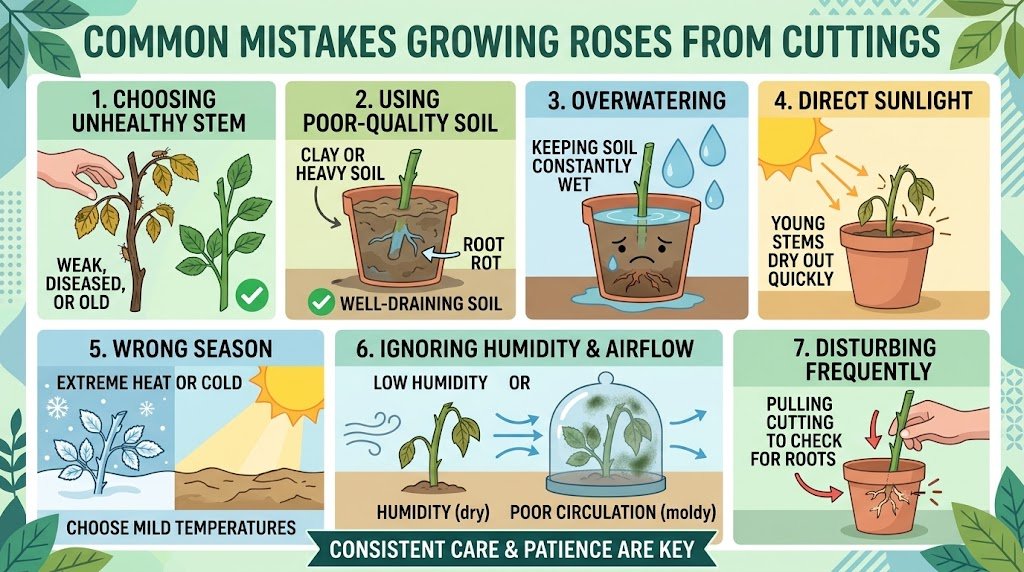
Choosing an Unhealthy Stem
Using weak, damaged, or diseased stems can reduce the chances of successful rooting. Always select a fresh, healthy stem with green leaves and no visible signs of disease.
Using Poor-Quality Soil
Heavy soil can hold too much water and restrict airflow around developing roots. Use well-draining potting soil to maintain suitable moisture and support root development.
Overwatering the Cutting
Too much water can cause the stem to rot before roots develop. Keep the growing medium slightly moist rather than waterlogged.
Exposing Cuttings to Direct Sunlight
Strong afternoon sunlight can dry out young stems. Place newly planted cuttings in a bright location with indirect sunlight.
Taking Cuttings at the Wrong Time
Extreme heat and cold can make rooting more difficult. Choose a suitable season with mild temperatures for better results.
Ignoring Humidity and Air Circulation
Low humidity can cause cuttings to lose moisture, while poor air circulation may encourage fungal problems. Maintain suitable humidity without keeping the cutting constantly wet.
Disturbing Cuttings Too Often
Frequently pulling stems out to check for roots can damage new growth. Give cuttings enough time to develop roots before moving them.
Avoiding these common mistakes and following proper rose gardening tips can help you grow stronger plants. Consistent care and patience are essential for successful growing roses at home.
How to Prepare a Rose Cutting for Planting
Preparing a rose cutting correctly is an important step in growing a new rose plant. A properly prepared stem has a better chance of developing roots and staying healthy during propagation. Before planting, choose a fresh, disease-free stem and prepare it carefully to reduce damage and moisture loss.
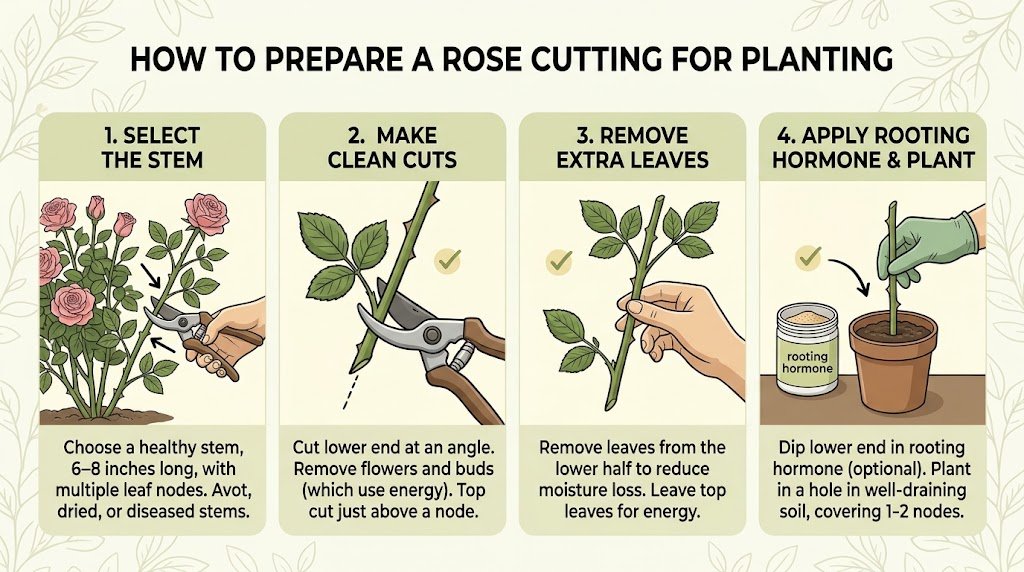
Select the Right Stem
Choose a healthy, non-flowering stem from a strong rose bush. A stem around 6–8 inches long and approximately the thickness of a pencil is generally suitable. It should have several leaf nodes, which are the points where leaves grow from the stem.
Avoid stems that are very soft, dried out, damaged, or affected by disease. Selecting suitable material improves the chances of successful rose propagation.
Make Clean Cuts
Use sharp, clean pruning shears to prepare the stem. Cut the lower end just below a leaf node at a slight angle. This provides a clean cutting surface and makes it easier to identify the bottom when planting.
Make the upper cut just above a leaf node. Remove any flowers and flower buds because they use energy that the stem needs for root development.
Remove Extra Leaves
Remove the leaves from the lower half of the stem, leaving one or two sets of healthy leaves near the top. Too many leaves can increase moisture loss, while removing all the leaves may reduce the cutting’s ability to produce energy.
This preparation helps maintain a suitable balance between moisture and growth.
Apply Rooting Hormone (Optional)
Dip the lower end of the prepared stem into rooting hormone if desired. This product can encourage root formation in some rose cuttings, but it is not essential. Follow the product instructions and avoid using more than recommended.
Prepare the Cutting for Planting
Once prepared, keep the stem from drying out. Plant it as soon as possible in a clean pot filled with well-draining potting soil. Make a small hole in the growing medium before inserting the stem to avoid rubbing off the rooting hormone.
Ensure that at least one or two leaf nodes are below the soil surface. Press the soil gently around the stem to provide support.
Proper preparation gives a healthy rose cutting a suitable starting point for root development and helps improve the chances of growing a new rose bush.
How to Plant and Grow Roses from Cuttings
Planting rose cuttings is a practical way to grow new rose bushes from an existing plant. The process involves preparing a suitable growing medium, placing the stem correctly, and providing proper moisture and light. With suitable conditions and regular care, a healthy rose cutting can develop roots and grow into a new plant.
Prepare the Pot and Growing Medium
Choose a small pot with drainage holes to prevent excess water from collecting around the stem. Fill it with a loose, well-draining growing medium that allows air and moisture to reach developing roots.
A mixture of potting soil and perlite can provide suitable drainage. Moisten the mixture before planting, but avoid making it waterlogged.
Plant the Rose Cutting
Follow these steps to plant your prepared stem:
- Make a small hole in the growing medium using a pencil or your finger.
- Insert the lower end of the stem into the hole.
- Ensure that at least one or two leaf nodes are below the soil surface.
- Gently press the growing medium around the stem to keep it upright.
- Water lightly to settle the soil around the cutting.
Planting the stem into a prepared hole helps protect its lower end and any applied rooting hormone.
Provide Suitable Light and Temperature
Place the pot in a bright location with indirect sunlight. Avoid strong afternoon sunlight because it can dry out the stem before roots develop.
Mild, warm temperatures generally support root development. Protect the pot from frost, strong winds, and extreme heat.
Maintain Proper Moisture
Check the growing medium regularly and water when the surface begins to feel slightly dry. Keep it consistently moist without allowing excess water to collect.
A clear plastic bag placed loosely over the pot can help maintain humidity. Keep it from touching the leaves and remove it periodically to allow fresh air circulation.
Monitor New Growth
Rose cuttings may take several weeks to develop roots. New leaves can appear before a strong root system forms, so do not assume that leaf growth alone means the cutting is established.
Once roots have developed and the plant shows steady growth, gradually introduce it to more direct sunlight. You can later move it into a larger pot or a suitable garden location.
Following these steps can make growing roses from cuttings easier and help young plants establish healthy roots. Regular attention to moisture, light, and drainage supports successful rose propagation.
How to Care for Newly Planted Rose Cuttings
Newly planted rose cuttings need careful attention because they do not have an established root system to absorb water and nutrients. Proper moisture, suitable light, and protection from extreme weather can help them develop healthy roots. If you are learning how to grow a rose bush from cuttings, following the correct planting and care techniques is important for successful propagation. Consistent care during the early weeks supports healthy root development.
Maintain Proper Soil Moisture
Water is essential for keeping a newly planted stem healthy. Check the growing medium regularly and water when the surface starts to feel slightly dry.
Avoid overwatering because constantly wet soil can cause the stem to rot. Make sure the pot has drainage holes so excess water can escape. Using well-draining potting soil helps maintain a suitable balance of moisture and air.
Provide Indirect Sunlight
Place the pot in a bright location where it receives filtered or indirect sunlight. Strong afternoon sunlight can increase moisture loss and cause young leaves to wilt.
Once the cutting develops roots and begins growing steadily, gradually introduce it to more direct sunlight according to the needs of the rose variety.
Maintain Suitable Humidity
Newly planted stems can dry out before developing roots. Covering the pot loosely with a clear plastic bag can help maintain humidity around the cutting.
Keep the plastic away from the leaves and provide occasional ventilation. Remove the cover gradually when the cutting shows established growth and can maintain its moisture more independently.
Protect Cuttings from Extreme Weather
Keep young cuttings away from frost, strong winds, heavy rain, and excessive heat. Sudden temperature changes can affect their growth.
Choose a sheltered location with good air circulation. In hot weather, provide extra protection during the afternoon.
Avoid Excessive Fertilizer
Do not apply strong fertilizer immediately after planting. Newly planted cuttings have limited roots and may be sensitive to concentrated nutrients.
Wait until the cutting has developed a healthy root system and shows steady new growth. After that, use a suitable rose fertilizer according to its label instructions.
Check for Signs of Root Development
Rose cuttings may take several weeks to develop roots, depending on the variety and growing conditions. New leaves are encouraging, but they do not always confirm successful rooting.
Look for steady growth and gently check for resistance when giving the stem a very light pull. Avoid repeatedly disturbing the cutting because delicate new roots can break easily.
Remove Dead or Damaged Leaves
Check the cutting regularly for yellow, dried, or damaged leaves. Remove dead material carefully using clean scissors.
Also, watch for black spots, mold, and signs of stem rot. Good air circulation and proper watering can help reduce these problems.
Transplant When Roots Are Established
Do not move the cutting too early. Wait until it has developed a healthy root system and can support continued growth.
When transplanting, choose a suitable pot or garden location with good drainage and enough space for future growth. Handle the roots gently to avoid damaging them.
Conclusion
Caring for young rose cuttings requires patience and consistent attention. Maintain suitable moisture, provide indirect sunlight, protect the stems from extreme weather, and avoid disturbing them while roots develop. These practices support healthy root development and improve the chances of growing roses at home successfully.
Tips for Successfully Growing a New Rose Bush
Growing a new rose bush from an existing stem requires patience, suitable growing conditions, and regular care. Although some cuttings develop roots quickly, others need more time. Following a few practical gardening tips can improve the chances of successful rose propagation and help young plants become stronger.
Choose Healthy Plant Material
Start with a fresh, healthy stem from a strong rose bush. Avoid branches with black spots, insect damage, dried sections, or signs of disease. A suitable healthy rose cutting provides a better starting point for root development.
Use Suitable Growing Medium
Choose loose, well-draining soil that allows water and air to reach developing roots. A mixture of potting soil and perlite can improve drainage and reduce the risk of waterlogging.
Avoid heavy garden soil that remains wet for long periods.
Maintain Consistent Moisture
Check the growing medium regularly and water when necessary. It should remain slightly moist but never completely soaked.
Too little water can dry out the stem, while excessive moisture may cause rotting. Proper watering supports healthy root development.
Provide Suitable Sunlight
Place newly planted cuttings in a bright location with indirect sunlight. Avoid intense afternoon sunlight because young stems can lose moisture quickly.
Once the plant develops established roots and stronger growth, gradually introduce it to more direct sunlight.
Maintain Good Air Circulation
Humidity helps prevent cuttings from drying out, but poor ventilation can encourage mold and fungal problems. If you use a clear plastic cover, keep it loose and allow fresh air to circulate regularly.
Remove fallen leaves and other decaying material from the pot.
Avoid Moving Cuttings Too Early
New roots are delicate and can break easily. Avoid pulling the stem out repeatedly to check its progress.
Wait until the cutting shows steady growth and has developed a suitable root system before transplanting it.
Be Patient During the Growing Process
Rose cuttings may need several weeks to develop roots. The exact time depends on the rose variety, temperature, humidity, and care.
Do not discard a cutting simply because it has not produced new leaves immediately. Monitor its condition and maintain suitable growing conditions.
Conclusion
Learning how to grow a rose bush from a cutting is a practical way to produce new rose plants at home. Choose a healthy stem, prepare it properly, and plant it in suitable, well-draining soil. Provide consistent moisture, indirect sunlight, and proper care while the roots develop. With patience and suitable growing conditions, a small cutting can gradually become a healthy rose bush.
Top 5 Frequently Asked Questions (FAQs)
Q1. How long does it take for rose cuttings to develop roots?
Rose cuttings generally take 4–8 weeks to develop roots, depending on the rose variety, temperature, humidity, and growing conditions.
Q2. What is the best time to take rose cuttings?
Late spring and early summer are generally suitable times because rose stems are actively growing and conditions can support root development.
Q3. Can you grow a rose bush from a single cutting?
Yes. A healthy stem cutting can develop roots and grow into a new rose bush when provided with suitable soil, moisture, and light.
Q4. Do rose cuttings need rooting hormone?
No. Rooting hormone is optional. It may encourage root formation, but rose cuttings can also develop roots without it.
Q5. How often should you water newly planted rose cuttings?
Check the soil regularly and water when the surface begins to feel slightly dry. Keep it moist but avoid waterlogging, which can cause stem rot.