
Introduction
Hedge Shears are useful garden tools for trimming shrubs, shaping hedges, and maintaining neat outdoor spaces. Understanding their types, main parts, common uses, and maintenance requirements helps gardeners use these tools safely and effectively. This guide explains practical trimming techniques, cleaning methods, and safety tips for everyday garden care.

Table of Contents
What Are Hedge Shears?
Manual hedge trimming tools are garden equipment designed to cut, shape, and maintain hedges and shrubs. They usually have two long cutting blades, two handles, and a central pivot joint that allows the blades to open and close. These tools help gardeners maintain neat boundaries and control the growth of small branches and leafy plants.
How Do They Work?
The blades move against each other when the handles are squeezed together. This action cuts suitable stems and leaves, making it easier to shape bushes and maintain an even appearance. Long blades cover a wider area, while ergonomic handles can improve comfort during regular garden maintenance.
Common Uses in Gardening
These tools are useful for hedge trimming, shrub shaping, and maintaining decorative plants. They can also help remove soft, overgrown growth from garden boundaries. However, thick branches may require loppers or a pruning saw instead.
Different Types of Hedge Trimming Tools
Gardeners can choose from several types of cutting tools depending on hedge size, branch thickness, and maintenance needs. Each type offers different features for shaping shrubs and keeping garden boundaries neat.
Manual Garden Shears
Manual hedge trimming tools have two sharp blades and handles operated by hand. They are suitable for trimming small hedges, shaping shrubs, and cutting thin stems. They do not require electricity or fuel.
Long-Handled Shears
Long-handled garden shears provide extra reach when trimming wider or taller hedges. Their extended handles can help gardeners reach difficult areas while maintaining a comfortable working position.
Wavy-Blade Shears
Wavy-blade cutting tools have slightly curved blade edges designed to help hold leafy stems during cutting. They can be useful for maintaining dense hedges and reducing slipping on suitable growth.
Straight-Blade Shears
Straight-blade garden tools have smooth, straight cutting edges that help create clean lines when shaping shrubs. They are commonly used for routine hedge maintenance and decorative trimming.
Electric Hedge Trimmers
Electric hedge trimmers use a powered cutting mechanism to trim larger areas more quickly than manual tools. Corded models require a power connection, while cordless versions operate using rechargeable batteries.
Main Parts of Manual Hedge Cutting Tools
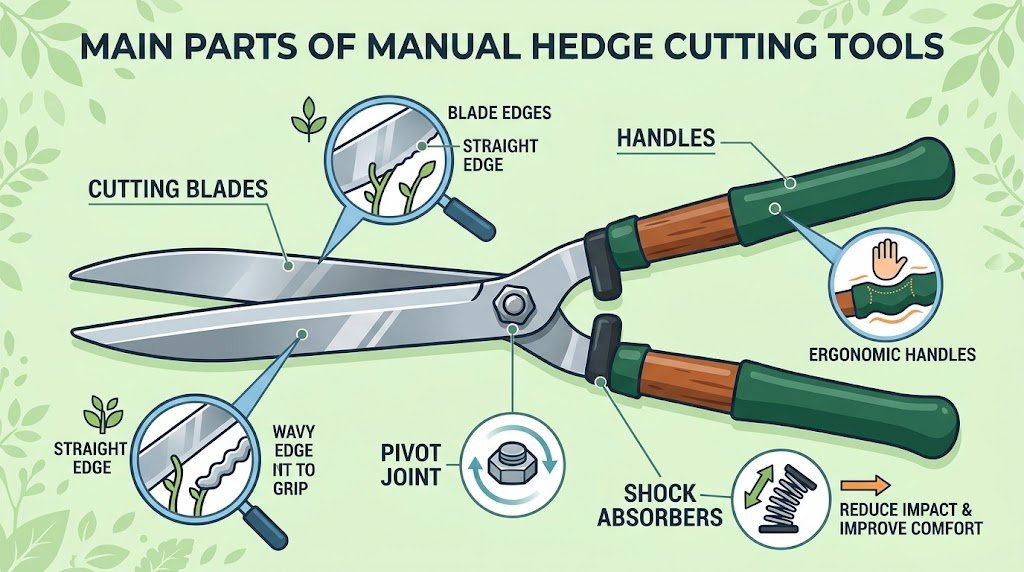
Understanding the main components of garden shears helps users operate, clean, and maintain them properly.
Cutting Blades
Cutting blades are sharp metal edges that cut leaves and small branches. Keeping them clean and sharp supports effective trimming.
Handles
Ergonomic handles provide a secure grip and help users control the tool during garden maintenance.
Pivot Joint
The pivot joint connects the blades and allows them to open and close smoothly during cutting.
Blade Edges
Straight blade edges help create neat lines, while some wavy-blade designs help grip leafy stems during trimming.
Shock Absorbers
Shock absorbers are fitted to some models to reduce impact when the blades close, helping improve comfort during repeated cuts.
Conclusion
Knowing these garden tool components helps users maintain their equipment and achieve better results when shaping shrubs and hedges.
10 Additional Parts of Manual Hedge Cutting Tools
Blade Bolts
Blade bolts hold the cutting blades together near the pivot area. They help keep the blades aligned during trimming.
Central Nut
The central nut secures the pivot bolt. Proper adjustment helps the blades move smoothly without excessive looseness.
Washers
Washers sit between connected parts to help distribute pressure and reduce friction around the pivot joint.
Handle Grips
Rubber handle grips provide a comfortable, non-slip surface that helps users maintain control while cutting shrubs.
Handle Shafts
Handle shafts connect the grips to the blades. Their length influences reach, leverage, and cutting control.
Blade Tips
Blade tips are the outer ends of the cutting blades. Their shape can affect access to narrow spaces and detailed trimming.
Cutting Edge
The cutting edge is the sharpened section of each blade that passes against the opposing blade to cut stems and leaves.
Tension Adjuster
A tension adjustment mechanism, when fitted, allows users to regulate pressure between the blades for smooth operation.
End Stops
Handle end stops, when included, limit how far the handles close or help prevent uncomfortable contact during repeated cutting.
Protective Blade Cover
A blade cover protects the cutting edges during storage and helps prevent accidental contact when the tool is not in use.
Common Uses of Manual Hedge Cutting Tools in Garden Maintenance
Manual cutting tools help gardeners maintain neat shrubs, control leafy growth, and improve the appearance of outdoor spaces. Their uses depend on plant type, branch thickness, and garden size. Understanding different types of tree branch cutters can help gardeners select suitable tools for trimming branches and maintaining plants.
Shaping Hedges and Shrubs
Shrub shaping helps maintain an even appearance along garden borders. Sharp blades can trim suitable stems and control excessive growth.
Maintaining Garden Boundaries
Hedge trimming keeps living fences neat around homes, pathways, and lawns. Regular cutting helps maintain the desired shape and size.
Trimming Overgrown Growth
Overgrown hedges may develop uneven shoots that affect their appearance. Removing suitable new growth helps restore a tidy outline without cutting too deeply.
Creating Decorative Shapes
Decorative pruning allows gardeners to maintain simple shapes in ornamental bushes. Careful, light trimming helps preserve the intended design.
Maintaining Formal Gardens
Garden maintenance tools are useful for keeping formal hedges even around walkways, flower beds, and outdoor seating areas.
Removing Soft, Unwanted Stems
Manual cutting tools can remove thin, leafy stems that grow beyond the desired outline. Thick branches may require loppers or a pruning saw instead.
How to Use Garden Shears Safely and Effectively
Using garden cutting tools correctly helps maintain neat hedges while reducing the risk of injury. Follow these practical steps for safer trimming.
Inspect the Tool Before Use
Check the cutting blades, pivot joint, and handles for damage or looseness. Clean blades help produce better cuts.
Wear Protective Equipment
Use gardening gloves and safety glasses to protect your hands and eyes from sharp branches and flying debris. Wear sturdy footwear for better stability.
Hold the Tool Correctly
Grip the ergonomic handles firmly with both hands. Keep your fingers away from the blades and maintain a balanced standing position.
Trim in Small Sections
Begin with light cuts and follow the natural outline of the hedge. Use controlled movements instead of forcing the blades through thick branches.
Avoid Overreaching
Keep both feet firmly on the ground. Use suitable long-handled tools or stable equipment designed for working at height rather than stretching beyond your reach.
Clean and Store After Use
Remove plant debris, dry the blades, and apply a suitable lubricant when needed. Store the tool with a protective blade cover in a dry, secure place.
How to Clean and Maintain Hedge Trimming Tools
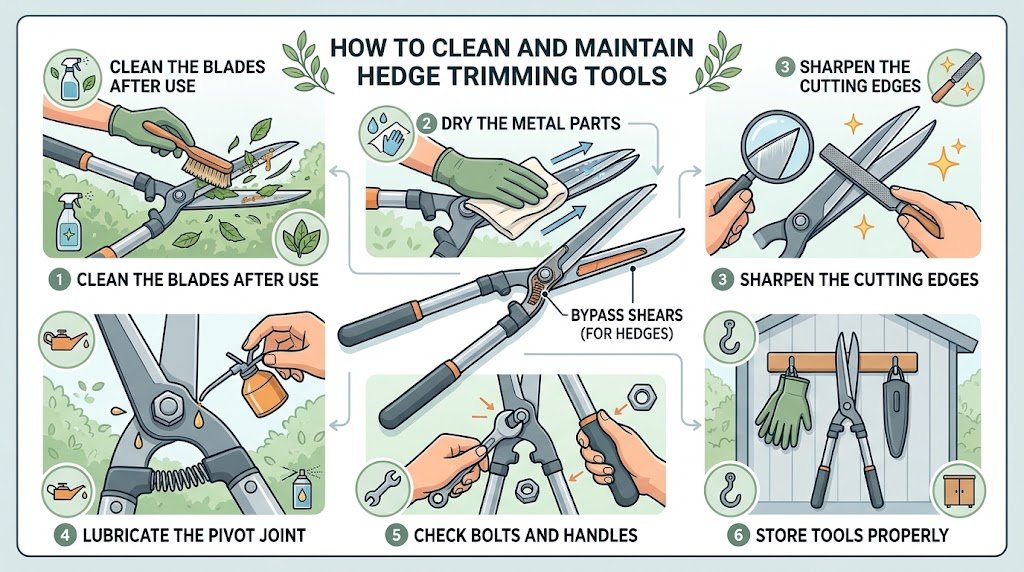
Regular maintenance helps garden cutting tools work smoothly and remain in good condition. Removing plant residue and protecting metal surfaces can also reduce rust and blade wear.
Clean the Blades After Use
Remove grass clippings, leaves, and sap with a suitable brush or cloth. For sticky residue, use a cleaner suitable for garden tools and follow its instructions.
Dry the Metal Parts
Wipe the cutting blades thoroughly after cleaning. Leaving moisture on metal surfaces can encourage rust, especially when tools are stored in damp places.
Sharpen the Cutting Edges
Inspect the blade edges for dullness or damage. Use a suitable sharpening tool according to the manufacturer’s instructions, or seek professional sharpening when necessary.
Lubricate the Pivot Joint
Apply a suitable lubricant to the pivot joint and moving parts when needed. This helps reduce friction and supports smooth blade movement.
Check Bolts and Handles
Inspect blade bolts, nuts, and handle grips for looseness or damage. Tighten adjustable parts according to the manufacturer’s guidance.
Store Tools Properly
Keep the equipment in a dry place and use a protective blade cover during storage. Store it securely away from children.
Common Problems When Using Manual Garden Shears
Manual garden cutting tools are useful for shaping shrubs, but certain problems can affect cutting performance and user comfort. Understanding these issues helps gardeners maintain their tools and work more effectively.
Dull Cutting Blades
Dull blades may crush stems instead of cutting them cleanly. Regular inspection and proper sharpening help maintain effective cutting performance.
Stiff Blade Movement
A stiff pivot joint can make the handles difficult to open and close. Dirt, rust, or insufficient lubrication may cause this problem.
Loose Pivot Bolts
Loose blade bolts can cause poor blade alignment and uneven cuts. Check the fasteners regularly and adjust them according to the manufacturer’s instructions.
Thick Branches Getting Stuck
Thick branches may become trapped between the blades when they exceed the tool’s cutting capacity. Use suitable loppers or a pruning saw for thicker growth.
Hand Fatigue
Repeated cutting can cause hand fatigue, especially when the handles are uncomfortable or the tool is heavy. Take regular breaks and choose a suitable handle design.
Rust on Metal Parts
Blade rust can develop when tools remain wet or are stored in damp conditions. Clean and dry the blades after use.
Safety Tips for Trimming Hedges and Shrubs
Safe trimming practices help prevent injuries and keep garden maintenance under control. Follow these precautions before and during cutting.
Wear Protective Equipment
Use gardening gloves, safety glasses, and sturdy footwear to protect your hands, eyes, and feet from sharp branches and debris.
Inspect Tools Before Trimming
Check the cutting blades, pivot joint, and handles for damage or loose parts. Do not use damaged equipment.
Keep a Stable Position
Stand on firm, level ground and maintain your balance. Avoid overreaching or trimming from unstable ladders.
Check the Surrounding Area
Look for people, pets, hidden wires, and obstacles before starting. Keep others at a safe distance from the cutting area.
Cut Within the Tool’s Capacity
Use manual garden shears for suitable leafy growth and thin stems. Choose loppers or a pruning saw for thicker branches rather than forcing the blades.
Maintain a Safe Grip
Hold both handles firmly and keep your fingers away from the cutting edges. Make controlled cuts without rushing.
Clean and Store Tools Safely
Remove plant debris, dry the blades, and fit a protective blade cover before storing the equipment out of children’s reach.
Conclusion
Choosing suitable garden cutting tools and maintaining them properly helps keep hedges neat and shrubs well-shaped. Regular cleaning, sharp blades, and safe handling can improve cutting performance and support effective garden maintenance.
Top 5 FAQs About Hedge Shears
Q1. What are hedge shears used for?
Hedge Shears are used to trim leafy hedges, shape shrubs, and maintain neat garden boundaries. They work best on suitable thin stems and soft growth.
Q2. What are the different types of hedge shears?
Common types include manual shears, long-handled shears, straight-blade shears, and wavy-blade shears. Powered hedge trimmers are another option for larger trimming tasks.
Q3. How do you maintain hedge shears?
Clean the blades after use, dry them thoroughly, sharpen them when needed, and lubricate the pivot joint according to the manufacturer’s instructions.
Q4. Can hedge shears cut thick branches?
Manual shears are generally designed for leafy growth and smaller stems. Use loppers or a pruning saw for branches that are too thick for the blades.
Q5. What safety precautions should you follow when using hedge shears?
Wear gardening gloves and safety glasses, inspect the tool before use, maintain a stable position, and keep your fingers away from the cutting edges.