
Introduction
The best time to prune roses depends on the rose variety, growing conditions, and local weather. Pruning during the right season helps remove dead branches, maintain plant shape, and encourage healthy flowers. However, cutting too early or too late can affect new growth and flowering. This guide explains suitable pruning seasons, weather conditions, and common mistakes to help you care for your rose bushes.

Table of Contents
Why Is Timing Important for Pruning Roses?
Choosing the right season for pruning helps rose bushes grow properly and produce healthy flowers. Pruning at the wrong time can remove developing buds, weaken new growth, or reduce flowering. Understanding the rose plant growth cycle helps gardeners choose a suitable period for trimming and maintaining their plants.
Encourages Healthy Growth
Proper pruning removes dead, damaged, and overcrowded branches. It allows sunlight and air to reach different parts of the plant. Regular rose bush maintenance also supports healthy stems and encourages fresh growth during the growing season.
Supports Better Flowering
Removing old and weak stems helps roses direct their energy toward healthy branches. Suitable rose pruning techniques can encourage new shoots and improve flowering. However, pruning at the wrong stage may remove buds that would otherwise produce flowers.
Prevents Plant Damage
Cold weather and frost can damage freshly cut stems. Pruning too early may expose new growth to freezing temperatures. Waiting for suitable weather helps protect plants and supports better recovery.
Improves Plant Shape and Airflow
Removing overcrowded branches improves airflow around the plant. It also helps gardeners maintain a balanced shape and reduce conditions that encourage fungal diseases.
Understanding seasonal changes and the needs of different rose varieties makes pruning easier and helps maintain healthy plants.
Best Time of Year to Prune Roses
The suitable pruning season depends on the rose variety and local climate. In many regions, late winter or early spring is a common time to prune rose bushes because plants begin developing new growth as temperatures rise. Choosing the right season helps protect healthy stems and supports better flowering.
Late Winter Pruning
Late winter is suitable for many rose varieties when the risk of severe frost has passed. During this period, gardeners can remove dead, damaged, and weak branches before active growth begins. This dormant season pruning helps prepare plants for the coming growing season.
Early Spring Pruning
Early spring is another suitable period for seasonal rose pruning. When new buds begin to swell, gardeners can remove unhealthy stems and shape the plant. Avoid cutting fresh growth unnecessarily, as it may affect future flowers.
Summer Pruning
Summer pruning is generally lighter than spring pruning. Remove faded flowers, dead branches, and damaged stems when needed. Deadheading roses helps keep plants tidy and may encourage additional flowering in repeat-blooming varieties.
Winter Pruning
Avoid heavy pruning during freezing weather. Severe cold can damage recently cut stems and affect new growth. However, removing clearly dead or broken branches can help maintain plant health.
Remember: The ideal pruning month varies by region, weather, and rose type. Gardeners should consider local frost conditions rather than following a fixed calendar date.
When Is the Best Time to Prune Rose Bushes?
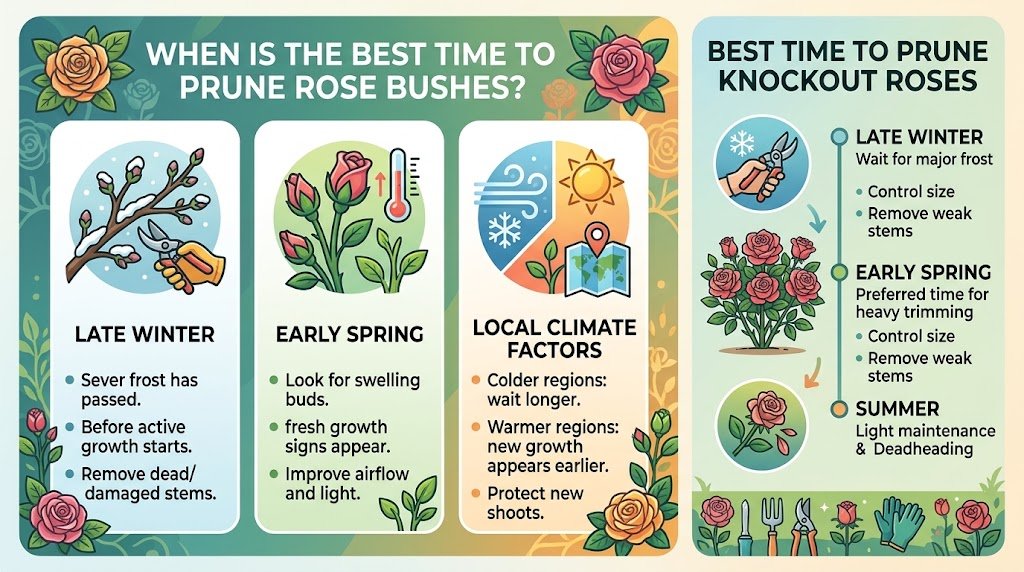
The suitable time to trim rose bushes depends on their variety, growing conditions, and local weather. In most regions, late winter or early spring is a good period for major pruning. During this time, plants begin preparing for new growth, making it easier to remove unhealthy branches and shape the bushes.
Pruning During Late Winter
Late winter is suitable for many garden roses when severe frost has passed. Remove dead, damaged, and weak stems before active growth begins. This dormant season pruning helps prepare the plant for the coming flowering season.
Pruning in Early Spring
Early spring is another suitable period for rose bush maintenance. Look for swelling buds and signs of fresh growth. Remove overcrowded branches to improve airflow and allow sunlight to reach the inner parts of the plant.
Consider Your Local Climate
Weather conditions can change the pruning schedule. In colder regions, wait until the risk of hard frost decreases. In warmer areas, plants may begin growing earlier. Proper timing helps protect new shoots and supports healthy rose growth.
Check the Condition of Your Rose Bushes
Before pruning, inspect the stems carefully. Remove dead, diseased, and broken branches using clean, sharp tools. Good rose pruning techniques help maintain plant shape and encourage healthy development.
Remember: Different rose varieties may require different pruning schedules. Always consider the plant type and local weather before cutting back healthy stems.
Best Time to Prune Knockout Roses
Knockout roses are popular garden plants because they produce repeated blooms and require relatively simple maintenance. Pruning them at the right time helps control their size, remove damaged branches, and encourage fresh growth. In most regions, late winter or early spring is suitable for their main annual pruning.
Late Winter Pruning
Late winter is a suitable period for preparing Knockout roses for the growing season. Wait until the danger of severe frost has passed before removing weak, dead, or damaged stems. This allows the plant to recover as warmer weather approaches.
Early Spring Pruning
Early spring is generally the preferred time for major trimming. Cut back overgrown branches and remove stems that cross or grow toward the center. Proper rose pruning techniques help improve airflow and maintain a balanced plant shape.
Summer Maintenance
During summer, Knockout roses may need light trimming to remove damaged stems and faded flowers. Deadheading roses can keep plants looking tidy, although many Knockout varieties naturally shed faded blooms.
Factors That Affect Pruning Time
Local weather, frost conditions, and plant growth can influence the pruning schedule. In colder regions, wait longer before cutting back healthy stems. In warmer climates, new growth may appear earlier.
Remember: Avoid heavy pruning during freezing weather. Using clean, sharp pruning shears for roses helps make smooth cuts and reduces unnecessary damage to plant stems.
Best Time to Prune Rose of Sharon
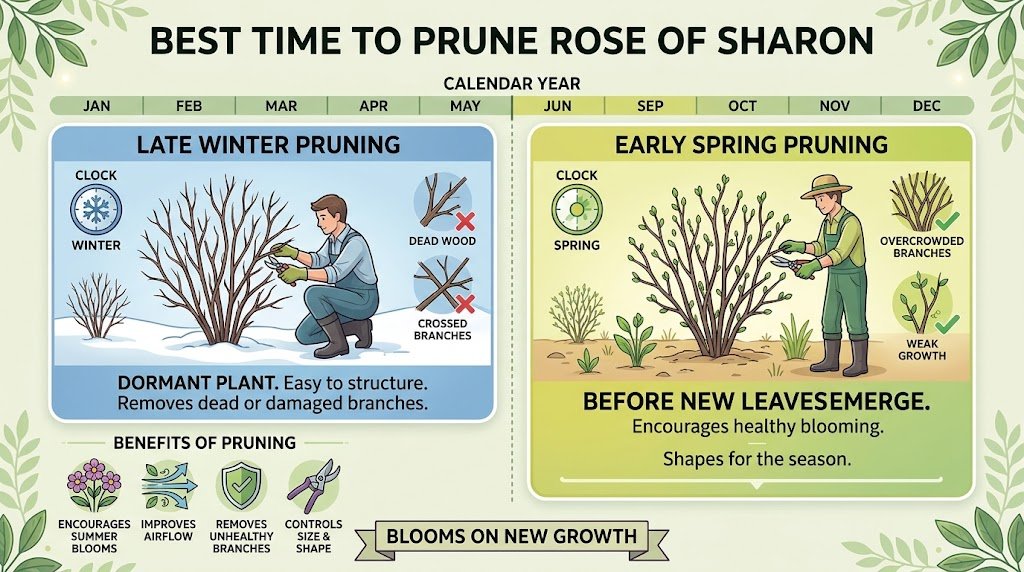
Rose of Sharon is a flowering shrub that produces blooms on new growth. Pruning it at the right time helps maintain its shape, control its size, and encourage healthy flowering. Unlike many traditional rose bushes, this plant is generally pruned in late winter or early spring before new growth begins.
Late Winter Pruning
Late winter is usually a suitable time for Rose of Sharon pruning. The plant is dormant during this period, making it easier to identify dead, damaged, and weak branches. Removing these stems helps prepare the shrub for the growing season.
Early Spring Pruning
Early spring is another suitable period before new leaves and shoots develop. Use clean, sharp pruning shears to remove overcrowded branches and improve the plant’s shape. Avoid cutting too much healthy growth at once.
Why Should You Prune Rose of Sharon?
Proper pruning supports healthy development and encourages new shoots. Since Rose of Sharon flowers on new growth, suitable trimming can help promote flowering during summer. It also improves airflow and removes unhealthy branches.
Important Pruning Tips
- Remove dead and damaged branches first.
- Cut crossing or overcrowded stems.
- Maintain a balanced natural shape.
- Avoid heavy pruning after new growth develops.
- Clean your tools before and after pruning.
Remember: The correct pruning period can vary with local weather. In colder regions, wait until the risk of severe frost has passed before carrying out major pruning.
Signs That Rose Bushes Are Ready for Pruning
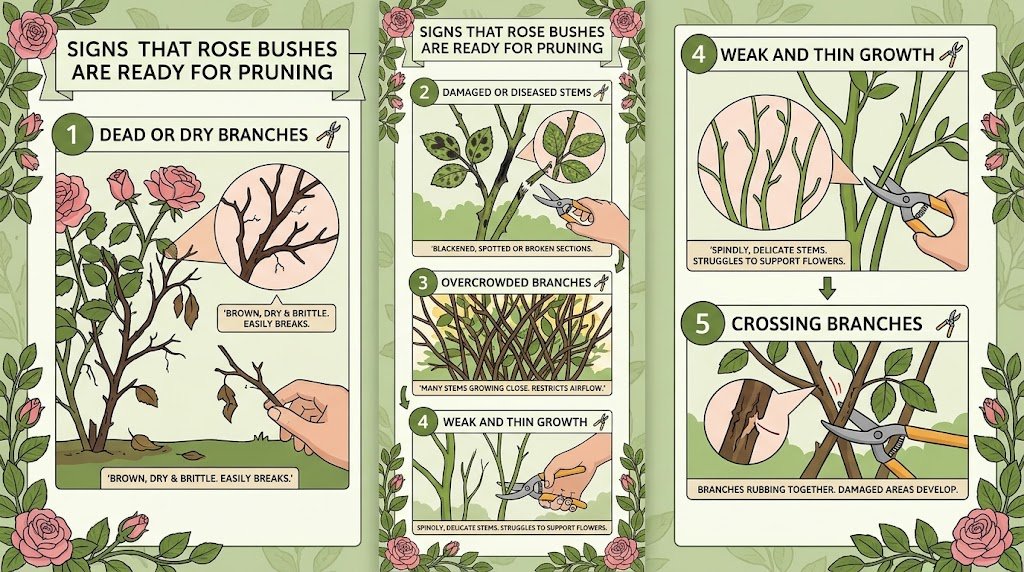
Knowing when a rose bush needs pruning helps maintain its shape and supports healthy growth. Before cutting any branches, inspect the plant for signs of damage, disease, or overcrowding. Understanding these conditions helps gardeners decide when rose bush maintenance is needed.
Dead or Dry Branches
Dead branches are often brown, dry, and brittle. They may break easily when touched and usually do not produce new leaves. Removing these stems helps prevent unhealthy growth and keeps the plant tidy.
Damaged or Diseased Stems
Look for blackened, broken, or unhealthy branches. These stems may affect nearby healthy growth. Use clean tools to remove damaged sections and support better rose plant health.
Overcrowded Branches
When too many branches grow close together, airflow around the plant becomes limited. Removing selected stems helps improve air circulation and allows sunlight to reach the inner parts of the bush.
Weak and Thin Growth
Very thin or weak stems may struggle to support healthy flowers. Removing some of these branches using proper rose pruning techniques helps maintain a stronger plant structure.
Crossing Branches
Branches that rub against each other can develop damaged areas. Inspect the center of the bush and remove unsuitable crossing stems to maintain a balanced shape.
Remember: Not every rose variety requires the same pruning schedule. Consider the plant type, growing season, and local weather before removing healthy branches.
How Weather and Climate Affect Rose Pruning
Weather and climate play an important role in deciding when to prune rose bushes. Temperature, frost, rainfall, and seasonal changes can affect plant growth and recovery after cutting. Understanding local weather conditions helps gardeners choose a suitable pruning period and protect healthy stems.
Effect of Cold Weather and Frost
Freezing temperatures can damage freshly cut stems and developing shoots. In colder regions, avoid heavy pruning during severe winter conditions. Wait until the danger of hard frost has passed before removing healthy branches.
Pruning in Warm Climates
In warmer regions, rose bushes may begin producing new growth earlier in the year. Gardeners should observe the plant’s growth cycle instead of following a fixed calendar. Proper seasonal rose pruning helps maintain healthy branches and supports flowering.
Effect of Rainfall and Moisture
Wet weather can make pruning less suitable because moisture may increase the spread of some plant diseases. Whenever possible, prune during dry weather. Clean cutting tools also help reduce the risk of spreading infections between plants.
Seasonal Temperature Changes
Sudden temperature changes can affect new shoots and plant development. Avoid heavy trimming when extreme cold or unusual weather conditions are expected. Suitable timing supports healthy rose growth and helps plants recover.
Consider Your Local Growing Conditions
The ideal pruning schedule varies depending on the region, rose variety, and local climate. Observe new buds, seasonal temperatures, and frost conditions before cutting back branches.
Remember: Good rose bush maintenance requires more than following a particular month. Always consider local weather and the plant’s condition before pruning.
Common Rose Pruning Mistakes to Avoid
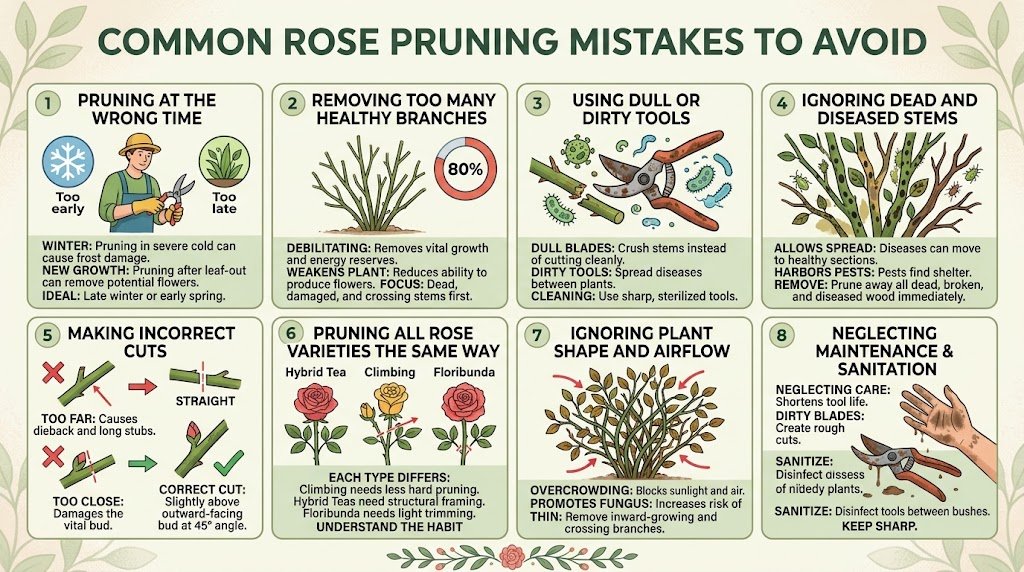
Pruning helps maintain healthy rose bushes, but incorrect cutting methods and poor timing can damage plants and affect flowering. Understanding common mistakes makes rose bush maintenance easier and helps gardeners achieve better results. Here are some mistakes to avoid when caring for rose plants.
Pruning at the Wrong Time
Pruning during severe winter conditions or after new growth has developed can affect plant recovery and flowering. Many garden roses benefit from major pruning in late winter or early spring, depending on the variety and local climate. Understanding the best season for pruning roses helps protect developing shoots and flower buds.
Removing Too Many Healthy Branches
Cutting away too much healthy growth can weaken a rose bush and reduce its ability to produce flowers. Remove dead, damaged, and overcrowded stems first. Follow suitable rose pruning techniques and avoid unnecessary cutting.
Using Dull or Dirty Pruning Tools
Dull blades can crush stems instead of making clean cuts. Dirty tools may also spread plant diseases between branches. Use sharp, clean pruning shears for roses to make smooth cuts and maintain plant health.
Ignoring Dead and Diseased Stems
Leaving dead, broken, or diseased branches on a plant can affect its overall condition. Inspect the bush carefully and remove unhealthy sections when necessary. This supports better airflow and healthy rose growth.
Making Incorrect Cuts
Cuts made too close to a healthy bud or leaving long damaged stubs can affect stem development. Make clean cuts slightly above an outward-facing bud. This encourages growth away from the center and helps maintain a balanced shape.
Pruning All Rose Varieties the Same Way
Different rose varieties have different growth habits and flowering patterns. Climbing roses, hybrid tea roses, and floribunda roses may require different pruning methods. Understand the plant type before choosing a cutting approach.
Ignoring Plant Shape and Airflow
Allowing branches to become overcrowded can reduce air circulation and sunlight inside the bush. Remove selected crossing and inward-growing stems to improve airflow and maintain an open structure.
Remember: Successful pruning requires suitable timing, clean tools, and careful cutting. Avoiding these common mistakes helps maintain attractive rose bushes and supports healthy seasonal growth.
Conclusion
Choosing the right pruning season helps maintain healthy rose bushes and encourages better flowering. Late winter or early spring is suitable for many rose varieties, but the ideal schedule depends on the plant type and local climate. Understanding the best time to prune roses helps gardeners avoid frost damage, remove unhealthy branches, and support fresh growth. Always use clean, sharp tools and follow suitable pruning methods for each variety.
Top 5 Frequently Asked Questions (FAQs)
Q1. When is the best time to prune roses?
Late winter or early spring is suitable for many rose varieties. Prune after severe frost has passed and before strong new growth begins.
Q2. Can rose bushes be pruned in autumn?
Light pruning to remove dead or damaged branches is possible, but avoid heavy autumn pruning because it may encourage tender new growth before winter.
Q3. How often should rose bushes be pruned?
Most garden roses benefit from major pruning once a year. Light trimming and removal of dead branches can be done when necessary.
Q4. When should Knockout roses be pruned?
Prune Knock Out roses in late winter or early spring, when the risk of severe frost has passed and new growth is beginning.
Q5. Can roses be pruned during summer?
Yes. Light summer pruning can remove faded flowers, dead stems, and damaged branches. Avoid excessive cutting during hot weather.