
Introduction
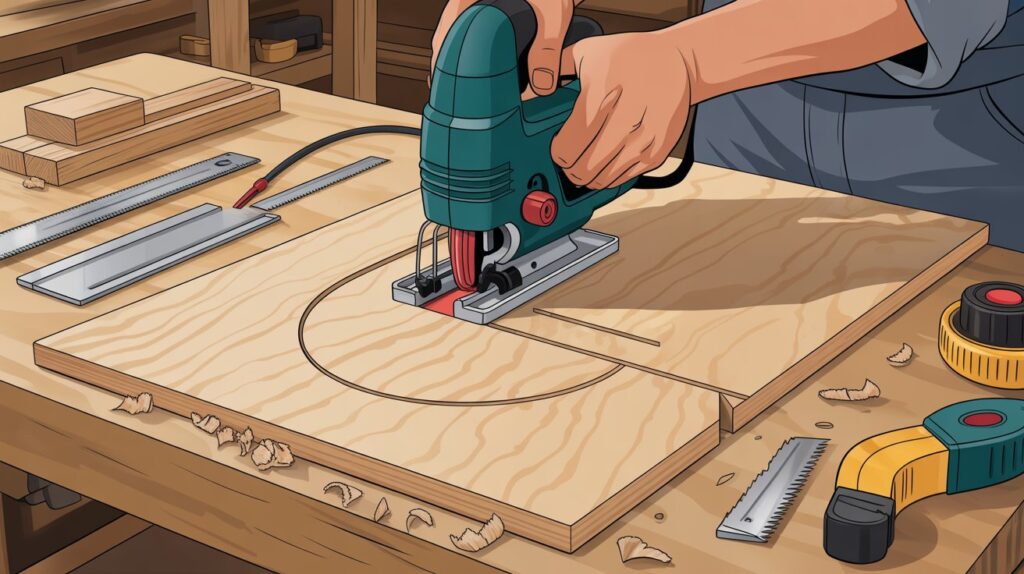
Cutting plywood with jigsaw is one of the most practical skills in woodworking for creating straight lines, curves, and detailed shapes with control and accuracy. This guide will help you understand the correct techniques, tools, and safety steps needed for smooth and professional results. From choosing the right blade to learning proper cutting methods, you will learn everything required to improve your woodworking skills.
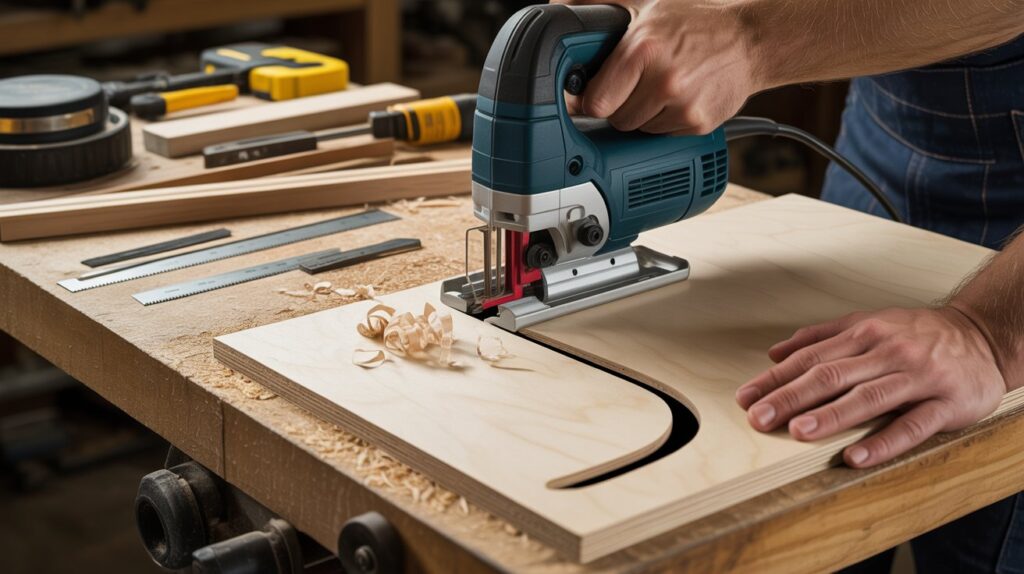
Table of Contents
Choosing the Right Jigsaw Blade for Plywood
Selecting the correct blade is important for accurate plywood cutting and smooth results. Different blades are designed for specific woodworking tasks, so choosing the right one improves cutting speed, precision, and edge quality. Understanding the parts of a jigsaw tool also helps users install and control blades properly during operation.
1. Fine Tooth Jigsaw Blade
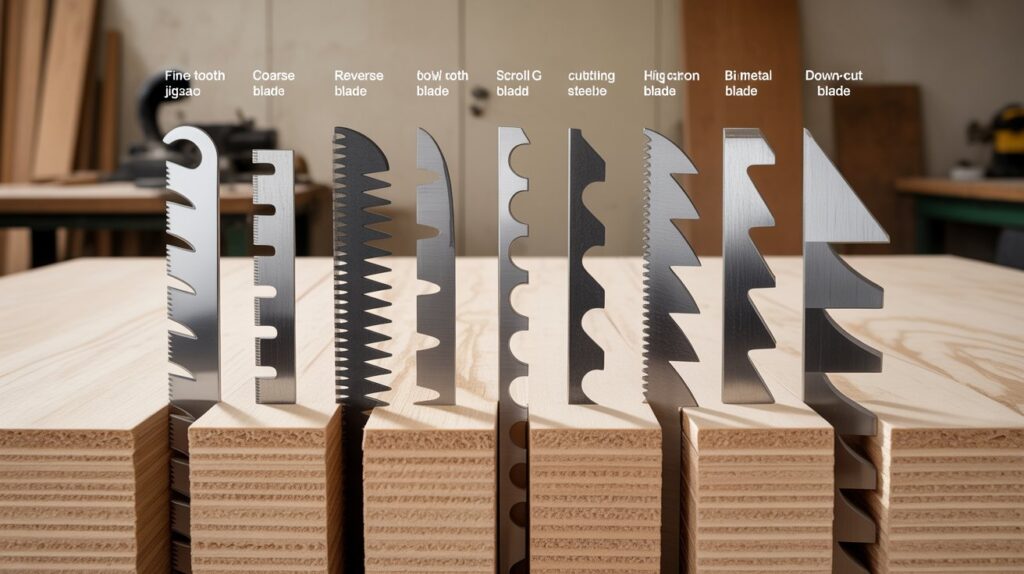
A fine-tooth jigsaw blade is perfect for achieving smooth and precise cuts in plywood. The smaller teeth reduce plywood tear-out and help create professional-looking edges. This blade works best for detailed woodworking projects and furniture making.
2. Coarse Tooth Blade
A coarse tooth blade cuts faster but produces rougher edges. It is useful for quick cuts where smooth finishing is not the main priority. Many beginners use this blade for basic DIY plywood projects.
3. Reverse Tooth Blade
A reverse tooth blade cuts downward instead of upward. This design helps prevent plywood splintering on the visible surface of the material. It is commonly used when appearance and clean finishing are important.
4. Scroll Cutting Blade
This narrow blade is designed for curved cuts in plywood and detailed patterns. It allows better control when making tight turns and creative shapes in woodworking projects.
5. High Carbon Steel Blade
High carbon steel blades are flexible and suitable for general wood cutting. They are commonly used in jigsaw cutting techniques because they handle softwood and plywood efficiently.
6. Bi-Metal Blade
A bi-metal blade combines strength and flexibility. It lasts longer than standard blades and performs well during heavy woodworking power tool use.
7. Down-Cut Blade
A down-cut blade creates smoother top edges by cutting downward through the plywood surface. It is a good option for decorative panels and visible wood surfaces.
Using the correct blade with a cordless jigsaw machine or standard jigsaw improves safety, accuracy, and overall cutting performance. Proper blade selection also helps users achieve smooth plywood edges with less sanding after the cut.
Preparing Plywood Before Cutting
Proper preparation is essential for accurate plywood cutting and smooth finishing. Before starting any woodworking project, make sure the plywood sheet is clean, stable, and properly marked. Good preparation reduces mistakes and improves overall cutting performance.
1. Measure and Mark Carefully
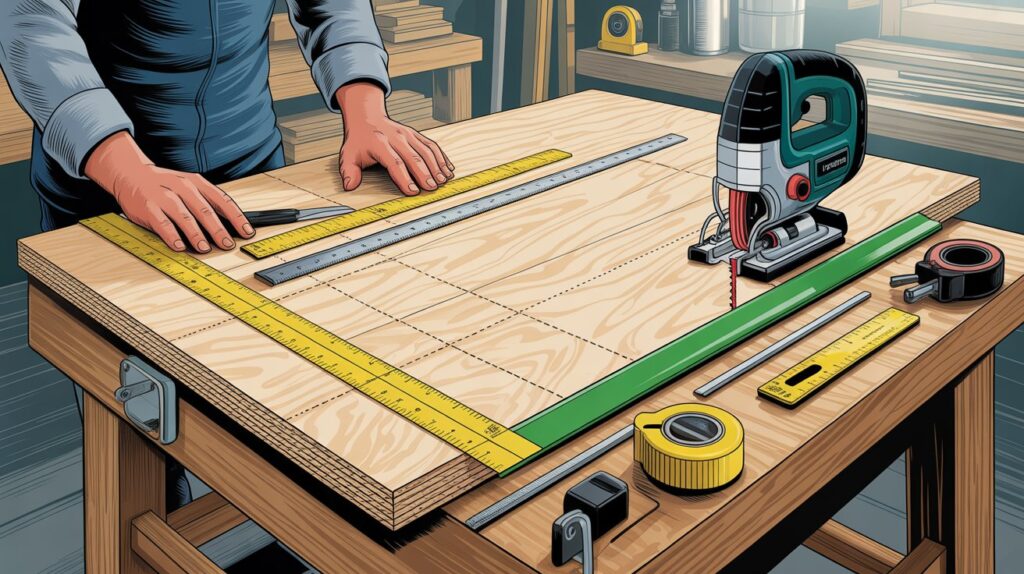
Use a measuring tape and straight edge to mark cutting lines clearly. Accurate markings help achieve better results when using jigsaw cutting techniques for straight or curved cuts.
2. Secure the Plywood Properly
Always set the plywood on a sturdy workbench or sawhorses to keep it stable during cutting. Use clamps to hold the material firmly in place. Loose plywood can cause vibration, rough edges, and uneven cuts during operation.
3. Select the Correct Blade
Installing the best jigsaw blade for plywood helps improve precision and reduce plywood tear-out. A fine tooth jigsaw blade is usually recommended for cleaner edges and smoother finishes.
4. Check the Parts of a Jigsaw Tool
Before starting, inspect important parts of a jigsaw tool such as the blade clamp, shoe, trigger, and motor. Properly functioning components improve control, safety, and cutting accuracy.
5. Apply Tape on the Cutting Line
Placing masking tape over the cutting line helps prevent plywood splintering. This simple method is commonly used in woodworking power tools projects for cleaner visible surfaces.
6. Prepare a Safe Workspace
Keep the work area free from dust and unnecessary objects. Wear safety glasses and ensure the cordless jigsaw machine has enough space for smooth movement during cutting.
Step-by-Step Guide to Cutting Plywood With Jigsaw
Using the correct method improves cutting accuracy and helps create smooth plywood edges. Following proper steps also increases safety and reduces material damage during woodworking projects.
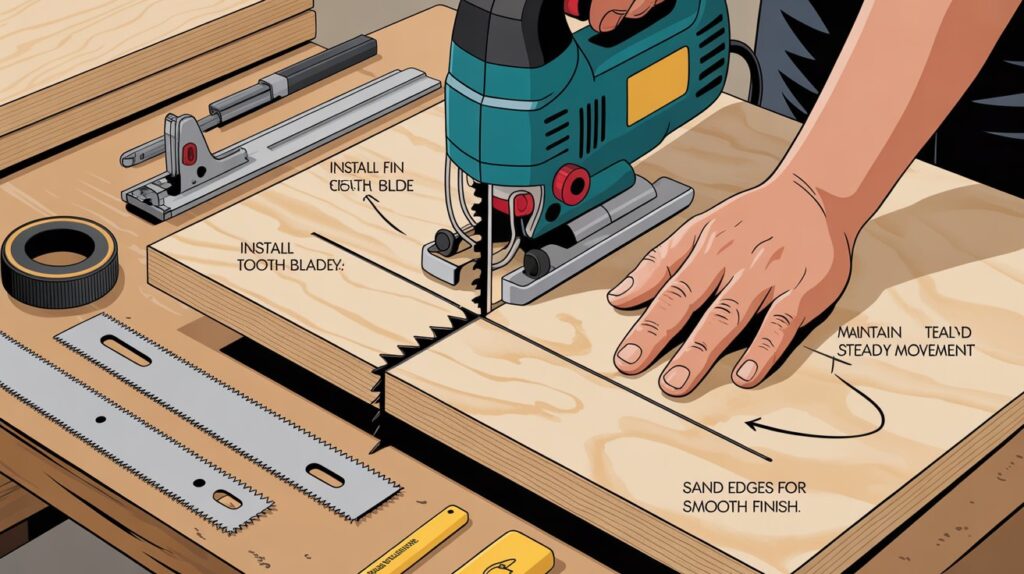
1. Install the Right Blade
Begin by installing a suitable blade for the project. A fine tooth jigsaw blade works well for clean cuts and helps prevent plywood splintering on the surface.
2. Adjust the Jigsaw Settings
Set the cutting speed according to the plywood thickness. Lower speeds provide better control for detailed work, while higher speeds are useful for faster cuts. Some orbital action jigsaw models allow additional cutting adjustments.
3. Position the Jigsaw Correctly
Place the shoe of the jigsaw flat against the plywood surface before starting. Proper positioning improves stability and supports accurate plywood cutting.
4. Start Cutting Slowly
Press the trigger gently and guide the blade along the marked line. Avoid forcing the tool forward because excessive pressure can damage the blade and create rough edges.
5. Maintain Steady Movement
Keep a consistent cutting speed throughout the process. Smooth movement improves jigsaw cutting techniques and reduces vibration during operation.
6. Handle Curved Cuts Carefully
For curved cuts in plywood, move the tool slowly and allow the blade to turn naturally. Scroll cutting blades are useful for detailed shapes and tight corners.
7. Sand the Edges After Cutting
After completing the cut, lightly sand the edges to remove rough spots. This step helps create smooth plywood edges and gives the project a professional appearance.
8. Inspect the Finished Cut
Check the final cut for accuracy and clean finishing. Proper use of woodworking power tools and understanding the parts of a jigsaw tool help improve overall project quality.
How to Cut Curves and Shapes in Plywood
Creating curved cuts in plywood requires proper control, the correct blade, and steady movement. A jigsaw tool is ideal for making circles, patterns, and detailed shapes in woodworking projects because it allows flexible cutting in different directions.
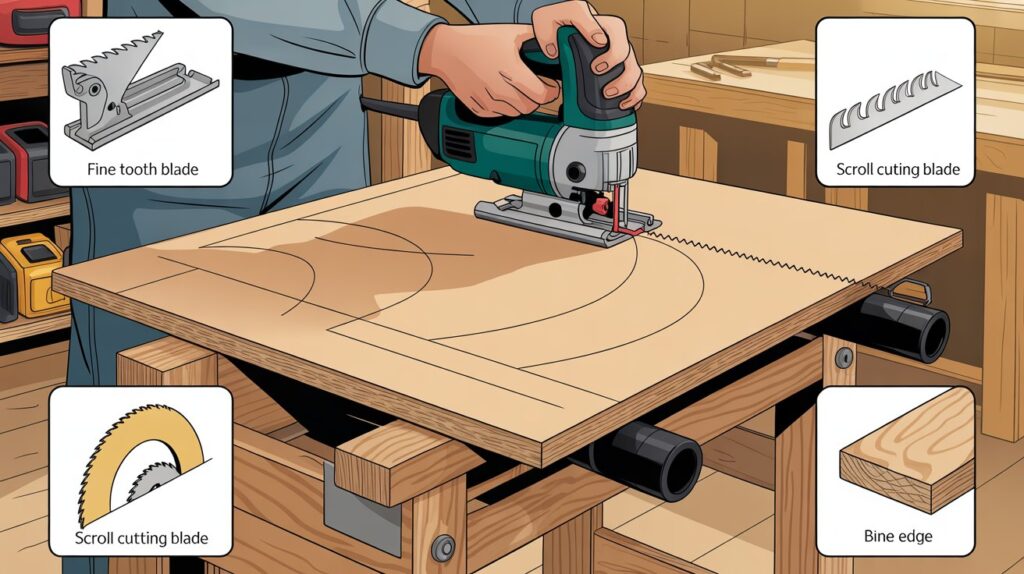
1. Choose the Right Blade
A scroll cutting blade or fine tooth jigsaw blade works best for detailed curves and smooth finishes. Narrow blades turn more easily and help improve accuracy during curved cutting tasks.
2. Mark the Shape Clearly
Use a pencil or template to draw the desired shape on the plywood surface. Clear markings help guide the blade and improve jigsaw cutting techniques during complex cuts.
3. Secure the Plywood Firmly
Clamp the plywood to a stable workbench before starting. Proper support reduces vibration and helps maintain accurate plywood cutting throughout the process.
4. Start With Slow Cutting Speed
Slow cutting speeds provide better control when following curves and corners. Moving too quickly can bend the blade and damage the plywood edges.
5. Let the Blade Move Naturally
Do not force the cordless jigsaw machine while turning curves. Allow the blade to follow the marked line smoothly to prevent rough edges and uneven cuts.
6. Reduce Plywood Tear-Out
Applying masking tape along the cutting line helps prevent plywood splintering. This method improves surface quality and creates smoother visible edges.
7. Check the Parts of a Jigsaw Tool
Inspect important parts of a jigsaw tool such as the blade clamp, shoe, and trigger before cutting. Well-maintained components improve stability and overall cutting performance.
8. Finish the Edges Smoothly
After cutting, sand the edges lightly to remove rough sections. This final step creates smooth plywood edges and gives the project a cleaner appearance.
Avoid Common Jigsaw Mistakes on Plywood
Many beginners make simple mistakes that affect cutting accuracy and surface quality. Understanding these errors can improve safety and help achieve better woodworking results.
1. Using the Wrong Blade
Selecting the wrong blade often causes rough cuts and plywood tear-out. A fine tooth jigsaw blade is usually the best choice for cleaner and smoother plywood edges.
2. Cutting Too Fast
Moving the jigsaw too quickly reduces control and may damage the plywood surface. Slow and steady movement improves accurate plywood cutting and produces cleaner results.
3. Applying Excessive Pressure
Forcing the tool forward can bend the blade and create uneven cuts. Let the woodworking power tool cut naturally without extra pressure.
4. Ignoring the Parts of a Jigsaw Tool
Failing to inspect the parts of a jigsaw tool can lead to poor performance and unsafe operation. Always check the blade clamp, motor, shoe, and trigger before starting work.
5. Poor Plywood Support
Unsupported plywood vibrates during cutting and causes inaccurate lines. Secure the material properly with clamps or a stable workbench before beginning.
6. Skipping the Cutting Line Mark
Cutting without clear markings increases the chance of mistakes. Always measure and mark the plywood carefully for better jigsaw cutting techniques.
7. Using High Speed for Curved Cuts
High speed makes curved cuts in plywood more difficult to control. Lower speeds improve precision and help create smoother shapes and corners.
8. Neglecting Safety Equipment
Many users ignore eye protection and workspace safety. Wearing safety glasses and maintaining a clean work area reduces accidents during operation.
9. Not Sanding the Final Edges
Rough edges can affect the appearance of DIY plywood projects. Light sanding after cutting improves finishing quality and creates a professional look.
Safety Tips for Using a Jigsaw Tool
Working with a jigsaw requires proper safety habits to prevent accidents and improve control during woodworking projects. Whether you are handling straight cuts or curved cuts in plywood, safety should always come first for better results and smooth operation.
1. Wear Proper Safety Gear
Always use safety glasses to protect your eyes from dust and wood particles. Gloves and ear protection are also helpful when using woodworking power tools for long periods.
2. Inspect the Parts of a Jigsaw Tool
Before starting, check important parts of a jigsaw tool such as the blade clamp, shoe, motor, and trigger. A properly maintained tool reduces the risk of malfunction during cutting.
3. Secure the Plywood Properly
Loose plywood can move during cutting and cause inaccurate results. Use clamps on a stable surface to ensure accurate plywood cutting and better control.
4. Use the Correct Blade
Selecting the best jigsaw blade for plywood is essential for safe and smooth operation. A fine tooth jigsaw blade helps reduce vibration and improves stability.
5. Keep Hands Away from the Blade
Always maintain a safe distance from the cutting area. This prevents injuries while performing jigsaw cutting techniques.
6. Work in a Clean Area
A clutter-free workspace improves visibility and reduces hazards when using a cordless jigsaw machine.
Tips for Achieving Smooth and Professional Results
Getting clean and professional-quality cuts in plywood requires proper technique, patience, and the right setup. Following these tips helps improve finishing and reduces the need for extra sanding.
1. Use a Fine Tooth Jigsaw Blade
A fine tooth jigsaw blade is ideal for smooth plywood edges. It reduces tear-out and helps achieve a clean surface finish.
2. Apply Masking Tape on Cut Lines
Placing tape along the cutting line helps prevent plywood splintering and improves edge quality during cutting.
3. Maintain Steady Cutting Speed
Avoid rushing the cut. A consistent speed improves accuracy in plywood cutting and reduces rough edges.
4. Support the Material Properly
Proper support prevents vibration and improves control, especially when working on DIY plywood projects.
5. Use Correct Jigsaw Cutting Techniques
Let the blade guide the cut naturally without forcing it. This is especially important when making curved cuts in plywood.
6. Choose the Right Tool Settings
Adjust speed and orbital action jigsaw settings based on material thickness for better control and smoother cuts.
7. Sand the Edges After Cutting
Light sanding helps remove rough areas and creates smooth plywood edges for a professional finish.
Final Thoughts on Cutting Plywood With Jigsaw
Cutting plywood with jigsaw is one of the most practical skills in woodworking, offering flexibility for both straight and detailed designs. When you understand the parts of a jigsaw tool and use the right blade selection, your accuracy and cutting quality improve significantly.
Proper preparation, steady handling, and correct jigsaw cutting techniques help reduce common issues like plywood tear-out and uneven edges. Whether you are using a cordless jigsaw machine or a standard model, practice plays a key role in improving results.
By following safe working habits, choosing the best jigsaw blade for plywood, and avoiding common mistakes, you can achieve smooth, professional results in all your woodworking power tools projects.
Conclusion
Cutting plywood with jigsaw becomes much easier when you understand the right techniques, tools, and safety practices. Using the correct blade, securing the material properly, and following steady cutting methods all play an important role in achieving clean and accurate results.
When you also understand the parts of a jigsaw tool and apply proper handling skills, you can reduce errors like splintering and uneven edges. With regular practice and attention to detail, you can improve your woodworking quality and complete DIY plywood projects with a professional finish.
Top Five Frequntly Asked Question
Q1. What is the best way for cutting plywood with jigsaw for beginners?
The best way for cutting plywood with jigsaw is to use a fine tooth blade, secure the plywood properly, and cut slowly along a marked line. This helps improve accuracy and reduces splintering.
Q2. Which blade is best for smooth plywood cutting?
A fine tooth jigsaw blade or reverse tooth blade is best for smooth plywood cutting. These blades help reduce tear-out and give cleaner edges during woodworking projects.
Q3. How can I prevent plywood splintering while cutting?
To prevent plywood splintering, apply masking tape on the cutting line, use a sharp blade, and cut at a steady speed. Supporting the sheet properly also improves results.
Q4. What are the main parts of a jigsaw tool I should know?
The main parts of a jigsaw tool include the blade, shoe, motor, trigger, and blade clamp. Understanding these parts helps improve control and cutting accuracy.
Q5. Can I cut curves and shapes in plywood with a jigsaw?
Yes, a jigsaw is perfect for cutting curves and shapes in plywood. Using a scroll blade and slow, controlled movement allows you to create smooth and detailed designs.