
Introduction
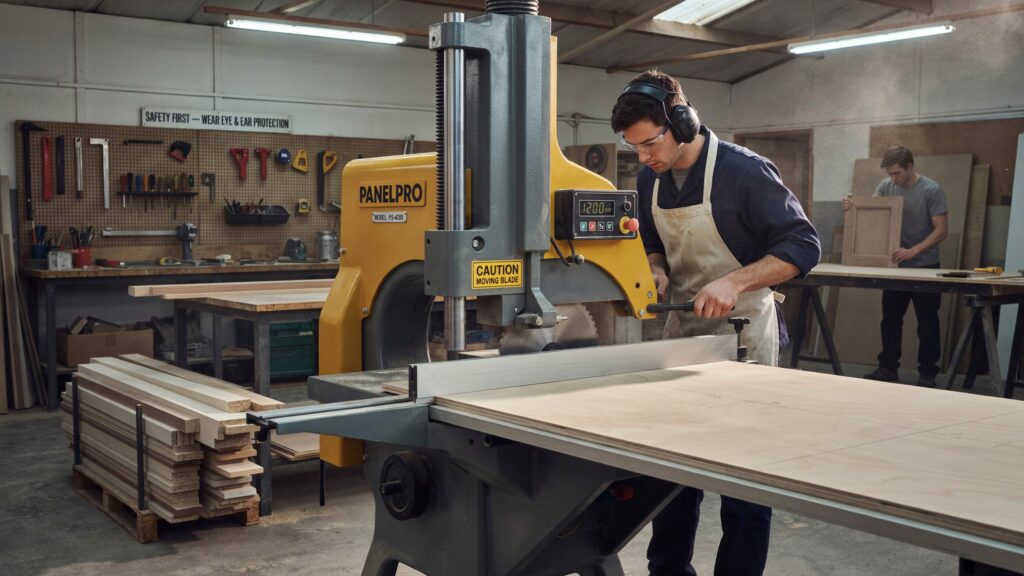
A panel saw is a specialized woodworking machine designed to cut large sheets of wood and board materials into accurate, straight sections. It is commonly used for plywood, MDF, melamine, and other sheet materials in woodworking and cabinet making. Understanding how it works, what materials it can cut, and where it is most useful can help you determine whether this machine is suitable for your projects. In this guide, we will cover its types, working process, advantages, limitations, applications, and basic safety practices.
Table of Contents
What Is a Panel Saw?
A panel saw is a woodworking machine designed to cut large sheets of wood and other board materials into accurate, straight sections. It is commonly used for cutting plywood, MDF, melamine, particleboard, and similar sheet goods. Unlike handheld saws, a panel saw provides a stable cutting system that makes it easier to handle large and heavy panels.
A panel saw machine typically uses a circular saw blade that moves through the material while the sheet is supported on a cutting table or frame. Depending on the design, the blade may move horizontally or vertically. This setup helps users make consistent cuts and prepare large panels for furniture, cabinets, doors, and other woodworking projects.
How Does a Panel Saw Work?
A panel cutting system works by guiding a circular saw blade through large sheets of wood or board material. The workpiece is supported on a stable surface while the cutting mechanism moves along a predetermined path. This setup makes sheet material cutting more controlled and helps produce accurate dimensions.
1. Position the Material
The sheet is placed securely on the cutting table or support frame. Materials such as plywood, MDF, melamine boards, and particleboard should be positioned properly before cutting begins. Correct positioning helps prevent movement during operation.
2. Set the Cutting Dimensions
The required cutting dimensions are measured and marked before the cut. On many machines, guides or stops can be adjusted to help maintain consistent measurements. Accurate setup is important when preparing materials for cabinet making or furniture projects.
3. Align the Cutting Guide
The cutting guide or fence is aligned with the required measurement. This guide helps keep the material in the correct position as the blade passes through it. Proper alignment is essential for producing straight cuts.
4. Start the Saw Blade
After the material and guides are correctly positioned, the woodworking machine is started. The circular blade rotates at high speed and is designed to cut through the selected sheet material.
5. Move the Blade Through the Material
Depending on the machine design, the blade moves horizontally or vertically through the workpiece. The controlled movement allows the blade to travel along a straight cutting path rather than relying entirely on manual guidance.
6. Support the Sheet During Cutting
Large sheets need adequate support throughout the cutting process. Proper support helps reduce movement, vibration, and unwanted bending. This is particularly important when cutting large or heavy panels.
7. Complete and Inspect the Cut
Once the blade has passed completely through the material, the cut section can be separated. The resulting edge should then be checked for accuracy, smoothness, and the required dimensions.
8. Repeat for Additional Cuts
When several pieces of the same size are required, the guides or stops can be used to maintain consistent measurements. This makes the machine useful for repeated precise cutting in furniture production, woodworking, and cabinet making.
Panel Saw for Woodworking and Cabinet Making
A panel cutting machine is particularly useful in woodworking and cabinet making because it is designed to handle large sheets of material accurately. It can help woodworkers prepare plywood, MDF, melamine boards, and other sheet materials before assembling furniture or cabinets.
1. Cutting Large Wood Panels
Large sheets can be difficult to handle with handheld saws because they may move or bend during cutting. A dedicated cutting system provides better support, making it easier to divide large panels into manageable pieces.
2. Preparing Plywood for Projects
A panel saw for plywood can make long, straight cuts through large plywood sheets. Accurate dimensions are important when plywood is being used for cabinets, shelves, furniture panels, and other woodworking projects.
3. Cutting MDF and Melamine Boards
MDF and melamine are widely used in modern furniture and cabinet making. A suitable panel saw machine for wood can cut these materials into required sizes when the correct blade and cutting settings are used.
4. Improving Cabinet Making Accuracy
Cabinet making often requires multiple pieces with specific dimensions. Consistent precise cutting helps ensure that cabinet sides, shelves, doors, and other components fit together properly during assembly.
5. Producing Straight Cuts
One of the main benefits of this type of woodworking machine is its ability to support controlled straight cuts. Proper measurement, alignment, and blade selection are still necessary to achieve clean and accurate results.
6. Making Repeated Cuts
Furniture and cabinet projects may require several pieces with identical dimensions. Adjustable guides and stops can help maintain consistent measurements, reducing the need to measure every piece from the beginning.
7. Handling Different Sheet Materials
Besides plywood, the machine can be used for materials such as MDF, particleboard, and melamine boards. The appropriate saw blade should be selected according to the material and desired edge quality.
8. Supporting Efficient Workshop Work
In professional woodworking shops, preparing large sheets efficiently can save time and simplify the production process. The machine allows workers to break down sheet materials before moving on to assembly, edging, drilling, and finishing.
9. Useful for Furniture Production
Furniture makers can use this cutting system to prepare panels for tables, cabinets, wardrobes, shelves, and other products. Accurate sheet material cutting helps maintain consistent dimensions throughout a project.
10. Important for Safe and Accurate Work
Good results depend on more than the machine itself. The material should be properly supported, measurements should be checked carefully, and the blade should be appropriate for the material. Following safe operating practices also helps reduce the risk of accidents and material damage.
Panel Saw vs. Other Woodworking Saws
Different woodworking saws are designed for different cutting tasks. A dedicated panel cutting machine is mainly intended for large sheet materials, while handheld and stationary saws offer different levels of portability, control, and cutting flexibility.
1. Panel Saw vs. Table Saw
A table saw is useful for ripping, crosscutting, and making different types of cuts in wood. A panel cutting machine, however, is specifically designed for handling large sheets such as plywood, MDF, and melamine boards. Its support and guiding system can make large sheet material cutting easier.
2. Panel Saw vs. Circular Saw
A circular saw is portable and can be used at different locations. It is useful for general woodworking and construction tasks. A panel cutting machine provides more structured support and guidance, which can help when making long, straight cuts through large sheets.
3. Panel Saw vs. Track Saw
A track saw uses a guide rail to control the cutting path and is especially useful when portability and accurate cuts are important. A panel cutting machine is generally more suitable for a workshop where large panels need to be processed regularly.
4. Panel Saw vs. Jigsaw
A jigsaw is designed for curved cuts, openings, and smaller detailed work. It is not normally intended for quickly breaking down large sheets. For precise cutting of large boards, a dedicated sheet-cutting machine is generally more appropriate.
5. Choosing the Right Saw
The right tool depends on the material, size of the workpiece, type of cut, and working environment. For cabinet making and large-sheet preparation, a dedicated cutting machine can provide useful support, while circular saws, track saws, table saws, and jigsaws are better suited to their specific applications.
Advantages of Using a Panel Saw
A dedicated sheet-cutting machine offers several benefits for woodworking, furniture production, and cabinet making. Its design is focused on handling large boards while providing controlled and repeatable cutting.
1. Accurate Straight Cuts
The guided cutting system helps keep the saw blade moving along a consistent path. With proper measurement and setup, this can produce accurate straight cuts in large sheet materials.
2. Easier Sheet Material Cutting
Large plywood, MDF, and melamine boards can be difficult to control with handheld tools. A stable support system makes sheet material cutting more manageable and organized.
3. Better Handling of Large Panels
The machine is designed to support large workpieces during cutting. This reduces the difficulty of positioning and controlling oversized sheets compared with using a handheld saw alone.
4. Consistent Cutting Results
Adjustable guides and stops can help users maintain the same dimensions across multiple pieces. This is particularly useful when several identical components are needed for furniture or cabinet making.
5. Efficient Workshop Workflow
A panel saw machine can simplify the process of breaking down large sheets into smaller components. Once the pieces are cut to size, they can move to other stages such as edging, drilling, assembly, and finishing.
6. Suitable for Different Sheet Materials
Depending on the machine and blade, it can be used for plywood, MDF, particleboard, melamine, and other sheet goods. Choosing the correct saw blade helps achieve better cutting performance and edge quality.
7. Useful for Furniture Production
Furniture makers can use this type of woodworking machine to prepare components for cabinets, wardrobes, shelves, tables, and other projects. Accurate dimensions help different components fit together during assembly.
8. Reduces Manual Handling During Cutting
The supporting structure helps keep large sheets positioned while the cut is being made. This can make the cutting process more controlled than manually guiding a large sheet with a portable saw.
9. Supports Repeated Cuts
When a project requires many pieces of the same size, guides and stops can help maintain consistent measurements. This is valuable in professional workshops where repeatability matters.
10. Improves Overall Cutting Efficiency
By combining material support, guided movement, and repeatable measurements, a panel saw machine for wood can make large-scale sheet preparation more organized and efficient.
Limitations of a Panel Saw
Although a dedicated sheet-cutting machine is useful for woodworking and cabinet making, it is not suitable for every cutting task. Understanding its limitations can help users decide when this type of woodworking machine is appropriate.
1. Requires Workshop Space
A panel saw machine can require considerable floor or wall space, especially when designed to handle large sheets. Smaller workshops may have difficulty providing enough room for the machine and the material.
2. Limited Portability
Unlike a circular saw or other handheld tools, this type of machine is generally intended for a fixed workshop location. It may not be practical for construction work or projects that require frequent movement between locations.
3. Mainly Designed for Sheet Materials
The machine is primarily intended for plywood, MDF, melamine, particleboard, and similar sheet goods. It may not be the most suitable choice for curved cuts, small detailed work, or tasks requiring a highly portable tool.
4. Not Ideal for Curved Cuts
The guided cutting system is designed mainly for straight cuts. A jigsaw or another specialized tool is generally more appropriate when a project requires curves, shapes, or intricate openings.
5. Initial Setup Can Take Time
Accurate sheet material cutting depends on proper alignment, measurement, and machine setup. Beginners may need time to understand the guides, stops, blade settings, and operating procedure.
6. Requires Proper Blade Selection
Different materials may require different blade types and tooth configurations. Using an unsuitable saw blade can result in rough edges, chipping, or reduced cutting performance.
7. Maintenance Is Necessary
Like other woodworking machines, regular maintenance is important. The blade, guides, moving components, and other parts should be inspected and maintained according to the machine’s instructions.
8. Large Panels Still Need Careful Handling
Although the machine provides support, large sheets can still be heavy and difficult to position. Proper material handling is important to prevent damage to the workpiece and reduce the risk of injury.
9. May Be More Machine Than Needed
For occasional DIY projects involving a few small cuts, a circular saw or track saw may provide sufficient capability. A dedicated woodworking machine can be unnecessary when large-sheet cutting is not a regular requirement.
10. Safety Knowledge Is Essential
The machine uses a high-speed rotating blade, so proper training and safe operating practices are important. Users should understand the machine’s controls, cutting procedure, and safety requirements before operating it.
How to Use a Panel Saw Safely

Safe operation is essential when working with any woodworking machine that uses a rotating blade. Proper preparation, material support, and operating technique can help reduce the risk of injury and improve cutting results.
1. Read the Manufacturer’s Instructions
Before using the machine, read the operating manual carefully. Learn the controls, adjustment procedures, safety features, and recommended operating methods for the specific machine.
2. Inspect the Machine Before Use
Check the saw blade, guards, guides, cables, and other important components before starting. Do not operate the machine if a safety component is damaged, loose, or missing.
3. Wear Appropriate Protection
Use suitable eye and hearing protection when required. Avoid loose clothing, jewelry, or anything that could become caught in moving components.
4. Secure the Work Area
Keep the area around the machine clean and free from unnecessary objects. Adequate space is especially important when working with large sheets of plywood, MDF, or other materials.
5. Position the Material Correctly
Place the sheet securely against the appropriate support, fence, or guide. Proper positioning helps prevent unwanted movement during sheet material cutting.
6. Check the Cutting Dimensions
Measure the material carefully before starting the cut. Confirm the guide or stop is set to the required measurement to avoid cutting the workpiece incorrectly.
7. Keep Hands Away From the Blade
Never place your hands near the cutting path. Use the machine’s intended handles, controls, and material-support systems rather than trying to manually control the workpiece close to the blade.
8. Allow the Blade to Reach Proper Speed
Start the machine according to the manufacturer’s instructions and allow the blade to reach its normal operating speed before beginning the cut. Avoid forcing the blade through the material.
9. Maintain Controlled Cutting
Allow the machine to perform the cut at an appropriate rate. Excessive force can affect precise cutting, damage the material, and place unnecessary stress on the machine.
10. Turn Off the Machine After Cutting
After completing the work, switch off the machine and wait for the blade to stop completely before making adjustments, removing material near the cutting area, or performing maintenance.
Panel Saw: Common Questions and Final Guide
Understanding the main uses, materials, and limitations of a dedicated sheet-cutting machine can help woodworkers choose the right cutting method for their projects.
1. Is a Panel Saw Good for Plywood?
Yes. A panel saw for plywood is designed to handle large plywood sheets and make long, straight cuts. Proper support, measurement, and an appropriate blade are important for achieving good results.
2. Can It Cut MDF?
Yes. MDF can generally be cut with a suitable panel saw machine for wood. The correct blade and cutting settings should be used to achieve a clean edge and reduce unnecessary chipping or damage.
3. Can It Cut Melamine Boards?
Yes. Melamine boards can be cut when the machine and saw blade are suitable for the material. Careful blade selection is particularly important when a clean finished edge is required.
4. Is It Useful for Cabinet Making?
Yes. It is commonly useful for cabinet making because cabinet projects often require multiple sheet components with accurate and consistent dimensions.
5. What Is It Mainly Used For?
Its primary purpose is sheet material cutting. It is particularly useful for breaking down large sheets into smaller pieces for furniture, cabinets, shelving, and other woodworking applications.
6. Can It Make Precise Cuts?
It can produce precise cutting when the machine is correctly aligned and operated. Measurement, guide positioning, blade condition, and material support all affect the final result.
7. Is It Suitable for Curved Cuts?
Generally, no. This type of woodworking machine is mainly designed for straight cuts. A jigsaw or another specialized cutting tool is better suited to curved or intricate cuts.
8. Is a Vertical or Horizontal Design Better?
Neither design is universally better. A vertical panel saw can save floor space and is useful for handling large sheets upright, while a horizontal design provides a table-based cutting arrangement. The appropriate choice depends on the workshop and cutting requirements.
9. Does Blade Choice Matter?
Yes. The tooth design, size, and condition of the saw blade can affect cutting quality, speed, and edge finish. The blade should be appropriate for both the material and the type of cut.
10. Final Guide
A dedicated sheet-cutting machine is mainly designed to make controlled, straight cuts in large boards such as plywood, MDF, melamine, and particleboard. Its strong points include material support, repeatable measurements, and efficient preparation of large sheets. However, it requires adequate workspace, proper setup, regular maintenance, and safe operating practices. Understanding these factors helps woodworkers use the machine effectively for furniture, woodworking, and cabinet-making projects.
Why Is a Panel Saw Necessary
| Importance | Why It Is Necessary | Benefit |
|---|---|---|
| 1 | Accurate sheet cutting | Helps produce straight and consistent cuts in large boards. |
| 2 | Handles large panels | Makes plywood, MDF, and other large sheets easier to cut. |
| 3 | Better material support | Supports the workpiece during cutting and improves control. |
| 4 | Precise dimensions | Helps prepare pieces to the required measurements for projects. |
| 5 | Efficient woodworking | Speeds up the process of breaking large sheets into smaller pieces. |
| 6 | Cabinet making | Helps prepare cabinet sides, shelves, doors, and other components. |
| 7 | Repeated cuts | Guides and stops can help produce multiple pieces of similar size. |
| 8 | Reduced manual handling | Makes handling large sheet materials more manageable during cutting. |
| 9 | Consistent results | A controlled cutting system can improve repeatability across projects. |
| 10 | Professional workshop use | Useful where large quantities of plywood, MDF, or other sheet goods need regular cutting. |
Short conclusion for the section:
A panel saw is particularly useful when woodworking projects involve large sheet materials, accurate dimensions, straight cuts, and repeated cutting tasks. It is not necessary for every workshop, but it can make large-panel preparation more controlled and efficient.
Conclusion
A panel saw is a useful woodworking machine for cutting large sheets of plywood, MDF, melamine, and other board materials into accurate and manageable pieces. Its guided cutting system can make straight cuts, repeated measurements, and large-panel preparation more controlled and efficient.
Although it requires suitable workspace, proper setup, maintenance, and safe operating practices, it can be particularly valuable for woodworking, furniture production, and cabinet making. Understanding its capabilities and limitations allows users to choose the right cutting method for their specific projects.
Frequently Asked Questions
Q1. What is a panel saw used for?
A panel saw is mainly used to cut large sheets of plywood, MDF, melamine, and other board materials into accurate, straight pieces.
Q2. What are 5 uses of a saw?
Common uses include cutting wood, plywood, MDF, plastic, and other materials, as well as making straight, cross, curved, or detailed cuts with the appropriate type of saw.
Q3. What materials can a panel saw cut?
It can typically cut plywood, MDF, particleboard, melamine, and other sheet materials when the correct blade is used.
Q4. Is a panel saw good for woodworking?
Yes. It is useful for woodworking because it can handle large panels and help produce consistent straight cuts for furniture and cabinet projects.
Q5. What is the difference between a panel saw and a table saw?
A panel saw is mainly designed for cutting large sheet materials, while a table saw is more versatile for ripping, crosscutting, and other woodworking cuts.