
Introduction
Pruning roses in spring is an important gardening practice that helps remove dead branches, improve plant structure, and encourage healthy new growth. Proper trimming allows rose bushes to receive better airflow and sunlight while preparing them for the flowering season. Understanding the right pruning time, tools, and techniques can help gardeners maintain attractive and healthy rose plants.

Table of Contents
When Is the Best Time to Prune Roses in Spring?
The best time to prune roses is usually in early spring when the risk of severe frost has passed and new growth begins to appear. In many regions, this happens when buds start swelling on the stems. However, the timing depends on local weather conditions and the type of rose.
For healthy rose bush maintenance, avoid pruning during freezing temperatures because fresh cuts may become damaged by frost. Remove dead or diseased branches when necessary, even before the main pruning season.
Signs That Roses Are Ready for Pruning
- Swollen buds: New buds indicate that the plant is preparing for active growth.
- New shoots: Small shoots show that the growing season is beginning.
- Milder weather: Warmer conditions reduce the risk of frost damage.
- Dead stems: Remove damaged or dead wood to support healthy development.
Hybrid tea roses and many shrub roses are commonly pruned in early spring. However, spring-flowering climbing roses may need pruning after flowering because they often bloom on older wood.
Why Spring Pruning Is Important for Rose Bushes
Spring pruning helps rose bushes recover from winter damage and prepares them for the growing season. During winter, some stems may become weak, diseased, or damaged by frost. Removing these unwanted parts allows the plant to focus its resources on healthy branches and new shoots.
Encourages Healthy New Growth
Removing dead and weak stems gives healthy branches more space to develop. It also helps the plant direct nutrients and energy toward productive growth. Proper spring pruning rose bushes encourages strong shoots that can support leaves and flowers during the growing season.
Improves Air Circulation and Sunlight
Overcrowded branches can restrict airflow through the centre of a rose bush. This creates humid conditions that may encourage fungal diseases such as powdery mildew and black spot. Removing crossing branches and overcrowded stems improves air circulation and allows more sunlight to reach the inner parts of the plant.
Removes Diseased and Damaged Stems
Winter weather can cause cracked, blackened, or dried stems. These damaged sections may affect the plant’s health if left untreated. Use clean, sharp pruning shears to cut back damaged growth until you reach healthy tissue. Disinfect the blades after cutting diseased material to reduce the risk of spreading infection.
Supports Better Flower Production
Many repeat-flowering roses produce flowers on new growth. Removing old, unproductive stems encourages fresh shoots that can develop flower buds. Suitable rose pruning techniques also help maintain a balanced shape and prevent excessive overcrowding.
Maintains Plant Shape and Structure
Uncontrolled branches can make a rose bush uneven and difficult to maintain. Removing weak, inward-growing, and crossing stems creates an open structure. This improves the plant’s appearance and makes watering, inspection, and future rose bush maintenance easier.
Important: Not every rose variety needs the same pruning method. Some spring-flowering climbing roses bloom on older stems, so heavy spring pruning may remove flower buds. Always consider the rose type before cutting healthy branches.
Tools Needed for Pruning Rose Bushes
Using the correct gardening tools makes rose pruning easier, safer, and more accurate. Suitable equipment helps create clean cuts, protect your hands from thorns, and reduce unnecessary damage to healthy stems. Before starting spring rose pruning, prepare the following tools.
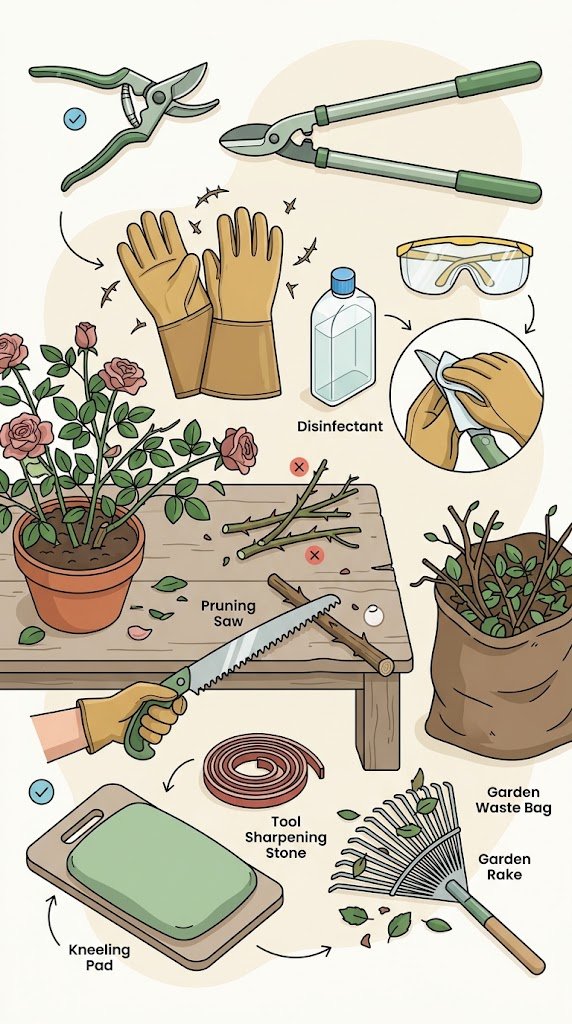
Bypass Pruning Shears
Bypass pruning shears are the most useful tool for trimming small rose stems. They have two curved blades that pass each other like scissors, producing clean cuts without crushing soft plant tissue. Choose sharp, comfortable shears for branches that are within the tool’s cutting capacity.
Loppers for Thick Branches
Garden loppers have long handles that provide extra leverage when cutting thicker or harder rose stems. They are useful when ordinary pruning shears cannot cut a branch easily. Avoid forcing the blades through stems that exceed the manufacturer’s recommended cutting capacity.
Gardening Gloves
Thick gardening gloves protect your hands from sharp rose thorns and scratches. Leather or thorn-resistant gloves with extended cuffs offer additional protection when working inside dense rose bushes.
Disinfectant for Pruning Blades
Clean pruning blades help reduce the spread of plant diseases. Use 70% isopropyl alcohol to disinfect cutting surfaces, particularly after removing diseased stems. Follow safe handling instructions and allow the blades to dry before storage.
Safety Glasses
Safety glasses protect your eyes from sharp branches and small pieces of wood that may move during cutting. They are particularly useful when pruning dense or thorny rose bushes.
Cleaning Cloth and Garden Waste Bag
A clean cloth helps remove sap, dirt, and moisture from tools after use. Keep a garden waste bag nearby to collect dead and damaged stems, fallen leaves, and diseased plant material. Dispose of diseased waste appropriately rather than leaving it around the rose bush.
Pruning Saw
A pruning saw is useful for removing thick, woody rose branches that are too large for ordinary shears or loppers. Choose a small, sharp garden saw that allows controlled cutting in tight spaces. It is particularly helpful for mature rose bushes with older stems.
Kneeling Pad
A gardening kneeling pad provides cushioning when working close to the ground. It makes it more comfortable to inspect lower branches, remove dead stems, and reach the base of rose bushes without putting excessive pressure on your knees.
Garden Rake
A garden rake helps collect fallen leaves, loose twigs, and pruning debris around rose bushes. Removing old plant material keeps the surrounding area tidy and reduces places where some pests and disease-causing organisms may survive.
Tool Sharpening Stone
A sharpening stone helps maintain the cutting edge of suitable pruning tools. Sharp blades produce cleaner cuts and require less effort than blunt blades. Follow the manufacturer’s sharpening instructions to avoid damaging the blade.
Garden Disinfectant Container
A small, suitable container can hold disinfectant for cleaning pruning blades between cuts when necessary. This is particularly useful when removing diseased branches from different parts of a rose bush. Always follow the disinfectant label instructions and avoid mixing cleaning chemicals.
Tool maintenance tip: Keep cutting blades sharp, clean, and rust-free. Properly maintained equipment produces cleaner cuts and makes rose bush maintenance ea
How to Prune Roses in Spring Step by Step
Proper pruning helps rose bushes develop healthy branches, maintain a balanced shape, and produce flowers during the growing season. Before starting, make sure severe frost has passed and prepare clean, sharp pruning shears. Choosing suitable garden pruning shears helps make clean cuts and reduces damage to healthy stems. Follow these steps to trim your rose bushes carefully.
Step 1: Inspect the Rose Bush
Examine the entire plant before cutting anything. Look for dead and damaged stems, blackened branches, broken wood, and weak growth. Also check for crossing branches that rub against each other. Identifying these problems first helps you decide which parts need removal.
Step 2: Remove Dead and Diseased Stems
Use sharp bypass pruning shears to remove dead, blackened, or diseased branches. Cut back towards healthy green tissue. If a stem is damaged along its length, continue cutting until the inside of the remaining stem appears healthy. Disinfect your blades after cutting diseased material.
Step 3: Cut Weak and Thin Growth
Remove very thin, weak, and poorly developed stems that are unlikely to support healthy flowering. This allows stronger branches to receive better access to sunlight and growing resources. Avoid removing healthy stems unnecessarily.
Step 4: Remove Crossing and Inward-Growing Branches
Identify branches that cross, rub against each other, or grow towards the centre of the bush. Remove selected unwanted stems at their point of origin. This opens the plant’s centre and improves air circulation, helping reduce conditions that favour fungal diseases.
Step 5: Shorten Healthy Stems Correctly
For many repeat-flowering bush roses, shorten suitable healthy stems to create a balanced framework. Make each cut approximately 5–6 mm (¼ inch) above an outward-facing bud. Angle the cut slightly away from the bud so water does not collect on it.
Step 6: Maintain the Shape of the Bush
Step back and examine the plant from different sides. Aim for an open, balanced structure rather than cutting every branch to the same length. The correct amount of trimming depends on the rose variety, age, and condition.
Step 7: Collect and Remove Pruning Waste
Gather fallen leaves, cut stems, and diseased plant material from around the plant. Dispose of diseased waste appropriately and avoid leaving infected debris near the rose bush.
Step 8: Clean Your Gardening Tools
Remove plant residue from your pruning shears and disinfect the blades when necessary. Dry the tools thoroughly before storage to prevent rust and maintain their cutting performance.
Important: These steps mainly apply to established bush roses, such as many hybrid tea and floribunda varieties. Spring-flowering climbing roses and some shrub roses require different pruning schedules because they may flower on older wood. Always identify the rose type before removing healthy branches.
Step 9: Check the Height of the Rose Bush
After removing unwanted branches, check the overall height of the plant. For many established hybrid tea roses, healthy main stems can be shortened to approximately 30–45 cm (12–18 inches), depending on the variety and local growing conditions. Avoid applying this height to all roses because shrub and climbing varieties need different treatment.
Step 10: Remove Remaining Flowerless or Unproductive Stems
Inspect the plant for old, poorly positioned stems that produce little healthy growth. Remove selected unproductive branches if they crowd the centre or weaken the plant’s structure. Keep strong, well-positioned stems that can support future flowering.
Step 11: Inspect the Base of the Plant
Check the lower part of the rose bush for unwanted suckers. Some roses are grafted onto rootstock, and suckers may grow from below the graft union. Remove these shoots at their point of origin rather than simply cutting off their tips. Do not confuse normal new growth from the rose variety with rootstock suckers.
Step 12: Water the Rose Bush When Needed
After pruning, check the soil moisture around the roots. If the soil is dry, water deeply at the base of the plant rather than spraying the leaves. Avoid excessive watering because consistently waterlogged soil can damage roots.
Step 13: Apply a Suitable Mulch Layer
Spread a 5–7 cm (2–3 inch) layer of organic mulch, such as composted bark or well-rotted garden compost, around the base. Keep the mulch a few centimetres away from the main stems. Mulching helps retain soil moisture, regulate soil temperature, and reduce weed growth.
Step 14: Monitor New Growth
Observe the rose bush over the following weeks. Look for healthy new shoots, leaf development, and signs of pests or disease. Remove newly damaged growth when necessary and provide suitable care as the plant enters its active growing season.
Practical tip: Do not continue cutting simply to make the rose bush smaller. Good spring rose pruning should maintain a healthy structure while preserving enough strong stems for future flowers.
Which Rose Stems and Branches Should You Remove?
Knowing which branches to remove is an important part of proper rose care. Cutting the wrong stems can reduce flowering, damage healthy growth, or affect the natural structure of the plant. Before trimming, inspect the entire bush and identify branches that are dead, diseased, damaged, or growing in an unsuitable direction.
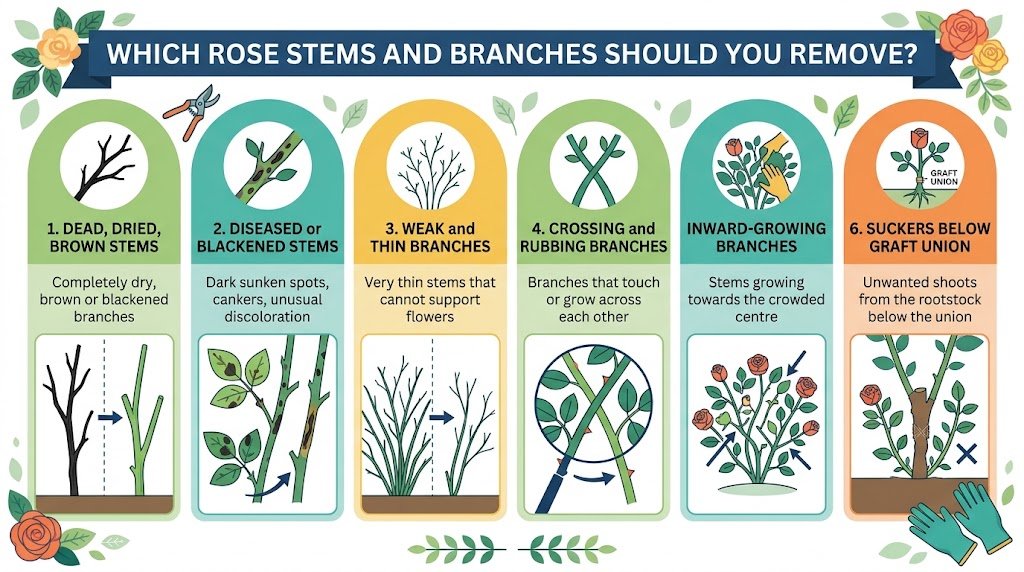
Dead and Dried Branches
Remove dead and damaged stems that are completely dry, brown, or blackened. These branches will not produce healthy new growth. Cut them back to healthy green tissue or remove them at their point of origin if the entire stem is dead.
Diseased or Blackened Stems
Remove stems showing signs of disease, such as dark sunken areas, unusual discoloration, or spreading dieback. Cut below the affected section into healthy tissue. Disinfect pruning shears after handling diseased material to reduce the risk of spreading infection.
Weak and Thin Branches
Very thin, weak, and poorly developed branches may struggle to support flowers. Remove selected weak stems, especially those growing close together or towards the centre. Preserve healthy young shoots that are well-positioned to develop into strong branches.
Crossing and Rubbing Branches
Branches that cross or rub against each other can develop damaged bark and wounds. Remove one of the competing stems, preferably the weaker or poorly positioned one. This also improves air circulation through the centre of the plant.
Inward-Growing Branches
Remove selected branches that grow towards the centre and create overcrowding. An open structure allows sunlight to reach more leaves and helps air move through the bush. This supports healthier rose bush maintenance.
Suckers Growing Below the Graft Union
Grafted roses sometimes produce unwanted shoots from the rootstock below the graft union. These are called suckers. They may compete with the desired rose variety for water and nutrients. Remove them at their point of origin, including where possible the connection to the rootstock, without damaging the main plant.
Old and Unproductive Stems
Some mature rose bushes develop old, woody stems that become less productive or overcrowd newer growth. Remove selected old branches at ground level when necessary to encourage replacement growth. However, do not remove every old stem, as some rose varieties flower on established wood.
Branches Growing Too Close Together
When several stems grow from nearly the same position, the area can become crowded. Keep the strongest, best-positioned branches and remove selected weaker ones. This creates space for healthy shoots and reduces competition within the bush.
Important: The correct branches to remove depend on the rose variety. For example, many hybrid tea roses benefit from regular spring pruning, while spring-flowering climbing roses should generally be pruned after flowering because their older stems may carry flower buds.
Common Rose Pruning Mistakes to Avoid
Pruning roses requires careful cutting and an understanding of how different varieties grow. Incorrect trimming can damage healthy stems, remove developing flower buds, and weaken the plant. Avoid these common mistakes to maintain healthy rose bushes.
Pruning Too Early
Cutting roses before severe winter frost has passed can expose fresh cuts and new shoots to cold damage. Wait until the weather becomes milder and buds begin to swell. The correct timing depends on your local climate and rose variety.
Using Blunt or Dirty Tools
Blunt pruning shears can crush stems instead of making clean cuts. Dirty blades may also spread plant diseases between branches. Keep cutting tools sharp and disinfect them when necessary, especially after removing diseased stems.
Removing Too Many Healthy Branches
Heavy pruning can remove productive stems and reduce flowering, particularly in roses that bloom on older wood. Remove dead, diseased, weak, and poorly positioned branches while preserving healthy growth.
Making Incorrect Cutting Angles
Avoid leaving long, uneven stubs or cutting directly into a healthy bud. For suitable bush roses, make a clean cut approximately 5–6 mm above an outward-facing bud, with a slight downward angle away from it.
Ignoring the Rose Variety
Different roses have different flowering habits. Applying the same pruning method to every plant can remove future flowers. Identify whether your plant is a hybrid tea, shrub, climbing, or spring-flowering rose before trimming.
Leaving Diseased Plant Material Behind
Do not leave infected stems and fallen diseased leaves around the plant. Collect and dispose of them appropriately to reduce potential sources of infection.
How to Prune Different Types of Roses
Different rose varieties require different pruning methods because they vary in growth habits, stem structure, and flowering times. Understanding these differences helps protect flower buds and maintain a healthy plant shape.
Pruning Hybrid Tea Roses
Hybrid tea roses usually produce large flowers on individual stems and benefit from annual spring pruning. Remove dead, damaged, and weak branches first. Keep approximately 3–5 strong, well-spaced main stems where the plant’s structure allows. Shorten suitable stems to around 30–45 cm, depending on the variety and growing conditions, making cuts above outward-facing buds.
Pruning Floribunda Roses
Floribunda roses produce clusters of flowers and generally need moderate spring pruning. Remove dead and overcrowded branches, then shorten selected healthy stems to maintain an open, balanced framework. Avoid cutting all stems too severely because this can reduce the plant’s flowering potential.
Pruning Climbing Roses
Climbing roses develop long canes that can be trained along walls, fences, and trellises. Remove dead or damaged canes and tie healthy main stems to their supports. Shorten side shoots where appropriate. Spring-flowering climbing roses should generally be pruned after flowering because their blooms often develop on older growth.
Pruning Shrub Roses
Shrub roses usually have a naturally spreading growth habit. Remove dead, diseased, and crossing stems, then lightly shape the plant if needed. Many varieties require only limited pruning. Avoid excessive cutting because it can spoil their natural form.
Pruning Miniature Roses
Miniature roses have smaller stems and compact growth. Remove dead flowers, damaged branches, and weak growth using small, sharp pruning shears. Lightly trim the plant to maintain its shape without removing too much healthy growth.
How to Care for Roses After Spring Pruning
After pruning, rose bushes need suitable care to recover and produce healthy new growth. Proper watering, soil maintenance, and regular inspection help plants adjust to their trimmed structure and prepare for flowering.
Water the Plant Properly
Check the soil moisture after pruning. If the upper soil feels dry, water deeply around the root zone. Avoid frequent shallow watering and do not allow water to collect around the roots. Watering at soil level also helps keep foliage dry.
Apply Organic Mulch
Spread a 5–7 cm layer of organic mulch, such as composted bark or well-rotted compost, around the base. Keep it away from the main stems to prevent excessive moisture against the canes. Mulch helps retain soil moisture, suppress weeds, and regulate soil temperature.
Provide Suitable Fertilizer
Once active growth begins, apply a balanced rose fertilizer according to the product label and soil conditions. Avoid excessive fertilizer because too much nitrogen can encourage leafy growth instead of balanced flowering. Do not fertilize newly planted roses without checking their specific requirements.
Inspect Leaves and New Shoots
Regularly check for yellow leaves, unusual spots, pests, and damaged shoots. Early inspection helps identify problems before they spread. Remove affected plant material when necessary and keep the surrounding area clean.
Provide Adequate Sunlight
Most garden roses grow best with approximately six or more hours of direct sunlight daily. Make sure nearby plants do not block sunlight or restrict airflow around the bush.
Remove Unwanted Weeds
Clear weeds growing around the rose bush because they compete for water, nutrients, and growing space. Remove them carefully without disturbing the rose roots.
Monitor Flower Development
Watch for healthy shoots and developing flower buds over the following weeks. Remove damaged growth when necessary, and provide consistent moisture during dry weather.
Care tip: Good spring care for roses involves regular observation rather than excessive watering, feeding, or trimming. Allow the plant to develop naturally after pruning.
Conclusion
Spring pruning plays an important role in maintaining healthy and well-shaped rose bushes. Removing dead, damaged, and weak stems allows new shoots to develop and improves airflow around the plant. Choosing the correct pruning method for each rose variety is equally important because different types have different flowering habits. With clean tools, suitable watering, and regular care, gardeners can support stronger growth and enjoy beautiful roses throughout the growing season.
Top 5 FAQs About Pruning Roses in Spring
Q1. When is the best time to prune roses in spring?
The best time is usually early spring, after severe frost has passed and buds begin to swell. Timing depends on your local climate and rose variety.
Q2. How much should you cut back rose bushes in spring?
For many established hybrid tea roses, shorten healthy stems to around 30–45 cm. Other rose varieties may require lighter pruning.
Q3. What branches should be removed when pruning roses?
Remove dead, diseased, damaged, weak, crossing, and inward-growing branches to maintain a healthy plant structure.
Q4. Can you prune roses with regular scissors?
It is better to use sharp bypass pruning shears because they produce cleaner cuts and reduce crushing damage to rose stems.
Q5. Should you water roses after spring pruning?
Yes. Check the soil moisture and water deeply around the roots when the soil is dry. Avoid overwatering because soggy soil can damage roots.