
Introduction
Mini Hand Saw for Wood is an essential tool for anyone who enjoys woodworking, home improvement, or DIY projects. Its compact size makes it easy to handle while providing excellent control for accurate cuts on small wooden pieces. Whether you are repairing furniture, building crafts, or working on detailed woodworking tasks, choosing the right saw can improve both the quality and efficiency of your work.
This guide explains everything you need to know, including the different types, common uses, key parts, safe operating methods, advantages, limitations, and maintenance tips. By understanding these features, you can select the right tool for your needs and achieve cleaner, more precise results in every project.
Table of Contents
Types of Mini Hand Saws for Wood
1. Small Hand Saw for Wood
A small hand saw for wood is one of the most versatile cutting tools for everyday woodworking. It is designed for making straight cuts in boards, trim, dowels, and other wooden materials. Its compact size provides better control, making it suitable for beginners and professionals working on DIY woodworking projects.
2. Fine Tooth Hand Saw
A fine tooth hand saw has closely spaced saw teeth that create smooth and accurate cuts with minimal splintering. It is commonly used for finishing work, furniture making, and other projects that require clean edges and precision wood cutting.
3. Compact Hand Saw for Wood
A compact hand saw for wood is lightweight and easy to carry, making it ideal for home repairs and outdoor tasks. Its portable design allows users to work comfortably in confined spaces while maintaining good cutting control. Many woodworking hand tools collections include this type because of its versatility.
4. Micro Handsaw
A micro handsaw is specially designed for delicate woodworking, model making, and craft projects. Its smaller blade allows users to perform detailed cuts in thin wooden pieces with excellent accuracy. This tool is especially useful when working on intricate designs that require careful handling.
5. Small Woodworking Saw
A small woodworking saw is suitable for cutting softwood, hardwood, plywood, and decorative wooden pieces. It provides excellent control during both crosscutting wood and general woodworking tasks, making it a dependable tool for hobbyists and skilled craftsmen.
6. Manual Wood Cutting Saw
A manual wood cutting saw operates without electricity, making it a reliable option for workshops, job sites, and outdoor projects. It allows users to cut wood quietly while maintaining better control over the cutting process. This type of saw is valued for its simplicity and durability.
7. Portable Hand Saw for Wood
A portable hand saw for wood is designed for convenience and easy transportation. Whether working in a home workshop or on a construction site, its lightweight construction makes it easy to carry and store. It is commonly used for quick cutting jobs where power tools are unnecessary.
8. Hand Saw for Small Wood Projects
A hand saw for small wood projects is perfect for hobby woodworking, crafts, and furniture repairs. Its manageable size helps users make accurate cuts while reducing material waste. It is often recommended for beginners learning basic wood cutting techniques.
9. Wood Cutting Hand Saw
A wood cutting hand saw is available in different blade lengths and tooth patterns to suit various woodworking needs. Some models are designed for cutting along the wood grain, while others perform better when cutting across it. Selecting the correct blade improves cutting efficiency on both softwood and hardwood.
10. Mini Wood Saw
A mini wood saw combines portability with cutting precision, making it useful for a wide range of woodworking applications. Many models feature an ergonomic saw handle that improves grip and reduces hand fatigue during extended use. This type of saw is an excellent choice for users who need a reliable tool for detailed woodworking and everyday cutting tasks.
Common Uses of a Mini Hand Saw for Wood
1. Small Woodworking Projects
A small woodworking saw is widely used for creating shelves, decorative items, wooden boxes, and other DIY projects. Its compact size provides better control, making it easier to complete detailed work with clean and accurate results.
2. Furniture Repairs
A wood cutting hand saw is useful for repairing chairs, tables, cabinets, and other wooden furniture. It helps trim damaged parts, adjust wooden components, and make precise cuts without using large power tools.
3. Craft and Hobby Work
A micro handsaw is an excellent choice for craft projects, model making, and other detailed woodworking tasks. Its small blade allows users to cut thin wooden pieces with high accuracy, making it ideal for projects that require precision wood cutting.
4. Trimming Wooden Molding and Trim
A fine tooth hand saw is commonly used for trimming moldings, baseboards, and wooden trim. The sharp saw teeth produce smooth cuts with minimal splintering, resulting in a clean finish that requires little sanding.
5. Cutting Dowels and Small Boards
A small hand saw for wood makes it easy to cut wooden dowels, narrow boards, and strips to the required length. It offers excellent control when working on projects that involve both softwood and hardwood materials.
6. Home Improvement Projects
A compact hand saw for wood is a practical tool for everyday home repairs and renovation tasks. It is commonly used for fitting wooden panels, cutting trim, and making quick adjustments where larger tools may be difficult to handle.
7. Outdoor Woodworking Tasks
A portable hand saw for wood is easy to carry for outdoor jobs such as building garden structures, repairing wooden fences, or cutting small timber. Since it does not require electricity, it performs well in locations without a power source.
8. Educational and Beginner Practice
A manual wood cutting saw is often recommended for beginners learning basic wood cutting techniques. It allows users to practice safe cutting methods while developing better control and confidence with essential woodworking hand tools.
9. Crosscutting Wooden Pieces
A mini wood saw is suitable for crosscutting wood when shortening boards or preparing small pieces for assembly. Choosing the correct blade design helps produce smoother cuts while reducing tear-out on the wood surface.
10. Precision Joinery and Detail Work
A hand saw for small wood projects is commonly used for fine joinery, fitting joints, and shaping small wooden components. Its compact design and ergonomic saw handle provide better stability, allowing users to make controlled cuts with greater accuracy.
Key Parts of a Mini Hand Saw for Wood
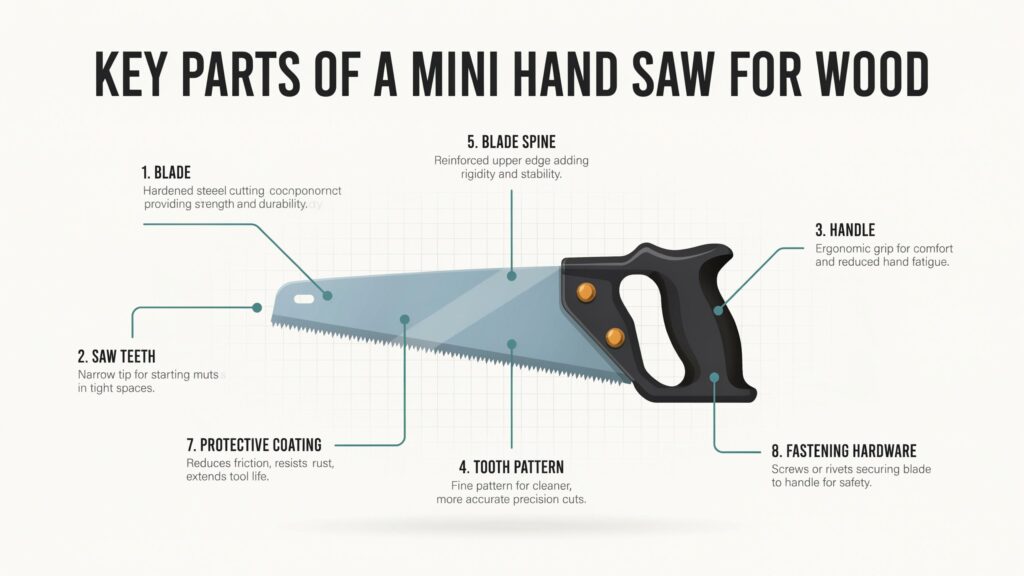
1. Blade
The blade is the main cutting component of a wood cutting hand saw. It is usually made from hardened steel to provide strength, durability, and long-lasting performance. The blade length and thickness affect cutting accuracy and control during different woodworking tasks.
2. Saw Teeth
The saw teeth are responsible for removing wood as the saw moves through the material. Different tooth shapes and sizes are designed for specific wood cutting techniques, helping users achieve smoother cuts in both softwood and hardwood.
3. Handle
The handle provides a secure grip and helps guide the saw during use. Most compact hand saw for wood models feature an ergonomic saw handle that improves comfort and reduces hand fatigue, especially during extended cutting sessions.
4. Tooth Pattern
The tooth pattern determines how efficiently the saw cuts wood. A fine tooth hand saw is designed to produce cleaner and more accurate cuts, making it suitable for furniture work, trim installation, and other projects that require precision wood cutting.
5. Blade Spine
Some small woodworking saw models include a reinforced blade spine that adds rigidity to the blade. This extra support helps keep the blade straight while cutting, improving stability and reducing the chance of bending.
6. Blade Tip
The blade tip is the front end of the saw and is useful when starting cuts in tight spaces or making detailed work. A micro handsaw often features a narrow tip that allows better access to small wooden pieces and intricate designs.
7. Protective Blade Coating
Many portable hand saw for wood models include a protective coating on the blade. This coating helps reduce friction during cutting, resists rust, and extends the working life of the tool by protecting the steel surface.
8. Fastening Hardware
The screws or rivets that connect the blade to the handle are important for maintaining strength and stability. A well-secured manual wood cutting saw provides better control and improves safety during regular woodworking applications.
9. Cutting Edge
The cutting edge is formed by the sharpened teeth along the blade. A properly maintained small hand saw for wood delivers smoother cuts, requires less effort, and improves overall performance in DIY woodworking projects.
10. Hanging Hole
Many mini wood saw designs include a small hanging hole near the end of the blade or handle. This feature makes storage more convenient, keeps the tool organized, and helps protect other woodworking hand tools in the workshop.
How to Use a Mini Hand Saw for Wood Safely
1. Inspect the Tool Before Use
Before starting any project, examine the wood cutting hand saw for signs of damage or wear. Make sure the blade is straight, the saw teeth are sharp, and the handle is firmly attached. A well-maintained tool provides safer and more accurate cutting.
2. Secure the Wood Properly
Always clamp or hold the wood firmly before cutting. Keeping the material stable prevents movement and helps the small hand saw for wood make cleaner cuts while reducing the risk of slipping.
3. Choose the Right Saw for the Job
Select a fine tooth hand saw for smooth finishing cuts or a small woodworking saw for general cutting tasks. Using the correct tool improves efficiency and supports better precision wood cutting.
4. Mark the Cutting Line
Use a pencil and ruler to mark the cutting line before sawing. A clear guide helps the manual wood cutting saw stay on track and reduces mistakes during the cutting process.
5. Hold the Handle Correctly
Grip the ergonomic saw handle firmly without applying excessive pressure. A comfortable grip improves control and helps reduce hand fatigue during longer woodworking tasks.
6. Start with Slow, Light Strokes
Begin cutting with gentle strokes to create a shallow groove in the wood. Once the blade is aligned, continue with smooth and even movements. This approach enhances cutting accuracy and helps keep the blade steady during use.
7. Maintain a Steady Cutting Angle
Keep the blade at a consistent angle while cutting. Whether using a compact hand saw for wood or a portable hand saw for wood, maintaining proper alignment produces smoother results and helps with crosscutting wood.
8. Keep Your Hands Away from the Blade
Position your free hand away from the cutting path at all times. This simple safety habit helps prevent accidental injuries while using a micro handsaw or any other manual cutting tool.
9. Wear Appropriate Safety Equipment
Safety glasses protect your eyes from flying wood particles, while work gloves improve grip and help reduce minor injuries. Wearing proper protective equipment is recommended for all DIY woodworking projects, regardless of experience level.
10. Clean and Store the Saw After Use
After finishing your work, remove sawdust from the blade and store the mini wood saw in a dry place. Regular cleaning helps prevent rust, keeps the blade in good condition, and extends the life of your woodworking hand tools.
Advantages and Limitations of a Mini Hand Saw for Wood
1. Easy to Control
A small hand saw for wood offers excellent control when making detailed cuts. Its compact size allows users to work comfortably on small pieces, making it a reliable choice for precision wood cutting and delicate woodworking tasks.
2. Lightweight and Portable
A portable hand saw for wood is easy to carry and store because of its lightweight design. It is convenient for home repairs, outdoor work, and DIY woodworking projects where large tools are not practical.
3. No Electricity Required
A manual wood cutting saw operates without batteries or electricity, allowing users to work in workshops, gardens, or remote locations. This makes it a dependable tool for quick cutting jobs in any environment.
4. Produces Clean and Accurate Cuts
A fine tooth hand saw is designed to create smooth cuts with minimal splintering. Its sharp saw teeth improve cutting quality, making it suitable for furniture repairs, trim work, and detailed woodworking.
5. Suitable for Small Projects
A small woodworking saw is ideal for crafts, model making, decorative items, and other small woodworking tasks. It provides better handling than larger saws when working with small wooden components.
6. Limited Cutting Capacity
Although a compact hand saw for wood performs well on smaller materials, it is not suitable for cutting thick lumber or large wooden beams. Bigger woodworking jobs often require larger hand saws or power tools.
7. Slower Than Power Tools
A wood cutting hand saw is operated manually, so it usually cuts more slowly than electric saws. This limitation becomes noticeable when working on large projects or making repeated cuts.
8. Requires Proper Cutting Technique
Using a micro handsaw effectively requires steady hand movements and good wood cutting techniques. Beginners may need practice to make straight, accurate cuts without damaging the workpiece.
9. Blade Needs Regular Maintenance
The blade should be cleaned and inspected after use to maintain good performance. Keeping the saw teeth sharp and free from rust helps improve cutting efficiency when working with both softwood and hardwood.
10. Best for Detailed Woodworking
A mini wood saw is an excellent choice for tasks that require accuracy and careful control. Its ergonomic saw handle improves comfort during use, but it is designed for smaller jobs rather than heavy-duty woodworking. It remains an important tool in any collection of woodworking hand tools.
How to Maintain a Mini Hand Saw for Wood
1. Clean the Blade After Every Use
After each cutting task, wipe the blade of the wood cutting hand saw with a clean, dry cloth to remove sawdust and wood particles. Regular cleaning helps maintain cutting performance and protects the blade from corrosion.
2. Keep the Saw Teeth Sharp
Sharp saw teeth make cutting smoother and require less effort. Inspect the teeth regularly and sharpen or replace the blade when it becomes dull. A well-maintained fine tooth hand saw delivers cleaner and more accurate results.
3. Prevent Rust
Apply a light coat of machine oil to the blade before storing it for long periods. This simple step protects the steel surface from moisture and extends the life of your manual wood cutting saw.
4. Store in a Dry Place
Always keep your portable hand saw for wood in a clean, dry location. Proper storage prevents rust and keeps the blade in good condition. Hanging the tool or placing it in a protective case also helps avoid accidental damage.
5. Check the Handle Regularly
Inspect the ergonomic saw handle for cracks, looseness, or wear. A secure handle provides better control and improves safety during woodworking tasks. Tighten any loose screws or fasteners before using the tool.
6. Protect the Blade Edge
Avoid placing the small hand saw for wood where the blade can strike hard objects. Protecting the cutting edge helps preserve the sharpness of the saw teeth and supports consistent precision wood cutting.
7. Use the Right Tool for the Material
A small woodworking saw performs best when used for its intended purpose. Avoid cutting materials that are harder than recommended, as this can damage the blade and reduce its cutting efficiency on softwood and hardwood.
8. Inspect Before Every Use
Before starting any project, examine the compact hand saw for wood for bent blades, damaged teeth, or loose components. Regular inspections help identify problems early and improve overall safety.
9. Keep the Blade Dry During Work
When working outdoors or in humid conditions, wipe moisture from the blade whenever necessary. This maintenance habit protects a micro handsaw from rust and keeps it ready for future DIY woodworking projects.
10. Organize with Other Woodworking Tools
Store the mini wood saw separately from other woodworking hand tools to prevent the blade from becoming damaged. Proper organization makes the tool easier to find, extends its service life, and ensures reliable performance whenever it is needed.
Conclusion
A Mini Hand Saw for Wood is a practical and reliable tool for making accurate cuts in a wide variety of woodworking projects. Its lightweight design, ease of use, and ability to handle detailed work make it suitable for beginners, DIY enthusiasts, and experienced woodworkers alike.
Understanding the different types, key parts, common applications, safety practices, and maintenance requirements helps you use the tool more effectively and extend its service life. With proper care and the right cutting techniques, this compact woodworking tool can deliver consistent performance and become a valuable part of your workshop for years to come.
Top Five Frequently Asked Questions
Q1. What is a mini saw used for?
A mini saw is used for cutting small pieces of wood with better accuracy and control. It is ideal for DIY woodworking projects, furniture repairs, craft work, trim cutting, and other detailed tasks where a larger saw is difficult to use.
Q2. What is a micro saw?
A micro saw is a compact hand tool designed for making precise cuts in thin wood and other small materials. It is commonly used for model making, fine woodworking, hobby crafts, and intricate projects that require clean, accurate cuts.
Q3. How do you use a small hand saw?
Secure the wood firmly before cutting and mark the cutting line with a pencil. Hold the saw handle comfortably, start with light strokes to create a guide, and then continue with smooth, even movements while keeping the blade aligned with the marked line.
Q4. What is the best saw to cut small pieces of wood?
A fine tooth hand saw or a compact woodworking saw is one of the best choices for cutting small pieces of wood. These tools provide clean cuts, better control, and reduced splintering, making them suitable for detailed woodworking and craft projects.
Q5. What are the little saws called?
Little saws are commonly called mini hand saws, micro handsaws, compact hand saws, or small woodworking saws. The name often depends on the blade design and the type of woodworking task they are intended to perform.