
Introduction
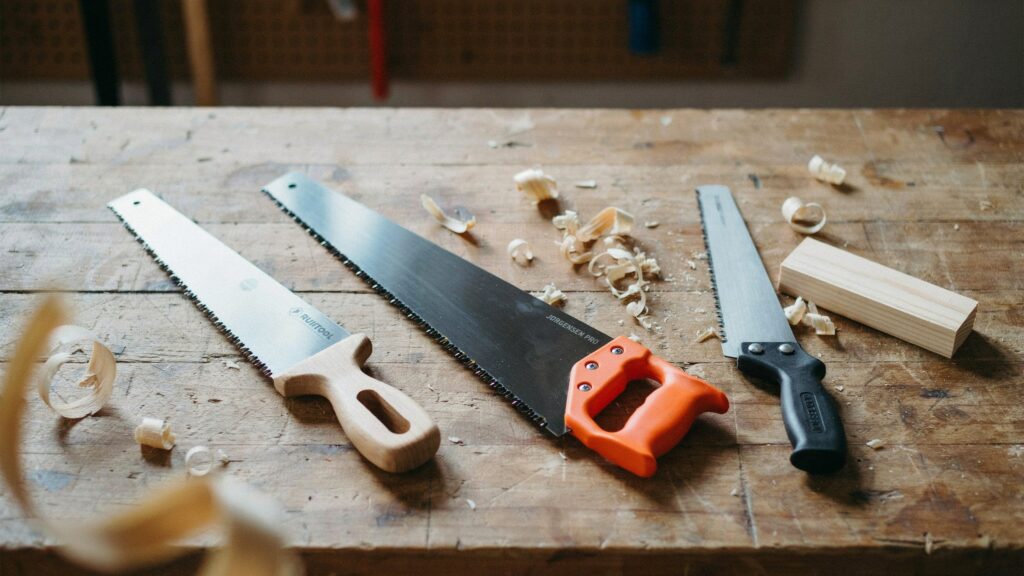
There’s nothing quite like the frustration of a saw that snags, splinters, or drags halfway through a cut you thought would take two minutes. If you’ve ever stood in your garage holding an uneven piece of wood, wondering why the tool in your hand feels more like a fight than a help, you’re not alone. Most people don’t realize that the wrong saw isn’t just inconvenient — it can turn a simple weekend project into a safety risk. That’s exactly why finding the best hand saw for cutting wood matters more than it seems.
The good news is, you don’t need to be a professional carpenter to get clean, confident cuts every time. With the right saw in hand, even a first-time DIYer can trim, shape, and build with precision, without the strain, the splinters, or the second-guessing. This guide walks you through exactly what to look for, so your next cut feels effortless instead of exhausting.
Table of Contents
| Image | Product | Detail | Price |
|---|---|---|---|
 | RUITOOL Japanese Hand Saw (6-Inch Double Edge Ryoba) |
| Price |
 | JORGENSEN 20 Inch Pro Hand Saw |
| Price |
 | JORGENSEN 10 Inch Japanese Pull Saw |
| Price |
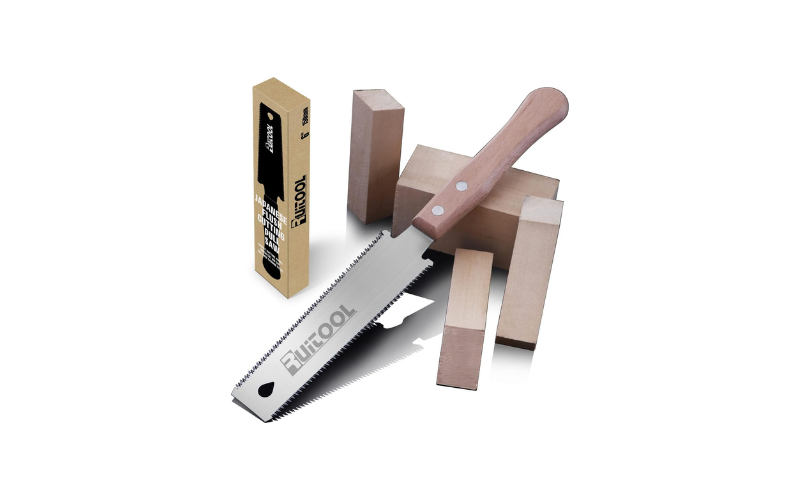
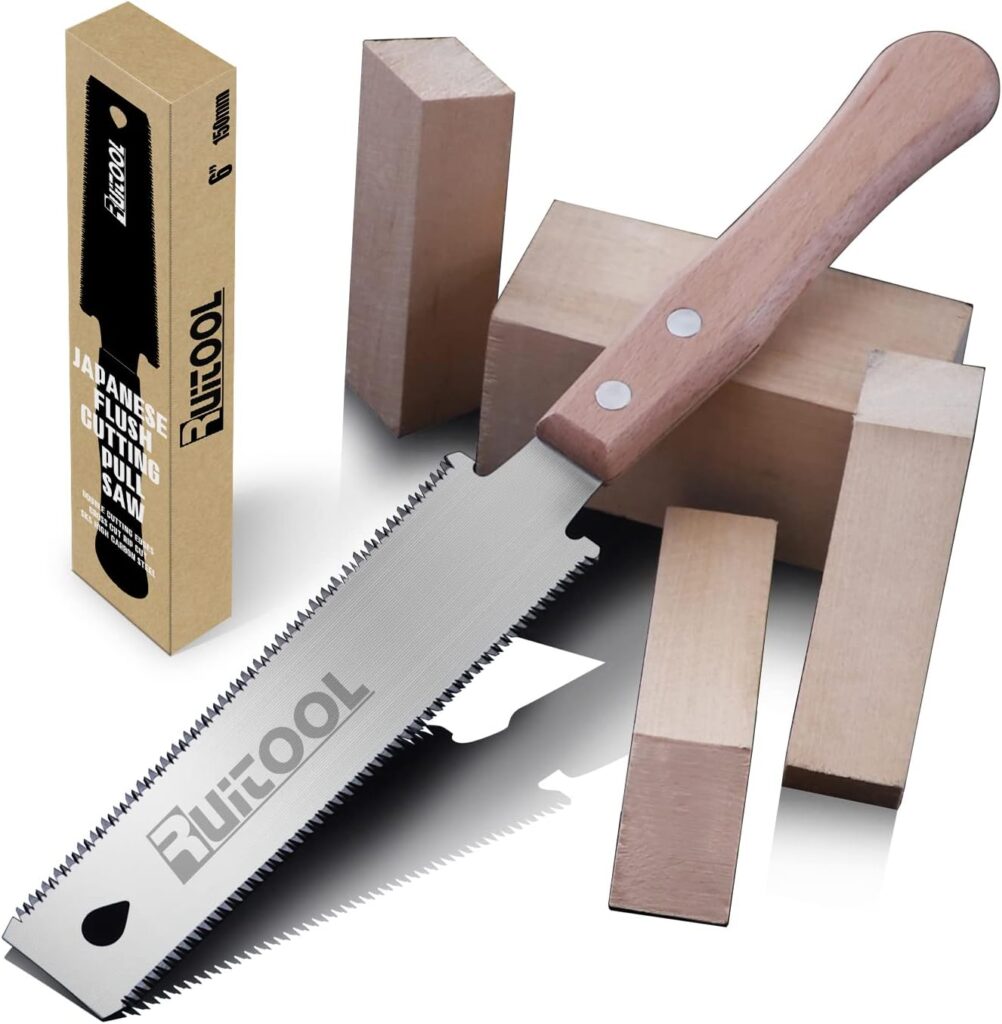
1.RUITOOL Japanese Hand Saw Review: The Best Hand Saw for Cutting Wood
There’s a quiet kind of pride that comes from fixing something with your own two hands. Whether you’re trimming a door that won’t close right, building a small shelf for your kids’ room, or finishing a weekend woodworking project in the garage, having the right tool makes all the difference between frustration and satisfaction. If you’ve been searching for the best hand saw for cutting wood, one that feels safe, precise, and dependable every single time you pick it up, the RUITOOL Japanese Hand Saw deserves a serious look.
This isn’t just another saw sitting in a toolbox. It’s a compact, double-edged Ryoba-style pull saw built with SK5 high-carbon steel, designed to give everyday homeowners and hobbyist woodworkers the kind of control usually reserved for professionals. With over 6,200 ratings and a 4.6-star average, plus an Amazon’s Choice badge and more than 10,000 units bought in the past month, it’s clear this little saw has earned real trust from real users. And in a home workshop, that trust matters just as much as sharpness — a tool that behaves predictably is a tool that keeps your hands, your project, and your peace of mind protected.
Let’s break down exactly what makes this saw stand out, and why it might be the smartest small investment you make for your home toolkit this year.
Key Features
The RUITOOL hand saw packs a surprising amount of thoughtful engineering into a lightweight, 6-inch blade. Here’s what makes it genuinely useful for everyday cutting tasks:
- Dual-Edge, Dual-Purpose Blade – One side offers 17 TPI for clean cuts on hardwood, while the other provides 14 TPI for smoother work on softwood. With both cutting styles built into one blade, you won’t need to keep separate saws taking up space in your garage or workshop.
- High-Carbon SK5 Steel Construction – The blade is hardened to HRC60-63 using a Japanese high-frequency hardening process, giving it the strength to hold an edge through repeated use without warping or dulling quickly.
- Three-Sided Hardened Teeth – This design improves chip removal and delivers a noticeably smoother cutting motion, reducing the effort and strain on your wrist and arm during longer projects.
- Comfortable Beechwood Handle – A natural wood grip that feels secure and steady in the hand, lowering the risk of slipping mid-cut, which is a small but important safety detail for any home tool.
- Compact and Lightweight Design – At just 0.11 kg and 12.2 inches long, it’s easy to store, easy to control, and easy to bring along for on-site or outdoor tasks.
- Flush-Cutting Precision – Ideal for finish carpentry where accuracy matters, such as trimming dowels, plugs, or edges flush without damaging the surrounding surface.
Each of these features works together to create a tool that feels less like “just a saw” and more like a reliable extension of your own hands.
Pros
- Lightweight and easy to maneuver, even for beginners or those with less hand strength
- Dual-sided blade covers both hardwood and softwood without switching tools
- High-carbon steel construction offers durability well beyond typical hardware-store saws
- Smooth pull-cutting motion reduces fatigue during extended use
- Backed by a lifetime warranty and responsive customer support
Cons
- Best suited for smaller cuts and detail work rather than heavy-duty framing lumber
- Exposed blade requires a protective sheath or careful storage to prevent accidental nicks
- Pull-saw cutting style may feel unfamiliar to those used to traditional push saws
Why We Recommend It
What really sets the RUITOOL Japanese Hand Saw apart isn’t just the specs on paper — it’s the confidence it puts in your hands the moment you start cutting. There’s something reassuring about a tool that responds exactly the way you expect it to, cut after cut, without fighting you or forcing extra effort. For homeowners who want to handle small repairs safely, and for woodworkers who value precision over guesswork, this saw checks every box: durability, control, comfort, and affordability.
At under $14, it’s a low-risk way to upgrade your home toolkit with something that performs like it costs far more. It’s the kind of tool you reach for again and again, not because you have to, but because it simply makes the job easier and safer. If you’re looking for a dependable, well-reviewed, and genuinely trustworthy pick for your next project, this hand saw earns its place as one of the best hand saws for cutting wood available today.
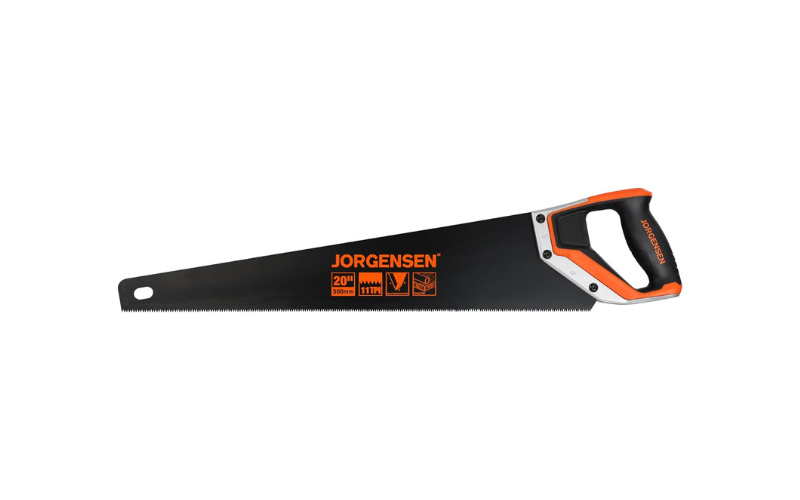
2.JORGENSEN 20-Inch Pro Hand Saw Review: The Best Hand Saw for Cutting Wood
There’s a certain confidence that comes from having a tool you can trust to do exactly what it’s meant to do, every single time. Whether you’re cutting drywall for a home renovation, trimming branches in the backyard, or working through a stack of plywood for a weekend project, the right saw keeps you safe, steady, and in control. If you’ve been on the hunt for the best hand saw for cutting wood, the JORGENSEN 20 Inch Pro Hand Saw is built to earn that trust from the very first cut.
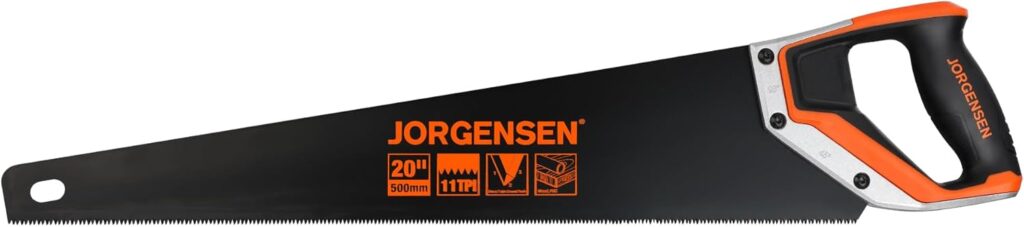
This isn’t a flimsy hardware-store saw that dulls after a few uses. It’s a 20-inch, black-coated professional saw with a high-speed steel blade and an 11 TPI triple-ground tooth design, made for homeowners, gardeners, and DIY enthusiasts who want serious performance without complicated tools. With a 4.8-star rating and an Amazon’s Choice badge, it’s clearly earned the confidence of everyday users. For any home project, that kind of consistency isn’t just convenient — it’s a safety feature in itself, keeping your hands steady and your cuts predictable from start to finish.
Let’s look at what makes this saw such a dependable addition to your home toolkit.
Key Features
The JORGENSEN Pro Hand Saw combines everyday practicality with genuinely thoughtful design. Here’s what makes it stand out:
- Durable High-Speed Steel Blade – A 0.85mm thick, low-friction black-coated blade with induction-hardened teeth that stays sharp longer, so you’re not constantly replacing tools.
- Triple-Ground, Fast-Cutting Teeth – 11 TPI teeth cut efficiently on both push and pull strokes, with deep grooves that clear chips quickly for smoother, faster work.
- Ergonomic Non-Slip Handle – A soft ABS and TPE grip is designed to reduce hand fatigue during longer projects, while also lowering the risk of the saw slipping mid-cut.
- Built-In Angle Guides – Built-in 45° and 90° angle guides on the handle let you line up precise cuts on your own, cutting out the need for separate measuring tools.”
- Versatile, Multi-Surface Use – Cuts through wood, plywood, PVC pipe, drywall, and wall panels, making it a practical all-in-one saw for household repairs and outdoor tasks alike.
- Compact and Easy to Store – Despite its 20-inch length, it’s simple to clean, maintain, and tuck away safely when not in use.
All these details combine to make this saw feel practical for regular household tasks, rather than something meant only for skilled tradesmen.
Pros
- Long 20-inch blade covers larger cuts in fewer strokes
- Cuts multiple materials, from wood to PVC pipe and drywall
- Ergonomic handle with angle guides supports safer, more accurate cuts
- Induction-hardened teeth hold their edge through repeated use
- Backed by a well-known brand with strong customer ratings
Cons
- arger size makes it less ideal for tight, detailed indoor work
- “Its extra weight compared to smaller saws could leave new users feeling fatigued sooner during use.
- Exposed blade needs careful storage to avoid accidental cuts
Why We Recommend It
What makes the JORGENSEN 20 Inch Pro Hand Saw genuinely stand out is how much confidence it puts in your hands the moment you start working. It’s not just about cutting faster — it’s about cutting safely, accurately, and without second-guessing yourself. The ergonomic grip, built-in angle guides, and durable blade all work together to make this feel like a tool designed with your safety and comfort in mind, not just performance on paper.
For homeowners tackling everyday repairs, gardeners trimming branches, or DIYers taking on bigger projects, this saw offers the kind of dependable strength that earns its place in your toolkit for years to come. If you want a hand saw that combines power, precision, and peace of mind, this is one of the best hand saws for cutting wood you can bring home today.
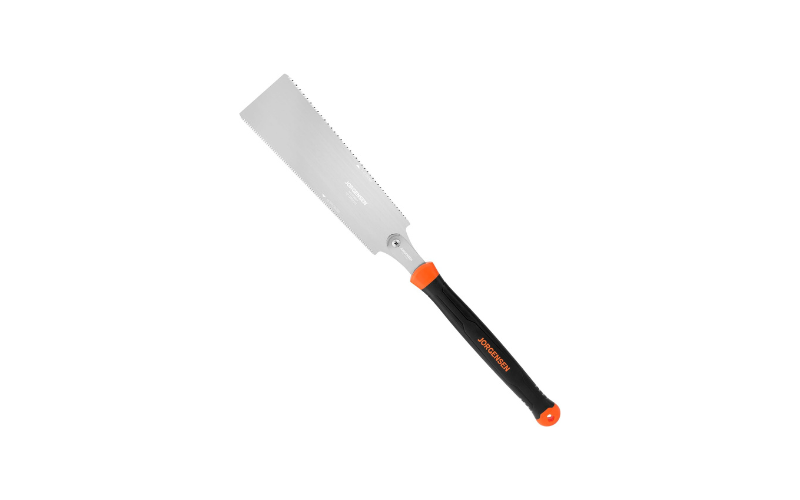
3. JORGENSEN 10-Inch Japanese Pull Saw Review: The Best Hand Saw for Cutting Wood
There’s a special kind of confidence that comes from having a tool that lets you work with precision instead of guesswork. Whether you’re trimming wood molding, cutting plywood for a home project, or handling detailed carpentry work in your garage, the right saw can mean the difference between a clean, safe finish and a frustrating afternoon. If you’re searching for the best hand saw for cutting wood, the JORGENSEN 10 Inch Pro Double Edge Japanese Pull Saw is designed to give you exactly that kind of steady, reliable control.
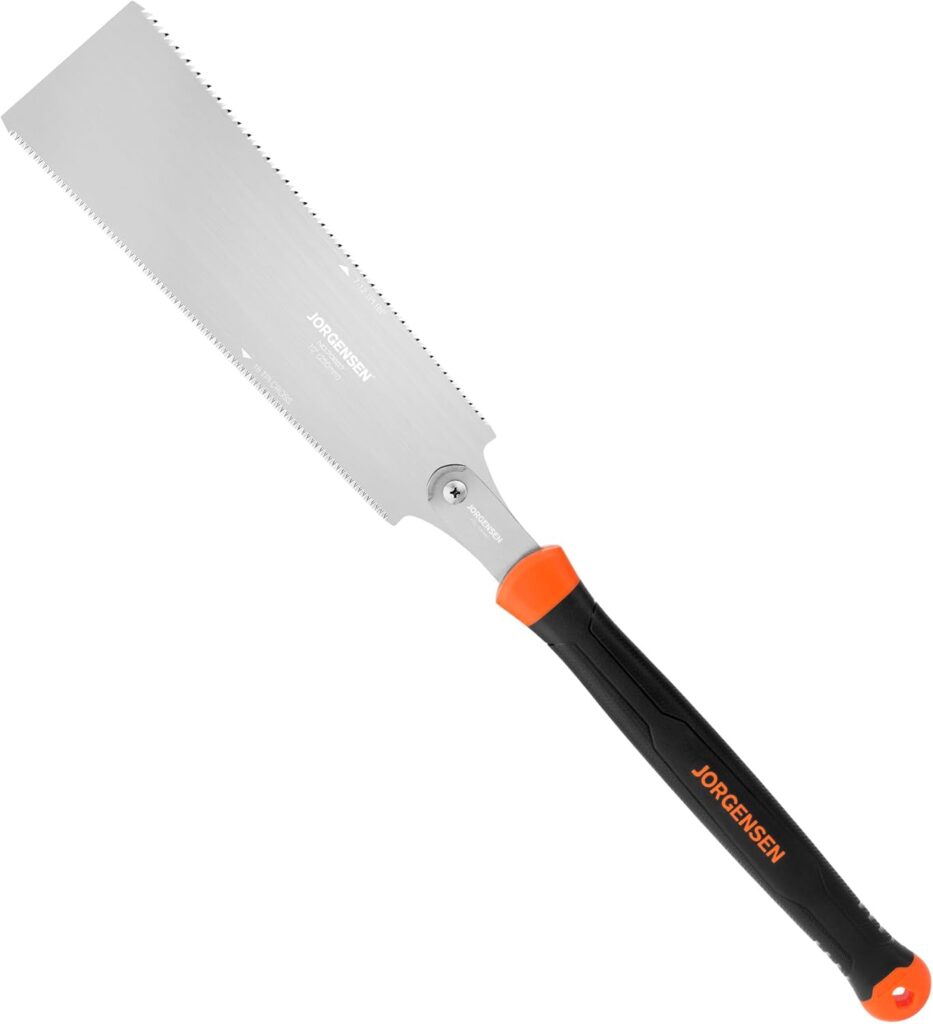
Built with premium SK5 Japanese steel and a double-edged blade, this pull saw is made for homeowners and woodworkers who want both power and precision in one lightweight tool. With a 4.6-star rating from over 300 reviews and hundreds bought in the past month, it’s clearly become a trusted choice for everyday cutting tasks. In any home workshop, that consistency matters — a saw that behaves predictably with every stroke helps protect your hands, your project, and your peace of mind.
Here’s a closer look at what makes this pull saw such a smart addition to your toolkit.
Key Features
The JORGENSEN Japanese Pull Saw blends smart engineering with genuine everyday usability. Here’s what sets it apart:
- Double-Edge Versatility – One side offers 7-12 TPI for fast rip cutting along the wood grain, while the other provides 18 TPI for precise cross-cutting on plywood, bamboo, and plastic pipe, giving you two saws in one.
- Durable SK5 Steel Blade – Induction-hardened for high elasticity and wear resistance, the blade stays sharp and flexible without snapping or bending under normal use.
- Replaceable Blade Design – When the blade eventually wears down, simply loosen the screw and swap it out, saving you from buying an entirely new saw.
- Ergonomic, Non-Slip Handle – A soft thermoplastic elastomer grip supports comfortable one- or two-handed use, reducing fatigue and lowering the risk of slipping during longer cuts.
- Triple-Ground Teeth – Designed for smoother, faster pull-cutting strokes that require less effort than traditional push saws, leaving a cleaner edge behind.
- Lightweight, 10-Inch Blade – At just 280 grams, it’s easy to control for both heavy cross-cuts and fine, detailed work, making it beginner-friendly and precise enough for professionals.
Together, these features make this saw feel dependable in the hand, whether you’re a first-time DIYer or an experienced carpenter.
Pros
- Double-edge blade handles both fast rip cuts and fine finish work
- Lightweight design reduces arm and hand fatigue during extended use
- Replaceable blade extends the saw’s usable lifespan
- Non-slip handle improves grip safety and cutting accuracy
- Versatile enough for wood, plywood, bamboo, and plastic pipe
Cons
- Thin, flexible blade requires steady technique to avoid bending during heavy-duty cuts
- Pull-saw cutting style may take a short adjustment period for those used to push saws
- Exposed blade needs a protective case or careful storage to prevent nicks
Why We Recommend It
What truly makes the JORGENSEN 10 Inch Japanese Pull Saw stand out is the sense of control it puts directly in your hands. There’s real reassurance in a tool that cuts exactly where you guide it, stroke after stroke, without extra effort or unpredictable results. For homeowners handling everyday repairs and woodworkers who care about clean, accurate cuts, this saw delivers the kind of dependable performance that builds lasting trust.
With its replaceable blade, ergonomic grip, and dual-edge design, it’s a smart, long-term investment rather than a one-time-use tool. For anyone wanting a reliable mix of safety, durability, and ease of use, this saw easily earns its spot among the top wood-cutting choices for your home
Best Hand Saw for Cutting Wood: Quick Comparison
Choosing the best hand saw for cutting wood depends on your project size, cutting style, and how often you’ll use it. Here’s a side-by-side comparison of all three top picks to help you decide fast.
| Feature | RUITOOL Japanese Hand Saw | JORGENSEN 20″ Pro Hand Saw | JORGENSEN 10″ Japanese Pull Saw |
| Best For | Detail work, flush cuts, beginners | Heavy-duty, multi-surface cutting | Precision cuts + fast rip cuts |
| Blade Length | 6 inches | 20 inches | 10 inches |
| Blade Material | SK5 High-Carbon Steel | High-Speed Steel | SK5 Steel (Replaceable) |
| Teeth (TPI) | 14/17 (double edge) | 11 TPI | 7-12/18 (double edge) |
| Weight | 0.11 kg (Lightest) | Heaviest of the three | 280 g |
| Handle Material | Beechwood | ABS + TPE | Thermoplastic Elastomer |
| Cutting Style | Pull saw | Push & pull strokes | Pull saw |
| Surface Versatility | Wood only | Wood, PVC, drywall, plywood | Wood, plywood, bamboo, plastic pipe |
| Special Feature | 3-edge hardened teeth | Built-in 45°/90° angle guides | Replaceable blade |
| Best Use Case | Small crafts, flush trims, DIY beginners | Big jobs, drywall, gardening, framing | Fine woodworking, mixed material cuts |
Quick Recommendation
- Budget-friendly pick: RUITOOL Japanese Hand Saw — lightweight and great for small jobs.
- Heavy-duty pick: JORGENSEN 20″ Pro Hand Saw — best for big cuts and multi-material use.
- All-rounder pick: JORGENSEN 10″ Japanese Pull Saw — best balance of precision, durability, and long-term value with its replaceable blade.
Buying Guide: How and Why to Choose the Best Hand Saw for Cutting Wood
Picking the best hand saw for cutting wood isn’t just about grabbing the first one you see at the store. The right saw depends on what you’re actually cutting, how often you’ll use it, and how comfortable it feels in your hand after twenty minutes of steady work. A little knowledge here goes a long way toward saving money, avoiding injury, and getting cleaner cuts every time.
Consider the Blade Length First
Blade length determines how much material you can cut in a single stroke. Shorter blades, around 6 to 10 inches, are ideal for detail work, flush trims, and precision cuts on smaller pieces of wood. Longer blades, closer to 20 inches, are built for bigger jobs like framing lumber, cutting drywall, or trimming branches outdoors. If most of your work is small home repairs or craft projects, a compact saw will feel far easier to control.
Check the Tooth Count (TPI)
TPI, or teeth per inch, tells you how fine or aggressive the cut will be. A higher TPI, like 17 or 18, gives smoother, more precise cuts and works well on hardwood or delicate finish work. A lower TPI, around 7 to 11, removes material faster and suits softwood or rougher cutting tasks. Many good hand saws now offer a double-edge blade, giving you both options in a single tool without needing to switch saws mid-project.
Blade Material Matters More Than You’d Think
Look for high-carbon steel, especially SK5 steel, since it holds an edge longer and resists bending under pressure. Induction-hardened blades last through repeated use without dulling quickly, which means fewer replacements and better long-term value. If durability and cutting strength matter to you, blade quality should never be an afterthought.
Prioritize Handle Comfort and Grip Safety
A saw is only as good as how safely and comfortably you can hold it. Ergonomic handles made from materials like beechwood, ABS, or thermoplastic elastomer reduce hand fatigue and lower the risk of slipping mid-cut, which matters just as much for home safety as the blade itself. If you’ll be cutting for long stretches, grip comfort should weigh heavily in your decision.
Think About Versatility and Everyday Use
Some saws are built strictly for wood, while others handle plywood, PVC pipe, drywall, and even bamboo. If you want one tool that covers multiple household tasks, look for a saw with proven multi-surface performance rather than buying several specialized tools you’ll rarely use.
Don’t Overlook Maintenance and Longevity
Saws with replaceable blades offer better long-term value, since you can swap out a worn blade instead of replacing the entire tool. This small feature can meaningfully extend the life of your investment while keeping your cutting performance consistent over time.
At the end of the day, the best hand saw for cutting wood is the one that matches your specific projects, feels secure in your hand, and holds up cut after cut. Getting this choice right means safer work, cleaner results, and a tool you’ll genuinely enjoy reaching for.
FAQs About Hand Saws
Q1. What is the best hand tool for cutting wood?
A quality hand saw with a hardened steel blade and comfortable grip works best for precise, everyday wood cutting.
Q2. What is the best saw for cutting wood?
The ideal choice depends on your project, but a double-edge saw with high TPI gives the cleanest, most versatile results.
Q3. What is the best handsaw to buy?
Look for one with durable SK5 or high-carbon steel and an ergonomic, non-slip handle for safe, long-lasting use.
Q4. Which saw is better for cutting wood?
A pull saw generally offers smoother, more controlled cuts with less effort than a traditional push saw.
Q5. What hand saw is best for cutting wood?
A lightweight saw with sharp, induction-hardened teeth delivers the most accurate cuts across both hardwood and softwood.
Q6. Why are Japanese saws better?
Their thin, pull-cutting blades create finer, cleaner cuts while requiring less strength and reducing wrist fatigue.
Conclusion
At the end of the day, cutting wood shouldn’t feel like a struggle — it should feel like progress. Whether you’re fixing something around the house, building your first project, or finally tackling that garage job you’ve been putting off, having the best hand saw for cutting wood in your hands changes everything. It means safer cuts, less effort, and more confidence every time you pick it up.
You don’t need the fanciest tool in the store — you just need one that works with you, not against you. Go ahead, pick the saw that matches your project, and get started with the confidence you deserve
Affiliate Disclosure
This post contains affiliate links. If you purchase through these links, we may earn a small commission at no extra cost to you, helping us continue sharing honest, helpful reviews.