
Introduction
A veneer saw is a specialized hand tool used to cut and trim thin wood sheets for furniture, decorative panels, and other woodworking projects. Choosing the right blade and using proper cutting techniques can help reduce rough edges and material waste. This guide explains its common uses, important features, cutting methods, tool selection, and maintenance to help you work with veneer more effectively.

Table of Contents
What Is a Veneer Saw?
A veneer saw is a specialized hand tool used to cut thin sheets of wood veneer for furniture making, decorative panels, and woodworking projects. Its compact blade helps make controlled cuts when preparing veneer pieces for joining or fitting.
Unlike many general-purpose saws, this tool is designed for detailed work with thin wood materials.
How Does It Work?
A traditional veneer saw usually has a short blade with fine teeth and an offset handle. This design helps the user guide the blade along a straightedge when preparing veneer edges. Steady, controlled strokes can help produce clean cuts and reduce unwanted damage.
A fine-toothed hand saw is useful for precise woodworking tasks, but the appropriate tool depends on the veneer’s thickness and construction.
Common Uses
A wood veneer saw is commonly used for:
- Cutting thin veneer sheets into suitable sizes.
- Trimming edges before joining two pieces.
- Preparing veneer for decorative inlays and furniture surfaces.
- Supporting accurate wood veneer preparation during woodworking projects.
For some very thin materials, a sharp utility knife may be more suitable than a saw.
Choosing the Right Tool
When selecting a veneer-cutting tool, consider blade sharpness, handle comfort, and the type of cut required. An antique veneer saw may interest collectors and traditional woodworking enthusiasts, while a modern tool may offer practical features for regular workshop use.
Always secure the material on a stable surface and keep your fingers away from the cutting path.
Understanding the Purpose of a Veneer Saw
A veneer saw is a specialized hand tool designed for cutting thin wood sheets used in furniture making, decorative surfaces, and detailed woodworking. Its short blade helps users make controlled cuts when preparing veneer pieces for fitting and joining.
Main Uses in Woodworking
A wood veneer saw is useful for trimming veneer edges, cutting narrow strips, and preparing pieces for decorative inlays. It supports accurate wood veneer preparation, particularly when two veneer edges need to fit together neatly.
A veneer cutting saw often has a short blade with fine teeth and an offset handle. This design helps the user guide the blade along a straightedge for controlled cutting. A sharp blade and steady hand can help achieve clean results.
Why Is It Different from Other Cutting Tools?
Unlike general-purpose saws, veneer trimming tools are intended for delicate work with thin materials. A fine-toothed hand saw may be suitable for certain veneer tasks, while a sharp utility knife can work better for very thin sheets, depending on their construction.
An antique veneer saw may also interest collectors and traditional woodworkers because older designs reflect historical woodworking practices.
Choosing the Right Tool
Consider the veneer thickness, blade condition, handle comfort, and type of cut before choosing a tool. Proper support and careful handling help reduce splintering and material waste. Always secure the sheet on a stable surface and keep fingers clear of the cutting path.
How a Veneer Saw Cuts Thin Wood Sheets
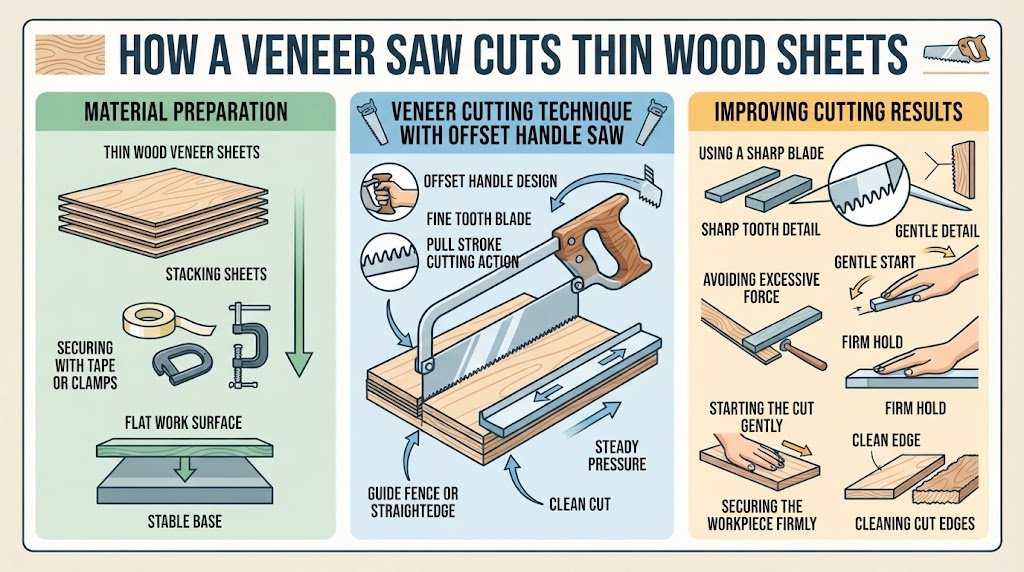
Cutting thin wood sheets requires control and careful handling to avoid rough edges or unwanted splits. A specialized hand tool with fine teeth can help woodworkers prepare veneer pieces for furniture, decorative panels, and other woodworking projects.
Preparing the Material
Before cutting, place the veneer on a flat, stable surface. Mark the required cutting line with a pencil and secure the material to prevent movement. A straightedge can help guide the blade and maintain an accurate line during precision wood cutting.
Using the Correct Cutting Technique
A veneer cutting saw typically has a short blade with fine teeth and an offset handle. Position the blade along the marked line and use slow, controlled strokes. Avoid applying excessive pressure, as this can damage delicate sheets.
A sharp veneer saw blade helps produce cleaner edges and makes cutting easier. For very thin veneer, a sharp utility knife may be more suitable, depending on the material and cutting direction.
Improving Cutting Results
Effective wood veneer preparation starts with proper support and a clear cutting line. Check the blade condition before use, keep the material steady, and inspect the edge after each cut.
A wood veneer saw is useful for trimming veneer strips and preparing edges for joining. Even an antique veneer saw can be suitable for traditional woodworking when it is properly maintained and in safe working condition.
Always keep your fingers away from the blade and store the tool safely after use.
Common Woodworking Tasks That Require a Veneer Saw
Thin wood veneer is often used to decorate furniture, cabinets, and wooden panels. Cutting these sheets accurately helps create neat edges and well-fitted pieces for different woodworking projects.
Trimming Veneer Edges
A veneer cutting saw is useful for trimming uneven edges before joining two veneer sheets. Careful cutting helps create a closer fit and a more consistent appearance on decorative surfaces.
Preparing Decorative Inlays
Woodworkers use wood veneer preparation techniques to cut small pieces for patterns, borders, and decorative inlays. A suitable hand tool can help shape these pieces with better control.
Cutting Narrow Veneer Strips
A wood veneer saw can help prepare narrow strips for furniture details and panel designs. Using a straightedge and steady strokes supports precision wood cutting and helps reduce material waste.
Repairing Veneered Furniture
When repairing damaged furniture surfaces, veneer trimming tools can help remove or adjust small sections of veneer. The replacement piece should match the existing material in thickness and grain direction.
Working with Traditional Tools
An antique veneer saw may be useful for traditional woodworking projects if its blade is sharp and the tool is in safe condition. A fine-toothed hand saw can also suit certain detailed cutting tasks, depending on the material.
Place thin wood sheets on a firm, flat surface before cutting, and choose a tool suitable for the material. For extremely thin veneer, a sharp utility knife may offer more precise control than a saw.
Important Features of a Veneer Saw Blade
The blade plays an important role in cutting thin wood sheets accurately. Its tooth design, sharpness, and overall condition affect cutting control and the quality of the finished edge.
Fine Teeth for Controlled Cutting
A veneer saw blade often has fine teeth that help remove small amounts of material during each stroke. This design is useful for detailed work where clean edges are important. The appropriate tooth pattern depends on the tool and the type of veneer being cut.
Blade Shape and Length
Many traditional veneer saws feature a short, curved blade. This shape supports controlled cutting along a marked line or straightedge. A suitable veneer cutting saw should feel comfortable and allow steady movement without unnecessary pressure.
Sharpness and Maintenance
A sharp blade cuts more efficiently than a dull one. Regular inspection helps identify damaged or worn teeth that may cause rough edges. Proper maintenance is essential for consistent precision wood cutting.
Handle Design and Control
The handle affects grip, balance, and comfort. Some tools have an offset handle that provides clearance above the work surface. A well-designed wood veneer saw allows the user to guide the blade while keeping the material stable.
Choosing a Suitable Blade
Choose a blade based on the wood veneer’s thickness, the required cut, and your project’s needs.
An antique veneer saw may suit traditional woodworking, provided it remains safe and functional. For extremely thin sheets, a sharp utility knife may be a more appropriate choice than a saw.
Always secure the material and keep your hands away from the cutting path.
Preparing Veneer Sheets Before Cutting
Proper preparation helps produce accurate cuts and reduces the risk of damaging thin wood sheets. Before starting any woodworking task, inspect the veneer and prepare a clean, stable workspace.
Inspect the Veneer Sheet
Check the sheet for cracks, curled edges, and damaged areas. Lay it flat and identify the section you need to cut. Good wood veneer preparation helps prevent mistakes and unnecessary material waste.
Measure and Mark the Cutting Line
Use a ruler and pencil to mark the required dimensions. A straightedge can guide the blade and support precision wood cutting. Keep the markings light so they do not leave visible marks on the finished surface.
Secure the Material
Place the veneer on a suitable cutting surface and hold it firmly without bending or crushing it. Proper support helps maintain control when using a veneer cutting saw or other appropriate tool.
Select the Right Cutting Tool
Choose a wood veneer saw for suitable trimming and joining tasks. Check that its blade is clean, sharp, and in good condition. For very thin sheets, a sharp utility knife may provide better control than a saw. An antique veneer saw can also be used if it is properly maintained and safe to operate.
Check the Workspace
Remove unnecessary objects from the work area and ensure adequate lighting. Keep your fingers away from the cutting path and avoid forcing the blade through the material. Careful preparation supports cleaner edges and safer woodworking.
Techniques for Making Clean and Accurate Cuts
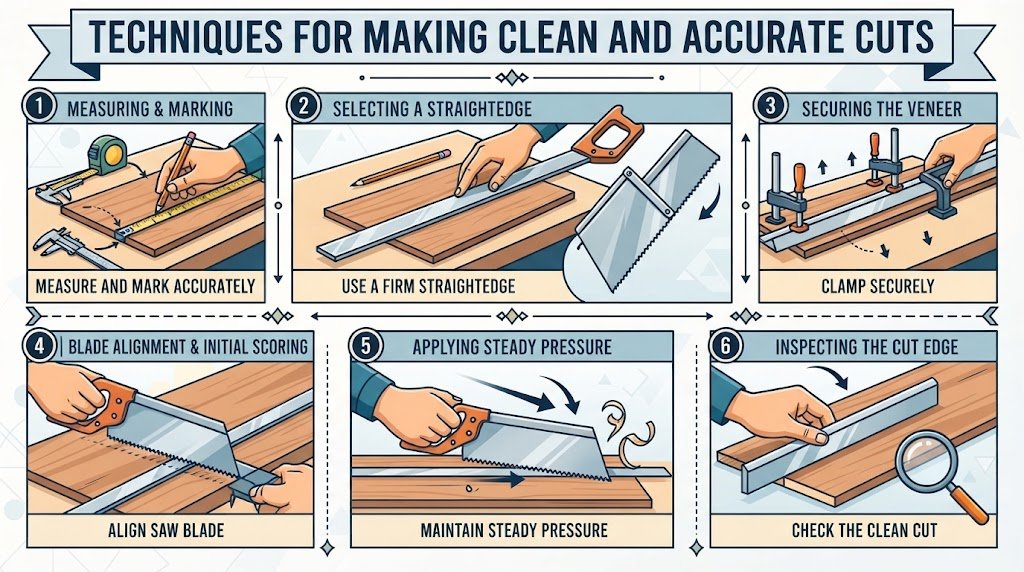
Cutting thin wood veneer requires patience, proper preparation, and a suitable cutting tool. Using the correct technique helps reduce rough edges, splintering, and material waste during woodworking projects.
Measure and Mark the Cutting Line
Start by measuring the veneer carefully with a ruler or measuring tape. Mark the cutting line lightly with a pencil and check the dimensions before cutting. Accurate measurements support precision wood cutting and help ensure that veneer pieces fit together properly.
Use a Straightedge for Guidance
A straightedge helps maintain a consistent cutting direction when preparing veneer strips or trimming uneven edges. Position it firmly along the marked line and ensure the material cannot move during cutting.
A veneer cutting saw can be guided along the straightedge when the tool design allows it. Keep your hands clear of the blade’s path to maintain safe control.
Choose a Suitable Blade
A sharp veneer saw blade helps produce cleaner edges with less effort. Inspect the teeth before use and avoid working with a damaged or excessively worn blade.
A fine-toothed hand saw may be suitable for certain veneer-cutting tasks because its small teeth can support controlled material removal. However, the correct blade depends on the veneer thickness and the saw’s design.
Apply Steady, Controlled Pressure
When using a wood veneer saw, begin with gentle strokes and maintain a consistent cutting motion. Avoid pushing too hard, as excessive pressure can cause the veneer to split, shift, or tear.
Keep the blade aligned with the marked line throughout the cut. Allow the teeth to do the work instead of forcing the tool through the material.
Support the Veneer Properly
Thin sheets can bend or crack if they are not supported. Place the material on a flat, stable surface before cutting. Secure it gently to prevent movement without crushing the edges.
Good wood veneer preparation makes it easier to achieve a neat finish and reduces the risk of damaging delicate sheets.
Inspect and Finish the Cut Edge
After cutting, check the edge for rough spots, splinters, or uneven sections. Small imperfections may be corrected carefully with an appropriate trimming tool or fine abrasive, depending on the veneer and intended finish.
Veneer trimming tools should be selected according to the task. A sharp utility knife may work better than a saw for some very thin sheets. An antique veneer saw can also be suitable for traditional woodworking if its blade is sharp and the tool is safe to use.
Maintain Safe Cutting Habits
Keep your fingers away from the cutting path and work in a well-lit area. Store cutting tools safely after use, and never force a blade that becomes stuck. Careful technique, proper support, and a suitable tool help produce accurate cuts while protecting both the material and the user.
Veneer Saw vs. Other Tools for Thin Wood
Choosing the right cutting tool for thin wood sheets helps improve accuracy and reduce material damage. The best option depends on the veneer thickness, the type of cut, and the finish required for your woodworking project.
Veneer Saw vs. Utility Knife
A veneer cutting saw is useful for trimming veneer edges, cutting strips, and preparing pieces for joining. Each stroke gently cuts away a small amount of wood using the saw’s teeth.
A sharp utility knife, however, may be more suitable for very thin veneer sheets. It can make controlled cuts when used with a straightedge and an appropriate cutting surface. Multiple light passes are often safer than forcing the blade through the material in one stroke.
Veneer Saw vs. Fine-Toothed Hand Saw
A fine-toothed hand saw can provide controlled cutting for certain thin wood materials. However, many general-purpose hand saws have larger blades that may be less convenient for delicate veneer work.
A traditional wood veneer saw usually has a short blade and an offset handle. This design helps the user guide the tool close to a straightedge, making it useful for trimming and preparing veneer edges.
Veneer Saw vs. Flush-Cut Saw
A flush-cut saw is designed to trim projecting material close to a surrounding surface. It can be useful when removing excess veneer or trimming certain wooden joints, depending on the blade design.
A dedicated veneer-cutting tool is generally more suitable when the task involves preparing separate thin sheets rather than trimming material already attached to a surface.
How to Choose the Right Tool
Consider these factors before starting:
- Material thickness: Very thin sheets may be easier to cut with a utility knife.
- Cutting purpose: A veneer cutting saw is useful for trimming edges and preparing strips.
- Required accuracy: A straightedge and stable work surface help support precision wood cutting.
- Blade condition: Sharp, undamaged blades help produce cleaner results.
- Tool condition: An antique veneer saw may be appropriate for traditional projects if it is safe and properly maintained.
Preparing Thin Wood for Better Results
Good wood veneer preparation begins with accurate measurements, clear cutting lines, and firm material support. Suitable veneer trimming tools can help reduce rough edges and unnecessary waste.
Always secure the material, keep your fingers away from the cutting path, and choose a tool suited to the specific task. The right method depends on the veneer, the cut required, and the quality of the finished edge.
How to Choose a Suitable Veneer Saw for Your Project
Selecting the right cutting tool helps you work with thin wood sheets accurately and reduce material waste. The best choice depends on the veneer thickness, the type of cut, and the level of precision your project requires.
Consider the Blade Design
A veneer saw blade should be sharp and suitable for the material you intend to cut. Many traditional designs feature a short blade with fine teeth, allowing controlled cuts along veneer edges. Check the blade condition before use to avoid rough cuts and unnecessary damage.
Match the Tool to Your Project
A veneer cutting saw is useful for trimming veneer edges, cutting narrow strips, and preparing pieces for joining. For very thin sheets, a sharp utility knife may provide better control. Choosing suitable veneer trimming tools depends on the material and the cutting task.
Check Handle Comfort and Control
A comfortable handle supports steady movement and reduces hand fatigue during detailed work. A traditional wood veneer saw may have an offset handle that provides clearance above the work surface. Choose a tool that feels balanced and allows you to guide the blade without excessive pressure.
Consider Traditional and Modern Designs
An antique veneer saw may suit traditional woodworking or restoration projects, provided the blade is safe and properly maintained. Modern tools may offer different handle shapes and blade designs, so compare their features with your intended use rather than choosing by appearance alone.
Focus on Accuracy and Material Preparation
Good wood veneer preparation includes measuring carefully, marking the cutting line, and securing the sheet on a stable surface. These steps support precision wood cutting and help reduce splintering and waste.
Before making the final cut, check the blade, confirm your measurements, and ensure your workspace is well lit. The right tool is one that suits your material, feels comfortable to control, and produces the edge quality your project needs.
Cleaning, Sharpening, and Storing a Veneer Saw
Proper maintenance helps keep woodworking tools in good condition and supports consistent cutting performance. Regular cleaning, careful blade inspection, and safe storage can extend a tool’s useful life.
Cleaning the Blade After Use
Remove sawdust and loose wood particles from the blade after each project. Use a soft, dry cloth and follow the manufacturer’s care instructions. If the blade has rust or stubborn residue, use a suitable cleaning method that will not damage its finish.
Keep the handle clean and dry to maintain a secure grip. A well-maintained veneer saw blade is easier to inspect and prepare for the next task.
Sharpening the Teeth Carefully
Over time, repeated cutting can make saw teeth less effective. Signs of a dull blade include increased effort, rough edges, and difficulty following the cutting line.
Sharpening depends on the blade’s tooth design. Some traditional veneer cutting saw blades require specialized files or professional sharpening. Avoid using an unsuitable file or changing the tooth shape without understanding the blade’s design.
A sharp fine-toothed hand saw can support controlled cutting, but damaged or heavily worn teeth may require professional attention.
Preventing Rust and Blade Damage
Moisture can cause corrosion, particularly on older steel blades. Dry the tool thoroughly before storage. If recommended for the blade material, apply a very light protective oil and wipe away excess residue.
An antique veneer saw may need extra attention because age, corrosion, or previous repairs can affect its condition. Inspect older tools carefully before using them.
Storing the Tool Safely
Store the saw in a dry location where the blade will not contact other metal tools. A blade guard or suitable protective case can help prevent accidental cuts and tooth damage.
Keep the tool away from moisture and out of children’s reach. Proper storage protects the blade and helps maintain safe working conditions.
Check the Tool Before Each Project
Before cutting, inspect the handle, blade, and teeth for looseness, cracks, or damage. A well-maintained wood veneer saw helps with precision wood cutting and supports reliable wood veneer preparation.
If the blade is damaged or the handle is loose, repair the tool appropriately or replace it before use.
Conclusion
Choosing the right veneer saw helps woodworkers cut thin wood sheets with greater control and accuracy. Understanding blade design, preparing the material properly, and using steady cutting techniques can help produce clean edges. Regular cleaning, appropriate sharpening, and safe storage also help maintain the tool. By following these practical steps, beginners and experienced woodworkers can handle veneer-cutting tasks more effectively.
Top 5 Frequently Asked Questions
Q1. What is a veneer saw used for?
A veneer saw is used to cut and trim thin wood veneer sheets for furniture, decorative panels, inlays, and woodworking projects.
Q2. How does a veneer saw differ from a regular hand saw?
A traditional veneer saw has a short blade designed for controlled cutting of thin veneer. A regular hand saw is generally intended for cutting thicker wood.
Q3. Can a veneer saw cut thick wood?
A veneer saw is designed mainly for thin veneer materials. A suitable woodworking saw is usually a better choice for thick boards or solid wood.
Q4. How do you keep a veneer saw sharp?
Clean the blade after use, inspect its teeth regularly, and sharpen it with the correct file or seek professional sharpening when necessary.
Q5. Is a veneer saw better than a utility knife?
It depends on the material and task. A veneer saw can be useful for trimming edges and cutting strips, while a sharp utility knife may work better for very thin veneer sheets.