
Introduction
A Flush cut saw is a useful woodworking hand tool designed to trim excess wood level with a surface. It is commonly used for cutting wooden dowels, trimming plugs, removing protruding pegs, and finishing furniture joints. Its thin blade helps make precise cuts while reducing damage to surrounding wood when used correctly. Understanding its uses, benefits, and proper techniques can help beginners and experienced woodworkers achieve cleaner results.

Table of Contents
What Is a Flush Cut Saw?
A flush cut saw is a hand tool used to trim wood pieces level with a surface without causing unnecessary damage. It is commonly used in woodworking to remove extra material from dowels, wooden plugs, pegs, and joints.
Unlike a standard woodworking saw, it usually has a thin, flexible blade that can lie flat against the wood. This makes it useful for cutting wooden dowels, trimming wooden plugs, and creating a smooth wood finish.
A Japanese flush cut saw often uses a pull-stroke cutting action, which helps users make controlled, precise cuts. Some models have flexible blades, while others feature teeth on one or both edges for different trimming tasks.
This tool is useful for furniture repairs, cabinets, and other woodworking projects where excess wood needs to be removed neatly. Choosing the right flush cut hand saw and using it carefully can help achieve clean results.
Common Uses of a Flush Cut Saw
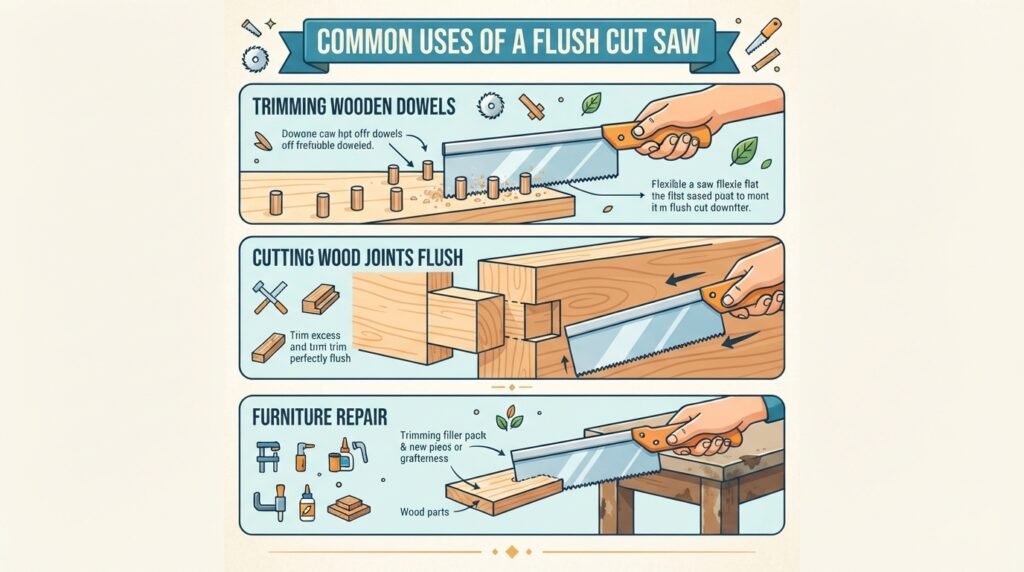
A flush cut saw is useful for woodworking tasks that require trimming excess wood without damaging the surrounding surface. Its thin blade helps make controlled cuts in tight spaces and around finished wood.
Trimming Wooden Dowels and Plugs
One common use is cutting wooden dowels that extend beyond a joint or furniture surface. It can also help with trimming wooden plugs used to cover screw holes, leaving the wood ready for sanding.
Cutting Wood Joints Flush
Woodworkers use this tool for trimming wood joints and removing small pieces that stick out from assembled furniture. Its flexible blade helps with cutting wood flush with a surface while reducing scratches when used carefully.
Furniture Repair and Cabinet Work
During furniture repairs, a flush cut hand saw can remove excess pegs, small wooden pieces, and protruding joints. It is useful for putting cabinets together and completing other woodworking tasks that require a clean, professional appearance.
Removing Excess Wood from Finished Surfaces
A flexible flush cut saw can trim small projections from finished wooden surfaces. Using light pressure and keeping the blade flat helps achieve a smooth wood finish with less risk of damaging nearby material.
Detailed Woodworking Tasks
For delicate jobs, a Japanese flush cut saw offers precise control for small trimming cuts. Its fine teeth make it suitable for delicate woodworking cuts, although the correct blade depends on the wood and the task.
Choose the right saw for the material, secure the workpiece, and cut slowly to help produce clean results.
Trimming Protruding Pegs
A flush cutting tool can remove protruding pegs from wooden frames, chairs, and tables. Its thin blade helps trim the extra wood close to the surface, making the area easier to sand and finish.
Working on Wooden Frames
During frame assembly, small wooden parts may extend beyond the edges of a joint. A fine-tooth saw blade helps trim these parts carefully and supports accurate wood surface preparation before painting or polishing.
DIY Woodworking Projects
For home repairs and DIY tasks, a hand saw for precise cuts is useful when removing small pieces of excess wood. It can help improve the appearance of shelves, wooden boxes, and other small woodworking projects.
Preparing Wood for Sanding
After trimming dowels, plugs, or joints, the surface may need light sanding. Using a suitable saw for cutting dowels flush reduces the amount of excess material and can make the finishing process easier.
Trimming Wooden Edges
A flush-trimming hand tool can remove small wooden projections along edges and corners. A flexible saw blade helps reach awkward areas and supports precise woodworking cuts when repairing wooden furniture or frames.
Removing Excess Material from Joinery
Woodworkers sometimes find small pieces sticking out after joining two wooden parts. A double edge flush cut saw can help trim these areas neatly, depending on the blade design and the type of joint.
Repairing Wooden Toys
Small wooden toys may have protruding dowels or pegs after assembly. A flush cutting saw can trim these pieces carefully, helping create a more even surface. Always secure the item and work gently to avoid damaging delicate parts.
Trimming Wooden Inlays
Some woodworking projects include decorative wooden pieces fitted into a larger surface. A suitable woodworking hand tool can trim slightly raised sections before sanding, helping the decorative area blend with the surrounding wood.
Finishing Small Craft Projects
For handmade boxes, wooden decorations, and other craft items, a dowel cutting tool can remove excess dowel material from assembled parts. Careful trimming helps prepare the project for sanding, staining, or painting.
How Does a Flush Cut Saw Work?
A flush-cutting hand tool works by using a thin, sharp blade to remove excess wood close to a flat surface. It is commonly used for cutting wooden dowels, trimming pegs, and smoothing protruding joints without removing too much surrounding material.

Blade Design and Cutting Action
A flush cut hand saw usually has a thin blade with fine teeth. Some models feature a flexible blade that bends slightly to rest against the wood surface. This design helps with cutting wood flush with a surface while reducing scratches.
A Japanese flush cut saw often cuts on the pulling stroke. This action helps maintain blade control and can produce clean cuts when used with light pressure.
Making a Clean Cut
To use the tool, position the blade flat against the surrounding wood and align it with the excess material. Move the saw gently back and forth, allowing the teeth to do the work. Avoid pressing too hard, as excessive force may damage the surface or bend the blade.
A fine-tooth saw blade is especially useful for delicate woodworking cuts and small trimming jobs.
Achieving a Smooth Finish
After trimming, lightly sand the area if necessary. Proper wood surface preparation helps remove minor marks and prepares the material for staining, painting, or polishing.
For the best results, secure the workpiece, select a suitable woodworking saw, and follow the manufacturer’s safety instructions.
Benefits of Using a Flush Cut Saw for Woodworking
A flush-cutting hand tool is useful for projects that require neat trimming and accurate results. Its thin blade helps remove excess wood while reducing the risk of damaging nearby surfaces when used correctly.
Clean and Precise Cuts
A flush cut hand saw helps trim wooden dowels, pegs, and plugs close to the surrounding surface. Its fine teeth support precise woodworking cuts, making it suitable for furniture repairs and detailed projects.
Reduced Surface Damage
A flexible flush cut saw can lie nearly flat against the wood, helping prevent unwanted scratches during cutting wood flush with a surface. However, careful handling is still necessary to protect delicate finishes.
Better Control During Trimming
A Japanese flush cut saw often cuts on the pulling stroke, allowing controlled movement with light pressure. This makes it useful for trimming wood joints and removing small protruding pieces.
Improved Finishing Results
Accurate trimming reduces excess material before sanding, staining, or painting. This supports better wood surface preparation and helps create a smooth wood finish on furniture and cabinets.
Useful for Different Projects
From DIY repairs to professional furniture making, this woodworking hand tool can handle many small trimming tasks. It is particularly effective for cutting wooden dowels, trimming wooden plugs, and finishing assembled joints.
Easy to Use for Small Jobs
A hand-operated tool does not require electricity or batteries. With the correct blade and proper technique, it offers a practical solution for detailed woodworking projects where larger saws may be difficult to control.
Suitable for Tight Spaces
A thin saw blade can reach narrow areas where larger cutting tools may be difficult to use. This makes it helpful for trimming small wooden parts around furniture joints and cabinet components.
Helps Reduce Material Waste
A fine-tooth saw blade removes small amounts of material during careful trimming. This can help preserve the surrounding wood and reduce unnecessary cutting during detailed repair work.
Useful for Furniture Restoration
When repairing older furniture, a flush cutting tool can remove protruding pegs and wooden plugs without requiring major disassembly. Careful trimming helps prepare repaired areas for sanding and refinishing.
Supports Detailed Craftsmanship
A hand saw for precise cuts gives woodworkers better control over small trimming tasks. It is useful for wooden boxes, frames, decorative pieces, and other projects that require a neat appearance.
Requires Minimal Setup
Unlike many powered tools, a manual woodworking saw generally needs no electricity or complicated setup. Keeping the blade clean, sharp, and properly stored helps maintain cutting performance and supports safer use.
Importance of a Flush-Cutting Saw
A flush-cutting hand tool is important in woodworking because it helps remove excess wood without cutting deeply into the surrounding surface. It is useful for furniture making, repairs, and finishing tasks that require accuracy.
Improves Cutting Accuracy
A flush cut hand saw helps trim dowels, pegs, and wooden plugs close to the surface. Its thin blade supports precise woodworking cuts and makes small trimming jobs easier to control.
Protects Surrounding Wood
A flexible flush cut saw can rest nearly flat against the workpiece. This helps reduce accidental scratches when cutting wood flush with a surface, especially on finished furniture.
Supports Better Wood Finishing
Removing protruding wood before sanding creates a more even surface. Proper wood surface preparation makes staining, painting, and polishing easier and helps achieve a smooth wood finish.
Useful for Furniture Repairs
A Japanese flush cut saw is useful for trimming wood joints, removing excess dowel material, and repairing wooden furniture. Its design allows controlled cutting in areas where larger saws may be difficult to handle.
Suitable for Detailed Projects
From cabinets to handmade wooden boxes, this woodworking hand tool supports neat finishing and careful material removal. It is especially helpful for cutting wooden dowels, trimming wooden plugs, and completing detailed woodworking projects.
How to Use a Flush-Cutting Saw Safely and Correctly
Using a flush-cutting hand tool correctly helps produce neat results while protecting the surrounding wood. Follow these steps for safer and more accurate trimming.
Prepare the Workpiece
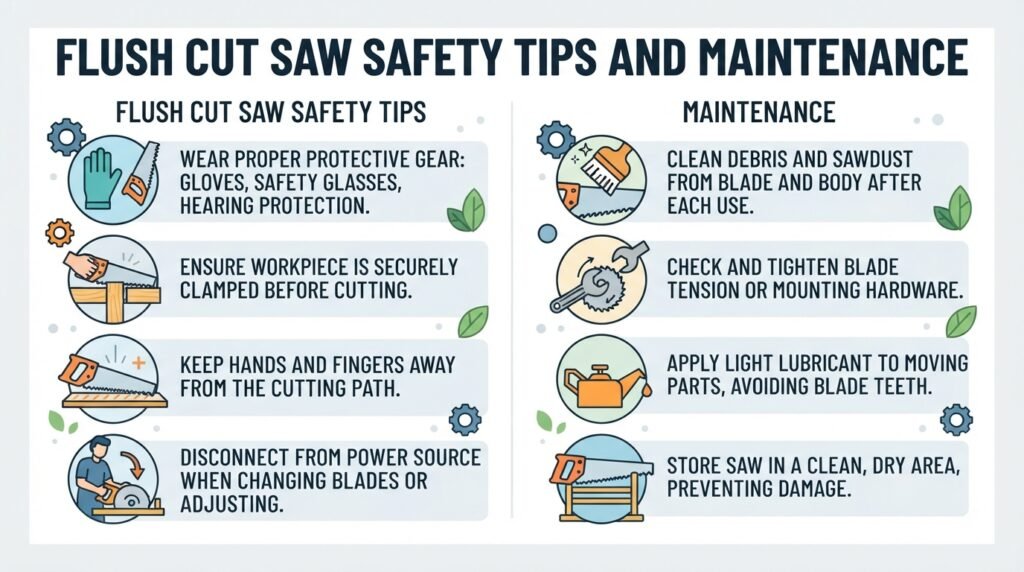
Secure the wood firmly on a stable workbench. Identify the excess material, such as a dowel, peg, or wooden plug. Keep your hands away from the cutting path and wear suitable eye protection.
Choose the Right Saw
Select a flush cut hand saw with suitable teeth and blade flexibility for the task. A Japanese flush cut saw is often designed for pull-stroke cutting, while other models may work differently. Always follow the manufacturer’s instructions.
Position the Blade Correctly
Place the blade nearly flat against the surrounding surface. This helps with cutting wood flush with a surface and reduces the chance of unwanted scratches.
Cut With Gentle Strokes
Move the saw steadily without applying excessive pressure. Let the teeth do the work when cutting wooden dowels or trimming wooden plugs. Avoid twisting the blade, as this can damage the teeth or workpiece.
Check and Finish the Surface
After trimming, inspect the area and use fine sandpaper if needed. Careful wood surface preparation can help create a smooth wood finish.
Maintain the Tool
Keep the woodworking saw clean, dry, and sharp when applicable. Store it safely with the blade protected, and replace damaged tools before further use.
Choosing and Using a Flush-Cutting Saw
Choosing the right hand saw helps you achieve clean, accurate results in woodworking. Consider the material, cutting task, and blade design before starting your project.
How to Choose the Right Saw
- Blade flexibility: A flexible blade is useful for trimming dowels close to a flat surface.
- Tooth design: A fine-tooth saw blade can produce neat cuts on suitable wood.
- Handle comfort: Choose a handle that provides a secure, comfortable grip.
- Cutting style: A Japanese flush cut saw commonly cuts on the pull stroke, while other designs may use a push or back-and-forth motion.
- Project requirements: Select a suitable woodworking saw for furniture repairs, cabinets, or detailed craftwork.
Tips for Better Cutting Results
Secure the workpiece before cutting. Keep the blade flat against the surrounding surface when cutting wood flush with a surface. Use gentle strokes when cutting wooden dowels or trimming wooden plugs, and avoid forcing the blade.
After trimming, inspect the surface and sand lightly if necessary to achieve a smooth wood finish. Clean the tool after use and store it safely.
The right tool and careful technique make detailed woodworking projects easier to complete accurately while reducing the risk of damaging the wood
Conclusion
A Flush cut saw is a practical tool for woodworking, furniture repairs, and detailed finishing tasks. It helps trim dowels, wooden plugs, and protruding joints while preparing surfaces for sanding and polishing. Flush cut saw blade trimming wood accurately with gentle strokes.. With proper care and safe handling, this tool can be a valuable addition to a woodworking toolkit.
Top 5 FAQs About Flush Cut Saws
Q1. What is a flush cut saw used for?
A flush cut saw is used to trim wooden dowels, plugs, pegs, and joints level with a surface. It helps achieve neat results in woodworking and furniture repairs.
Q2. How does a flush cut saw work?
It uses a thin, toothed blade to cut excess material close to the surrounding surface. Gentle strokes help improve control and reduce damage to the wood.
Q3. Can a flush cut saw cut plastic?
Yes, some models can cut certain plastics, but the blade must be suitable for the material. Always check the manufacturer’s instructions before cutting.
Q4. What is the difference between a flush cut saw and a regular hand saw?
A flush cut saw typically has a thinner blade designed for trimming material level with a surface. A regular hand saw is generally designed for broader cutting tasks.
Q5. How do you use a flush cut saw safely?
Secure the workpiece, wear eye protection, and keep your hands away from the blade. Use light, controlled strokes and avoid forcing or twisting the saw.