
Introduction
Different types of grass cutters are designed to handle different gardening needs, from trimming small lawns to cutting thick grass and weeds. Choosing the right equipment depends on your garden size, grass condition, terrain, and maintenance requirements. This guide explains common grass-cutting tools, their functions, and how to select and maintain suitable equipment for your garden.

Table of Contents
Why the Right Grass Cutter Matters
Choosing the right grass-cutting equipment makes garden maintenance easier and more efficient. Different lawns have different needs, depending on their size, grass thickness, and terrain. Suitable lawn care tools help maintain a neat appearance while reducing unnecessary effort.
The right grass cutter machine also helps you work more comfortably. For example, a small garden may need a manual grass cutter, while a larger lawn may benefit from a rotary lawn mower. For thick grass and weeds, a brush cutter machine may be more suitable.
Using appropriate lawn maintenance equipment can also help you cut grass more evenly and reach difficult areas. A cordless grass cutter offers greater freedom of movement, while an electric grass cutter can be convenient for gardens near a power supply.
Before choosing your equipment, consider the lawn size, grass type, power source, and maintenance requirements. Selecting suitable grass cutting tools helps you care for your garden safely and achieve better results with less effort.
Understand the Different Types of Grass Cutters
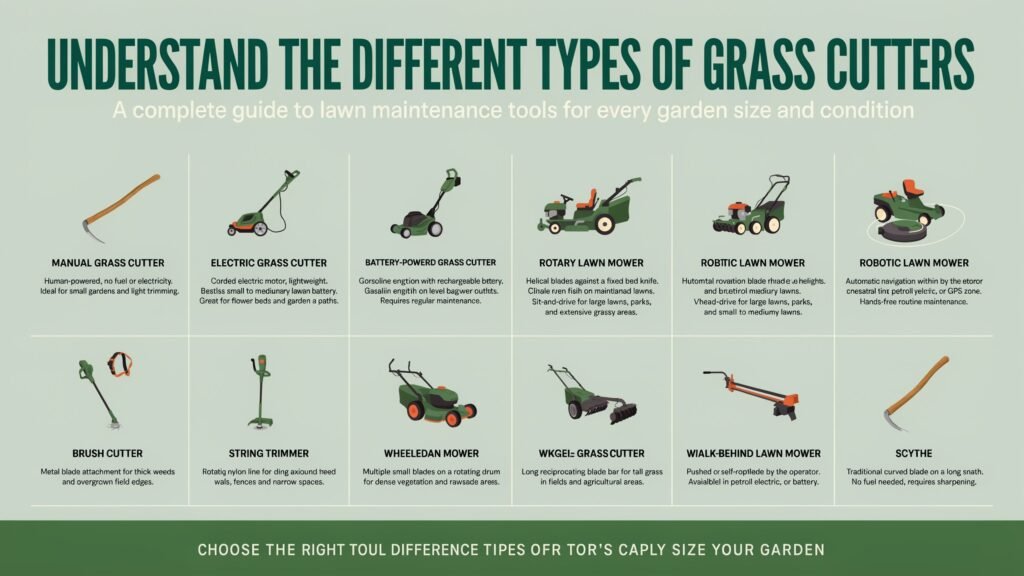
Different grass-cutting machines and tools are designed for different garden sizes, grass conditions, and maintenance needs. Understanding their functions helps you choose suitable grass cutting tools for your lawn.
Manual Grass Cutter
A manual grass cutter uses human power rather than a motor. It is suitable for small gardens, light grass cutting, and areas where powered equipment is unnecessary. It requires physical effort but does not need fuel or electricity.
Electric Grass Cutter
An electric grass cutter runs on electricity and is useful for regular garden maintenance. It is generally lightweight and convenient for small to medium-sized lawns near a power outlet. Its operating range depends on the cord length.
Battery-Powered Grass Cutter
A battery-powered grass cutter uses a rechargeable battery instead of a power cord. It allows greater freedom of movement and is useful for trimming grass around flower beds, fences, and garden paths. Runtime depends on battery capacity and grass conditions.
Petrol Grass Cutter
A petrol grass cutter uses a gasoline engine to power its cutting mechanism. It is commonly used for larger gardens and areas where electrical outlets are unavailable. Regular engine maintenance and fuel are required.
Rotary Lawn Mower
A rotary lawn mower uses a horizontally rotating blade to cut grass. It is suitable for maintaining ordinary lawns and handling a range of grass heights, depending on the mower’s power and blade settings.
Reel Lawn Mower
A reel lawn mower uses rotating helical blades that cut grass against a fixed blade. It works well on relatively level lawns with regularly maintained grass and can provide a clean, even finish.
Riding Lawn Mower
A riding lawn mower allows the operator to sit while controlling the machine. It is designed for large lawns, parks, and extensive grassy areas where walking behind a mower would take considerable time.
Robotic Lawn Mower
A robotic lawn mower cuts grass automatically within a designated operating area. Depending on the model, it uses boundary wires or navigation technology to move around the lawn. It is suitable for routine maintenance when the garden meets the machine’s operating requirements.
Brush Cutter
A brush cutter machine is designed for thick grass, weeds, and tougher vegetation. Depending on its design, it uses a metal blade or another compatible cutting attachment. It is useful for uneven ground, field edges, and overgrown garden areas.
String Trimmer
A string trimmer uses a rapidly rotating nylon line to cut grass. It is especially useful for trimming grass edges, reaching narrow spaces, and cutting grass around trees, walls, and fences. It is generally intended for finishing work rather than mowing a large lawn
Wheeled Grass Cutter
A wheeled grass cutter is a grass-cutting tool supported by wheels, making it easier to move across the garden. It is useful for maintaining small and medium-sized lawns, depending on its design. The wheels help guide the cutting head and maintain a more consistent cutting height.
Walk-Behind Lawn Mower
A walk-behind lawn mower is pushed or self-propelled by the operator while its blade cuts grass. It is suitable for residential lawns and medium-sized gardens. Some models use petrol, while others operate on electricity or rechargeable batteries.
Flail Mower
A flail mower uses multiple small blades attached to a rotating drum to cut dense grass, weeds, and rough vegetation. It is commonly used on large properties, roadside areas, and overgrown land. Its robust design makes it suitable for tougher mowing conditions.
Sickle Bar Mower
A sickle bar mower uses a long cutting bar with reciprocating blades that move back and forth. It is mainly used for cutting tall grass and vegetation in fields and agricultural areas. It is less common for ordinary residential lawn maintenance.
Scythe
A scythe is a traditional gardening tool featuring a long handle and a curved metal blade. It allows users to cut grass, weeds, and other plants manually without needing fuel or electricity. This tool is helpful in places where powered equipment is difficult to use, although it requires careful handling and regular blade sharpening.
Lawn Mowers and Brush Cutters
Lawn mowing equipment and brush-cutting tools help maintain gardens, parks, fields, and other grassy areas. They differ in cutting design, power source, and intended use. A lawn mower is generally designed for maintaining grass at an even height, while a brush cutter is better suited to thick grass, weeds, and rough vegetation.
Rotary Lawn Mower
A rotary lawn mower cuts grass with a blade that spins horizontally beneath the machine. It is commonly used for routine lawn care, and its ability to cut taller grass depends on the mower’s design and adjustable cutting height.
Reel Lawn Mower
A reel lawn mower uses rotating helical blades that cut grass against a fixed blade. It works best on relatively level lawns with short, regularly maintained grass.
Riding Lawn Mower
A riding lawn mower lets the user sit on the machine while cutting grass, making it convenient for maintaining large lawns and grassy areas.. It is useful for large lawns, parks, and extensive grassy areas because it reduces the need to walk behind the machine.
Walk-Behind Lawn Mower
A walk-behind lawn mower is operated while walking behind it. Some models require pushing, while self-propelled versions use a drive system to assist movement. It is suitable for residential gardens and medium-sized lawns.
Robotic Lawn Mower
A robotic lawn mower trims grass on its own within a defined lawn area, requiring little manual effort during routine maintenance.. Depending on the model, it uses boundary wires or navigation technology to move around the lawn with limited supervision.
Electric Lawn Mower
An electric lawn mower uses electrical power to cut grass and is a practical choice for regular lawn maintenance. Corded models need a nearby power outlet, while cordless models operate using rechargeable batteries.
Petrol Lawn Mower
A petrol lawn mower operates with a fuel-powered engine that drives the blade to cut grass efficiently. It is useful in larger gardens and areas without convenient electrical access, although it requires fuel and regular engine maintenance.
Brush Cutter
A brush cutter machine is designed for thick grass, tough weeds, and rough vegetation. Depending on the model and approved attachment, it can use a metal blade or cutting line to manage different types of growth.
Wheeled Brush Cutter
A wheeled brush cutter has a grass-cutting mechanism mounted on a wheeled frame, making it easier to move across the ground while clearing vegetation. It can help manage dense vegetation over larger areas, depending on its cutting capacity and terrain suitability.
Flail Mower
A flail mower uses multiple small blades attached to a rotating drum. It is commonly used for cutting dense grass, weeds, and rough vegetation along field edges, large properties, and other areas that require heavier-duty maintenance.
Choosing the Right Equipment
Before selecting garden cutting equipment, consider the size of the area, grass thickness, ground conditions, and maintenance requirements. Lawn mowers are generally better for achieving an even lawn finish, while brush cutters and flail mowers are more suitable for tougher vegetation. Always use the equipment according to its instructions and wear appropriate protective gear.
How to Choose the Right Grass Cutter
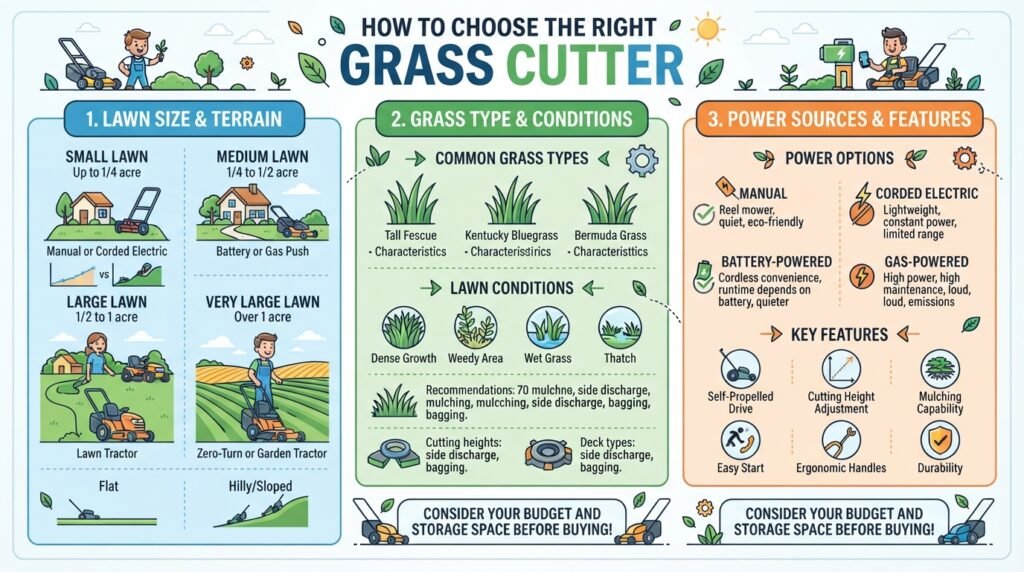
Choosing suitable grass cutting tools depends on your garden size, grass type, terrain, and maintenance needs. The right equipment can make lawn care easier, improve cutting results, and reduce unnecessary effort. Consider these important factors before selecting your equipment.
Consider Your Lawn Size
For small gardens, a manual grass cutter or electric grass cutter may be sufficient. Medium-sized lawns can benefit from a walk-behind lawn mower, while larger properties may require a riding lawn mower.
Check the Type of Grass
Short, regularly maintained grass is easy to manage with a reel lawn mower. For thicker grass and stubborn weeds, a brush cutter machine may be more appropriate. Choose equipment according to the vegetation it is designed to handle.
Compare Power Sources
A cordless grass cutter offers freedom of movement, while a corded electric model provides continuous power when connected to a suitable outlet. A petrol grass cutter can be useful in larger areas without convenient electrical access.
Choose Equipment for Your Terrain
Flat lawns are generally suitable for ordinary lawn mowers. Uneven ground, narrow spaces, and areas around fences may require different garden cutting equipment, such as a string trimmer or suitable brush cutter.
Consider Maintenance and Storage
A battery-powered grass cutter requires battery charging and care. Petrol-powered machines need engine maintenance, while manual tools require blade cleaning and sharpening. Check your available storage space before purchasing larger equipment.
Maintenance and Safety Tips
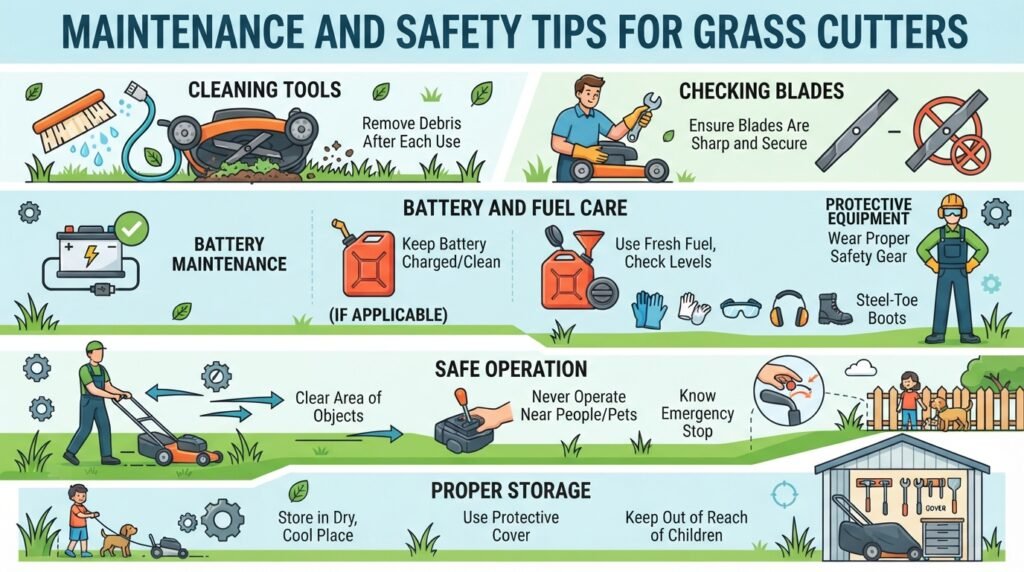
Proper maintenance helps grass cutting tools work efficiently and last longer. Following basic safety practices also reduces the risk of injury while maintaining your garden.
Clean the Equipment After Use
Remove grass clippings, dirt, and debris from your grass cutter machine after each use. Follow the manufacturer’s cleaning instructions and avoid spraying water on electrical parts.
Check the Blades and Cutting Line
Inspect blades for damage and keep them sharp according to the manufacturer’s instructions. Replace worn cutting lines on a string trimmer when necessary. Always switch off the machine and disconnect its power source before inspection.
Maintain the Power Source
For an electric grass cutter, inspect the cable and plug for damage. Store batteries in suitable conditions and charge them with the recommended charger. For a petrol grass cutter, check the fuel, air filter, and engine oil as directed in the manual.
Wear Protective Equipment
Wear safety glasses, sturdy footwear, and hearing protection when required. Long trousers and suitable gloves can provide additional protection. Keep children and pets away from the operating area.
Operate the Machine Carefully
Read the user manual before operating any lawn maintenance equipment. Check the ground for stones, branches, and other objects that could become dangerous projectiles. Never remove safety guards or use damaged equipment.
Store Equipment Properly
Keep your garden cutting equipment in a dry, secure place away from children. Store fuel according to the manufacturer’s instructions and local safety requirements. Before performing repairs or maintenance, ensure the machine is switched off, cooled down, and disconnected from its power source.
Conclusion
Understanding the different types of grass cutters helps you choose suitable equipment for your lawn and gardening needs. Manual tools, electric and petrol-powered machines, lawn mowers, and brush cutters each have specific functions. Consider your garden size, grass thickness, budget, and maintenance requirements before making a choice. With proper care and safe operating practices, the right equipment can make grass cutting easier and help keep your garden neat.
Frequently Asked Questions About Grass Cutters
Q1. What are the different types of grass cutters?
The main types include manual grass cutters, electric grass cutters, petrol grass cutters, battery-powered cutters, lawn mowers, brush cutters, and string trimmers. Each is designed for different grass-cutting needs.
Q2. Which grass cutter is best for a small garden?
A manual grass cutter, cordless grass trimmer, or small electric lawn mower can work well for a small garden. The best option depends on grass thickness and lawn size.
Q3. What is the difference between a grass cutter and a lawn mower?
A lawn mower is mainly designed to cut lawn grass evenly, while a grass cutter or brush cutter is often used for trimming edges, thick grass, and weeds.
Q4. Which grass cutter is best for thick grass and weeds?
A brush cutter machine is generally suitable for thick grass and tough weeds. Choose the correct cutting attachment according to the vegetation and the manufacturer’s instructions.
Q5. How do I maintain a grass cutter?
Clean the equipment after use, inspect the blades and cables, and follow the manufacturer’s maintenance instructions. Always switch off and disconnect the power source before cleaning or inspecting cutting parts.