
Introduction
Lawn edging shears are useful garden tools for trimming grass along pathways, flower beds, patios, and other lawn boundaries. They help create neat edges in areas where lawn mowers may not reach easily. Understanding the different types, common uses, and proper maintenance methods can help gardeners choose the right tool and keep their outdoor spaces tidy. This guide explains how these tools work, how to use them effectively, and how to maintain them safely.

Table of Contents
What Are Lawn Edging Shears?
Lawn edging shears are hand-operated garden tools designed to trim grass along lawn borders, pathways, driveways, and flower beds. They help cut grass in narrow areas where a lawn mower may not reach easily. These tools are useful for maintaining a neat finish around the edges of a garden.
Most models have two sharp blades connected to handles that allow the user to open and close the blades for cutting. Some designs feature short handles for close trimming, while long-handled edging shears allow users to work while standing, reducing the need to bend repeatedly.
Main Purpose of Lawn Edging Shears
The main purpose of these tools is lawn edge maintenance. They help remove overgrown grass around garden boundaries and create a cleaner appearance. They can also be used for trimming grass around pathways, patios, fences, and flower beds where larger cutting equipment may be difficult to control.
Unlike powered lawn equipment, manual models do not require fuel, batteries, or electricity. They are generally quiet and can be suitable for small trimming tasks in home gardens.
How They Help Maintain Garden Borders
Using garden edging shears helps control grass growth along narrow edges and improves the appearance of outdoor spaces. Their cutting action allows users to work carefully around plants and other garden features.
For effective results, choose a suitable tool for the area, keep the blades clean and sharp, and cut only the grass that needs trimming. Regular use can make lawn border maintenance easier and help keep garden edges looking tidy.
How Do Lawn Edging Shears Work?
Lawn edging shears work through a simple cutting action that trims grass along lawn borders and in narrow areas. Their two sharp blades move against each other when the handles are opened and closed, cutting grass that may be difficult to reach with a lawn mower.
These tools are useful for lawn edge maintenance around pathways, flower beds, patios, fences, and other garden boundaries. Understanding their working method helps users achieve a neat finish while avoiding unnecessary damage to nearby plants.
How the Cutting Mechanism Works
Most manual models have two metal blades connected by a pivot point. When the handles move, the blades open to accept grass between their cutting edges. Closing the handles brings the blades together and cuts the grass.
The sharpness and alignment of the blades affect cutting performance. Clean, properly maintained blades generally provide a smoother cut and require less effort than dull or damaged ones.
Steps for Using the Tool
- Position the blades: Place the cutting edges around the grass that needs trimming.
- Align the cutting area: Keep the blades close to the lawn border without cutting into the soil or damaging nearby plants.
- Close the handles: Apply steady pressure to cut the grass cleanly.
- Move along the edge: Repeat the process in small sections to maintain a consistent border.
- Check the finish: Inspect the trimmed area and carefully remove any remaining uneven grass.
This method supports neat lawn borders and helps control grass growing along narrow edges.
How Different Designs Operate
Handheld lawn shears usually have short handles and are suitable for small trimming jobs that require close control. In comparison, long-handled edging shears provide a longer reach and can reduce the need to bend while working.
Both designs use a manual cutting mechanism, but their handle length and blade arrangement can vary. Choosing the right style depends on the garden layout, the amount of trimming required, and the user’s comfort.
Tips for Better Cutting Results
For effective grass trimming, keep the blades clean and sharp, work slowly around obstacles, and avoid forcing the tool through thick or woody stems. Wear suitable gardening gloves and keep your fingers away from the cutting edges.
Regular care helps maintain cutting performance and makes garden border maintenance easier. With the correct technique, these tools can help keep lawn edges tidy without the noise or power requirements of motorized equipment.
Different Types of Lawn Edging Shears
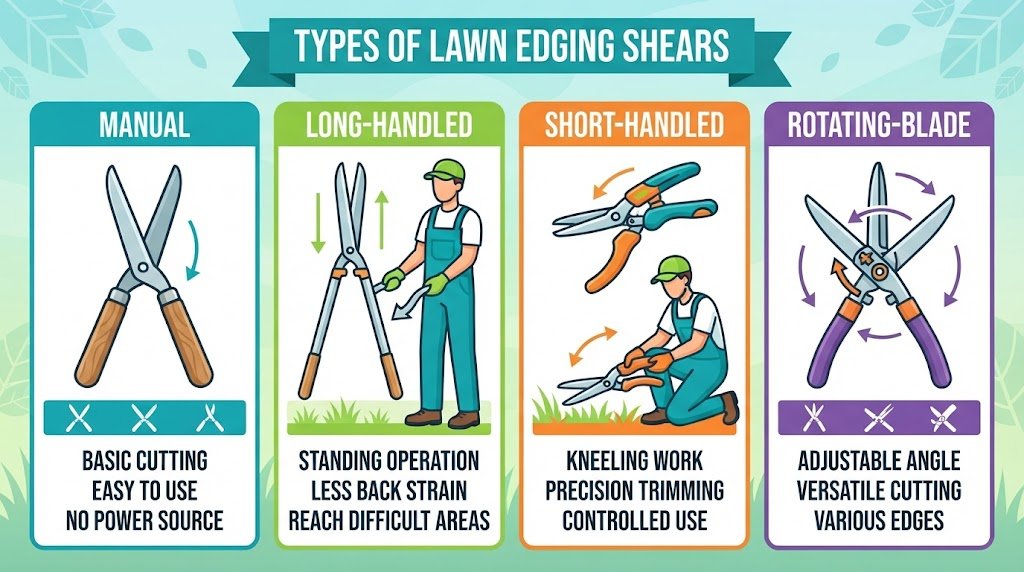
Garden cutting tools come in different designs to suit various lawn sizes and trimming tasks. Choosing the right type depends on the length of the grass, the shape of the garden borders, and the user’s comfort. Understanding the main types can help homeowners select suitable equipment for regular lawn edge maintenance.
Manual Lawn Edging Shears
Manual models use two blades operated by hand pressure. They do not require electricity, batteries, or fuel, making them suitable for small trimming jobs around pathways, flower beds, and patios. Manual lawn edging shears are also useful for gardeners who prefer a simple tool for maintaining neat lawn borders.
Long-Handled Edging Shears
These tools feature extended handles that allow users to trim grass while standing more upright. They can reduce repeated bending when working along longer lawn edges. Long-handled edging shears are particularly useful for maintaining borders around lawns, paths, and garden beds.
Short-Handled Grass Shears
Short-handled models are designed for close trimming and detailed work. Their compact size can make it easier to reach small areas around garden features. Grass edging shears with short handles are useful for correcting uneven patches and trimming grass in tight spaces.
Rotating-Blade Edging Shears
Some models feature blades or cutting heads that can rotate to different angles. This design helps users position the cutting edges for different trimming directions. Rotating heads can be helpful when working along curved borders or in areas where a fixed blade angle is less convenient. Check the product design before purchasing because adjustment mechanisms vary.
Choosing the Right Type
When comparing different designs, consider handle length, blade sharpness, weight, grip comfort, and the size of the area you need to maintain. For small gardens, a basic manual tool may be sufficient. Larger lawns with long borders may be easier to maintain with an extended-handle design.
The right tool can make grass trimming more manageable and support consistent garden border maintenance. Regular cleaning and proper storage also help keep the blades in good working condition.
Common Uses of Lawn Edging Shears in Garden Maintenance
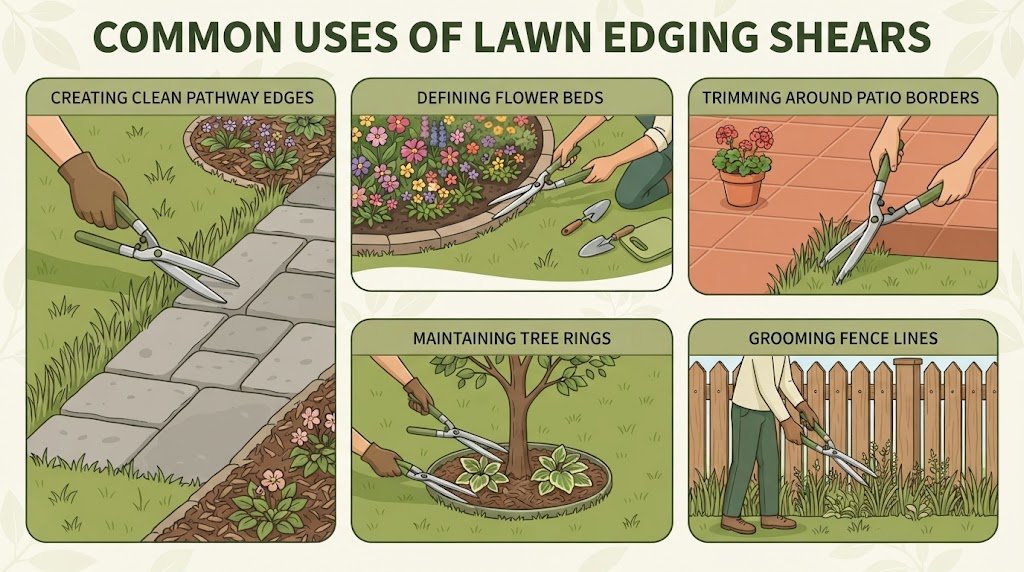
Keeping a garden tidy requires attention to areas that lawn mowers cannot easily reach. Grass often grows along paths, flower beds, fences, and patios, creating uneven borders. Grass edging shears help trim these areas and maintain a clean appearance without requiring large or powered equipment.
Trimming Grass Along Pathways
Grass can spread over the edges of garden paths and driveways, making them look untidy. Lawn edge maintenance with manual cutting tools helps remove unwanted growth along these boundaries. Carefully trimming the grass creates a clearer separation between the lawn and hard surfaces.
Maintaining Flower Bed Borders
Grass growing into flower beds can make garden boundaries difficult to maintain. Garden edging shears allow gardeners to trim grass near flower beds while working carefully around nearby plants. Keeping these areas tidy can improve the overall appearance of the garden.
Cleaning Edges Around Patios
Patios and paved seating areas often have narrow gaps or borders where grass can grow. Using handheld lawn shears helps trim grass along these edges where a lawn mower may not fit comfortably. Careful cutting also helps prevent damage to paving surfaces and nearby plants.
Trimming Grass Around Trees and Fences
Grass growing around tree bases, fence posts, and other garden features can be difficult to cut evenly. Manual tools provide close control for grass trimming around garden edges. Work slowly around tree trunks and avoid cutting into the bark or damaging the surrounding soil.
Improving Lawn Borders
Uneven grass along the boundary of a lawn can affect the appearance of the entire outdoor space. Regular trimming helps create neat lawn borders and gives the garden a more organized finish. Straight edges can be maintained by following an existing path or border, while curved edges require smaller, careful cuts.
Managing Small, Hard-to-Reach Areas
Some corners and narrow spaces are difficult to reach with larger garden equipment. Manual lawn edging shears are useful for these small jobs because they do not require a power source and can be positioned precisely. However, thick stems and woody growth may require a more suitable cutting tool.
Supporting Regular Garden Care
Consistent trimming can reduce the need for extensive corrective work later. After use, clean away grass and moisture from the blades, check for damage, and store the tool in a dry, secure location.
Using the right tool for each task makes garden border maintenance easier and helps keep outdoor spaces neat. For the best results, trim carefully, protect nearby plants, and follow the manufacturer’s safety instructions.
How to Use Lawn Edging Shears for Neat Lawn Borders
Creating clean lawn edges helps a garden look organized and well-maintained. Grass often grows unevenly along paths, patios, fences, and flower beds, where lawn mowers may not provide a precise finish. Using grass edging shears with the correct technique can help trim these areas neatly and improve the appearance of your outdoor space.
Prepare the Lawn Edge
Before trimming, remove stones, fallen branches, and other debris from the area. Identify the boundary between the grass and the adjoining surface, such as a pathway or flower bed. A clear cutting line makes it easier to achieve neat lawn borders without removing too much grass.
Choose the Right Cutting Tool
Select a tool that suits the size and shape of the area. Manual lawn edging shears are useful for small trimming tasks, while long-handled models can provide a more comfortable reach along extended borders. Check that the blades are clean, sharp, and properly aligned before starting.
Position the Blades Correctly
Hold the handles securely and position the blades around the grass that needs trimming. Keep the cutting edges close to the boundary without cutting into the soil or damaging nearby plants. Correct positioning supports accurate lawn edge maintenance and helps create a consistent finish.
Trim the Grass in Small Sections
Close the handles with steady pressure to cut the grass. Move gradually along the border, trimming short sections at a time. Avoid rushing or forcing the blades through thick growth, as this can produce uneven cuts or damage the tool.
For curved borders, adjust the blade position as you move. When working around trees, fences, or flower beds, use extra care to avoid harming plants and other garden features.
Check the Finished Border
After trimming, inspect the entire edge for missed patches and uneven grass. Make small corrections where necessary rather than cutting large amounts at once. This approach helps maintain a balanced appearance along paths, patios, and garden beds.
Clean and Store the Shears
Remove grass clippings and dirt from the blades after use. Dry the metal parts thoroughly to help prevent rust, and apply suitable maintenance oil if recommended by the manufacturer. Store the tool in a dry place with the blades safely covered.
Regular care and careful cutting make garden border maintenance easier. By following these steps, you can use lawn edging shears effectively to keep lawn boundaries tidy and achieve a clean finish around your garden.
Lawn Edging Shears vs. Grass Shears: Key Differences
Garden cutting tools come in different designs to handle specific lawn care tasks. Although lawn edging shears and grass shears may look similar, their blade designs, handle styles, and intended uses can differ. Understanding these differences helps gardeners choose the right tool for maintaining lawn borders and trimming grass.
Main Differences Between the Tools
Lawn edging shears are generally designed to trim grass along lawn boundaries, pathways, driveways, and flower beds. Many models have long handles that allow users to work while standing.
Grass shears are commonly used for trimming grass in small areas, around garden features, and in places that lawn mowers cannot reach easily. Some have short handles for close control, while others feature extended handles or adjustable cutting heads.
| Feature | Lawn Edging Shears | Grass Shears |
|---|---|---|
| Main purpose | Finishing lawn edges | Trimming grass in small areas |
| Handle design | Often long-handled | Short or long-handled |
| Typical use | Along paths and lawn borders | Around plants and garden features |
| Cutting method | Usually manual | Manual or powered, depending on the model |
| Best suited for | Defined lawn boundaries | Detailed grass trimming |
Which Tool Should You Choose?
Choose a long-handled edging tool if you regularly maintain extended lawn borders and prefer to work while standing. Grass shears may be more suitable for small patches and detailed trimming around garden features.
Before purchasing, check the blade length, handle design, weight, and cutting capacity. The right choice depends on your garden layout and the type of trimming you perform most often.
How to Clean, Sharpen, and Maintain Lawn Edging Shears
Regular maintenance helps keep garden cutting tools in good working condition. Dirty or blunt blades may produce uneven cuts and require more effort during use. Proper cleaning, sharpening, and storage can help extend the useful life of your equipment.
Clean the Blades After Every Use
Grass, soil, and moisture can collect on the blades during trimming. Remove these materials with a suitable brush or cloth after each task. If the manufacturer permits washing, clean the blades carefully and dry them thoroughly to reduce the risk of rust.
For sticky plant residue, use a cleaner suitable for garden tools and follow the product instructions. Keep cleaning materials away from children and pets.
Check and Sharpen the Blades
Inspect the cutting edges regularly for dullness, rust, or damage. Sharp blades generally cut grass more cleanly than blunt ones.
If sharpening is needed, follow the manufacturer’s instructions and use a suitable sharpening tool. Maintain the original cutting angle rather than removing excessive metal. If the blades are chipped, bent, or badly damaged, seek professional repair or replace the affected parts.
Inspect the Handles and Moving Parts
Check the handles, pivot bolt, and other moving parts for looseness or wear. Tighten fasteners according to the manufacturer’s guidance. If the cutting action becomes stiff, apply a small amount of suitable lubricant to the pivot point when recommended.
These checks help maintain smooth operation and improve control during grass trimming.
Store the Tool Properly
Before storage, make sure the blades are clean and dry. Apply a light protective oil if recommended, close the blades safely, and keep the tool in a dry place. Use a blade cover when available.
Consistent care supports effective lawn edge maintenance and helps keep your cutting tools ready for future gardening tasks.
Safety Tips for Using Lawn Edging Shears
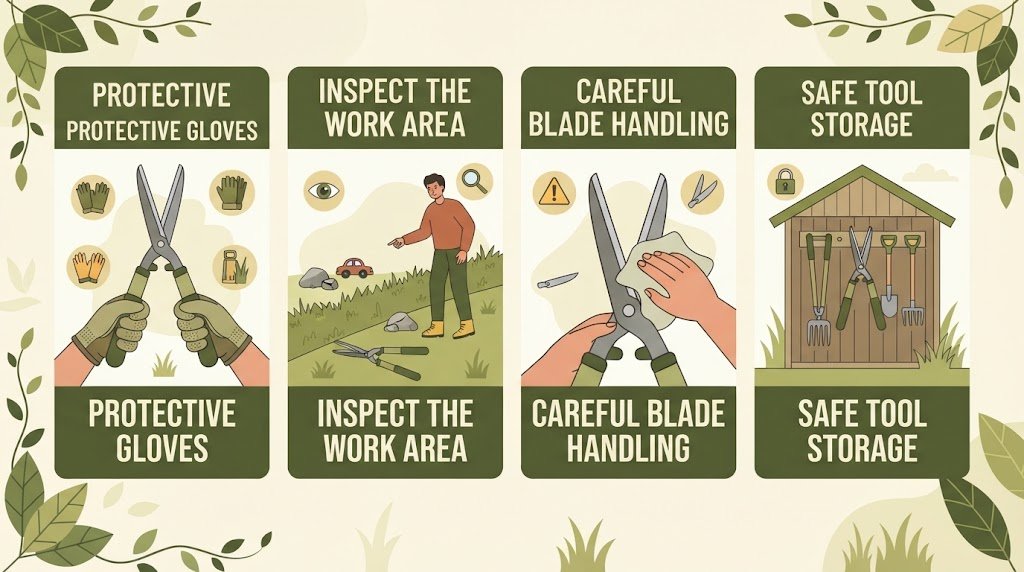
Using garden cutting tools safely helps reduce the risk of cuts and other injuries. Before trimming grass around pathways, flower beds, or fences, inspect the work area and make sure the tool is in good condition.
Wear Suitable Protective Equipment
Wear gardening gloves to improve grip and protect your hands from sharp edges. Closed-toe shoes help protect your feet from dropped tools and garden debris. Safety glasses may be useful when trimming near dry grass, soil, or small particles that could become airborne.
Inspect the Work Area
Remove stones, sticks, wires, and other obstacles before starting. Check for hidden objects in dense grass, and keep children and pets away from the working area.
Handle the Blades Carefully
Keep your fingers away from the cutting edges and pivot points. Hold the handles securely and make controlled cuts rather than forcing the blades through thick grass. Never carry the tool with exposed blades pointing toward your body.
Use the Tool for Its Intended Purpose
Manual lawn edging shears are designed mainly for grass and suitable light vegetation. Do not use them to cut thick branches, wire, or other materials outside their intended purpose. Stop using the tool if the blades become loose, damaged, or difficult to control.
Clean and Store Safely After Use
Close or cover the blades before putting the tool away. Store it in a dry, secure location where children cannot reach it. Follow the manufacturer’s instructions for cleaning, maintenance, and safe handling.
By following these precautions, gardeners can complete garden border maintenance more safely while keeping lawn edges neat and well cared for.
Conclusion
Lawn edging shears can make lawn care easier by helping gardeners trim grass along borders and in narrow spaces. Choosing a suitable design, using the correct cutting technique, and keeping the blades clean and sharp can support consistent results. Regular maintenance and safe handling also help extend the tool’s useful life. With the right approach, gardeners can maintain neat lawn edges and keep their outdoor spaces looking clean and well cared for.
FAQs About Lawn Edging Shears
What are lawn edging shears used for?
Lawn edging shears are used to trim grass along pathways, flower beds, patios, and lawn borders where lawn mowers may not reach easily.
What is the difference between lawn edging shears and grass shears?
Lawn edging shears are commonly used to finish lawn boundaries, while grass shears are often used for detailed trimming in small or hard-to-reach areas. Their designs and uses can overlap.
How do you use lawn edging shears correctly?
Position the blades around the grass along the edge, close the handles carefully, and trim small sections at a time for a neat, even finish.
How do you sharpen lawn edging shears?
Clean the blades first, then use a suitable sharpening tool according to the manufacturer’s instructions. Avoid sharpening damaged blades without proper guidance.
How do you maintain lawn edging shears?
Remove grass and dirt after use, dry the blades thoroughly, check for loose parts, and store the tool in a dry place to help prevent rust.