
Introduction
Parts of Lawn Edging Shears play an important role in keeping lawn borders neat and well-maintained. Each component, including the cutting blades, handles, and pivot joint, has a specific function. Understanding these parts helps gardeners use their tools correctly, identify common problems, and maintain reliable cutting performance.
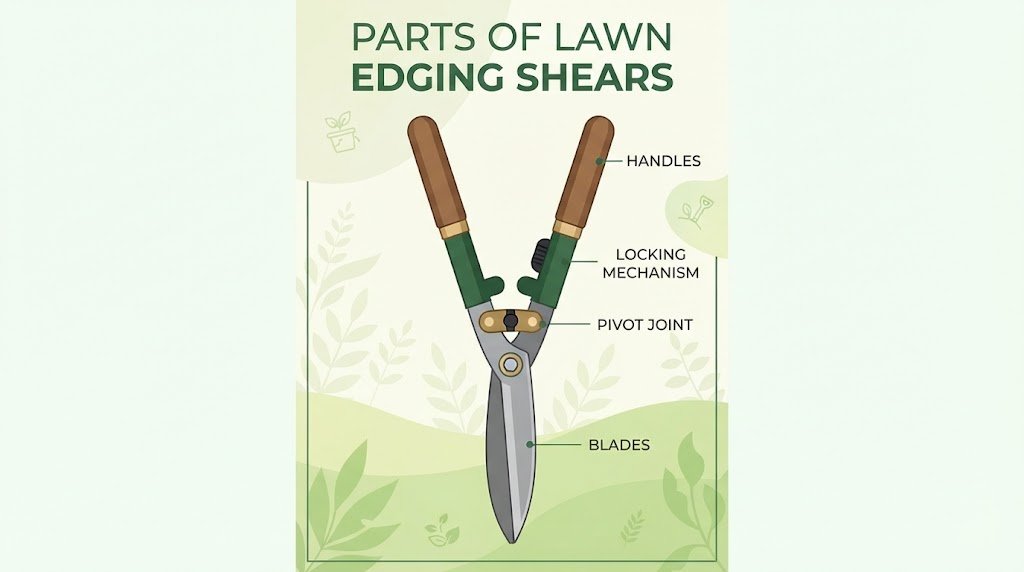
Table of Contents
What Are Lawn Edging Shears?
Lawn edging shears are manual garden tools designed to trim grass neatly along paths, driveways, flower beds, and lawn borders. They help create clean edges in areas where a lawnmower may not reach easily. These tools usually have long handles and sharp cutting blades that allow users to trim grass with controlled hand movements.
Unlike lawnmowers, these manual grass cutting tools are useful for small areas and detailed finishing work. They can help improve the appearance of a garden when used correctly and maintained regularly.
Common Uses of Lawn Edging Shears
These tools are commonly used for trimming grass along pathways, tidying lawn borders, and cutting grass around flower beds. Their narrow blades help reach confined spaces and provide greater control when shaping lawn edges.
They are also useful for lawn edge finishing after mowing. However, they are not intended for cutting thick branches or large areas of long grass.
How Do Lawn Edging Shears Work?
The tool works through two blades that move against each other when the handles are operated. This movement cuts grass between the blades. The cutting mechanism depends on the design, while the handle grips help users hold and control the tool comfortably.
Some models include long, upright handles that reduce the need to bend while trimming. Others have shorter handles for close-up garden work.
Choosing suitable garden edging tools depends on the size of the lawn, the type of grass, and the user’s comfort. Regular cleaning and proper storage also help maintain blade performance and support safe use.
10 Main Components of Lawn Edging Shears

Lawn edging shears are useful garden edging tools for trimming grass along paths, flower beds, driveways, and lawn borders. Each component has a specific purpose, from cutting grass to providing a comfortable grip. Understanding these parts helps users operate, clean, and maintain their tools properly.
Cutting Blades
The cutting blades are the main working parts of the tool. They meet to cut grass and create neat lawn edges. Sharp, clean blades generally provide a more even cut than dull or dirty ones.
Handle Grips
The handle grips provide a secure place to hold the tool. Comfortable grips can improve control and reduce hand discomfort during routine grass trimming.
Handles
The handles transfer hand movement to the blades. Their length and design affect reach, posture, and ease of use when trimming grass along pathways and garden borders.
Pivot Bolt
The pivot bolt connects the blades and allows them to move. It should remain secure while permitting smooth blade movement.
Cutting Edges
The cutting edges are the sharpened sections of the blades. Keeping them clean and in good condition supports effective lawn edge finishing.
Blade Joint
The blade joint is the area where the two blades connect and move past each other. Dirt or rust around this area can affect movement, so regular cleaning is important.
Blade Alignment
Blade alignment refers to how correctly the blades meet during cutting. Proper alignment helps the tool cut grass evenly and prevents unnecessary friction.
Spring Mechanism
Some models include a spring mechanism that helps return the handles or blades to their resting position. Not every design uses a spring, so its presence depends on the model.
Handle Connection
The handle connection joins the handles to the cutting assembly. A secure connection helps transfer movement efficiently and supports controlled operation.
Locking Mechanism
Some lawn shears have a locking mechanism that keeps the blades closed during storage. This feature can help reduce accidental contact with the sharp edges when the tool is not in use.
Maintaining the Components
Regular care helps keep manual grass cutting tools in usable condition. Remove grass and dirt after use, dry the metal parts, and apply a suitable lubricant to the pivot when recommended by the manufacturer. Check the handles, fasteners, and blades for damage before trimming.
Because designs vary, consult the manufacturer’s instructions before sharpening, adjusting, or replacing individual components. Proper maintenance supports safe handling and consistent cutting performance.
How Lawn Edging Shears Components Work Together
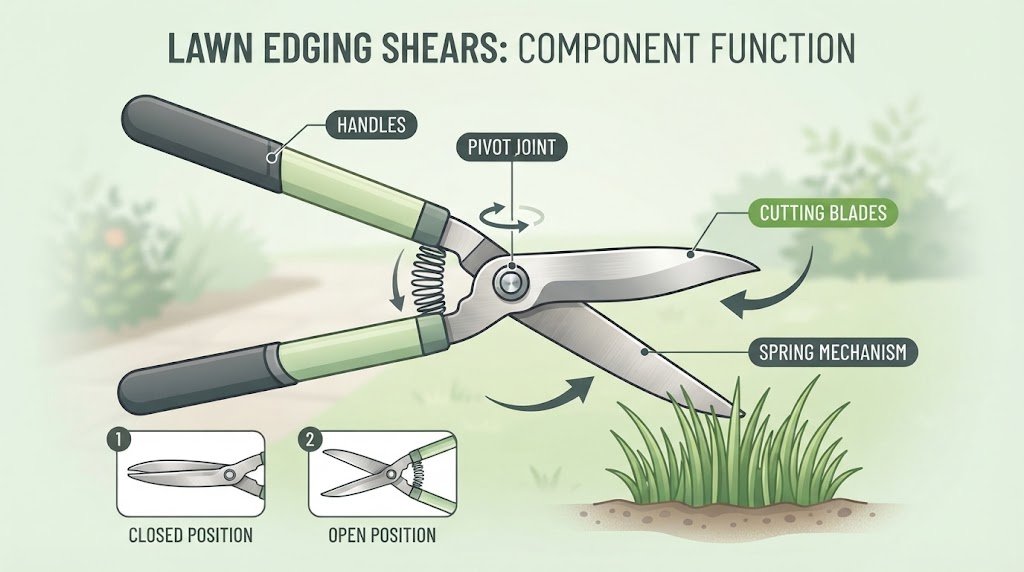
Lawn edging shears use several components to trim grass neatly along garden borders, paths, and flower beds. Each part has a specific function, and all the parts work together to provide controlled cutting. Understanding this process helps users operate their garden edging tools correctly and maintain them for regular use.
The Role of the Cutting Blades
The cutting blades perform the main task of trimming grass. When the handles move, the blades come together and cut grass between their edges. Clean, sharp blades help produce a more even finish along lawn borders.
How Handles Control Blade Movement
The handles transfer hand pressure to the cutting assembly. Their design affects reach, comfort, and control. Comfortable handle grips can make routine grass trimming easier, especially when working along long pathways or around flower beds.
How the Pivot Joint Supports Cutting
The pivot bolt connects the blades and allows them to rotate. As the handles move, the blades open and close around this joint. Proper blade alignment helps the cutting edges meet correctly and reduces unnecessary friction.
The Function of the Spring Mechanism
Some models include a spring mechanism that helps reopen the handles after a cutting movement. This feature can reduce repeated effort, although its design and availability vary between models.
Why All Components Matter
When the blades, handles, and pivot joint work properly, the tool can provide controlled lawn edge finishing. Loose connections, dirty blades, or a stiff joint may make cutting more difficult. Regular cleaning and checking the fasteners can help maintain performance.
Common Materials Used to Make Lawn Shears Parts
The materials used in lawn shears affect their durability, weight, comfort, and resistance to corrosion. Different manufacturers use different combinations depending on the tool’s design and intended use.
Steel Blades
Steel blades are common because steel can provide the strength and cutting edge needed for trimming grass. Some models use stainless steel for improved corrosion resistance, while others use carbon steel that may require more careful drying and maintenance.
Metal Handles and Frames
Metal components provide structural support and transfer force from the handles to the blades. Steel is commonly used for strength, while aluminium may be used where lower weight is desirable. The exact material depends on the model.
Plastic and Rubber Grips
Handle grips may use plastic, rubber, or other synthetic materials. These materials can improve comfort and provide a more secure hold. Their texture and shape influence how easily users control the tool during trimming.
Springs and Fasteners
A model with a spring may use spring steel or another suitable metal for repeated movement. The pivot bolt and other fasteners are usually made from metal to keep moving components connected securely.
Choosing and Caring for Materials
Good maintenance helps protect different materials from wear. Remove grass residue, dry metal parts after cleaning, and store the tool in a dry place. Follow the manufacturer’s instructions for lubrication and sharpening to help maintain the tool’s cutting performance and service life.
How to Maintain and Clean Lawn Edging Shears Parts
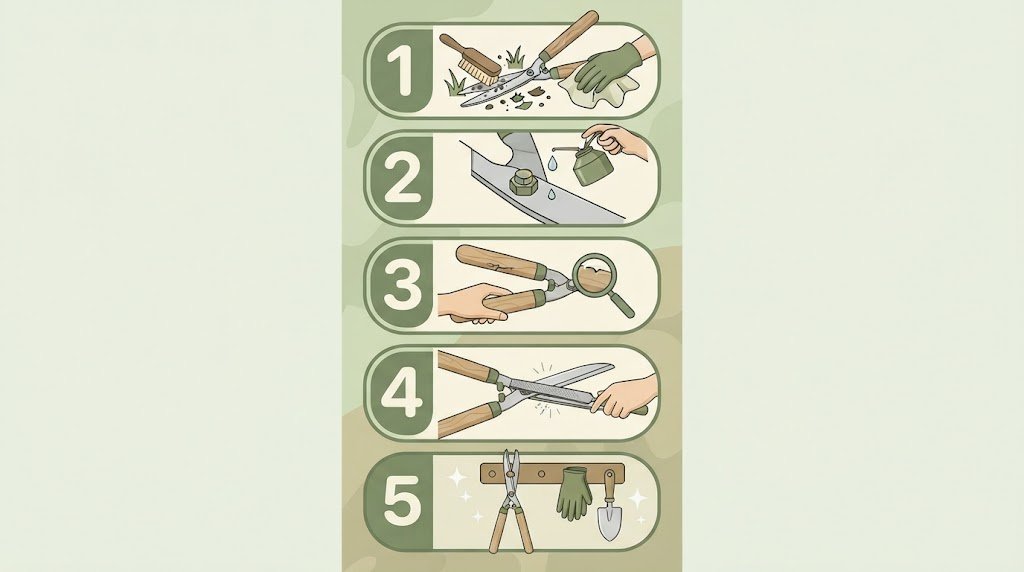
Regular cleaning and maintenance help keep garden tools in good working condition. Lawn edging shears can collect grass, moisture, and soil during use. If these materials remain on the tool, they may contribute to rust, stiff movement, or reduced cutting performance. Proper care helps maintain the cutting blades, pivot joint, and handles.
Clean the Blades After Each Use
Remove grass clippings and dirt from the cutting edges with a suitable brush or cloth. If the blades need washing, follow the manufacturer’s instructions and dry them thoroughly afterward. Clean blades help support smooth cutting and reduce the buildup of residue.
Check and Lubricate the Pivot Bolt
The pivot bolt allows the blades to move against each other. Dirt or rust around this joint can make the shears difficult to operate. Clean the area and apply a small amount of suitable tool lubricant if recommended by the manufacturer. Check that the fastener is secure without overtightening it.
Inspect the Handles and Grips
Examine the handle grips for cracks, looseness, or wear. Damaged grips can make the tool harder to control. Check the handles and their connections for bending or looseness before using the shears.
Sharpen and Store the Shears Properly
Dull steel blades may crush or pull grass instead of cutting it cleanly. Sharpen the blades according to the manufacturer’s guidance or ask a qualified tool service professional. Store the shears in a dry place, preferably with a blade guard or locking mechanism secured.
Always handle sharp blades carefully and keep your hands away from the cutting edges during cleaning and maintenance.
Common Problems With Lawn Edging Shears Components
Even well-maintained garden edging tools can develop problems over time. Identifying the cause early can help users decide whether cleaning, adjustment, or professional repair is needed.
Dull or Damaged Blades
Blades may become dull after repeated use or contact with hard objects. This can lead to uneven cuts and extra effort. Clean the blades first and inspect them for chips or damage. Sharpen serviceable blades according to the manufacturer’s instructions, but replace blades that are seriously damaged.
Stiff Blade Movement
A stiff pivot joint may result from dirt, corrosion, or excessive tightening. Clean the joint and check the fastener. Apply suitable lubricant if recommended. If the blades remain difficult to move, the joint may require adjustment or repair.
Misaligned Cutting Edges
Poor blade alignment can leave grass uncut between the blades. Check for loose fasteners, bent blades, or visible damage. Do not force misaligned blades together, as this may worsen the problem. Seek professional repair if the blades are bent or the cause is unclear.
Loose or Damaged Handles
Loose connections can reduce control during trimming grass along pathways. Inspect the handle connections and tighten fasteners according to the product instructions. Replace damaged grips or parts when necessary.
Rust on Metal Components
Moisture left on metal surfaces can cause rust, particularly on carbon steel. Remove light surface rust using a suitable method recommended for the tool, then dry and protect the metal as instructed by the manufacturer. Heavily corroded or weakened parts may need replacement.
When to Repair or Replace Parts
Minor dirt buildup and routine lubrication are usually simple maintenance tasks. However, cracked handles, broken springs, badly damaged blades, and worn pivot joints may require replacement parts or professional servicing. Always follow the manufacturer’s guidance to maintain safe operation and reliable cutting performance.
Conclusion
Understanding the Parts of Lawn Edging Shears helps gardeners learn how these tools work and how to care for them properly. From sharp cutting blades to comfortable handles and a smooth pivot joint, every component contributes to effective grass trimming. Regular cleaning, proper lubrication, and checking for damage can help maintain performance and support safe use.
Top 5 FAQs About Parts of Lawn Edging Shears
Q1. What are the main parts of lawn edging shears?
The main parts include cutting blades, handles, handle grips, and a pivot bolt. Some models also have a spring or locking mechanism.
Q2. What do the blades do on lawn edging shears?
The cutting blades trim grass along lawn borders, pathways, and flower beds to create a neat finish.
Q3. How do you maintain lawn edging shears parts?
Clean the blades after use, dry metal components, lubricate the pivot when recommended, and store the tool in a dry place.
Q4. Why are my lawn edging shears difficult to open and close?
Dirt, rust, a tight pivot bolt, or damaged components may restrict movement. Clean and inspect the joint, following the manufacturer’s instructions.
Q5. What materials are used to make lawn edging shears?
Blades and structural parts are commonly made from steel or other metals, while handles may include plastic or rubber grips for comfort.