
Introduction
Electric Grass Shears are useful garden tools for trimming grass in small areas where a lawn mower may be difficult to use. They help maintain neat lawn edges, tidy grass around flower beds, and reach narrow spaces along garden paths. Understanding their types, uses, benefits, and maintenance requirements can help gardeners choose the right tool and use it safely.

Table of Contents
What Are Electric Grass Shears?
Electric grass-cutting tools are garden devices designed to trim grass in small areas where a lawn mower may be difficult to use. They are useful for tidying lawn edges, trimming grass around trees, and reaching narrow spaces near garden paths and flower beds.
These tools use cutting blades powered by electricity from a rechargeable battery or, in some models, a power connection. Their compact design helps users control the trimming process around delicate plants and garden borders.
Common Uses in the Garden
Electric lawn shears are suitable for light trimming tasks, including lawn edge trimming, cutting grass around obstacles, and maintaining small patches of grass. Some models include interchangeable attachments for trimming grass and shaping small hedges.
How They Differ from Manual Tools
Unlike grass trimming shears, which require hand pressure to move the blades, powered models use a motor to operate the cutting mechanism. This can reduce repetitive hand movement, although performance depends on blade design, battery capacity, and grass conditions.
These tools are intended mainly for finishing work rather than cutting tall grass across large lawns. Choosing the right tool depends on garden size, trimming needs, and the manufacturer’s instructions.
How Electric Grass Shears Work
Electric grass-cutting tools use a small motor to move sharp blades back and forth or operate a cutting mechanism, depending on the model. This movement trims grass efficiently around lawn edges, garden paths, and areas that are difficult to reach with larger equipment.
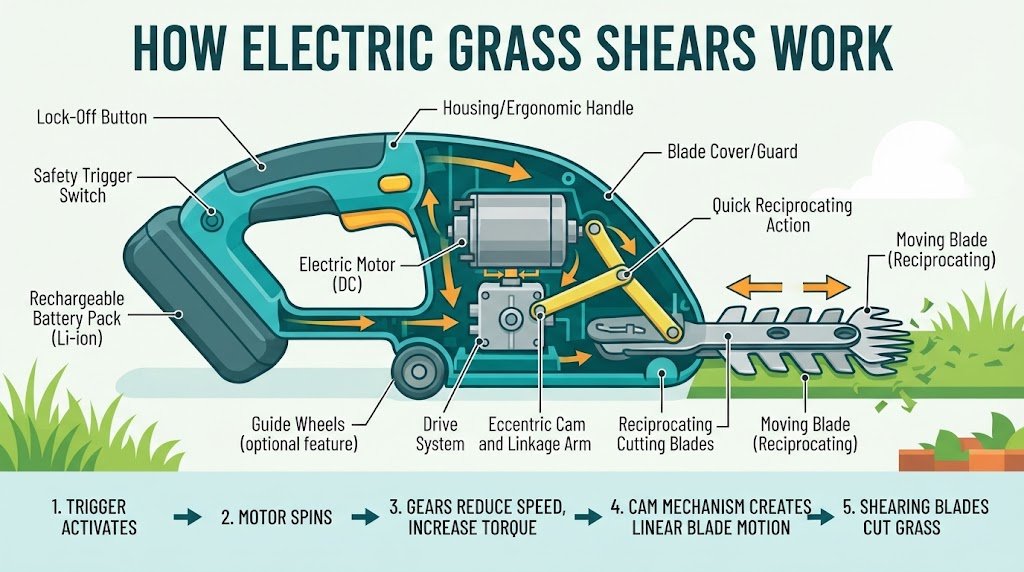
Motor and Cutting Blades
The motor supplies the power needed to move the cutting blades. As the blades move, they cut grass caught between their edges. Some models use narrow blades for grass, while other attachments are designed for light hedge trimming.
Battery and Power Supply
Many cordless grass shears operate using a rechargeable battery. The battery supplies energy to the motor, allowing users to work without a power cable. Operating time depends on battery capacity, grass thickness, and the condition of the tool. Corded models receive electricity through a connected power supply.
Trimming Grass Safely
For effective lawn edge trimming, move the tool steadily along the area being cut. Avoid forcing the blades through thick vegetation, as this may reduce cutting performance. Keep hands away from moving parts and follow the manufacturer’s safety instructions.
Regular garden tool maintenance, including cleaning grass residue and checking the blades, helps keep the cutting mechanism working properly. Always switch off the device and disconnect its power source before cleaning or inspecting it.
Different Types of Electric Grass Shears
Powered grass-trimming tools come in different designs to suit various garden tasks. Their main differences include power source, blade design, size, and intended use.
Battery-Powered Models
These tools use rechargeable batteries and allow movement without a power cable. Their battery life and charging time depend on the model and battery capacity.
Corded Electric Models
Corded tools receive electricity through a cable. They can operate continuously while connected to a suitable power supply, but the cable limits movement.
Compact Handheld Models
Lightweight designs are useful for grass trimming in tight spaces, including small lawns and narrow borders.
Interchangeable-Blade Models
Some devices accept different attachments for grass trimming and light hedge shaping. Always use the attachment specified by the manufacturer.
Telescopic-Handle Models
These tools have an extended or adjustable handle that can reduce bending during lawn edge trimming.
Other Design Variations
- Rotating-head models: Allow angle adjustments for certain trimming tasks.
- Narrow-blade models: Reach small spaces around garden features.
- Wide-blade models: Cover a broader cutting area per pass.
- Ergonomic-grip models: Provide a more comfortable hand position.
- Lightweight cordless models: Suit brief, light-duty tasks.
- High-capacity battery models: May offer longer operating time.
- Dual-function models: Combine grass trimming with compatible shrub-trimming attachments.
- Safety-lock models: Include controls designed to help prevent accidental activation.
- Adjustable-handle models: Offer different working positions.
- Professional-grade models: Are designed for demanding use within their stated operating limits.
Common Uses of Electric Grass Shears in Gardens
Powered grass-cutting tools help maintain neat lawns and tidy garden edges. Their compact design makes them useful for light trimming tasks in areas where larger equipment may be difficult to handle.
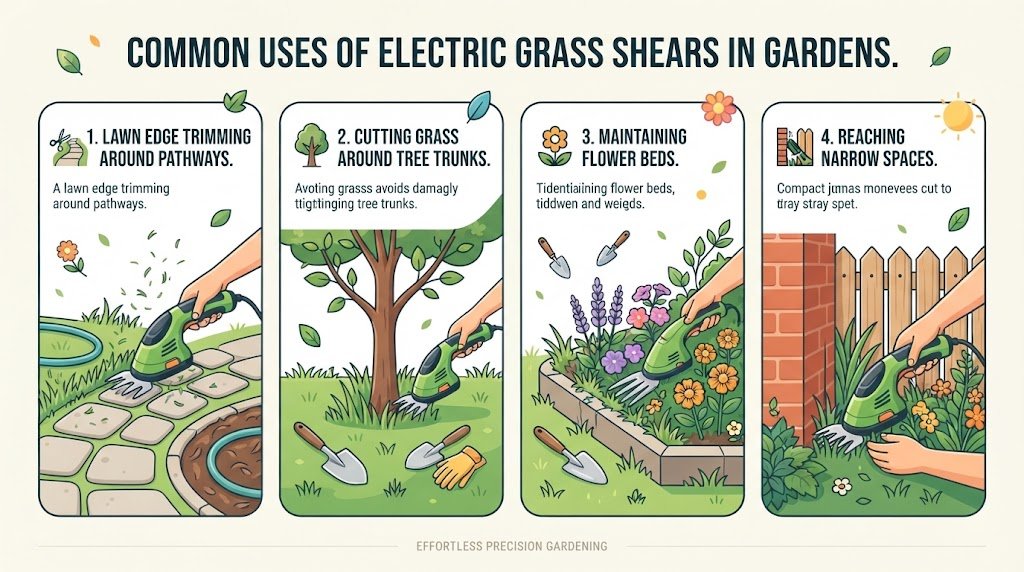
Trimming Lawn Edges
These tools help tidy grass along paths, patios, and driveways. Careful lawn edge trimming creates a cleaner boundary between grass and hard surfaces.
Cutting Grass Around Trees
Grass around tree trunks can be difficult to reach with a lawn mower. Compact shears can help trim these areas while allowing users to work carefully around the bark.
Maintaining Flower Beds
Electric lawn shears can trim grass near flower beds and garden borders. Keep the blades away from flowers, stems, and other delicate plants to prevent accidental damage.
Reaching Narrow Spaces
Small cutting tools are useful for grass trimming in tight spaces, such as corners, narrow borders, and areas around garden features.
Finishing Lawn Maintenance
After mowing, these tools can help tidy small patches of uneven grass. Suitable lawn maintenance equipment makes it easier to finish areas that a mower cannot reach.
For best results, choose the correct blade attachment, remove stones and debris before trimming, and follow the manufacturer’s safety instructions. These tools are intended mainly for light finishing work rather than cutting large areas of tall grass.
Benefits and Limitations of Electric Grass Shears
Powered grass-cutting tools can make small garden tasks easier, but their suitability depends on the type of work and the tool’s design.
Benefits of Electric Grass Shears
- Less manual effort: A motor moves the blades, reducing repetitive hand movement compared with manual shears.
- Precise trimming: Compact cutting blades help tidy grass along lawn borders and around garden features.
- Easy handling: Lightweight models can be convenient for short trimming sessions.
- Cordless operation: Battery-powered grass shears allow users to move freely without a power cable.
- Neat lawn edges: They support detailed lawn edge trimming where larger equipment may not fit.
Limitations of Electric Grass Shears
- Limited cutting capacity: Most models are designed for light trimming rather than tall, dense grass.
- Battery restrictions: Cordless tools need recharging, and operating time varies with battery capacity and workload.
- Regular maintenance: Blades require cleaning and inspection to maintain cutting performance.
- Safety concerns: Moving blades can cause injuries if handled carelessly.
- Unsuitable for large lawns: Trimming extensive areas may take longer than using a suitable lawn mower or trimmer.
Choosing the Right Tool
Consider your garden size, cutting needs, power source, and comfort before choosing a model. Check the manufacturer’s specifications and use the tool only for its intended purpose. Proper garden tool maintenance can help preserve performance and support safe operation.
Safety Tips for Using Electric Grass Shears
Safe handling is important when trimming grass with powered garden tools. Following basic precautions can help prevent injuries and protect nearby plants.
Inspect the Tool Before Use
Check the cutting blades, handle, battery, and safety controls for visible damage. Do not use a tool with loose parts or damaged components. Follow the manufacturer’s operating instructions.
Wear Suitable Protective Equipment
Wear safety glasses, sturdy closed-toe shoes, and suitable gardening gloves when recommended. Keep loose clothing, jewellery, and long hair away from moving parts.
Clear the Work Area
Remove stones, sticks, and other debris before starting. Keep children and pets away from the trimming area to reduce the risk of accidents.
Handle the Blades Carefully
Keep your hands away from moving blades. Hold the tool firmly and use controlled movements when performing lawn edge trimming. Never force the blades through thick grass or unsuitable materials.
Switch Off Before Cleaning
Turn off the device and remove its battery or disconnect the power supply before cleaning, inspecting, or changing attachments. Wait until all moving parts stop completely.
Store the Tool Properly
After use, clean away grass residue and store the tool in a dry, secure place. Proper garden tool maintenance helps keep the equipment in good condition.
Always follow the manufacturer’s safety instructions, including guidance on charging, blade replacement, and protective equipment.
How to Clean and Maintain Electric Grass Shears
Regular cleaning and proper care help keep garden cutting tools in good working condition. Grass residue, moisture, and dirt can affect blade movement and cutting performance if left on the tool.
Clean the Blades After Use
Switch off the tool and remove the battery or disconnect the power supply. Use a suitable brush or cloth to remove grass clippings and dirt from the cutting blades. Avoid touching sharp edges directly.
Check and Lubricate Moving Parts
Inspect the blades for damage, corrosion, or looseness. Apply lubricant only as recommended by the manufacturer to support smooth blade movement. Replace damaged parts when necessary.
Care for the Battery
For battery-powered grass shears, follow the recommended charging instructions. Keep the battery dry and store it under the conditions specified in the manual. Do not use a damaged battery.
Store the Tool Correctly
Dry the tool before storage and keep it in a clean, secure location away from moisture. Use a blade cover when provided to protect the cutting edges.
Inspect the Tool Regularly
Check handles, safety switches, attachments, and blade fasteners before use. Proper garden tool maintenance can help identify problems early and support reliable operation.
Always follow the manufacturer’s cleaning instructions. Disconnect the power source before maintenance, and never clean or adjust the blades while they are moving.
Suggestions and Recommendations for Users
Choosing the right garden cutting tool depends on your lawn size, trimming needs, and preferred power source. Consider these practical recommendations to get better results and maintain safe working habits.
Choose the Right Tool for Your Garden
For small lawns and narrow borders, compact electric lawn shears can help with detailed trimming. For larger areas or tall grass, a suitable grass trimmer or lawn mower may be more effective.
Check the Blades and Battery
Before use, inspect the grass cutting blades for damage and make sure the battery is sufficiently charged. Choose a model with a comfortable grip and suitable operating time for your garden tasks.
Use Controlled Trimming Techniques
Move the tool steadily when performing lawn edge trimming. Avoid forcing the blades through thick grass, and keep them away from tree bark, flower stems, and other delicate surfaces.
Follow Safety and Maintenance Guidelines
Wear suitable protective equipment and keep children and pets away from the work area. Regular garden tool maintenance, including cleaning and checking the blades, helps keep the tool in good condition.
Always read the manufacturer’s instructions before operating the equipment, changing attachments, or charging the battery. Use the tool only for its intended purpose.
Conclusion
Electric grass-cutting tools can make detailed lawn maintenance easier when used for suitable tasks. Understanding their features, limitations, and safety requirements helps users achieve tidy results while protecting nearby plants. Regular cleaning, proper storage, and careful blade inspection can also support reliable performance. Choose a tool that suits your garden, follow the manufacturer’s instructions, and use it responsibly.
Frequently Asked Questions
Q1. What are electric grass shears used for?
Electric Grass Shears are used to trim grass around lawn edges, flower beds, pathways, and other small areas that larger tools may not reach easily.
Q2. Are electric grass shears suitable for small gardens?
Yes. Compact models are useful for maintaining small lawns, trimming narrow borders, and tidying grass around garden features.
Q3. What is the difference between manual and electric grass shears?
Manual shears require hand pressure to cut grass, while electric models use a motor to move the blades and reduce repetitive hand movement.
Q4. How do you maintain electric grass shears?
Remove the power source before cleaning, clear grass residue from the blades, inspect the tool for damage, and store it in a dry place according to the manufacturer’s instructions.
Q5. Are electric grass shears safe to use?
They can be used safely when the manufacturer’s instructions are followed. Wear suitable protective equipment, keep hands away from moving blades, and switch off the tool before cleaning or adjusting it.