
Introduction
The best time to prune roses depends on the rose variety, growing conditions, and local weather. Pruning during the right season helps remove dead branches, maintain plant shape, and encourage healthy flowers. However, cutting too early or too late can affect new growth and flowering. This guide explains suitable pruning seasons, weather conditions, and common mistakes to help you care for your rose bushes.

Table of Contents
Understanding Rose Pruning and Its Benefits
Rose pruning is an important part of maintaining healthy and attractive rose bushes. It involves removing dead, damaged, weak, or unwanted stems to improve the plant’s condition and encourage better growth. Regular pruning also helps roses maintain their shape and produce healthy flowers. For more gardening advice and useful cutting-tool information, explore our Garden Cutting Tools category on cutterzone.
Why Is Rose Pruning Important?
Proper pruning improves air circulation between branches, allowing air to move more freely through the plant. This can help reduce moisture buildup and the risk of certain fungal diseases.
Removing dead or damaged branches also allows the plant to direct more energy toward healthy stems. It encourages healthy rose growth and helps maintain a balanced structure.
Main Benefits of Pruning Rose Bushes
- Encourages new growth: Removing weak stems creates space for stronger shoots to develop.
- Improves flowering: Proper pruning helps many rose varieties produce healthy flowering stems.
- Maintains plant shape: Trimming unwanted branches keeps rose bushes neat and manageable.
- Removes unhealthy stems: Cutting away damaged or diseased growth helps prevent problems from spreading.
- Improves sunlight exposure: Opening crowded branches allows more sunlight to reach the inner parts of the plant.
How Pruning Supports Healthy Roses
Using clean, sharp pruning shears helps make smooth cuts and reduces unnecessary stem damage. Removing crossing branches and overcrowded growth also improves the plant’s structure.
The amount of trimming depends on the rose variety, its age, and growing conditions. Understanding these differences helps gardeners maintain strong plants without removing too much healthy growth.
When Is the Best Time to Prune Roses?
Choosing the right time to trim rose bushes depends on the rose variety, local climate, and flowering habits. Pruning at the correct time helps protect healthy stems and supports better flowering. Most repeat-flowering roses benefit from their main pruning in late winter or early spring, when the plants begin coming out of dormancy.
Spring Pruning
Pruning roses in spring is common for many modern rose varieties. Late winter or early spring is generally suitable when severe frost has passed and new buds begin to swell. Remove dead or damaged branches, weak stems, and overcrowded growth to improve the plant’s structure.
Summer Pruning
Summer trimming is mainly used to remove faded flowers and maintain plant appearance. Deadheading roses encourages many repeat-flowering varieties to produce another round of blooms. Cut faded flower stems back to a suitable leaf or healthy outward-facing bud.
Autumn and Winter Pruning
Avoid heavy pruning in autumn because fresh shoots may develop before cold weather arrives. In winter, remove broken or diseased stems when necessary. Save major trimming for the appropriate spring period in colder climates.
Does Rose Variety Affect Pruning Time?
Yes. Different varieties require different schedules:
- Hybrid tea roses: Usually receive their main pruning in early spring.
- Floribunda roses: Benefit from spring pruning to encourage balanced flowering.
- Climbing roses: Many are pruned after flowering, depending on whether they bloom once or repeatedly.
- Shrub roses: Often need light pruning to remove damaged or overcrowded stems.
How Climate Changes the Pruning Schedule
In colder regions, wait until the risk of severe frost has passed. In warmer climates, roses may begin growing earlier, so pruning can take place sooner. Always observe local weather and the plant’s growth rather than following a fixed calendar date.
How to Prune Roses Step by Step
Proper trimming helps rose plants maintain a healthy structure and produce better flowering growth. Before cutting, examine the plant carefully and identify which stems need attention. Follow these steps to avoid removing healthy growth unnecessarily.
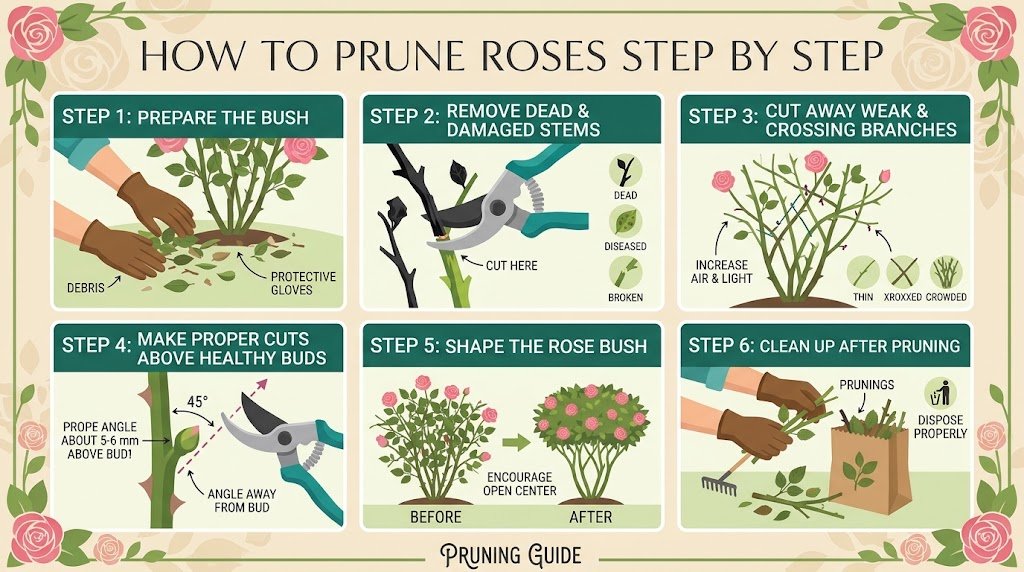
Step 1: Prepare the Rose Bush
Remove fallen leaves and loose debris around the base of the plant. Inspect the branches to identify weak, broken, diseased, or overcrowded stems. Wear protective gloves because rose branches often have sharp thorns.
Step 2: Remove Dead and Damaged Stems
Use sharp pruning shears to cut away dead, blackened, broken, or diseased branches. Continue cutting until you reach healthy green tissue. Removing damaged growth helps maintain the plant’s condition and reduces potential disease problems.
Step 3: Cut Away Weak and Crossing Branches
Look for thin, poorly developed stems and branches rubbing against each other. Remove selected unwanted growth to improve air circulation and allow more sunlight to reach the centre of the plant.
Step 4: Make Proper Cuts Above Healthy Buds
Identify an outward-facing bud and position your cutting tool approximately 5–6 mm above it. Make a clean, angled cut, sloping away from the bud. This encourages new shoots to grow outward rather than into the centre of the bush.
Step 5: Shape the Rose Bush
Remove excessive growth while maintaining a balanced structure. The amount of trimming depends on the rose variety. Some modern bush roses tolerate harder pruning, while many shrub and climbing roses require lighter, more selective cuts.
Step 6: Clean Up After Pruning
Collect removed stems, fallen leaves, and plant debris from around the rose. Dispose of diseased material appropriately rather than leaving it near healthy plants. Clean and dry your tools before storing them.
Important: Avoid cutting too much healthy growth at once. Proper trimming should improve the plant’s structure while leaving enough strong stems to support future flowering.
How Much Should You Cut Back Rose Bushes?
The amount of growth to remove depends on the rose variety, plant age, and overall condition. Cutting too little may leave overcrowded branches, while excessive trimming can reduce flowering or weaken the plant. The goal is to maintain a balanced shape without removing too many healthy stems.
Recommended Pruning Amount for Different Rose Types
- Hybrid tea roses: During the main spring pruning, many established plants can be reduced by about one-third to one-half, depending on their condition and growing climate.
- Floribunda roses: Remove approximately one-third of the previous season’s growth to encourage strong stems and balanced flowering.
- Climbing roses: Avoid cutting back the main framework unnecessarily. Remove dead growth and shorten selected flowering side shoots according to the variety.
- Shrub roses: Usually require lighter trimming. Remove damaged branches and shorten unwanted growth to maintain their natural shape.
Signs That a Rose Bush Needs More Trimming
Look for these signs before deciding how much to remove:
- Dead or damaged branches that no longer produce healthy growth.
- Crossing stems that rub against each other.
- Weak shoots that cannot support strong flowering.
- Overcrowded growth that restricts air circulation.
- Old or unproductive stems that affect the plant’s structure.
What Happens If You Cut Back Too Much?
Heavy pruning at the wrong time can reduce flowering, expose the plant to stress, and encourage tender shoots that may be damaged by frost. Avoid removing large amounts of healthy growth without considering the rose variety.
Practical tip: Make gradual cuts and step back occasionally to check the plant’s shape. Healthy rose stems should remain strong enough to support leaves and flowers throughout the growing season.
Common Rose Pruning Mistakes to Avoid
Incorrect trimming can affect flowering, plant shape, and overall rose health. Even small mistakes, such as using blunt tools or removing healthy stems unnecessarily, can create problems during the growing season. Understanding these common errors helps gardeners maintain stronger and healthier plants.
Pruning at the Wrong Time
Cutting roses during severe frost or at an unsuitable stage of growth can damage new shoots. The best time to prune roses depends on the variety and local climate. Many repeat-flowering bush roses benefit from their main pruning in late winter or early spring.
Using Blunt or Dirty Tools
Dull blades can crush rose stems instead of making clean cuts. Dirty tools may also spread plant diseases between bushes. Always use sharp, clean pruning shears and disinfect them after cutting diseased branches.
Cutting Too Much Healthy Growth
Removing too many branches can weaken the plant and reduce potential flowering. Avoid excessive trimming, especially when dealing with young or newly established rose bushes. Remove unwanted growth while preserving healthy, strong stems.
Making Incorrect Cutting Angles
Flat or poorly positioned cuts may allow water to collect near a bud. Make a clean, slightly angled cut approximately 5–6 mm above a healthy, outward-facing bud.
Ignoring Crossing and Diseased Branches
Branches that rub against each other can develop damaged bark. Diseased stems may also affect nearby growth. Remove affected branches carefully to improve air circulation and maintain a healthy plant structure.
Forgetting to Remove Faded Flowers
Leaving faded blooms on many repeat-flowering varieties can reduce their appearance and may slow further flowering. Deadheading roses helps keep plants tidy and encourages additional blooms in suitable varieties.
Applying the Same Pruning Method to Every Rose
Climbing, shrub, hybrid tea, and floribunda roses have different growth habits. Using one pruning method for every variety can remove important flowering stems. Always identify the rose type before deciding how much growth to cut.
Gardening tip: Observe your rose bush before making any cuts. Understanding its variety, flowering pattern, and condition helps prevent unnecessary pruning damage.
How to Care for Roses After Pruning
After trimming, rose bushes need suitable care to recover and produce healthy new growth. Proper watering, soil maintenance, and regular inspection help plants adjust after removing unwanted branches. The care routine may vary depending on the weather, soil condition, and rose variety.
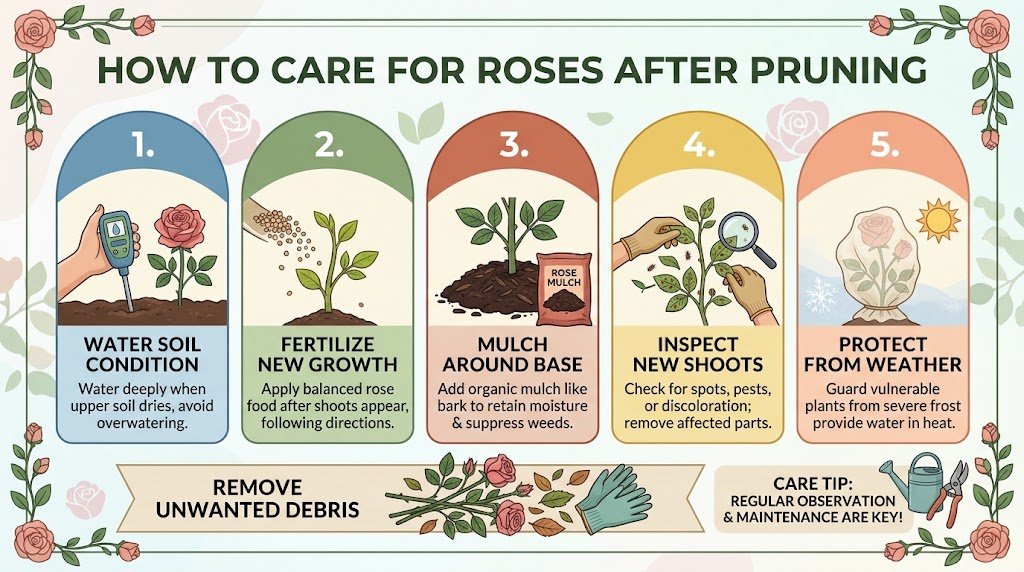
Water the Plant According to Soil Conditions
Check the soil moisture after pruning. Water deeply when the upper soil begins to dry, allowing moisture to reach the roots. Avoid excessive watering because waterlogged soil can damage roots and encourage fungal problems.
Apply a Suitable Fertilizer
Once new growth begins, apply a balanced rose fertilizer according to the product instructions. Nutrients such as nitrogen, phosphorus, and potassium support leaf development, root health, and flowering. Avoid applying excessive fertilizer, as it can encourage weak growth.
Add Mulch Around the Base
Spread a layer of organic mulch, such as composted bark or leaf mould, around the plant. Keep mulch away from the main stem to prevent excessive moisture buildup. Mulching helps retain soil moisture, regulate temperature, and reduce weed growth.
Inspect New Shoots and Leaves
Check developing rose stems regularly for unusual spots, discoloration, pests, or damaged leaves. Remove affected growth when necessary and maintain good air circulation around the plant to reduce disease problems.
Protect Roses From Weather Changes
Freshly pruned plants may be more exposed to changing weather conditions. In colder regions, protect vulnerable plants from severe frost. During hot weather, provide appropriate watering and avoid unnecessary disturbance to the roots.
Remove Unwanted Garden Debris
Collect cut branches, fallen leaves, and other debris around the bush. Dispose of diseased material properly to reduce potential sources of infection. Keep gardening equipment clean and dry after use.
Care tip: Regular observation is more useful than unnecessary treatment. Check your rose bushes throughout the growing season and respond to their actual watering, feeding, and maintenance needs.
Tips for Encouraging Healthy Rose Growth After Pruning
Healthy rose growth depends on suitable sunlight, soil conditions, watering, and regular maintenance. After removing unwanted branches, gardeners should provide the right growing conditions to help new shoots develop and support future flowering.
Provide Enough Sunlight
Most garden roses grow best with at least six hours of direct sunlight daily. Choose a suitable planting location where sunlight reaches the leaves and branches. Adequate light supports strong stems and better flower development.
Maintain Healthy Soil
Roses prefer fertile, well-drained soil with good organic matter. Adding mature compost can improve soil structure and provide nutrients. Avoid planting roses in areas where water collects around the roots.
Water Consistently
Water deeply around the base of the plant rather than frequently wetting the leaves. Adjust watering according to rainfall, temperature, and soil moisture. Consistent moisture supports healthy rose growth without creating waterlogged conditions.
Feed Roses at the Right Time
Apply a balanced rose fertilizer when active growth begins, following the manufacturer’s instructions. Proper feeding supports new shoots, foliage development, and flowering. Avoid excessive nitrogen because it can produce too many leaves at the expense of blooms.
Encourage Strong Branch Development
Allow healthy rose stems to develop without unnecessary cutting. Remove weak shoots and overcrowded branches when needed. Maintaining suitable spacing improves air circulation and allows sunlight to reach more parts of the plant.
Monitor Pests and Plant Diseases
Inspect leaves, buds, and stems regularly for aphids, black spot, powdery mildew, and other common rose problems. Remove affected plant material when appropriate and use suitable treatments only when necessary.
Apply Organic Mulch
A layer of composted bark or leaf mould helps retain moisture, control weeds, and regulate soil temperature. Keep the mulch slightly away from the main stem to prevent excessive moisture around the plant’s base.
Gardening tip: Keep a simple record of flowering periods, watering, and plant growth. Observing seasonal changes helps you understand what your roses need for healthy development.
Conclusion
Learning how to prune roses helps gardeners maintain healthy plants, improve their shape, and encourage better flowering. Choosing the right pruning time, using clean tools, and removing dead or damaged branches are important parts of proper rose care. Different rose varieties may require different pruning methods, so always consider the plant’s growth habits and local climate. With regular maintenance and suitable care, rose bushes can remain healthy and produce beautiful flowers throughout the growing season.
Top 5 Frequently Asked Questions (FAQs)
Q1. When is the best time to prune roses?
Late winter or early spring is generally best for pruning many repeat-flowering roses, after severe frost has passed.
Q2. How much should you cut back rose bushes?
The amount depends on the variety. Many established bush roses can be reduced by one-third to one-half during their main pruning.
Q3. Can I prune roses during summer?
Yes. Light summer pruning and removing faded flowers help maintain plant appearance and encourage further blooms in repeat-flowering varieties.
Q4. What tools are best for pruning roses?
Sharp bypass pruning shears are ideal for small stems. Use loppers or a pruning saw for thicker, woody branches.
Q5. Should I remove dead branches from rose bushes?
Yes. Remove dead, broken, and diseased branches to maintain plant health and improve air circulation.