
Introduction
Pruning roses in summer helps maintain healthy rose bushes, remove damaged growth, and encourage continued flowering. However, trimming roses during hot weather requires proper timing and suitable techniques to avoid unnecessary plant stress. Different rose varieties also have different pruning needs. This guide explains when to trim roses, which tools to use, how to prune different varieties, common mistakes to avoid, and how to care for rose bushes afterwards.

Table of Contents
When Is the Right Time to Prune Roses in Summer?
The best time to trim roses during summer is usually after their first flush of flowers has faded. This allows the plant to prepare for another flowering cycle. For many repeat-flowering varieties, light trimming in early or midsummer helps maintain a tidy shape and encourages fresh growth.
Choose a cool morning when the weather is dry. Avoid cutting rose bushes during extreme heat because hot conditions can increase stress and moisture loss. In particularly warm regions, wait until temperatures become more moderate.
Deadheading rose flowers is useful when blooms begin to fade. Remove the spent flowers just above a healthy leaf or outward-facing bud. Also inspect the plant for dead and damaged stems and remove affected growth with clean, sharp pruning shears.
The timing depends on the rose variety. Knock Out roses and other repeat-flowering roses can benefit from light summer trimming after flowering. However, newly planted roses and recently stressed plants may need less pruning.
Avoid hard pruning roses in summer, especially during heatwaves. Heavy cutting can remove healthy leaves and expose the plant to additional stress. Proper timing and moderate cuts support healthy growth throughout the flowering season.
Essential Tools for Safe and Effective Rose Pruning
Using the correct equipment makes rose pruning easier, safer, and more precise. The right tools help remove unwanted growth without crushing healthy stems or damaging the plant. Before starting, choose equipment that matches the thickness of the branches and the condition of the rose bush.
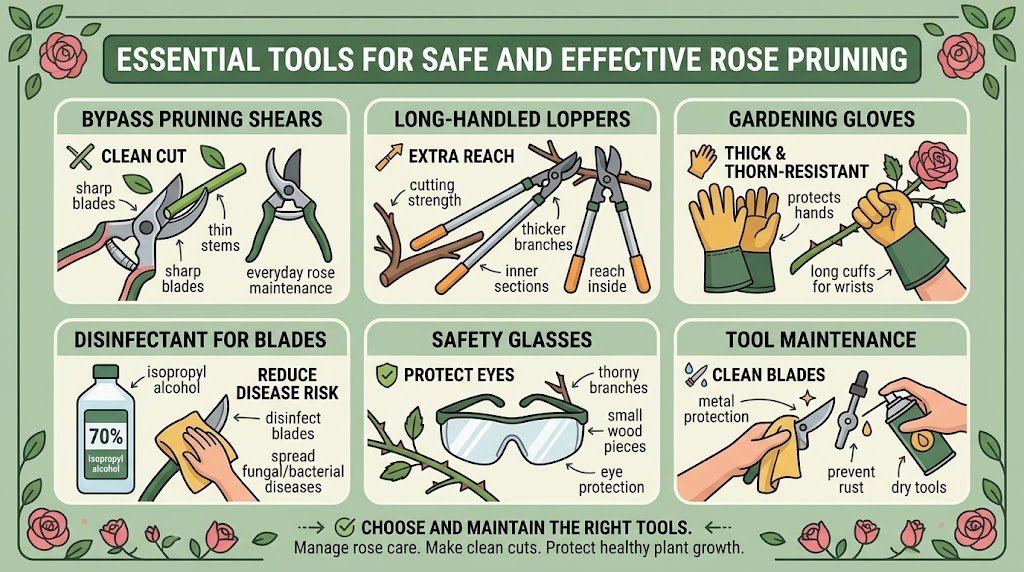
Bypass Pruning Shears
Bypass pruning shears are the most useful tool for everyday rose maintenance. They have two curved blades that pass each other to make a clean cut. They work well for removing thin stems, faded flowers, and small branches.
Choose sharp shears with comfortable handles. Dull blades can crush stems instead of cutting them cleanly, making it harder for the plant to recover.
Long-Handled Loppers
Loppers have longer handles that provide extra reach and cutting strength. They are useful for removing thicker branches that ordinary pruning shears cannot handle. They also help gardeners reach the inner sections of larger rose bushes.
Avoid forcing loppers onto branches that are too thick, as this can damage the blades.
Gardening Gloves
Roses have sharp thorns that can scratch or puncture skin. Wear thick, thorn-resistant gardening gloves to protect your hands while handling branches. Gloves with long cuffs also protect your wrists and lower arms.
Disinfectant for Pruning Blades
Clean tools help reduce the risk of spreading fungal and bacterial diseases between plants. Use 70% isopropyl alcohol to disinfect cutting blades, especially after removing diseased stems. Allow the blades to dry before using them again.
Safety Glasses and Tool Maintenance
Safety glasses protect your eyes from thorny branches and small pieces of wood. After pruning, remove plant debris, clean the blades, dry the tools, and apply a light coating of suitable oil to metal parts to help prevent rust.
Choosing and maintaining the right pruning tools makes rose care more manageable and helps gardeners make cleaner cuts while protecting healthy plant growth.
How to Prune Rose Bushes During Hot Weather
Pruning roses during hot weather requires a careful approach because high temperatures can increase moisture loss and put extra stress on plants. Instead of removing large amounts of growth, focus on light trimming, removing unhealthy branches, and maintaining good airflow. Use sharp garden pruning shears to make clean cuts without crushing healthy stems. These steps help protect rose bushes while maintaining their health and appearance.
Choose a Cool Time of Day
Start pruning early in the morning when temperatures are lower. Avoid working during midday or intense afternoon sunlight. Before cutting, check that the plant is not severely wilted or suffering from drought stress.
If a heatwave is expected, postpone unnecessary trimming until conditions improve.
Remove Dead and Unhealthy Stems
Inspect the entire bush and identify dead and damaged stems, broken branches, and diseased growth. Cut these sections back to healthy tissue using clean, sharp bypass pruning shears.
Make each cut slightly above a healthy outward-facing bud. This helps direct new growth away from the centre of the plant and improves airflow.
Trim Faded Flowers Carefully
Removing spent blooms is called deadheading. For many repeat-flowering varieties, cut faded flower stems back to a healthy leaf or suitable bud. This prevents the plant from spending energy developing unwanted rose hips and may support another flowering cycle.
However, some rose varieties produce attractive hips, so removing every faded flower is not always necessary.
Avoid Heavy Cutting During Extreme Heat
Light pruning of roses is generally safer than removing large sections of healthy growth during hot weather. Keep enough leaves on the bush because they produce energy through photosynthesis.
Avoid hard pruning roses in summer unless there is a specific reason, such as removing severely damaged or diseased branches. Major reshaping is usually better scheduled for the appropriate dormant or seasonal pruning period.
Water and Monitor the Bush After Pruning
Check soil moisture after trimming. Water deeply at the base when the upper soil begins to dry, rather than frequently wetting the foliage. A layer of organic mulch can help retain moisture and regulate soil temperature.
Monitor the plant for wilting, leaf scorch, or unusual discoloration over the following days. Adjust watering according to rainfall, soil conditions, and local temperatures.
Summer Pruning Techniques for Different Rose Varieties
Not all roses need the same type of summer trimming. Their growth habits, flowering patterns, and branch structures determine how much pruning is appropriate. Understanding these differences helps gardeners maintain healthy plants without removing stems that may produce future flowers.
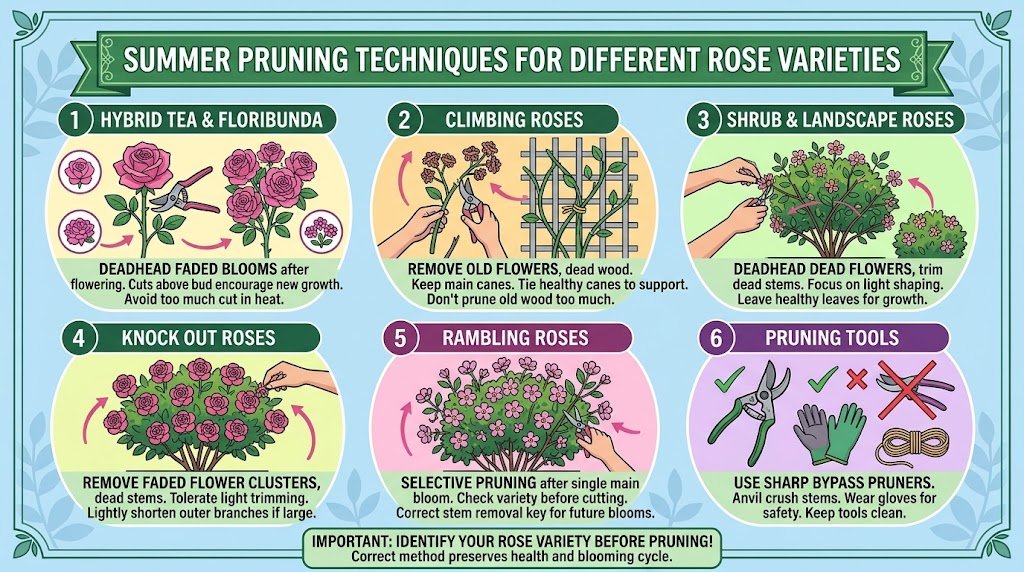
Hybrid Tea and Floribunda Roses
Hybrid tea roses usually produce large flowers on individual stems, while floribunda roses develop clusters of smaller blooms. For both types, remove faded flowers after flowering to encourage further blooming.
Use sharp bypass pruning shears to cut just above a healthy outward-facing leaf or bud. Remove weak, damaged, and crossing branches when necessary, but avoid removing too much healthy growth during extreme heat.
Climbing Roses
Climbing roses need a different approach because their long canes form the plant’s main structure. During summer, remove faded flower clusters and dead or damaged growth.
Avoid cutting back the main climbing canes unnecessarily. Many climbing roses flower on older wood, so excessive trimming can reduce future blooms. Tie healthy canes to their support to keep growth organised.
Shrub and Landscape Roses
Shrub roses generally require less summer pruning than hybrid tea varieties. Remove dead flowers, damaged stems, and branches that grow into the centre of the bush.
For repeat-flowering varieties, pruning rose bushes in summer should focus on light shaping rather than major size reduction. Leave healthy leaves and branches intact to support continued growth.
Knock Out Roses
Knock Out roses are popular landscape roses known for repeated flowering. They can tolerate light summer trimming when established and growing actively.
For pruning Knock Out roses in summer, remove faded flower clusters and damaged stems. If the bush becomes too large, lightly shorten some outer branches without cutting the entire plant back heavily.
Rambling Roses
Most rambling roses produce flowers on older growth, often during one main flowering period. After flowering, some varieties benefit from selective removal of old flowered stems, while others need minimal trimming.
Check the variety before cutting healthy canes. Removing the wrong stems can reduce flowering in the following season.
Important: Always identify your rose variety before applying a pruning method. Correct summer pruning techniques preserve healthy growth and help maintain the plant’s natural flowering cycle.
How to Prune Knock Out Roses in Summer
Knock Out roses are repeat-flowering shrubs that can produce blooms from spring until autumn under suitable growing conditions. They generally need only light maintenance during summer rather than severe cutting. Proper trimming helps remove faded flowers, control unwanted growth, and maintain an attractive shape.
Remove Faded Flowers and Damaged Growth
Start by examining the bush for faded blooms, broken branches, and unhealthy stems. Use clean, sharp bypass pruning shears to remove damaged sections.
For deadheading roses in summer, cut faded flower clusters just above a healthy set of leaves. This keeps the plant tidy and may encourage continued flowering, although established Knock Out roses often bloom well without regular deadheading.
Reduce Excessive Branch Growth
If your bush becomes too wide or develops long, uneven branches, shorten selected stems to maintain its shape. Make cuts just above outward-facing buds to encourage balanced growth.
Pruning Knock Out roses in summer should remain moderate. Avoid removing large amounts of healthy foliage because leaves help the plant produce energy and protect it from heat stress.
Maintain Airflow and Plant Health
Remove crossing branches and weak growth that crowd the centre of the bush. Better airflow helps foliage dry more quickly after rain or watering.
After trimming, collect fallen leaves and cut branches. Disinfect your pruning blades after removing diseased material to reduce the risk of spreading infection.
Care for Knock Out Roses After Pruning
Water the soil deeply when it begins to dry, particularly during hot weather. Apply a layer of organic mulch around the base, keeping it away from the main stems.
Avoid heavy fertilisation immediately after severe heat stress. Monitor new growth and adjust watering according to weather conditions.
Tip: Light Knock Out roses pruning in summer is usually sufficient for established bushes. Save major size reduction for a more suitable pruning period rather than cutting heavily during extreme temperatures.
When Not to Prune Roses in Summer
Heavy trimming is not suitable for every summer condition. Removing large sections of healthy branches and leaves can weaken rose bushes, especially when temperatures are high. Understanding when to avoid hard pruning roses in summer helps protect plants and maintain their ability to produce flowers.
During Heatwaves and Extreme Temperatures
Avoid major cutting during heatwaves or prolonged hot weather. Heavy pruning removes protective foliage and exposes inner branches to direct sunlight. This can increase moisture loss and cause sunburn on previously shaded stems.
Wait until temperatures become more moderate before carrying out unnecessary shaping.
When Rose Bushes Are Drought-Stressed
Do not heavily trim roses that have wilted leaves, dry soil, or signs of water stress. First, check soil moisture and provide appropriate watering. Allow the plant to recover before considering additional cutting.
Rose bush maintenance during dry weather should focus on protecting healthy foliage and monitoring plant condition.
During the Main Flowering Period
Removing too many healthy flowering stems can reduce the number of blooms available during the season. Instead, use light pruning of roses to remove faded flowers and damaged branches while preserving productive growth.
Newly Planted or Weak Rose Bushes
Recently planted roses need time to establish their roots. Weak plants may also struggle to recover from major cuts. Remove only dead, broken, or diseased growth unless a specific problem requires further action.
When Roses Produce Flowers on Older Wood
Some climbing and rambling roses flower on stems produced in previous seasons. Cutting these canes back heavily during summer may remove next season’s flower-producing growth.
Identify the rose variety before removing established branches. Pruning repeat-flowering roses and once-flowering varieties requires different approaches.
Practical tip: During hot weather, prioritise removing unhealthy growth and faded flowers rather than reshaping the entire bush. Reserve major pruning for the appropriate season for your rose variety.
Common Summer Rose Pruning Mistakes to Avoid
Incorrect pruning can weaken rose bushes, reduce flowering, and make plants more vulnerable to environmental stress. Understanding common mistakes helps gardeners maintain healthy roses throughout the warmer months.
Removing Too Much Healthy Growth
One common mistake is cutting back large sections of healthy branches during hot weather. Excessive trimming reduces the leaves available for photosynthesis and exposes shaded stems to direct sunlight.
Use light pruning of roses to remove unwanted growth while keeping enough healthy foliage on the plant.
Using Dull or Dirty Pruning Tools
Blunt blades can crush stems instead of making clean cuts. Dirty tools may also transfer disease between plants.
Use sharp pruning tools for roses and disinfect the blades after removing diseased branches. Clean equipment helps protect healthy stems.
Cutting in the Wrong Place
Making cuts too far above a bud can leave dead stem sections, while cutting too close may damage the growing point.
When removing a healthy stem, make a clean, slightly angled cut approximately 5–6 mm above an outward-facing bud.
Pruning During Extreme Heat
Heavy trimming during a heatwave can increase moisture loss and cause additional stress. Choose cooler morning hours for necessary maintenance and postpone major shaping until temperatures improve.
Removing Productive Climbing Rose Canes
Not all climbing roses flower on new growth. Some varieties produce blooms on older stems. Removing these canes unnecessarily can reduce future flowering.
Check the variety’s flowering habit before cutting established branches.
Ignoring Aftercare
Leaving cut branches and diseased leaves around the plant can create an untidy growing area. Failing to monitor soil moisture can also affect recovery.
After pruning rose bushes in summer, collect plant debris, check soil moisture, and apply suitable mulch to help retain water.
Practical advice: Make selective cuts based on the plant’s condition rather than following a fixed amount of trimming. Careful decisions help maintain healthy growth and flowering.
How to Care for Roses After Summer Pruning
Proper aftercare helps rose bushes recover from trimming and maintain healthy growth during warm weather. After removing unwanted branches and faded flowers, pay attention to watering, soil moisture, sunlight, and plant health. These simple steps can reduce stress and support continued flowering.
Water the Soil According to Its Moisture
Roses need consistent moisture, particularly during hot weather. Water deeply around the base of the plant when the upper soil begins to dry. Avoid frequent shallow watering because it may not reach the deeper roots.
Water early in the morning and direct water towards the soil rather than wetting the leaves. Adjust the watering frequency according to rainfall, soil type, and temperature.
Apply Organic Mulch Around the Base
A layer of organic mulch helps reduce water evaporation and keeps soil temperatures more stable. You can use composted bark, shredded leaves, or well-rotted organic material.
Spread approximately 5–8 cm of mulch around the root area, leaving a small gap around the main stems to prevent excessive moisture accumulation.
Check for Signs of Stress or Disease
After pruning roses in the summer, inspect the plant regularly for wilting, yellow leaves, black spots, and unusual stem discoloration. Remove diseased material with disinfected tools and avoid adding infected debris to ordinary compost.
Some temporary stress may occur during hot weather, but persistent wilting or spreading damage needs attention.
Provide Suitable Sunlight and Airflow
Most roses grow best with several hours of direct sunlight daily. However, newly exposed stems may be sensitive to intense afternoon heat. Where appropriate, temporary afternoon shade can help protect vulnerable plants.
Maintain enough space between branches to improve air circulation and allow foliage to dry after rain.
Resume Feeding Only When Appropriate
Avoid applying strong fertiliser to severely stressed or drought-affected roses. Once the plant is growing actively and conditions are suitable, use a rose fertiliser according to its label instructions.
Excessive fertiliser can encourage soft growth and increase plant stress during hot weather.
Regular watering, suitable mulching, and careful monitoring help maintain healthy rose bushes after summer trimming.
Conclusion
Successful summer rose care depends on careful trimming, suitable timing, and proper aftercare. Remove faded flowers, dead branches, and damaged growth while preserving healthy leaves and productive stems. Avoid heavy cutting during extreme heat, and adjust your approach according to the rose variety. With the right techniques, gardeners can maintain attractive, healthy rose bushes and support flowering throughout the growing season.
Top 5 FAQs
Q1. Is it okay to prune roses in summer?
Yes. Light summer pruning is generally suitable for removing faded flowers, dead branches, and damaged growth. Avoid heavy trimming during extreme heat.
Q2. When is the best time to prune roses in summer?
The best time is usually after the first flush of flowers fades. Choose a cool morning when temperatures are lower.
Q3. How much should you cut back rose bushes in summer?
Remove faded blooms, dead stems, and unwanted growth. Avoid cutting away large amounts of healthy foliage during hot weather.
Q4. Can you prune Knock Out roses during summer?
Yes. Established Knock Out roses can receive light summer trimming to remove faded flowers, damaged stems, and excessive growth.
Q5. Should you water roses after summer pruning?
Check the soil moisture and water deeply if the soil is becoming dry. Apply mulch to help retain moisture around the roots.