
Introduction
Parts of a chainsaw are the essential components that work together to deliver safe, powerful, and efficient cutting performance. Whether you use a chainsaw for tree cutting, firewood preparation, pruning, or landscaping, understanding each part helps you operate the tool correctly and maintain it for long-lasting performance. In this guide, you’ll learn the names, functions, and maintenance of both internal and external chainsaw components, making it easier to identify parts, troubleshoot problems, and keep your chainsaw in excellent working condition.
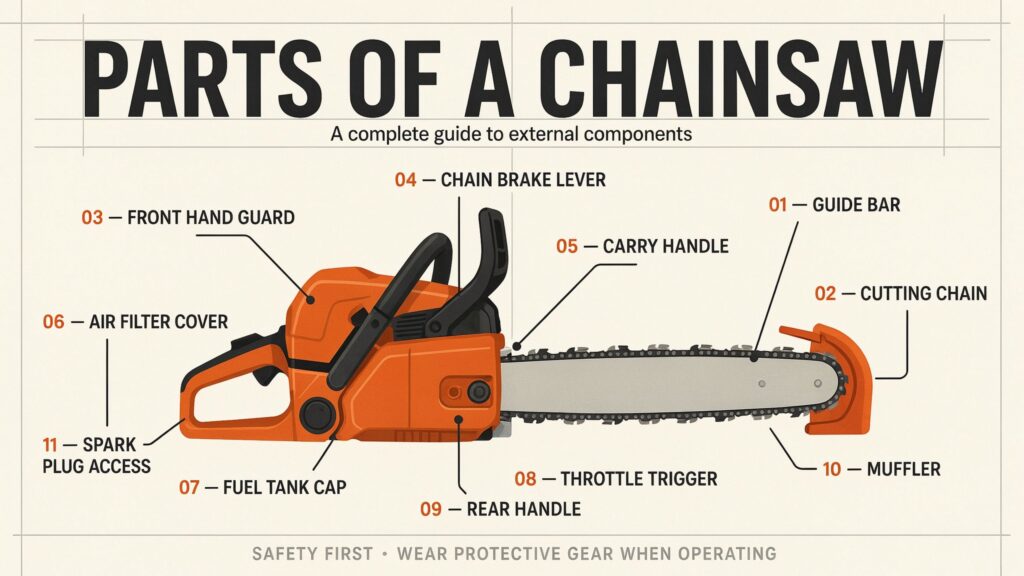
Table of Contents
2. Main Parts of a Chainsaw and Their Functions
Understanding the chainsaw parts names helps you operate, maintain, and repair your tool with confidence. Every component has a specific job, from generating engine power to driving the cutting chain and protecting the user. The following guide explains the most important chainsaw components and their functions in a simple and easy-to-understand way.
1. Guide Bar
The chainsaw guide bar is the long metal bar that supports and guides the chain during cutting. It keeps the chain aligned and allows smooth movement while making accurate cuts.
2. Chainsaw Chain
The chainsaw chain is the cutting component that rotates around the guide bar. Its sharp cutters remove wood quickly and efficiently.
3. Cutting Teeth
Cutting teeth are the sharp edges on the chain that slice through wood fibers. Keeping them sharp improves cutting speed and reduces engine strain.
4. Drive Links
Drive links fit into the guide bar groove and engage with the drive sprocket, allowing the chain to move smoothly around the bar.
5. Depth Gauges (Rakers)
Depth gauges control how deeply each cutting tooth enters the wood. Proper adjustment helps produce smooth and safe cuts.
6. Tie Straps
Tie straps connect different chain sections together and help maintain chain flexibility while rotating.
7. Rivets
Rivets hold the chain links together securely, allowing the chain to remain strong during heavy cutting.
8. Chain Brake
The chainsaw chain brake is an important safety feature that stops the chain almost instantly during kickback or emergency situations.
9. Chain Catcher
The chain catcher helps prevent a broken or derailed chain from striking the operator, improving overall safety.
10. Drive Sprocket
The chainsaw sprocket transfers engine power to the chain, allowing it to rotate around the guide bar.
11. Clutch
The chainsaw clutch connects the engine to the sprocket only when the engine reaches operating speed, preventing unwanted chain movement while idling.
12. Clutch Drum
The clutch drum works with the clutch to transmit power efficiently from the engine to the chain.
13. Engine
The chainsaw engine parts generate the power needed to drive the chain. Most chainsaws use either a gasoline engine or an electric motor.
14. Cylinder
The cylinder is where fuel combustion takes place, creating the force needed to move the piston.
15. Piston
The piston moves up and down inside the cylinder to produce engine power.
16. Crankshaft
The crankshaft converts the piston’s up-and-down motion into rotating motion that powers the chain.
17. Carburetor
The carburetor mixes air and fuel in the correct ratio before delivering it to the engine for combustion.
18. Spark Plug
The chainsaw spark plug ignites the air-fuel mixture, allowing the engine to start and operate efficiently.
19. Air Filter
The chainsaw air filter prevents dust, dirt, and debris from entering the engine, helping maintain performance and extending engine life.
20. Fuel Tank
The chainsaw fuel tank stores the gasoline or fuel mixture required to run the engine.
21. Fuel Filter
The fuel filter removes contaminants from the fuel before it reaches the carburetor.
22. Fuel Line
The fuel line carries fuel safely from the tank to the carburetor.
23. Primer Bulb
The primer bulb supplies fuel to the carburetor before starting, making cold starts easier.
24. Choke Lever
The choke lever restricts airflow during startup to help the engine start more easily in cold conditions.
25. Throttle Trigger
The chainsaw throttle trigger controls engine speed and determines how fast the chain rotates.
26. Throttle Lockout
The throttle lockout prevents accidental throttle activation and improves operator safety.
27. Stop Switch
The stop switch allows the operator to shut off the engine quickly when needed.
28. Starter Handle
The chainsaw starter handle is pulled to start the engine by turning the crankshaft manually.
29. Starter Rope
The starter rope connects the handle to the recoil starter mechanism.
30. Recoil Starter
The recoil starter rewinds the starter rope automatically after each pull.
31. Front Handle
The front handle provides a secure grip and better control while operating the chainsaw.
32. Rear Handle
The rear handle supports the main grip and houses the throttle trigger for comfortable operation.
33. Hand Guard
The front hand guard protects the operator’s hand and also activates the chain brake on many models.
34. Muffler
The muffler reduces engine noise and directs hot exhaust gases away from the operator.
35. Oil Pump
The oil pump delivers chain oil continuously to reduce friction and wear between the guide bar and chain.
36. Oil Reservoir
The chainsaw oil reservoir stores lubricating oil that keeps the guide bar and chain properly lubricated during operation.
37. Bar Oil Adjustment Screw
This screw allows adjustment of the amount of lubrication supplied to the guide bar and chain on compatible models.
38. Anti-Vibration System
The anti-vibration system reduces vibrations transmitted to the handles, making the chainsaw more comfortable to use for extended periods.
39. Chain Tensioner
The chain tensioner allows quick adjustment of chain tightness, helping maintain safe and efficient cutting performance.
40. Safety Features
Modern chainsaw safety features include the chain brake, throttle lockout, chain catcher, hand guard, and anti-vibration system. Together, these features reduce the risk of accidents and improve user protection during operation.
Learning these chainsaw components and understanding their functions makes maintenance easier, improves cutting efficiency, and helps extend the life of your chainsaw. Whether you are maintaining a homeowner model or exploring the parts of a chainsaw Stihl, knowing how each component works is essential for safe and reliable operation.
3. Parts of a Chainsaw Chain Explained
The parts of a chainsaw chain work together to deliver smooth, fast, and accurate cutting performance. Every link and cutting element has a specific purpose that helps the chain move efficiently around the chainsaw guide bar. Understanding these chainsaw components also makes it easier to maintain the chain, improve cutting efficiency, and replace worn parts when necessary.
1. Cutting Teeth
The cutting teeth are the sharp edges that remove wood fibers during operation. They are the primary cutting elements of the chainsaw chain and should be sharpened regularly to maintain clean, efficient cuts.
2. Left-Hand Cutter
A left-hand cutter is designed to cut from one side of the chain. It alternates with the right-hand cutter to create balanced and straight cuts.
3. Right-Hand Cutter
The right-hand cutter works with the left-hand cutter to remove wood evenly. Alternating cutter positions improve cutting accuracy and reduce vibration.
4. Top Plate
The top plate forms the upper cutting edge of each cutter. Its sharp angle determines how effectively the chain slices through wood.
5. Side Plate
The side plate supports the cutting edge and helps shape the wood chips removed during cutting.
6. Working Corner
The working corner is the point where the top plate and side plate meet. This area performs most of the cutting and should remain sharp for the best results.
7. Depth Gauge (Raker)
The depth gauge controls how deeply each cutter enters the wood. Proper depth gauge height improves cutting speed while reducing the risk of excessive kickback.
8. Gullet
The gullet is the curved space beneath each cutter. It collects and clears wood chips, allowing the cutting teeth to work efficiently.
9. Drive Links
Drive links fit inside the groove of the chainsaw guide bar and engage with the chainsaw sprocket. They guide the chain and transfer engine power to keep it moving.
10. Tie Straps
Tie straps connect the cutting links and drive links, providing flexibility and maintaining the chain’s structure during operation.
11. Rivets
Rivets securely fasten all chain links together while allowing each section to pivot smoothly around the guide bar.
12. Preset Tie Strap
A preset tie strap includes a built-in depth gauge. It helps improve chain stability and contributes to safer cutting performance.
13. Bumper Drive Link
A bumper drive link reduces the chance of aggressive cutting by limiting how deeply the cutters bite into the wood. This design improves operator safety.
14. Bumper Tie Strap
The bumper tie strap is another safety feature that helps reduce kickback by controlling the cutting action of the chain.
15. Heel of the Cutter
The heel is the rear section of the cutter that supports its structure and helps maintain proper alignment during operation.
16. Toe of the Cutter
The toe is the front section of the cutter that enters the wood first and contributes to smooth cutting.
17. Cutter Chassis
The cutter chassis provides structural support for the cutting tooth and connects it to the rest of the chain.
18. Chain Pitch
Chain pitch refers to the distance between drive links. It determines compatibility with the guide bar and sprocket and affects cutting performance.
19. Chain Gauge
Chain gauge measures the thickness of the drive links. Choosing the correct gauge ensures the chain fits securely inside the guide bar groove.
20. Lubrication Groove
The lubrication groove allows chain oil to spread evenly across the moving links. Proper lubrication reduces friction, heat, and wear while extending the life of the chainsaw chain.
Knowing the parts of a chainsaw chain helps you identify worn components, maintain proper cutting performance, and improve overall safety. Whether you are examining the inside parts of a chainsaw, reviewing a parts of a chainsaw diagram, or comparing the parts of a chainsaw Stihl, understanding each chain component will help you keep your chainsaw operating smoothly and efficiently. The better you understand these chainsaw parts names, the easier it becomes to perform routine maintenance and achieve clean, precise cuts.
Inside Parts of a Chainsaw
The inside parts of a chainsaw are responsible for generating power, transferring motion, supplying fuel, and keeping the machine running smoothly. Unlike the external components, these internal chainsaw components are enclosed within the engine housing and work together to deliver reliable cutting performance. Understanding these chainsaw engine parts makes troubleshooting, maintenance, and repairs much easier.
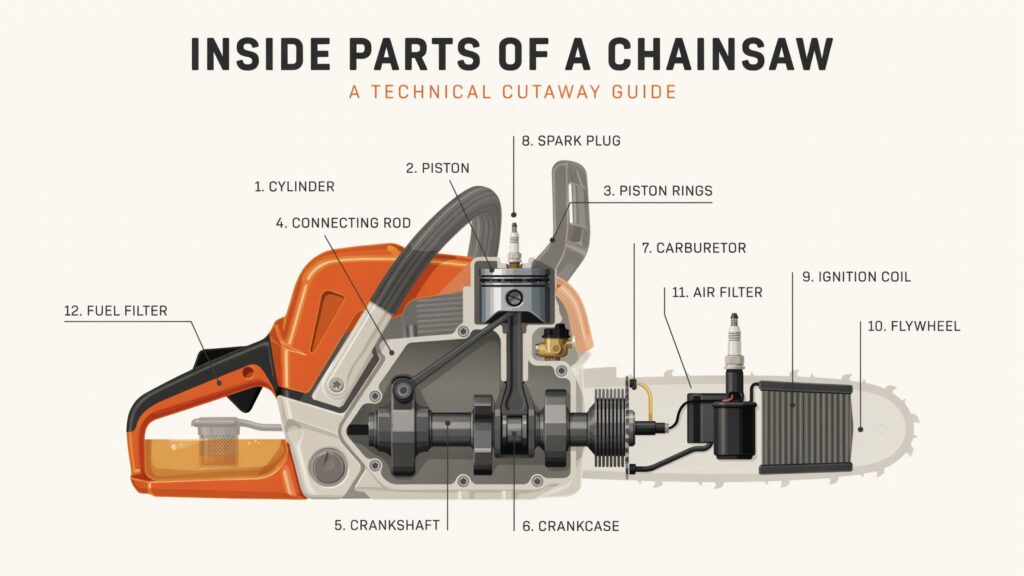
1. Cylinder
The cylinder is the chamber where combustion takes place. It houses the piston and converts the energy from burning fuel into mechanical power.
2. Piston
The piston moves up and down inside the cylinder during combustion.This movement produces the power required to run the engine.
3. Piston Rings
Piston rings form a secure seal between the piston and cylinder, maintaining proper compression while minimizing engine wear.
4. Connecting Rod
The connecting rod links the piston to the crankshaft. It transfers the piston’s movement into rotational motion.
5. Crankshaft
The crankshaft converts the up-and-down movement of the piston into rotary motion, which ultimately drives the cutting system.
6. Crankcase
The crankcase encloses the crankshaft and other moving parts. It protects internal components and supports proper engine operation.
7. Carburetor
The carburetor mixes air and fuel in the correct ratio before delivering the mixture into the combustion chamber for efficient engine performance.
8. Spark Plug
The chainsaw spark plug creates the spark needed to ignite the air-fuel mixture, enabling the engine to start and run efficiently.
9. Ignition Coil
The ignition coil generates the high-voltage electricity required for the spark plug to produce a spark.
10. Flywheel
The flywheel stores rotational energy and helps keep the engine running at a steady speed while assisting the cooling system.
11. Air Filter
The chainsaw air filter prevents dust, dirt, and debris from entering the engine, protecting internal components and maintaining engine efficiency.
12. Fuel Filter
The fuel filter removes contaminants from the fuel before it reaches the carburetor, reducing the risk of clogging.
13. Fuel Line
The fuel line carries fuel from the chainsaw fuel tank to the carburetor for combustion.
14. Primer Bulb
The primer bulb pushes fuel into the carburetor before starting, making cold starts quicker and easier.
15. Choke Valve
The choke valve limits airflow during startup, creating a richer fuel mixture for easier engine ignition.
16. Reed Valve
The reed valve regulates airflow into the engine and improves fuel efficiency in many two-stroke chainsaws.
17. Intake Port
The intake port allows the air-fuel mixture to enter the combustion chamber during the engine cycle.
18. Exhaust Port
The exhaust port releases burned gases from the engine after combustion, helping maintain efficient performance.
19. Muffler
The muffler reduces engine noise and directs hot exhaust gases safely away from the operator.
20. Clutch
The chainsaw clutch engages the chain only when the engine reaches sufficient speed, preventing unnecessary chain movement while idling.
21. Clutch Drum
The clutch drum works with the clutch to transfer engine power to the drive sprocket.
22. Drive Sprocket
The chainsaw sprocket receives rotational power from the clutch and drives the chain around the guide bar.
23. Needle Bearing
The needle bearing supports smooth rotation between the clutch drum and crankshaft while reducing friction.
24. Oil Pump
The oil pump delivers lubricant from the chainsaw oil reservoir to the guide bar and chain, reducing heat and wear.
25. Oil Pickup Filter
The oil pickup filter removes debris from the chain oil before it reaches the oil pump, helping maintain proper lubrication.
26. Oil Delivery Channel
The oil delivery channel carries lubricating oil from the pump to the guide bar for continuous chain lubrication.
27. Anti-Vibration Springs
These springs reduce vibration transferred from the engine to the handles, improving user comfort during extended use.
28. Cooling Fins
Cooling fins help dissipate engine heat, preventing overheating during demanding cutting tasks.
29. Starter Pawls
Starter pawls engage the flywheel when the starter rope is pulled, allowing the engine to crank during startup.
30. Recoil Starter Spring
The recoil spring automatically rewinds the starter rope after each pull, preparing it for the next start.
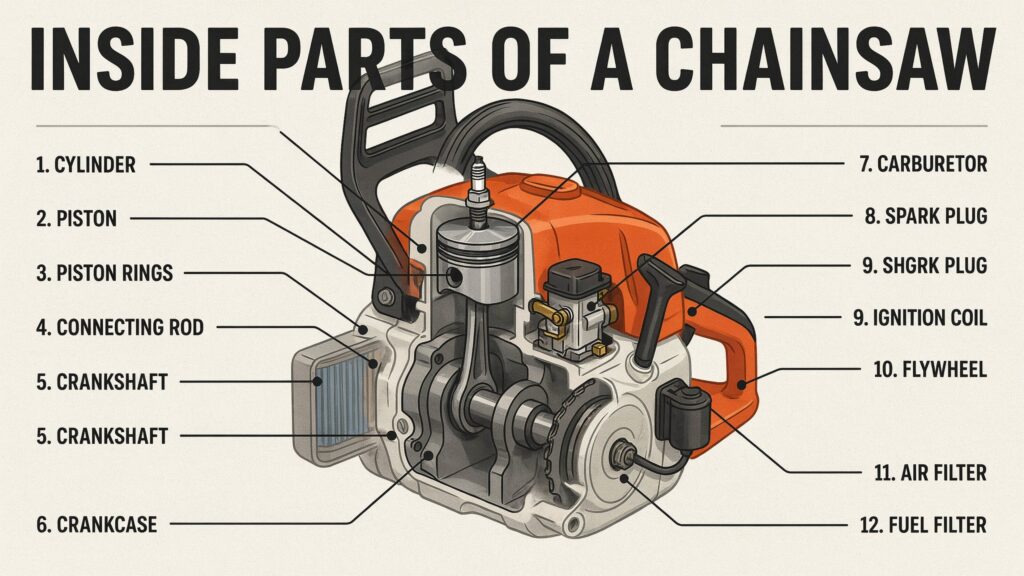
Understanding the inside parts of a chainsaw helps users maintain peak performance, diagnose mechanical problems, and extend the service life of the tool. Whether you are reviewing a parts of a chainsaw diagram, comparing the parts of a chainsaw Stihl, or learning more about essential chainsaw engine parts, knowing how these internal components work together will help you keep your chainsaw operating safely and efficiently.
External Parts of a Chainsaw
The external chainsaw components are the parts you can see and handle during normal operation. These components allow you to control the tool, perform cutting tasks safely, and access routine maintenance points. Learning these chainsaw parts names helps users operate the machine correctly and identify components that may require cleaning, adjustment, or replacement.
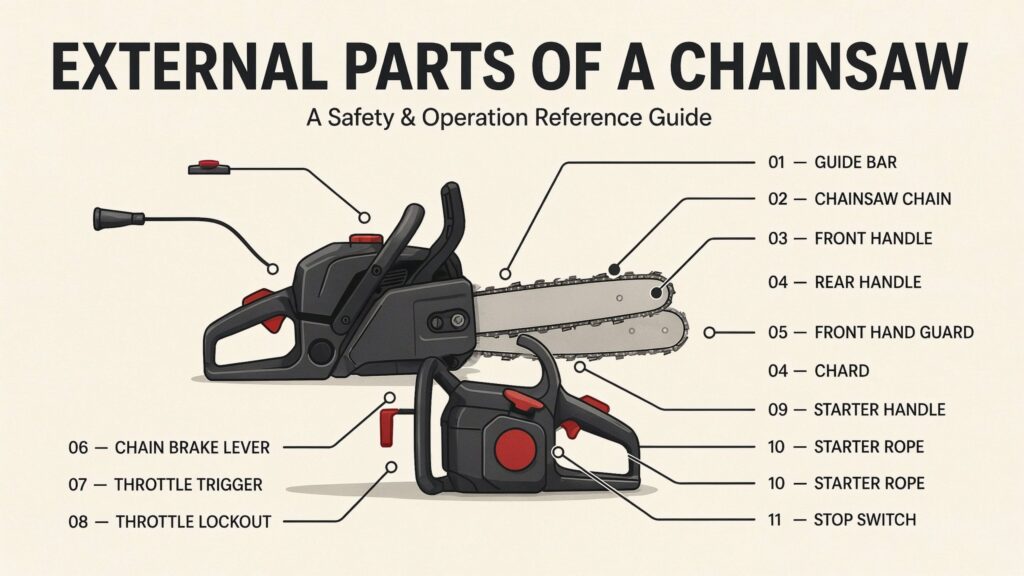
1. Guide Bar
The chainsaw guide bar is the long metal bar that supports the chainsaw chain and keeps it moving in a straight path. It provides stability and helps produce smooth, accurate cuts.
2. Chainsaw Chain
The chainsaw chain rotates around the guide bar and performs the cutting action. It contains sharp cutting teeth that remove wood quickly and efficiently.
3. Front Handle
The front handle provides a secure grip for the supporting hand. It improves balance and gives the operator better control during cutting.
4. Rear Handle
The rear handle serves as the main grip and houses the throttle controls. It allows comfortable handling while controlling engine speed.
5. Front Hand Guard
The front hand guard protects the operator’s hand from debris and also activates the chainsaw chain brake on most modern chainsaws during kickback.
6. Chain Brake Lever
The chainsaw chain brake is a critical safety device that stops the chain almost instantly if kickback occurs, helping reduce the risk of injury.
7. Throttle Trigger
The chainsaw throttle trigger controls engine speed and determines how fast the chain rotates while cutting.
8. Throttle Lockout
The throttle lockout prevents accidental throttle activation. It must be pressed before the throttle trigger can be used, improving operator safety.
9. Starter Handle
The chainsaw starter handle is pulled to start gasoline-powered chainsaws. It engages the recoil starter and turns the engine during startup.
10. Starter Rope
The starter rope connects the handle to the recoil mechanism, allowing the engine to crank when pulled.
11. Stop Switch
The stop switch allows the operator to shut off the engine quickly after completing a task or during an emergency.
12. Chain Tensioner
The chain tensioner is used to adjust chain tightness. Proper chain tension improves cutting performance and reduces wear on the guide bar.
13. Chain Catcher
The chain catcher helps protect the operator if the chain breaks or comes off the guide bar by preventing it from moving toward the user.
14. Muffler
The muffler reduces engine noise and directs exhaust gases away from the operator for safer and more comfortable use.
15. Fuel Tank
The chainsaw fuel tank stores the fuel required to power the engine. It should always be filled with the correct fuel mixture recommended by the manufacturer.
16. Fuel Tank Cap
The fuel tank cap seals the tank securely, preventing fuel leaks and contamination.
17. Oil Reservoir
The chainsaw oil reservoir stores bar and chain oil that lubricates the guide bar and chain during operation.
18. Oil Tank Cap
The oil tank cap provides access for refilling chain oil while keeping dirt and debris out of the lubrication system.
19. Air Filter Cover
The air filter cover protects the chainsaw air filter and allows quick access for cleaning or replacement.
20. Spark Plug Cover
The spark plug cover protects the chainsaw spark plug from dust, moisture, and accidental contact while allowing easy access for maintenance.
21. Clutch Cover
The clutch cover protects the chainsaw clutch, drive sprocket, and chain tensioning mechanism. It also secures the guide bar in place.
22. Guide Bar Nuts
Guide bar nuts hold the guide bar and clutch cover firmly together. They should be checked regularly to ensure they remain tight during operation.
23. Bucking Spikes
Bucking spikes, also called felling spikes, grip the wood during cutting. They improve stability and provide better control when making larger cuts.
24. Side Access Chain Adjuster
This adjustment mechanism allows users to tighten or loosen the chain easily without removing major components.
25. Anti-Vibration Mounts
The anti-vibration mounts reduce vibrations transmitted from the engine to the handles. This feature improves comfort and reduces fatigue during extended use.
26. Cooling Air Vents
Cooling air vents allow fresh air to circulate around the engine, helping prevent overheating during continuous operation.
27. Recoil Starter Housing
The recoil starter housing protects the starter mechanism and supports the smooth operation of the starter rope.
28. Exhaust Outlet
The exhaust outlet directs engine gases away from the operator while working together with the muffler to reduce noise.
29. Bar Tip
The bar tip is the rounded end of the chainsaw guide bar that supports chain movement as it travels around the bar.
30. Side Inspection Cover
The side inspection cover provides access to important chainsaw components, making routine inspection and maintenance easier.
Understanding these external chainsaw parts names allows users to operate the tool safely, perform regular maintenance, and quickly identify worn components. Whether you are reviewing a parts of a chainsaw diagram, comparing the parts of a chainsaw Stihl, or learning about the inside parts of a chainsaw, knowing the function of every visible component helps improve performance, safety, and the overall lifespan of the chainsaw.
Parts of a Chainsaw Diagram
A parts of a chainsaw diagram is a labeled illustration that identifies the location and function of each chainsaw component. It helps beginners understand how a chainsaw is assembled, while experienced users can use it for maintenance, troubleshooting, and replacing worn parts. By studying a diagram, you can quickly recognize both the external and inside parts of a chainsaw.
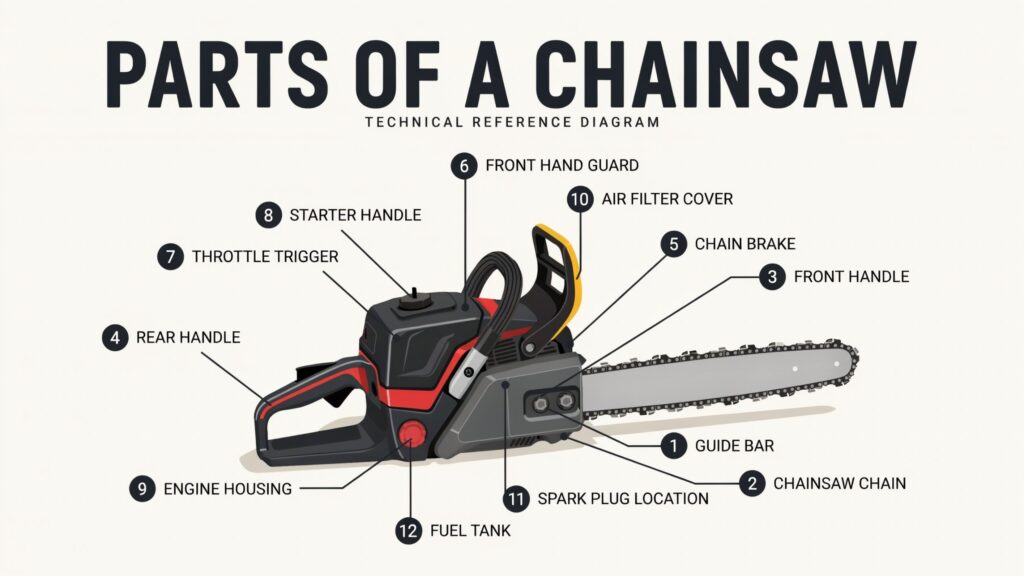
1. Guide Bar
The chainsaw guide bar is clearly shown extending from the front of the tool. It supports and guides the chainsaw chain during every cutting operation.
2. Chainsaw Chain
The chainsaw chain wraps around the guide bar and performs the cutting action. A diagram shows how the chain travels around the bar and connects with the drive sprocket.
3. Front Handle
The front handle is positioned above the guide bar and provides a secure grip for better balance and control while operating the chainsaw.
4. Rear Handle
The rear handle is located at the back of the chainsaw and contains the throttle controls for managing engine speed.
5. Chain Brake
A diagram identifies the chainsaw chain brake near the front hand guard. This safety feature stops chain movement during kickback or emergency situations.
6. Front Hand Guard
The front hand guard protects the operator’s hand and activates the chain brake on most modern chainsaws.
7. Throttle Trigger
The chainsaw throttle trigger is located inside the rear handle and controls the speed of the engine and chain.
8. Starter Handle
The chainsaw starter handle is attached to the recoil starter and is used to start gasoline-powered chainsaws.
9. Engine Housing
The engine housing protects the internal chainsaw engine parts, including the piston, cylinder, crankshaft, and ignition system.
10. Air Filter Cover
The air filter cover protects the chainsaw air filter while allowing quick access for cleaning and replacement.
11. Spark Plug Location
Most diagrams indicate where the chainsaw spark plug is installed, making routine inspection and replacement much easier.
12. Fuel Tank
The chainsaw fuel tank is shown near the rear section of the tool. It stores the fuel needed for engine operation.
13. Oil Reservoir
The chainsaw oil reservoir is positioned separately from the fuel tank and supplies lubricant to the guide bar and chain.
14. Clutch Cover
The clutch cover protects the chainsaw clutch, chain tensioner, and drive sprocket while securing the guide bar in place.
15. Drive Sprocket
The chainsaw sprocket is located beneath the clutch cover and transfers engine power to the chain.
16. Chain Tensioner
The chain tensioner is usually located beside the guide bar mounting area. It allows users to adjust chain tension for safe operation.
17. Chain Catcher
A diagram identifies the chain catcher below the guide bar mounting area. This safety device helps stop a broken or derailed chain.
18. Muffler
The muffler is mounted near the engine and directs exhaust gases away from the operator while reducing engine noise.
19. Cooling Vents
Cooling vents are positioned around the engine housing to improve airflow and prevent overheating during extended use.
20. Internal Engine Components
Many detailed diagrams also display the inside parts of a chainsaw, including the carburetor, piston, connecting rod, crankshaft, clutch, oil pump, and other important chainsaw engine parts. These illustrations help users understand how power is produced and transferred to the cutting system.
A parts of a chainsaw diagram is an excellent reference for identifying chain saw parts names, understanding how each component fits together, and performing routine maintenance. Whether you are comparing the parts of a chainsaw Stihl or studying another brand, a clear diagram makes inspections, repairs, and replacement of chainsaw components much easier and more accurate.
How All Chainsaw Parts Work Together
Every chainsaw component has a specific role, but the tool performs efficiently only when all parts operate together as a complete system. From starting the engine to rotating the chainsaw chain, each step depends on the proper function of multiple chainsaw parts names working in sequence. Understanding how these systems interact helps improve maintenance, troubleshooting, and safe operation.
1. Fuel System Delivers Power
The process begins when fuel flows from the chainsaw fuel tank through the fuel line and fuel filter to the carburetor. The carburetor mixes fuel with air in the correct ratio before sending it into the engine for combustion.
2. Ignition System Starts the Engine
The ignition coil generates electrical energy, and the chainsaw spark plug ignites the air-fuel mixture inside the cylinder. This controlled explosion creates the power needed to run the engine.
3. Engine Produces Mechanical Energy
The chainsaw engine parts, including the piston, connecting rod, crankshaft, and cylinder, convert combustion energy into rotational motion that powers the cutting system.
4. Clutch Transfers Engine Power
As engine speed increases, the chainsaw clutch engages automatically. It transfers rotational force from the crankshaft to the clutch drum while keeping the chain stationary during idle.
5. Drive Sprocket Rotates the Chain
The chainsaw sprocket receives power from the clutch and drives the chainsaw chain around the guide bar at high speed for efficient cutting.
6. Guide Bar Supports Chain Movement
The chainsaw guide bar provides a stable track that keeps the chain aligned while allowing smooth movement during cutting operations.
7. Chain Components Perform the Cutting
The parts of a chainsaw chain, including the cutting teeth, drive links, depth gauges, tie straps, and rivets, work together to remove wood quickly while maintaining stability and cutting accuracy.
8. Lubrication System Reduces Friction
The oil pump draws lubricant from the chainsaw oil reservoir and delivers it to the guide bar and chain. Continuous lubrication minimizes friction, reduces heat, and extends the life of moving parts.
9. Air Intake Protects the Engine
The chainsaw air filter removes dust and debris before air enters the carburetor. Clean airflow improves combustion efficiency and protects sensitive engine components from premature wear.
10. Cooling System Controls Engine Temperature
Cooling fins and the flywheel circulate air around the engine, helping maintain safe operating temperatures during extended cutting tasks.
11. Throttle Controls Cutting Speed
The chainsaw throttle trigger allows the operator to control engine speed. Increasing throttle causes the clutch to engage fully and the chain to rotate faster for more demanding cuts.
12. Safety Systems Protect the Operator
Modern chainsaw safety features, including the chain brake, chain catcher, hand guard, and throttle lockout, work together to reduce the risk of injury during normal operation and unexpected kickback.
13. Anti-Vibration System Improves Comfort
Anti-vibration mounts and springs reduce the amount of engine vibration reaching the handles. This improves control and reduces operator fatigue during long periods of use.
14. Exhaust System Removes Burned Gases
After combustion, exhaust gases exit through the muffler. The muffler also lowers engine noise while directing hot gases safely away from the user.
15. Complete System Works as One Unit
Every internal and external component depends on the others for reliable performance. Whether examining the inside parts of a chainsaw, reviewing a parts of a chainsaw diagram, or comparing the parts of a chainsaw Stihl, it becomes clear that proper maintenance of each component is essential for safe operation, smooth cutting, and long service life.
When all chainsaw components are clean, correctly adjusted, and well maintained, the machine delivers consistent power, efficient cutting, and dependable performance. Understanding how these systems work together also makes it easier to diagnose problems, replace worn parts, and keep the chainsaw operating at its best.
Chainsaw Maintenance and Parts Inspection
Regular maintenance and inspection help extend the life of your chain saw, improve cutting performance, and reduce the risk of unexpected breakdowns. By checking important chainsaw components before and after use, you can identify worn or damaged parts early and keep the tool operating safely and efficiently.
1. Inspect the Chainsaw Chain
Examine the chainsaw chain for dull cutting teeth, damaged drive links, loose rivets, and cracked tie straps. Replace or sharpen the chain if you notice excessive wear or poor cutting performance.
2. Check the Guide Bar
Inspect the chainsaw guide bar for uneven wear, burrs, bent edges, and a worn groove. A properly maintained guide bar improves chain movement and cutting accuracy.
3. Adjust Chain Tension
Make sure the chain is properly tensioned before every use. A chain that is too loose can derail, while one that is too tight increases wear on the guide bar and chainsaw sprocket.
4. Sharpen the Cutting Teeth
Sharp cutting teeth improve efficiency and reduce strain on the engine. Use the correct file size and maintain the recommended sharpening angle.
5. Clean the Air Filter
The chainsaw air filter should be cleaned regularly to remove dust and debris. A clean filter allows proper airflow and helps the engine maintain consistent power.
6. Inspect the Spark Plug
Check the chainsaw spark plug for carbon buildup, worn electrodes, or damage. Clean or replace it if necessary to ensure reliable starting and smooth engine performance.
7. Examine the Fuel System
Inspect the chainsaw fuel tank, fuel line, and fuel filter for leaks, cracks, or blockages. Replace damaged components to prevent fuel delivery problems.
8. Check the Oil Reservoir
Ensure the chainsaw oil reservoir contains enough bar and chain oil before starting the tool. Proper lubrication protects the guide bar and chain from excessive friction.
9. Test the Oil Pump
Verify that the oil pump delivers a steady supply of lubricant to the guide bar. Insufficient lubrication can lead to overheating and premature wear.
10. Inspect the Drive Sprocket
The chainsaw sprocket should be checked for worn or damaged teeth. Replacing a worn sprocket helps extend the life of the chain and improves power transfer.
11. Check the Clutch
Inspect the chainsaw clutch for excessive wear, cracks, or damaged springs. A properly functioning clutch ensures smooth engagement and prevents unwanted chain movement at idle.
12. Tighten Loose Fasteners
Check all nuts, bolts, and screws before use. Tight hardware keeps the chainsaw stable and prevents components from loosening during operation.
13. Inspect the Starter Assembly
Examine the chainsaw starter handle, starter rope, and recoil mechanism for signs of wear or damage. Replace worn parts to ensure dependable engine starting.
14. Clean the Cooling System
Remove sawdust and debris from the cooling fins and air intake areas. Good airflow prevents the engine from overheating during heavy cutting.
15. Inspect the Muffler
Check the muffler for carbon buildup, cracks, or loose mounting bolts. A clean and secure muffler improves engine efficiency and reduces noise.
16. Test the Chain Brake
The chainsaw chain brake should engage and release smoothly. Test it before every use to confirm that this important safety system is working correctly.
17. Examine the Chain Catcher
Inspect the chain catcher for cracks or damage. It should remain securely attached to help protect the operator if the chain breaks or derails.
18. Check the Throttle Trigger
The chainsaw throttle trigger should move freely and return to the idle position when released. A sticking throttle should be repaired immediately.
19. Inspect the Anti-Vibration System
Check the anti-vibration mounts for wear or damage. Proper vibration control improves comfort and reduces operator fatigue during extended use.
20. Follow a Regular Inspection Schedule
Routine inspection of all chainsaw components, including the inside parts of a chainsaw, helps identify problems before they become costly repairs. Whether reviewing a parts of a chainsaw diagram or maintaining the parts of a chainsaw Stihl, consistent maintenance ensures reliable performance, safer operation, and a longer service life.
Regular care of these chainsaw engine parts and external components keeps the chainsaw running efficiently, improves cutting quality, and minimizes the chance of unexpected failures during demanding tasks.
Conclusion
Understanding the parts of a chainsaw is essential for anyone who wants to use the tool safely and efficiently. Every component, including the guide bar, chain, engine, clutch, and safety features, works together to provide smooth, reliable, and efficient cutting performance. Learning how these parts work together also makes routine maintenance, troubleshooting, and repairs much easier.
Whether you are a beginner or an experienced user, knowing the function of each component will help you improve cutting accuracy, extend the life of your chainsaw, and reduce the risk of mechanical problems. By inspecting, cleaning, and maintaining your chainsaw regularly, you can keep it operating smoothly and safely for years to come.
Frequently Asked Questions (FAQs)
Q1. What are the main parts of a chainsaw?
The main chainsaw components include the guide bar, chainsaw chain, engine, chain brake, clutch, drive sprocket, air filter, spark plug, fuel tank, oil reservoir, throttle trigger, starter handle, and handles. Each part works together to provide safe and efficient cutting.
Q2. What are the parts of a Chainsaw Man?
Chainsaw Man is a Japanese manga and anime series and is not related to chainsaw tools. If you are looking for the components of a real chainsaw, refer to sections covering the guide bar, chain, engine, clutch, chain brake, and other mechanical parts.
Q3. What is the main purpose of a chainsaw?
A chainsaw is designed to cut wood quickly and efficiently. It is commonly used for tree felling, pruning branches, cutting firewood, clearing fallen trees, and various woodworking and landscaping tasks.
Q4. What is a chainsaw brake?
A chainsaw brake, also called a chain brake, is an important safety feature that stops the chain almost instantly during kickback or emergencies, helping reduce the risk of serious injury.
Q5. What are the safety parts of a chainsaw?
The main chainsaw safety features include the chain brake, chain catcher, front hand guard, throttle lockout, anti-vibration system, and chain guard. These components help protect the operator during use.
Q6. Why is it called a chainsaw?
It is called a chainsaw because it cuts with a metal chainsaw chain that rotates around a guide bar. The chain has sharp cutting teeth that work like a moving saw, allowing it to cut through wood quickly and efficiently.