
Introduction
Scroll Saws are useful woodworking tools for cutting detailed patterns, curved shapes, and decorative designs in wood. They are popular among beginners, DIY enthusiasts, and professional woodworkers who need accuracy when creating intricate projects. From wooden puzzles and ornaments to letters and fretwork, these tools can handle many creative tasks. In this guide, you will learn how they work, which materials they can cut, how to use them safely, and how to maintain them for reliable performance.
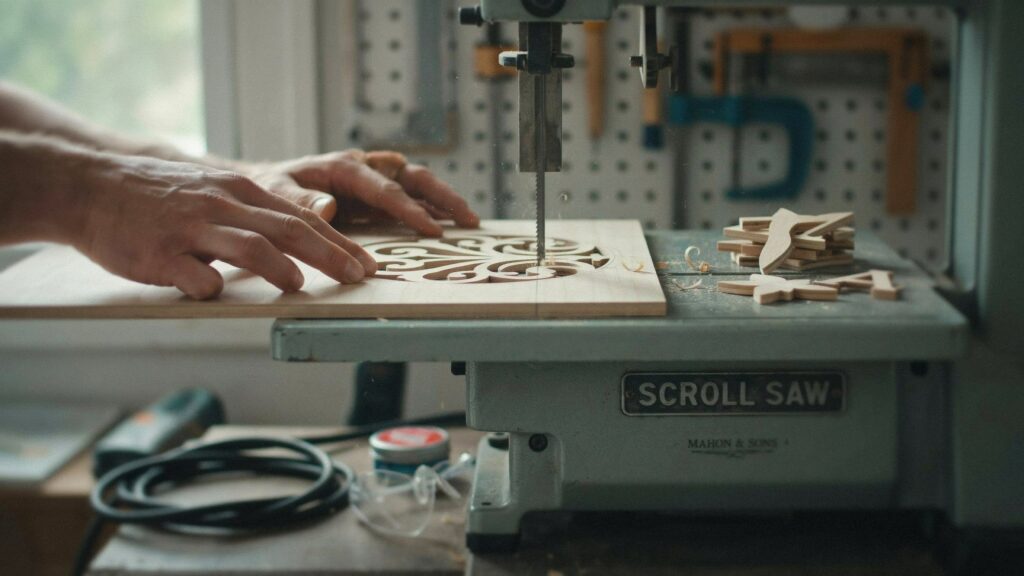
Table of Contents
What Is a Scroll Saw?
A scroll saw is an electric woodworking tool used to cut detailed shapes, curves, and patterns in wood. It has a thin blade that moves up and down quickly, allowing users to make precise cuts for decorative projects.
A wood scroll saw is useful for making wooden puzzles, ornaments, letters, toys, and other craft projects. Beginners and professional woodworkers use this tool when they need accuracy and control for intricate designs.
Unlike a band saw, which uses a continuous blade, this machine uses a short, reciprocating blade. It can also make interior cutouts by passing the blade through a small hole drilled in the material.
A typical woodworking machine includes a blade, motor, worktable, blade clamps, and speed control. Some models also have a dust blower to keep the cutting line clear.
Woodcraft saws are helpful for decorative woodworking because they can produce detailed shapes that are difficult to make with larger saws. Choosing the correct blade and following safety instructions helps improve cutting accuracy and protect the user.
How Does a Scroll Saw Work?
A scroll saw works by moving a thin blade up and down at high speed to cut detailed shapes and patterns in wood. The user guides the material across the worktable while the blade follows the marked cutting line. This process helps create smooth curves, intricate designs, and precise cuts.
How the Cutting Process Works
- Choose the right blade: Select a blade suitable for the material’s thickness and the type of cut.
- Install the blade firmly and set the proper tension by following the manufacturer’s guidelines.
- Mark the design: Draw the desired pattern on the wood before cutting.
- Adjust the speed: Use a suitable speed for the material and the complexity of the design.
- Guide the material: Move the workpiece slowly across the table, keeping your fingers away from the moving blade.
- Complete the cut: Follow the marked line carefully to achieve the desired shape.
Understanding Blade Movement and Speed
The blade moves vertically through a repeated up-and-down motion. This movement allows the machine to cut small curves and detailed patterns that are difficult to produce with larger saws.
Many models include variable-speed control, which allows users to adjust blade speed for different materials and cutting tasks. A slower speed can provide better control for delicate work, while a suitable higher speed may help with straightforward cuts. The correct setting depends on the material, blade, and machine.
Why Blade Tension Matters
Correct blade tension helps keep the blade stable during cutting. A blade that is too loose may bend or produce inaccurate cuts, while excessive tension can cause the blade to break. Always follow the manufacturer’s guidance when adjusting tension.
For accurate results, use a sharp blade, support the workpiece properly, and avoid forcing the material through the cutting area. These practices help improve cutting quality and reduce the risk of accidents.
Common Uses in Woodworking
A scroll saw is useful for woodworking projects that require detailed shapes, smooth curves, and precise cuts. It helps beginners, DIY enthusiasts, and professional woodworkers create decorative items and practical crafts from wood.
1. Cutting Curved Wood Shapes
A wood scroll saw can cut curves, circles, and irregular shapes that are difficult to make with many other saws. It is useful for creating decorative edges, wooden shapes, and custom designs.
2. Making Intricate Wood Designs
Woodworkers use this tool to create detailed patterns in thin wood boards. These designs may include flowers, animals, geometric shapes, and decorative artwork.
3. Creating Wooden Puzzles and Toys
This tool is suitable for making wooden puzzles, small toys, and educational shapes. Its thin blade allows users to cut individual pieces carefully, provided the material and blade are appropriate.
4. Making Decorative Ornaments
Woodcraft saws are commonly used to make wall decorations, holiday ornaments, hanging shapes, and small wooden gifts. These projects often require accurate cutting and smooth curves.
5. Cutting Letters and Shapes
A woodworking scroll saw can cut letters, numbers, and symbols from wood. These pieces can be used for nameplates, signs, home decorations, and craft projects.
6. Making Interior Cutouts
One useful feature is the ability to cut openings inside a piece of wood. The user drills a small starter hole, removes the blade according to the machine’s instructions, passes it through the hole, and secures it again before cutting the design.
7. Creating Fretwork Patterns
Fretwork involves cutting detailed patterns with open spaces in the material. Woodworkers use this technique to create decorative panels, intricate screens, and ornamental designs.
For the best results, choose a suitable blade, mark the pattern clearly, and move the wood slowly. Always wear eye protection and follow the manufacturer’s safety instructions.
Materials a Scroll Saw Can Cut
A scroll saw can cut several materials, depending on the blade type, material thickness, and machine capacity. Choosing the right material helps produce clean cuts and reduces the risk of blade damage.
1. Softwood
Softwoods such as pine and cedar are suitable for many decorative woodworking projects. They are often easier to cut than dense hardwoods, making them a practical choice for beginners.
2. Hardwood
Wood such as oak, maple, and cherry can be used for detailed projects when the machine and blade are suitable. Dense hardwood may require slower cutting and careful blade selection.
3. Plywood
Thin plywood is commonly used for wooden puzzles, ornaments, and decorative patterns. Choose plywood with suitable thickness and avoid forcing it through the blade.
4. MDF and Other Wood-Based Panels
Medium-density fiberboard (MDF) can be suitable for certain projects. However, cutting MDF creates fine dust, so use appropriate dust extraction and respiratory protection when required.
5. Certain Plastics
Some plastics can be cut if the material and blade are compatible with the machine. Check the manufacturer’s recommendations to prevent melting, rough edges, or other cutting problems.
Always check the machine’s cutting capacity before starting a project. Avoid materials that are too thick, unsuitable, or unsafe for your equipment.
How to Use a Scroll Saw for Beginners
Using a scroll saw correctly helps beginners make accurate cuts and complete woodworking projects safely. Follow these steps before starting your first design.
1. Choose the Correct Blade
Select a blade according to the material, thickness, and pattern. Fine blades are often useful for detailed work, while other blade types may be better for thicker materials.
2. Mark the Cutting Pattern
Draw your design clearly on the wood using a pencil. Simple patterns are a good starting point for beginners.
3. Secure the Blade and Material
Switch off and disconnect the machine before installing or adjusting the blade. Follow the manufacturer’s instructions to secure the blade and set the correct tension. Place the material flat on the worktable.
4. Adjust the Cutting Speed
If your machine has variable-speed control, select a suitable speed for the material and design. Start slowly when learning to cut curves.
5. Follow the Cutting Line
Turn on the machine and guide the wood gently toward the blade. Keep your fingers away from the cutting area, and never force the material through the blade.
6. Finish and Inspect the Cut
Turn off the machine before removing scraps or inspecting the finished piece. Light sanding can help smooth rough edges when necessary.
Wear eye protection, keep the work area clean, and follow all safety instructions supplied with your machine.
Advantages and Limitations
A scroll saw offers several benefits for detailed woodworking, but it also has limitations. Understanding both helps you decide whether this tool is suitable for your project.
Advantages
Precise curved cuts: The thin blade makes it easier to follow curved lines and create detailed shapes.
Interior cutouts: Users can create openings inside a wooden piece by passing the blade through a prepared starter hole.
Suitable for decorative projects: It works well for ornaments, puzzles, letters, and intricate patterns.
Good control: The workpiece rests on a table, allowing users to guide small pieces carefully when proper techniques are followed.
Useful for beginners: With practice and the correct setup, beginners can learn to produce attractive wooden designs.
Limitations
Limited cutting depth: The machine cannot handle every material thickness. Always check its specifications.
Slower cutting: Detailed patterns may take time, especially when working with complex designs.
Blade breakage: Incorrect tension, excessive pressure, or an unsuitable blade can cause breakage.
Not ideal for large straight cuts: Other tools, such as circular saws or table saws, are generally more suitable for long, straight cuts in large boards.
Material restrictions: Not every material is safe or suitable for cutting with this machine.
Overall, this tool is a good choice for detailed and decorative woodworking. For large boards, thick materials, or fast straight cuts, another type of saw may be more appropriate.
Scroll Saw vs. Band Saw: Key Differences
A scroll saw and a band saw are both woodworking tools, but they are designed for different cutting tasks. The main difference is their blade movement, cutting capacity, and ability to create detailed shapes.
| Feature | Scroll Saw | Band Saw |
| Blade design | Thin, short blade | Continuous loop blade |
| Blade movement | Moves up and down | Moves continuously |
| Best for | Intricate patterns and small curves | Resawing, thicker wood, and larger curves |
| Interior cutouts | Possible with a starter hole | Usually requires a different cutting approach |
| Cutting capacity | Generally limited to thinner materials | Can handle thicker materials, depending on the model |
| Typical projects | Puzzles, ornaments, and fretwork | Furniture parts, curved pieces, and lumber cutting |
Which Tool Should You Choose?
Choose a scroll saw when your project requires intricate patterns, small curves, or interior cutouts. It is useful for decorative woodworking and detailed craft projects.
A band saw is generally better for cutting thicker wood, resawing boards, and making larger curved cuts. Its cutting capacity depends on the machine’s throat depth, cutting height, and blade.
Both tools have different strengths. Consider the material, design, and type of cut before choosing one for your workshop.
Important Safety Tips
Safe working habits help prevent injuries and improve cutting accuracy. Before using any woodworking machine, read its manual and understand its controls.
- Wear eye protection: Protect your eyes from flying wood chips and broken blade pieces.
- Keep fingers away from the blade: Guide the material carefully and maintain a safe distance from the cutting area.
- Inspect the blade: Check for damage and ensure it is installed correctly before switching on the machine.
- Secure the material: Keep the workpiece flat against the table and support it properly.
- Avoid excessive pressure: Let the blade cut at its own pace. Forcing the material can damage the blade.
- Keep the work area clean: Remove loose scraps and maintain good lighting.
- Disconnect power before adjustments: Always unplug the machine before changing blades, cleaning, or performing maintenance.
- Control dust: Use suitable dust extraction and follow the recommended precautions for the material being cut.
- Avoid loose clothing: Keep loose sleeves, jewellery, and long hair away from moving parts.
- Follow the manufacturer’s instructions: Use appropriate blades, settings, and safety equipment for your machine.
Never leave a running machine unattended. Good preparation and careful operation make woodworking safer for beginners and experienced users.
Maintenance and Care
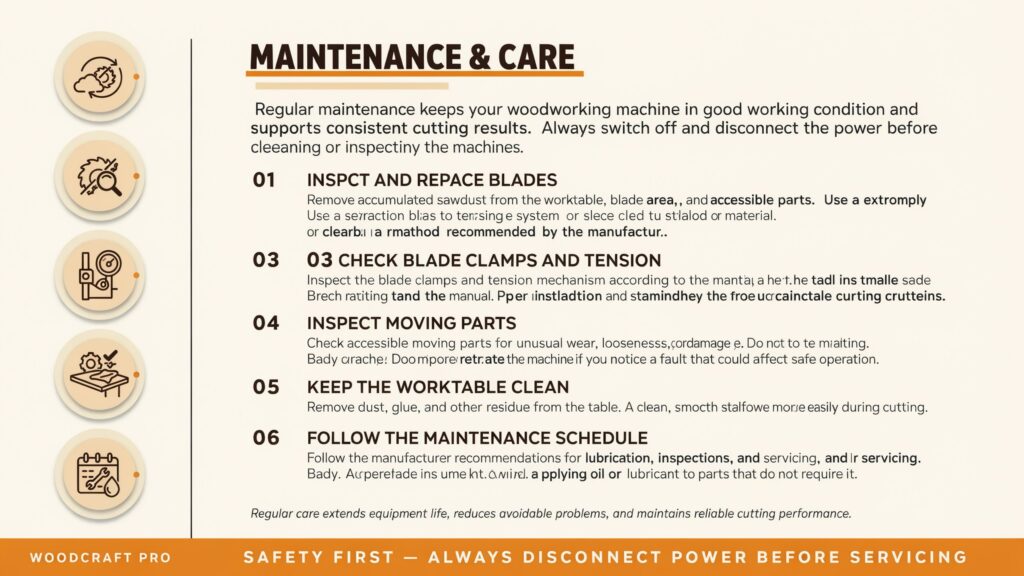
Regular maintenance helps keep a woodworking machine in good working condition and supports consistent cutting results. Always switch off and disconnect the power before cleaning or inspecting the machine.
1. Clean Dust and Debris
Remove accumulated sawdust from the worktable, blade area, and accessible parts. Use a suitable dust extraction system or cleaning method recommended by the manufacturer.
2. Inspect and Replace Blades
Check blades for dull teeth, bending, cracks, or other damage. Replace damaged blades promptly and select a suitable blade for the material.
3. Check Blade Clamps and Tension
Inspect the blade clamps and tension mechanism according to the manual. Proper installation and tension help the blade remain stable during cutting.
4. Inspect Moving Parts
Check accessible moving parts for unusual wear, looseness, or damage. Do not operate the machine if you notice a fault that could affect safe operation.
5. Keep the Worktable Clean
Remove dust, glue, and other residue from the table. A clean, smooth surface allows the material to move more easily during cutting.
6. Follow the Maintenance Schedule
Follow the manufacturer’s recommendations for lubrication, inspections, and servicing. Avoid applying oil or lubricant to parts that do not require it.
Regular care can help extend equipment life, reduce avoidable problems, and maintain reliable cutting performance.
Common Mistakes to Avoid
Beginners can improve their woodworking results by avoiding a few common mistakes.
- Choosing the wrong blade: Use a blade suitable for the material thickness and cutting pattern.
- Applying too much pressure: Guide the wood gently instead of forcing it through the blade.
- Incorrect blade tension: Follow the manufacturer’s instructions to avoid unstable cutting or blade breakage.
- Moving too quickly: Slow down around tight curves to maintain control and accuracy.
- Ignoring material support: Keep the workpiece stable and flat on the table.
- Skipping safety checks: Inspect the machine before use and wear appropriate protective equipment.
- Neglecting maintenance: Clean the machine regularly and replace worn or damaged blades.
Practising on scrap wood is a useful way to learn how different blades and speeds affect cutting results before starting a detailed project.
Conclusion
Scroll Saws are valuable tools for woodworkers who want to create detailed designs, smooth curves, and precise interior cutouts. Choosing the right blade, using suitable materials, and following proper safety practices can improve cutting results. Regular cleaning and maintenance also help keep the machine in good working condition. Whether you are a beginner or an experienced woodworker, understanding its uses and limitations will help you complete your projects with greater confidence and accuracy.
Top five FAQs
Q1. What is a scroll saw used for?
A scroll saw is used to cut detailed patterns, curved shapes, wooden puzzles, decorative ornaments, letters, and intricate designs in wood.
Q2. How thick a piece of wood can a scroll saw cut?
Most scroll saws can cut wood around 1–2 inches thick, but the actual capacity depends on the machine, blade, and material. Always check the manufacturer’s specifications.
Q3. What is another name for a scroll saw?
A scroll saw is sometimes associated with a fret saw, a tool used for intricate cutting. However, a traditional fret saw is usually a manual tool, while a scroll saw is powered.
Q4. Do I really need a scroll saw?
You need one if you regularly make detailed wooden designs, interior cutouts, or decorative crafts. For ordinary straight cuts, a different type of saw may be more suitable.
Q5. What is a scroll saw best used for?
A scroll saw is best for intricate woodworking, including curved cuts, fretwork, wooden puzzles, ornaments, and small decorative projects that require precision.